
All Legendary and Mythical Pokémon in Legends: Z-A
A complete, spoiler-light look at every Legendary and Mythical Pokémon in Pokémon Legends: Z-A and how they fit into Lumiose City.
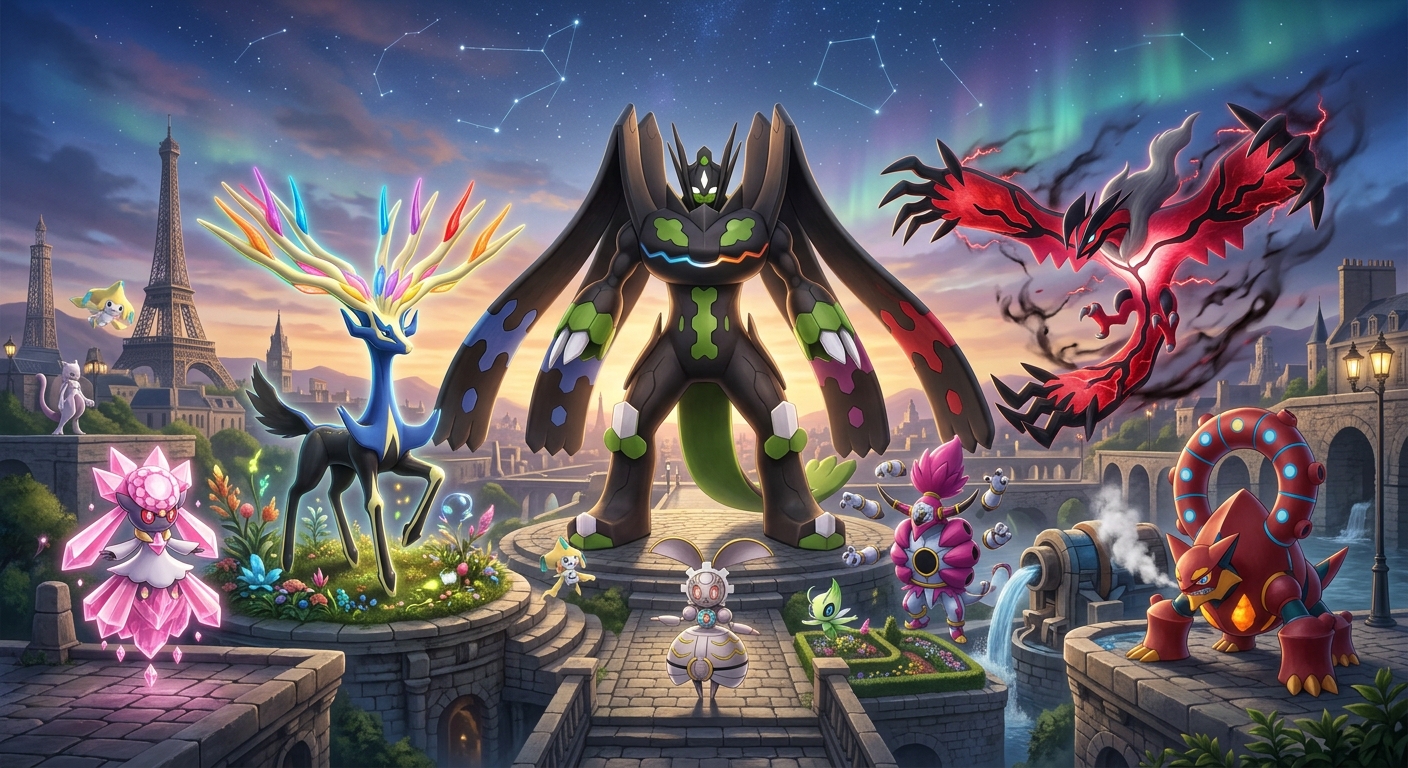
Pokémon Legends: Z-A reimagines Kalos with a sprawling Lumiose City at its core and a story built around some of the series’ most iconic Legendary and Mythical Pokémon. Beyond the main campaign, the game layers in optional encounters, form changes, and post-game quests that make tracking down every special Pokémon feel like its own adventure.
This guide walks through every major Legendary and Mythical Pokémon featured in Pokémon Legends: Z-A, explaining their narrative role, battle quirks, forms, and what kind of preparation you should consider before facing them. It avoids heavy story spoilers wherever possible while still giving enough context for effective planning.
Understanding Legendaries and Mythicals in Legends: Z-A
Before diving into individual Pokémon, it helps to understand how Legends: Z-A treats these rare species compared to prior games in the series.
How Legendary Encounters Are Structured
Legends: Z-A follows the approach that Game Freak began in previous Legends-style entries: Legendary battles are presented as set-piece encounters where you need to read attack patterns, manage positioning, and then transition into traditional turn-based combat. Official series descriptions emphasize that Legendaries often have unique forms tied to specific conditions or items, especially Zygarde in Kalos-related material.1
Across the game you’ll see a few consistent patterns:
- Story-gated battles: Many Legendary Pokémon only become obtainable after you have cleared specific chapters or completed the main scenario.
- Safe capture windows: As in other Legends titles, the game typically presents a clear moment when you&rsquore meant to throw a Poké Ball, often after a powerful move or stagger phase.
- Post-game cleanup: Several Legendaries and Mythicals are tied to quests that only open up once the core story is finished.
Legendary vs. Mythical: What’s the Difference?
The Pokémon Company generally distinguishes between Legendaries and Mythicals by availability: Mythical Pokémon are usually distributed through limited-time events or special in-game features, while Legendaries are obtainable in the main game.2 Legends: Z-A keeps that distinction conceptually, but folds Mythicals into side quests and special areas rather than external events.
In practical terms:
- Legendary Pokémon usually anchor core story beats or major side arcs.
- Mythical Pokémon tend to be hidden behind optional objectives, puzzles, or lengthy quest chains.
- Both categories are balanced around high-level teams and advanced players, especially in the post-game.
The Kalos Trinity: Xerneas, Yveltal, and Zygarde
The heart of Legends: Z-A’s legendary roster revolves around Kalos&rsquo original trio: Xerneas, Yveltal, and Zygarde. These three define the narrative tone and post-game challenge.
Xerneas: Guardian of Life
Xerneas represents the power of life and regeneration. Across official Kalos material, it is described as a Pokémon that can share its eternal life with others.3 In Legends: Z-A, that identity aligns with Lumiose City’s conflicting visions of renewal and urban development.
What to expect from Xerneas:
- Type: Fairy
- Battle focus: Strong special attacks paired with area-denial patterns characteristic of Legends-style boss encounters.
- Story role: Thematically linked to restoration, hope, and the “ideal future” for Lumiose.
On the battlefield, Xerneas leans on Fairy-type power that threatens Dragon, Dark, and Fighting Pokémon. It rewards players who bring resistant or neutral options and who are comfortable switching between agile dodging and careful Poké Ball timing.
Yveltal: Wings of Destruction
Yveltal is the counterpart to Xerneas, embodying decay and destruction. Official Pokédex descriptions emphasize that it absorbs life energy from everything around it when its lifespan ends.3 In Legends: Z-A, this motif ties into fears about unchecked expansion, conflict, and the cost of ambition.
Key traits of Yveltal:
- Type: Dark / Flying
- Battle focus: High-pressure offense with wide arcs of coverage and a focus on chipping away at both your active Pokémon and your own character.
- Narrative theme: The potential fallout of misusing technology and power.
The duel against Yveltal tends to punish static play: staying still invites sweeping moves that force you to reposition quickly. Grounded Electric-, Rock-, or Ice-type strategies can be effective in the turn-based phase, but you need to survive the opening gauntlet first.
Zygarde: Order, Forms, and Final Challenges
Zygarde is described by The Pokémon Company as a being composed of numerous cell-like components that assemble into different forms, stepping in when the ecosystem is threatened.1 Legends: Z-A places Zygarde at the center of its big-picture themes: order, balance, and what it means to intervene when a city tips too far in any direction.
Zygarde’s defining traits:
- Type: Dragon / Ground
- Core mechanic: Multiple forms that reflect how many Zygarde Cells and Cores are assembled.
- Battle identity: Durable, escalating fights that ramp up as its form changes.
Zygarde’s Forms Explained
Drawing from Kalos lore and prior official materials,1 Zygarde generally appears in several configurations:
- 10% Forme: A faster, less bulky form that trades survivability for speed.
- 50% Forme: The classic serpentine version, balancing offensive and defensive stats.
- Complete Forme: A towering figure triggered when Zygarde’s health is pushed to critical levels, drastically boosting its power.
Legends: Z-A integrates these forms into one of its most demanding encounters. The fight against Zygarde functions as a capstone: you’re managing targeted ground eruptions, beams, and shockwaves while trying to stagger it enough to capture it. For many players, this is where building a cohesive, high-level team becomes mandatory instead of optional.
Other Returning Legendary Pokémon
Beyond the core trio, Legends: Z-A nods to other Legendary Pokémon from earlier generations, many of which appear in special areas or as part of layered side quests. The contemporary Legends: Z-A hub created by The Pokémon Company highlights several fan-favorite Legendaries in promotional material.4
Mewtwo: The Engineered Powerhouse
Mewtwo, engineered through genetic manipulation, has long been portrayed as a symbol of human overreach.5 In Legends: Z-A, its presence underscores the tension between research, ethics, and the unintended consequences of experimentation.
- Type: Psychic
- Threat profile: Extremely high special attack with broad coverage.
- Encounter tone: Less about environmental spectacle, more about a pure test of your team-building and item management.
Players often treat Mewtwo as a personal benchmark for competitive-style team design within the single-player context: resistances, speed tiers, and status strategies all matter.
Heatran and the Primordial Titans
Certain Legendary Pokémon from the Sinnoh and Hoenn regions appear as optional high-end challenges. Among them, Heatran and the primal manifestations of Kyogre and Groudon make thematic sense in a story preoccupied with construction, energy use, and environmental strain.
| Pokémon | Type | Broad Theme |
|---|---|---|
| Heatran | Fire / Steel | Volcanic activity and industrial heat |
| Groudon (Primal) | Ground | Land expansion and tectonic force |
| Kyogre (Primal) | Water | Oceanic power and rising waters |
| Rayquaza | Dragon / Flying | Sky guardian restraining primal conflict |
While specific encounter details differ, these Legendaries generally prioritize pattern recognition and positional play, requiring you to adapt to persistent hazards like lava bursts, tidal surges, or meteor-like projectiles before you can safely transition into throwing Poké Balls.
Mythical Pokémon and Hidden Quests
Mythical Pokémon in Legends: Z-A skew toward puzzle-like side content rather than straightforward boss fights. The Pokémon Company often frames Mythicals as mysterious or elusive beings,2 and Legends: Z-A carries that idea forward with layered clues, urban legends, and NPC rumors.
Urban Legends in Lumiose
Several Mythical quests play on the atmosphere of a dense, vertical city. You might hear about strange lights in rarely visited alleys, ghostly sightings near old infrastructure, or items that only appear during certain times of day.
Expect these common elements:
- Time-based triggers: Some Mythicals only reveal themselves at specific times, encouraging you to revisit areas under different lighting and crowd conditions.
- Item chains: A few quests ask you to trade niche items between NPCs, gradually unlocking access to special encounters.
- Environmental riddles: Landmarks, shadows, and building silhouettes sometimes form visual clues pointing to where a Mythical might appear.
Combat Expectations for Mythicals
Mythical battles are usually shorter but less forgiving. Many of these Pokémon have unconventional movepools or gimmicks that punish careless mistakes. Because they are optional, the game often assumes you’re arriving with a well-trained team and a decent stockpile of Poké Balls.
Useful preparation across Mythical encounters includes:
- A mix of fast Pokémon and sturdy tanks to adapt to sudden spikes of damage.
- Status tools such as Sleep or Paralysis to stabilize capture attempts.
- Flexible move coverage to account for unusual type combinations.
Strategic Tips for Hunting Every Legendary
Finding and catching every Legendary and Mythical Pokémon in Legends: Z-A is less about brute force and more about planning, information gathering, and resource management.
Team-Building Principles
Official design commentary over the years has emphasized that Legendary battles are built to test both player skill and team construction rather than raw level grinding.6 With that in mind, consider the following approach:
- Type diversity first: Aim for six different primary types and coverage moves so that no single Legendary can overwhelm your entire party.
- Status and disruption: Moves that lower stats, inflict status, or set entry hazards can make long encounters more manageable.
- Recovery options: Self-healing moves or held items that restore HP reduce reliance on consumables mid-fight.
Resource and Time Management
Because Legends-style games encourage exploration over linear progression, it’s easy to throw yourself at a Legendary too early. A more measured approach saves frustration:
- Check NPC hints: In-city characters often comment when an area has become especially dangerous; treat that as a soft recommendation to train up first.
- Stock up before committing: Ultra Balls, healing items, and status restorers are far more efficient to purchase in bulk in advance than to farm reactively.
- Use the map deliberately: Mark potential Legendary locations and route your exploration to stack item collection, training, and quest progress in one loop.
Sample Legendary Difficulty Overview
Experiences will vary based on your team and playstyle, but the table below offers a general overview of how challenging each major Legendary tends to feel in Legends: Z-A.
| Pokémon | Relative Difficulty | Notable Pressure Points |
|---|---|---|
| Xerneas | Moderate | Heavy Fairy damage and persistent area attacks |
| Yveltal | High | Wide coverage and punishing movement patterns |
| Zygarde (Complete) | Very High | Escalating forms, dense ground-based hazards |
| Mewtwo | High | High special attack and broad movepool |
| Mythical encounters | Moderate–High | Unusual gimmicks, limited capture windows |
Frequently Asked Questions
Do I need to beat the main story before catching most Legendaries?
Many of the highest-profile Legendary and Mythical Pokémon are locked behind story completion or late-game chapters. You’ll meet some as part of the main scenario, but the full roster generally opens up in the post-game, encouraging you to explore Lumiose and the wider region more freely once the credits roll.
Are Legendary and Mythical Pokémon shiny-locked in Legends: Z-A?
The series has a history of mixing approaches: some games lock most story-critical Legendaries while leaving certain optional encounters available as shinies.7 Legends: Z-A follows that tradition with a hybrid system. As a rule of thumb, assume that major story set-pieces are shiny-locked, while specific optional battles may not be. Consult up-to-date official or community resources if hunting shinies is a priority.
Can I re-battle a Legendary if I knock it out or fail to catch it?
Most Legends-style titles allow you to retry important Legendary encounters, either by revisiting the location or triggering the relevant quest step again. Legends: Z-A is designed with similar accessibility in mind so that a single mistake doesn’t permanently lock you out of completing your Pokédex.
How many Legendary and Mythical Pokémon are in Legends: Z-A?
The exact number depends on how you classify form variations and post-release content, but Legends: Z-A features a substantial roster drawn from Kalos, Hoenn, Sinnoh, and beyond. Official promotional material emphasizes Zygarde, Xerneas, Yveltal, and several returning Legendary staples.4 Future patches or events could expand that lineup further.
Is it worth focusing on Legendaries for regular battles?
Legendary and Mythical Pokémon typically boast strong stats and unique moves, making them powerful tools in both in-game challenges and competitive formats where they are allowed.6 However, Legends: Z-A is designed so that smart team composition with non-Legendary partners remains perfectly viable. Using Legendaries should feel like an exciting reward, not an absolute requirement.
Closing Thoughts
Pokémon Legends: Z-A transforms Lumiose City into a stage where Legendary and Mythical Pokémon aren’t just rare collectibles but central actors in the story of a region struggling with growth, technology, and balance. From the ideological clash represented by Xerneas and Yveltal to the climactic test of Zygarde’s final form, each encounter asks you to think about more than raw power.
Whether you’re a completionist aiming for every last Legendary and Mythical entry in your Pokédex or a story-first player who just wants to experience the most memorable battles, approaching these encounters with preparation and curiosity will make Legends: Z-A’s rarest Pokémon feel like the climax of your journey rather than a checklist. Build a flexible team, pay attention to the hints the city gives you, and you’ll gradually unravel every secret hidden in its alleys, rooftops, and distant wild zones.
References
- Pokémon of Pokémon Legends: Z-A — The Pokémon Company. 2025-02-27. https://legends.pokemon.com/en-us/story-world/pokemon
- Pokémon Categories: Legendary and Mythical Pokémon — The Pokémon Company. 2020-11-18. https://www.pokemon.com/us/strategy/legendary-and-mythical-pokemon-explained
- Pokédex Entries for Xerneas and Yveltal — The Pokémon Company. 2013-10-12. https://www.pokemon.com/us/pokedex/xerneas
- Pokémon Legends: Z-A Announcement — The Pokémon Company / Nintendo. 2024-02-27. https://www.nintendo.com/us/store/products/pokemon-legends-z-a-switch
- Mewtwo Pokédex and Lore Overview — The Pokémon Company. 2013-10-12. https://www.pokemon.com/us/pokedex/mewtwo
- Pokémon Battle Design in Legendary Encounters — Game Freak Developer Interview (via The Pokémon Company). 2021-02-26. https://www.pokemon.com/us/pokemon-news/behind-the-scenes-of-legendary-pokemon-battles
- Shiny Pokémon and Event Distributions — The Pokémon Company Support. 2022-08-03. https://support.pokemon.com/hc/en-us/articles/360001023374
Similar Articles








Read full bio of medha deb