Arc Raiders and the Case for Faster Loadouts
Why players want loadout tools that cut friction and keep the action moving.
Why Faster Loadouts Matter in Arc Raiders and Beyond
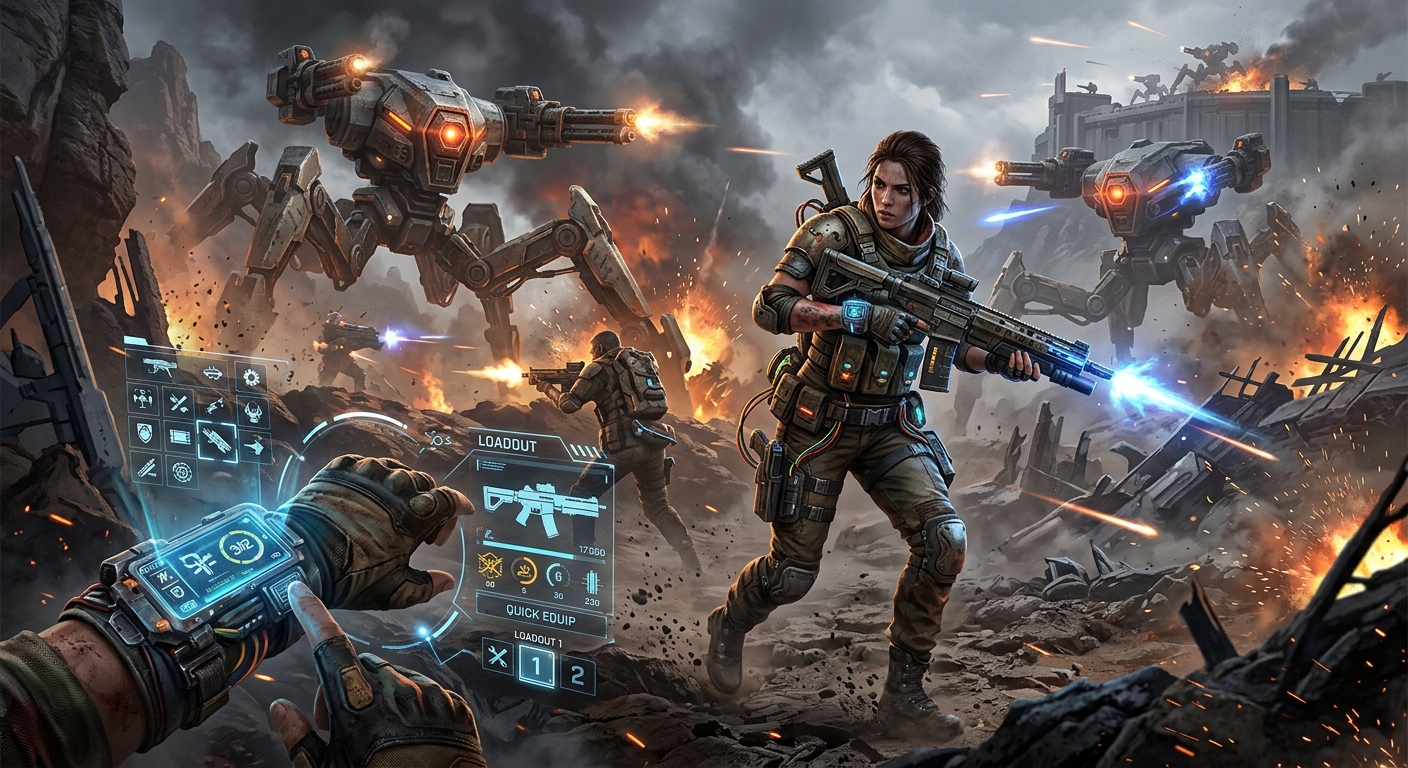
One of the most interesting conversations around Arc Raiders has little to do with guns, enemies, or the battlefield itself. Instead, it centers on something far more ordinary: how long it takes to prepare before you even start playing. In a game where every run involves choosing gear, checking equipment, and getting ready to head out, the amount of time spent in menus can shape the whole experience. That is why the discussion around custom loadouts has resonated so strongly with players.
Developers at Embark Studios have acknowledged that players are asking for ways to make loadout setup smoother. The request is simple on its face, but the underlying issue is more important than it first appears. When a game asks players to repeat the same setup steps again and again, even a small amount of friction can become a reason to stop playing for the night. In a genre built around momentum, convenience is not a luxury; it is part of the design.
The real problem: menu fatigue
Players often say they want custom loadouts because they do not want to perform the same sequence of clicks before every match. That complaint may sound minor, but it reflects a bigger truth about modern game design: the best systems disappear into the background. If it takes too much effort to rebuild a preferred kit each time, the game begins to feel as though it is asking for work before offering fun.
In shooters and extraction-style games, preparation is part of the loop. You choose weapons, pick utility items, and decide how risky or cautious you want to be. Yet the more often those choices are repeated manually, the more they feel like chores rather than strategy. A well-built save system can preserve the tactical side of loadout planning while removing the repetitive parts that players have already solved for themselves.
Why developers hesitate to add convenience features too early
It is easy to assume that a feature like saved loadouts should be straightforward, but game teams rarely make these decisions in isolation. Every quality-of-life feature has to be weighed against engineering time, interface complexity, balance concerns, and the overall roadmap. If a studio is still refining core systems, a quality-of-life request may sit lower on the list even when the team agrees that it is useful.
That appears to be the situation here. The broader takeaway is not that the feature is unimportant, but that development priorities often focus first on stability, pacing, and the larger gameplay foundation. Once those pieces are secure, convenience features become easier to justify and implement well. In other words, a team may know what players want without being ready to deliver it immediately.
What players gain from saved kits
Saved loadouts do more than reduce annoyance. They support experimentation, help different playstyles coexist, and lower the barrier to jumping into a match on short notice. A player who only has time for one or two runs is far more likely to log in if their favorite gear setup is ready to go with minimal effort.
There is also a psychological benefit. When setup feels easy, players are more willing to try new weapons or make changes between sessions. If changing equipment feels tedious, most people stick with one familiar arrangement or choose the fastest option available. That is one reason why convenience features often have a larger effect than expected: they change not just efficiency, but behavior.
- Less repetition: players avoid rebuilding the same kit every match.
- More flexibility: it becomes easier to keep different setups for different missions or moods.
- Better session flow: the time between deciding to play and actually playing gets shorter.
- Lower friction for casual play: even short sessions feel worthwhile when prep is quick.
How convenience features shape extraction shooters
Extraction shooters rely on tension, risk, and the possibility of loss. That makes every decision about gear feel meaningful. But meaningful does not need to mean time-consuming. In fact, the genre may benefit more than most from shortcuts that reduce administrative busywork. If the risk is in the mission, not the menu, the game can preserve its intensity without wasting the player’s energy.
That balance is especially important in a game like Arc Raiders, which mixes cooperative play, third-person action, and resource management. A loadout system that respects the player’s time would fit naturally with that structure. It would let players spend their attention on scouting, positioning, and survival rather than on recreating the same inventory setup every run.
| Design goal | Why it matters |
|---|---|
| Speed | Gets players into matches faster and reduces downtime. |
| Consistency | Helps users return to known builds without mistakes. |
| Choice | Makes it easier to swap between specialized kits. |
| Accessibility | Reduces friction for players who struggle with repetitive interface tasks. |
The hidden value of a good interface
UI design is often judged only when it goes wrong. Players do not usually celebrate menus that simply work; they notice menus that waste time. But in a demanding action game, the interface is part of the experience, not a separate layer. A clean, fast, intuitive system can make the difference between “I might play another round” and “I am done for the evening.”
That is why a request for custom loadouts is more than a minor quality-of-life suggestion. It is really a request for a smoother relationship between planning and action. The best interfaces keep the player in the rhythm of the game. When they do not, every extra step becomes a reminder that the fun is waiting behind a wall of menus.
Why some players use the fastest option available
Even when games provide elaborate customization, many players still reach for the easiest available preset. That is not laziness; it is a practical response to time and attention. If a free or default loadout gets someone into a match more quickly, it can become the preferred choice simply because it reduces hassle. This behavior reveals something important: players often value momentum above perfection.
For developers, that should be a useful signal. If a large portion of the audience is choosing the path of least resistance, the design likely contains an opportunity to improve the route without changing the challenge. A faster setup flow does not cheapen the game; it simply ensures the interesting decisions happen where they belong.
What an ideal loadout system could look like
A well-designed loadout system does not need to be complicated. In fact, the best version might be the simplest one: a few saved presets, fast swapping, and a clear way to edit gear without losing track of what is equipped. If a game can preserve player intention while trimming repetitive steps, it has probably found the right balance.
Possible improvements could include:
- Multiple saved presets for different roles or missions
- One-click re-equip for a previously used kit
- Visual indicators showing what changed since the last save
- Clear separation between standard gear and temporary experiment setups
- Fast access from the pre-match screen without extra navigation
These ideas are not just about speed. They are about reducing confusion, avoiding mistakes, and supporting more confident play. A player should be able to understand their options at a glance and get back to the action without feeling like they need to memorize a manual.
What this says about player expectations today
Modern players expect games to respect their time. That expectation has grown across the industry, not only in competitive shooters but in role-playing games, survival titles, and online service games. Features once considered extras are now part of the baseline standard for user experience. If a title makes frequent tasks feel slow, the audience is far less patient than it used to be.
The discussion around Arc Raiders shows that players are paying close attention to every part of the loop, not just the combat. They want systems that support the fun rather than compete with it. And when developers acknowledge that expectation openly, it creates a promising foundation for future updates, even if the feature does not arrive immediately.
Looking ahead without overpromising
It is reasonable to want saved loadouts sooner rather than later, but it is also wise to recognize that game development follows priorities. Teams often need to build the core experience first, then refine the edges once the foundation is stable. The important part is that the issue has been noticed, discussed, and understood from inside the studio.
That awareness matters because it suggests a shared language between players and developers. Players are not asking for something random; they are asking for a more elegant version of a process the game already requires. When that kind of request is heard clearly, it becomes much more likely that the eventual solution will feel natural rather than bolted on.
Frequently asked questions
Why are custom loadouts so popular in shooters?
Because they reduce repetitive setup work, help players switch between builds quickly, and make it easier to jump into a session with the right equipment already prepared.
Do convenience features make games less challenging?
Not usually. They tend to remove unnecessary friction rather than core difficulty. The challenge remains in the match itself, where it matters most.
Why might developers delay a requested feature?
Teams often have to focus on core systems, balance, performance, and stability before they can spend time on quality-of-life improvements.
What is the biggest benefit of faster loadout setup?
The biggest benefit is better flow. Players spend less time preparing and more time doing the thing they actually came to do: play the game.
References
- Arc Raiders lead is “super aware” of demand for custom loadouts — GamesRadar. 2026-05-20. https://www.gamesradar.com/games/third-person-shooter/arc-raiders-lead-is-super-aware-of-demand-for-custom-loadouts-that-save-us-100-clicks-admits-he-sometimes-runs-a-free-loadout-because-he-cant-be-bothered-making-one/
- ARC Raiders — Embark Studios. 2026-05-20. https://arcraiders.com/
Similar Articles




Read full bio of Sneha Tete