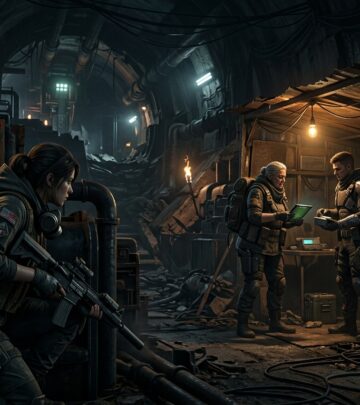
Arc Raiders Canto SMG Blueprint Guide
Learn how to unlock, craft, and optimize the Canto SMG blueprint in Arc Raiders for lethal close‑quarters firepower.
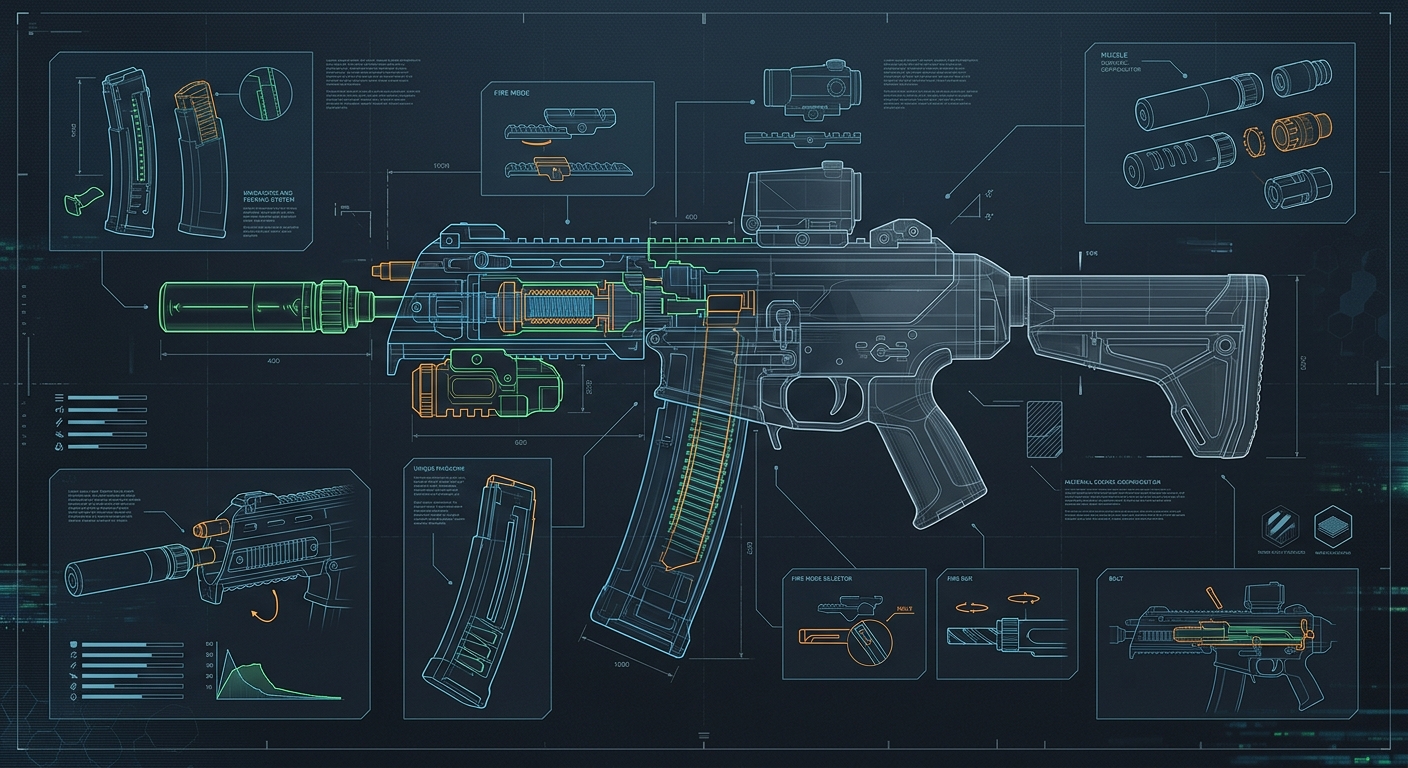
The Canto submachine gun has quickly earned a reputation among Arc Raiders players as one of the strongest close‑quarters weapons in the game. Its blistering rate of fire and high damage output can shred hostile raiders and ARC machines alike, but unlocking and crafting it takes some understanding of how map modifiers, loot caches, and crafting materials interact.
This guide walks you through how to find the Canto blueprint, which materials you need to build it, where to farm those resources efficiently, and how to set up strong Canto builds for different playstyles. All of the information here is based on the in‑game mechanics of Arc Raiders and general extraction shooter systems, not on any particular player or influencer.
Understanding the Canto SMG in Arc Raiders
Before you start hunting for the blueprint, it helps to understand what the Canto actually is and where it fits in your arsenal.
Weapon role and identity
The Canto is a medium‑ammo submachine gun designed for short to medium range engagements. Compared to lighter SMGs, it typically hits harder per shot, but kicks more and rewards controlled firing instead of mindless spraying.
- Ammo type: Medium rounds
- Preferred range: Close to mid‑range firefights
- Strengths: High damage throughput, fast time‑to‑kill when controlled
- Weaknesses: Noticeable recoil, demands careful aim and recoil management
In practical terms, the Canto shines when you aggressively clear buildings, defend extraction points, or pressure enemy squads around choke points. It is less reliable for long‑range duels or situations where you must tap‑fire across open terrain.
When the Canto makes sense in your loadout
The Canto is most valuable when you pair it with a weapon that covers its weaknesses. Consider the following loadout concepts:
- Canto + DMR/marksman rifle: Use the rifle for long sightlines and swap to the Canto indoors or during pushes.
- Canto + shotgun: All‑in close‑quarters setup for urban or heavily enclosed maps, ideal if you expect a lot of PvP around objective buildings.
- Canto + utility launcher: Bring explosives or crowd control for robot packs while keeping the Canto as your primary anti‑raider gun.
How to Unlock the Canto Blueprint
Arc Raiders uses a blueprint system to gate powerful gear. You must first obtain the Canto blueprint as loot before you can craft the weapon in your base. While the exact loot tables are tuned by the developers and may change with patches, there are consistent patterns to how the Canto blueprint appears.
Targeting Hurricane map modifiers
Player reports and in‑game observation indicate that the Canto blueprint tends to drop from First Wave Raider Caches in missions with the Hurricane map modifier. Hurricane variants typically increase environmental danger and change enemy behavior, but in exchange they often boost loot quality. That makes them prime hunting grounds for rare weapon blueprints like the Canto.
Focus your search on:
- Maps currently rolled with Hurricane: Check the mission selection interface and prioritize any deployment marked with the Hurricane modifier.
- Raider‑heavy areas: Zones dominated by human raiders instead of ARC machines tend to contain more Raider Caches and weapon‑centric loot.
Spaceport and other reported drop locations
Many players report finding the Canto blueprint specifically on the Spaceport map while a Hurricane modifier was active. However, it is not believed to be exclusive to Spaceport, and the blueprint has been observed in other Hurricane maps as well. Treat Spaceport as a strong option, not the only one.
You are looking for First Wave Raider Caches, which are high‑value loot containers guarded by hostile raiders or placed in risky locations. The Canto blueprint can drop randomly from these caches, so repeated runs are expected.
Efficient blueprint farming strategy
Because the blueprint is a random drop, your goal is to maximize the number of Raider Caches you open per hour while minimizing downtime between raids. A simple loop could look like this:
- Queue into a Hurricane mission, prioritizing Spaceport or other raider‑dense maps.
- Move quickly between known cache spawn locations, avoiding drawn‑out fights when possible.
- Open every First Wave Raider Cache you can safely reach.
- Extract as soon as you feel the risk outweighs potential reward, then repeat.
Extraction shooters reward risk, but they also punish greed. Suspending a run after opening several caches is often more efficient than trying to clear the entire map and losing everything to a late‑game ambush.
Crafting Requirements for the Canto SMG
Once you obtain the blueprint, the Canto becomes craftable at your base crafting station. As with other high‑tier weapons, you will need a mix of generic components and rarer parts. Based on in‑game descriptions and player experience, the Canto typically calls for components such as:
| Component | Typical Sources | Notes |
|---|---|---|
| Advanced Mechanical Components (x2) | Mechanical zones; Matriarch and Queen enemies; crafting via Refiner level 2 | High‑tier mechanical loot; may require several runs if you do not craft it. |
| Magnets (x5) | Vendor Celeste; salvaging items; Exodus zones | Mid‑tier resource used across multiple recipes; easy to stockpile if you salvage diligently. |
| Medium Gun Parts (x3) | Raider and Security zones; Refiner level 2 (with relevant blueprints) | Core weapon component for many medium‑ammo weapons. |
Preparing your base and Refiner
To craft some of these materials, you will need a Refiner upgraded to level 2. Investing in base upgrades early significantly smooths out the grind for all advanced weapons, not just the Canto. This mirrors broader crafting design in modern extraction shooters, where base progression and crafting depth are used to drive long‑term engagement.1 Ensuring your infrastructure is in place before you farm specific parts will save you time later.
Resource farming tips
To gather the required components efficiently, consider the following approaches:
- Route‑based farming: Learn a few quick routes through Mechanical and Exodus zones that consistently yield resource nodes and chests. Repeating short, optimized runs is more efficient than long, unfocused expeditions.
- Targeted enemy farming: Mechanical bosses like Matriarchs and Queens have a chance to drop Advanced Mechanical Components. Hunt them specifically when you need these rare parts.
- Vendor usage: Keep an eye on vendors like Celeste, who can sell magnets and other mid‑tier components. Converting currency into time savings is often worth it once your overall income stabilizes.
- Salvage discipline: Salvage surplus weapons and gear you do not intend to use. Many mid‑tier materials come primarily from dismantling rather than raw node harvesting.
Building the Canto: Attachments and Playstyles
The Canto’s raw stats are only part of the story. Attachments, converters, and your own mechanical skill all shape how the weapon performs. Because recoil is a defining trait, most strong Canto builds revolve around stabilizing the weapon and extending its effective range.
Control‑focused Canto build
This setup emphasizes consistent, accurate bursts and is suitable for most players:
- Muzzle: Compensator or muzzle brake to mitigate vertical and horizontal recoil.
- Grip: Angled or recoil‑reducing grip to further stabilize the weapon during sustained fire.
- Magazine: Extended magazine for fewer reloads in close‑quarters fights.
- Converter (if available): Stability‑oriented converter rather than pure damage, giving you a more forgiving feel.
With this configuration, treat the Canto as a burst‑fire SMG. Fire in short, controlled bursts while tracking targets. The goal is to land a high percentage of your shots instead of relying on volume alone.
High‑risk, high‑damage Canto build
If you are comfortable managing recoil and want maximum damage, you can lean into damage‑boosting attachments and converters:
- Muzzle: Compensator with less focus on stability, or a device that improves bullet velocity.
- Grip: Lightweight or rapid‑handling grip for faster aiming and weapon swapping.
- Magazine: Extended mag remains valuable for aggressive pushes.
- Converter: Damage‑boosting or kinetic converter that increases output at the cost of stability.
This style rewards quick reactions and confident tracking. You will want to:
- Pre‑aim common angles before peeking.
- Use cover aggressively to reset recoil and reload safely.
- Commit to fights decisively rather than spraying at uncertain targets.
Adapting to PvE vs PvP
The optimal Canto configuration also depends on whether you are focused on PvE robot encounters, PvP against other raiders, or a mix of both:
- Primarily PvE: Lean into damage, magazines, and converters that help chew through mechanical health bars. Robots often move predictably, so slightly higher recoil is less punishing.
- Primarily PvP: Prioritize recoil control and handling. Human opponents strafe, crouch, and use cover intelligently, making accuracy and responsiveness more important than raw DPS.
- Hybrid play: Aim for a balanced build with at least one stabilizing attachment and one damage‑oriented option.
General Tips for Running the Canto in Raids
Regardless of your exact attachment choices, there are a few universal habits that will help you get the most from the Canto.
Manage recoil proactively
Because the Canto can kick hard, especially in damage‑oriented setups, you should:
- Practice burst control in low‑risk fights or on low‑value enemies.
- Pull slightly down and towards the opposite direction of horizontal sway as you fire.
- Avoid holding down the trigger for more than a second unless you are at very close range.
These skills generalize across shooters; research on motor skill learning suggests that short, focused practice sessions improve accuracy more than long, unfocused play.2
Play around your effective range
Do not try to turn the Canto into a long‑range beam. Instead:
- Use cover, terrain, and flanking routes to close the distance.
- Rely on your secondary for fights that occur beyond comfortable Canto range.
- Choose approach angles that force enemies into close‑quarters, such as doorways and tight corridors.
Use sound and positioning to your advantage
Extraction shooters reward information and positioning at least as much as mechanics. To maximize your chances of extracting with your Canto intact:
- Limit unnecessary gunfire: Firing the Canto loudly and often will attract other raiders, who may attempt to third‑party your fights.
- Control high‑traffic areas: Strong spots with good sightlines over objectives or extraction zones let you leverage the Canto’s close‑range power while minimizing surprise flanks.
- Communicate in squads: Coordinate with teammates so your Canto user takes the lead in entries and close‑quarters pushes, while others cover longer angles.
Risk Management and Progression
Because Arc Raiders is an extraction shooter, carrying a crafted Canto into a raid always involves risk. You could lose the weapon on a failed extraction. That risk is a feature of the genre and is central to why these games feel tense and rewarding.3
Protecting your investment
Once you have crafted a Canto, consider the following guidelines:
- Do not bring your best gear every time: Reserve fully kitted Cantos for missions where you intend to fight for high‑value objectives.
- Use budget builds while learning: If you are still getting comfortable with the Canto’s recoil, bring cheaper attachments and armor until your survival rate improves.
- Stash multiples: When resources allow, craft more than one Canto so a single loss does not set you back completely.
Incremental difficulty approach
Adopting a gradual progression path can help you improve without constant losses:
- Start with low‑risk raids using simpler weapons while you learn map layouts and cache locations.
- Introduce the Canto once you feel confident reaching and looting caches consistently.
- Only then start pushing into Hurricane missions with full Canto builds and high‑end armor.
This scaffolded learning approach mirrors educational research showing that gradually increasing challenge while maintaining a reasonable success rate is effective for skill development.4
Frequently Asked Questions
Is the Canto blueprint locked to the Spaceport map?
No. While many players report finding the Canto blueprint on Hurricane Spaceport missions, it is not believed to be exclusive to that map. Any mission with the Hurricane modifier and First Wave Raider Caches can potentially yield the blueprint, though drop rates are not publicly disclosed.
Do I need a specific level to get the Canto blueprint?
There is no widely confirmed account‑level requirement for the blueprint itself, but practical experience suggests you should be comfortable surviving Hurricane missions before farming it. That usually means having a reasonably upgraded base, refined gear, and familiarity with how raids play out.
Can I craft Canto components without Refiner level 2?
You can sometimes find Advanced Mechanical Components and Medium Gun Parts as loot, but without a level 2 Refiner you will rely heavily on luck. Upgrading the Refiner gives you more control over your progression by letting you convert generic resources into specific components.
Is the Canto worth using over early‑game SMGs?
In most situations, yes. Compared to starter SMGs, a properly built Canto offers higher damage potential and better flexibility at mid‑range. However, it is less forgiving; if you struggle with recoil, you might prefer a more stable weapon until your aim improves.
Will future patches change how to get the Canto?
Balance updates and loot table adjustments are common in live service games. Developers often tweak weapon performance and acquisition methods to keep the meta healthy, as documented in patch‑note histories for similar shooters.5 If a major update lands, re‑check in‑game descriptions and patch notes to ensure your farming methods are still optimal.
References
- Game design patterns for loot and rewards in multiplayer games — Nordic Game Conference / Mark Brown. 2020-05-27. https://www.gdcvault.com/play/1027112
- The effects of practice on motor learning — Schmidt, R. A., & Lee, T. D., Human Kinetics. 2019-01-15. https://us.humankinetics.com/products/motor-learning-and-control-6th-edition
- Why players love high-stakes gameplay — The Economist (Game Theory column). 2021-03-06. https://www.economist.com/graphic-detail/2021/03/06/the-science-of-risk-and-reward-in-video-games
- Optimizing challenge and skill in games: Flow theory — Csikszentmihalyi, M., Springer. 2014-06-19. https://link.springer.com/chapter/10.1007/978-94-017-9088-8_16
- Live game balancing and patching practices — GDC (Game Developers Conference) Summit Panel. 2022-03-23. https://www.gdcvault.com/play/1027742
Similar Articles






Read full bio of Sneha Tete