
Arc Raiders Flashpoint: Chaos, Close Scrutiny, and Co‑op Mayhem
How Flashpoint’s brutal new map condition turns Arc Raiders into a tense, Helldivers‑style warzone of constant pressure.
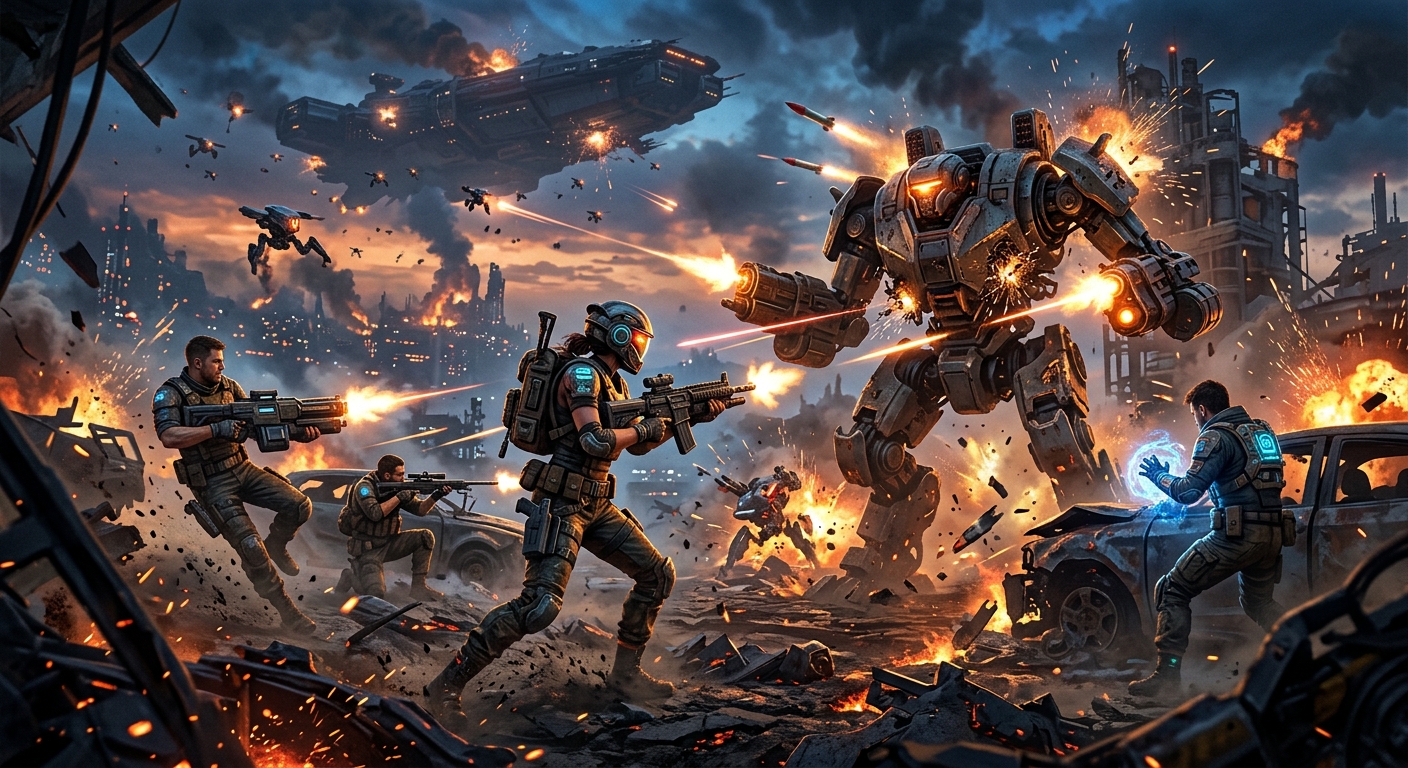
The Flashpoint update has transformed Arc Raiders from a tense co-op shooter into something closer to a rolling disaster movie. At the heart of this change is a new map condition that players are already calling a kind of digital “hell on Earth”—a mode where visibility plummets, enemies feel endless, and every decision can end in a squad wipe. For many, it recalls the infamous Malevelon Creek from Helldivers 2, a now-legendary hotspot associated with brutal difficulty and unforgettable war stories.
This article breaks down why the new condition is such a shock to the system, how it fits into Arc Raiders’ evolving design, and what you can do to actually survive long enough to extract. Along the way, we’ll look at the update’s broader impact on co-op and PvPvE balance and why chaos may be exactly what Arc Raiders needed.
Flashpoint in Context: Where Arc Raiders Stands Now
Arc Raiders, from Embark Studios, is a free-to-play third-person shooter that blends co-op PvE with high-stakes PvP encounters. Squads drop onto a hostile planet surface, scrounging for gear while battling robotic Arc enemies and dealing with other players who might help, ignore, or ambush them.
The Flashpoint update sits at a critical moment for the game’s life cycle:
- Retention pressure: Competitive shooters and co-op games continually add fresh challenges to keep players engaged over time, often via seasons, operations, and limited-time modes, a pattern seen in games like Apex Legends and Destiny 2.1
- Identity building: Arc Raiders is still carving out its identity among other co-op shooters. Memorable, punishing scenarios are one way to generate community stories and long-term attachment, as shown by how certain maps or missions become touchstones in shooter communities.2
Flashpoint aims to deliver that kind of defining experience through a new set of mechanics and map conditions, the most dramatic of which is the one turning matches into total chaos.
The New Map Condition: Designed for Pure Pressure
Although the update introduces multiple tweaks and additions, the standout feature is a map-wide condition (often referred to in patch notes and community discussion as Close Scrutiny) that fundamentally twists the pacing of a match. Unlike simple weather effects, this condition reshapes how you move, fight, and even think about risk.
Main Effects of the New Condition
Different lobbies can roll different map conditions, but this one is tuned around cranking tension to extremes. Typical characteristics include:
- Hostile density spikes: Enemy patrols escalate quickly. The feeling is less “skirmish” and more “siege.” You’ll face frequent overlapping pulls, forcing you to pick fights carefully or risk being overwhelmed.
- Visibility punishment: Environmental effects like smoke, haze, or lighting shifts make it harder to read the battlefield, encouraging close-range chaos and raising the likelihood of surprise attacks.
- Resource scarcity and redistribution: While basic loot may be scarcer, special Arc-grade rewards and rare caches become more common in dangerous zones. The economy nudges players into riskier areas by making them disproportionately profitable.
- Reduced safe downtime: The map feels “always hot,” with fewer quiet pockets to safely regroup, heal, or manage inventory.
These elements combine to create a match tempo where even routine tasks—looting, repositioning, reviving a teammate—are riskier than normal. It doesn’t just buff enemies; it changes the way you approach the entire session.
Malevelon Creek Memories: Why Players Think of Helldivers 2
Within hours of the condition going live, players began comparing it to Malevelon Creek, the notorious battlefield from Helldivers 2 that quickly built a reputation for grinding squads into the dirt. In Helldivers 2, that map became a community meme and rallying point, representing the game’s willingness to be punishing and chaotic.
Shared DNA Between the Two Experiences
| Aspect | Arc Raiders Flashpoint Condition | Helldivers 2 Malevelon Creek |
|---|---|---|
| Tone | Bleak, high-tension warzone with near-constant threats | Infamously brutal frontline that became a meme for suffering |
| Enemy Pressure | Frequent overlapping engagements; extraction is difficult | Dense spawns and aggressive enemies that punish mistakes |
| Player Stories | Clutch escapes, extraction disasters, sudden squad wipes | Legendary last stands and chaotic defeats shared online |
| Design Purpose | Create a memorable, high-risk map condition that stands out | Serve as a challenging hotspot defining the game’s difficulty |
Both experiences tap into what game researchers sometimes describe as “edge-of-chaos” design, where difficulty is tuned to hover just at the boundary between mastery and failure. This threshold is known to increase excitement and engagement when executed well, providing intense moments without feeling arbitrary.3
New Threats and Tools: How Flashpoint Shifts the Sandbox
The Flashpoint update doesn’t simply add a difficult condition and call it a day. It also introduces new weapons, a new Arc threat variant, and additional mission content like the Operation: Close Scrutiny arc. These pieces work together to reshape how squads handle the battlefield.
Weapons Built for Chaos
While the exact stats and meta will evolve as players experiment, the broad design intent is clear: new guns and gear give squads better tools to survive when things spiral out of control.
- Mid- to long-range rifles: Designed to pick off key targets through smoke or at unpredictable ranges, helping players manage threat density before it gets out of hand.
- High-burst options: New weapons capable of quickly deleting high-priority enemies or clumped foes, rewarding squads that coordinate focus fire.
- Utility-focused gear: Explosives, deployables, or support items aimed at area denial and crowd thinning, crucial when extraction zones become kill-boxes.
A New Arc Threat: Vaporizer-Level Problems
Flashpoint also adds a new Arc threat type that serves as a mobile pressure generator. While the precise in-game name and mechanics may vary, its role is clear: force squads out of entrenched positions and punish static play.
Expect this enemy type to:
- Control space: It may project dangerous zones or persistent damage fields, restricting safe movement paths.
- Punish crowding: Squads that huddle too tightly around objectives or cover could find themselves instantly punished.
- Complicate extraction: When combined with the map condition’s visibility and density changes, this new Arc threat turns extraction zones into some of the most dangerous spaces in the match.
Operation: Close Scrutiny and the Arc’s “Magic” Systems
Alongside the new condition, Flashpoint introduces Operation: Close Scrutiny, a themed operation that ties into the broader narrative of Arc surveillance and escalating hostilities. One intriguing element—highlighted in earlier interviews and coverage—is how the Arcs effectively “cheat” under the hood using what developers describe as a kind of “magic” movement system.
In a GamesRadar interview, Embark staff explained that certain Arc behaviors rely on internally labeled “magic” movement, allowing enemies to bypass obstacles in ways standard physics wouldn’t permit.4 This is less literal sorcery and more about AI navigation shortcuts that keep pressure on players:
- Dynamic pathfinding: If players barricade routes, AI can find or create alternative access, stopping exploits that trivialize encounters.
- Surprise vectors: Enemies can appear from angles that feel less predictable, making each push or retreat riskier.
- Match pacing control: The system helps maintain the sense that you’re never entirely safe, even in positions that look defensible.
While this may sound unfair at first glance, such techniques are common in modern game AI. Developers often use non-physical shortcuts or teleports to keep enemies engaging and to prevent players from breaking level design. Academic work on game AI notes that maintaining challenge often requires “cheating” behaviors that are carefully hidden from players to preserve immersion.5
Loot, Risk, and the New Economy of Danger
One of the most interesting aspects of the new map condition is how it rewires risk versus reward. In standard Arc Raiders missions, you might take a moderate risk for moderate loot, with some zones clearly labeled as high-risk/high-reward. Under Close Scrutiny, the lines blur.
How Rewards Shift Under the New Condition
While exact values depend on tuning, the general pattern looks like this:
- Common loot reduced: Daily essentials like basic ammo or low-tier gear are less abundant, making each bullet more precious.
- High-tier Arc loot more concentrated: Powerful rewards appear in contested or exposed areas, especially zones with heavy Arc activity or critical objectives.
- Keys and gates simplified: Certain gated mechanics (like locked doors) may be removed or streamlined, emphasizing open-field conflict over puzzle-like progression.
This design dovetails with research on player motivation showing that many players enjoy voluntary risk-taking when the reward feels meaningful and the danger is clearly communicated.6 Close Scrutiny leans into that by making it very obvious when you’re voluntarily stepping into the fire for better loot.
Practical Survival Tips for Close Scrutiny Runs
Shiny new guns and Arc-grade loot are great, but they won’t save you if your squad plays like it’s still on a normal map. To survive this heightened chaos, you’ll need to adapt.
Squad Composition and Roles
Consider organizing your squad around complementary roles rather than everyone running similar builds:
- Frontliner: Carries durable armor and high-burst weapons, leads pushes, and draws aggro.
- Controller: Focused on crowd control—grenades, suppression, and zoning tools.
- Designated Spotter: Uses range and heightened situational awareness to call out threats in low visibility.
- Support/Utility: Packs heals, ammo drops, and tools that enable quick repositioning.
Movement and Positioning
Under Close Scrutiny, positional mistakes are punished hard.
- Don’t turtle for too long: Holding a strong position is useful, but the longer you stay, the more pressure accumulates—especially with the new Arc threat in play.
- Rotate early, not late: Move toward objectives and extraction ahead of the timer. Waiting until the last minute guarantees you’ll be sprinting through stacked enemy spawns.
- Use layered cover: Avoid “dead-end” corners. Always have a backup retreat line in case you’re forced out.
Communication and Decision-Making
In a mode built on chaos, clarity is one of your strongest tools.
- Call your priorities: Identify elite enemies, snipers, or the new Arc threat type immediately so the squad can focus fire.
- Pre-plan extractions: Decide on a preferred extraction route early, then adjust as intel changes.
- Set a bailout rule: Agree on a threshold (no more respawns, low ammo, etc.) where the team decides to cut losses and extract rather than pushing deeper.
Community Impact: Why Chaos Might Be Healthy
From a community perspective, Flashpoint’s map condition and Operation: Close Scrutiny are about more than just a difficulty spike—they’re tools for building shared stories. Games with strong co-op communities often revolve around famous missions, raids, or maps that everyone has an opinion about.
That can be powerful for long-term health:
- Shared identity: Players who endure a “hell map” together often feel a stronger sense of camaraderie and belonging.
- Content longevity: A single, well-designed challenge can sustain interest for weeks or months as players chase different strategies and builds.
- Streaming and discoverability: Chaotic, high-stakes gameplay tends to generate compelling streams and clips, which can draw new players into the ecosystem.
Of course, balance is key. If difficulty tips into pure frustration or feels unfairly “cheaty,” players can bounce off. But when tuned properly, the kind of near-unmanageable chaos Flashpoint aims for can become the backbone of a game’s mythology—much like Malevelon Creek did for Helldivers 2.
Frequently Asked Questions
Is Close Scrutiny always active in Arc Raiders matches?
No. The new condition is one of several possible map-wide modifiers that can be active in a given match. Some lobbies may roll more forgiving conditions, while others spawn the high-chaos variant associated with Flashpoint.
Do I need specific gear to handle the new condition?
You don’t need a single meta loadout, but having at least one player with strong crowd control tools and another with reliable mid- to long-range damage significantly improves your survival chances. Utility items that help with repositioning and reviving are also important.
How does the new Arc threat differ from existing enemies?
The new threat type focuses on space control and pressure. Instead of just dealing damage, it shapes where you can safely stand or move, making it particularly dangerous when layered over low visibility and high enemy density.
Can I play Flashpoint content solo?
Arc Raiders is fundamentally designed around co-op squads, and the Flashpoint condition is tuned with team play in mind. While solo runs may technically be possible, they will be considerably more punishing, and coordinating with at least one other player is strongly recommended.
Why are players comparing this update to Helldivers 2?
The comparison largely comes from the emotional feel of the new condition: dense enemy spawns, tough extractions, and an overall sense of being constantly under siege, similar to what players experience on Helldivers 2’s most infamous maps.
Final Thoughts: Embracing the Firestorm
The Flashpoint update shows Embark Studios leaning into what makes Arc Raiders unique: tense, unpredictable encounters where the environment, AI, and other players all conspire to push you to your limits. The new map condition doesn’t just add difficulty for its own sake; it reshapes how you think about movement, loot, and survival, carving out a niche for Arc Raiders in a crowded field of co-op shooters.
If you’re willing to endure the chaos, Close Scrutiny offers something rare: matches you’ll still be talking about long after the run ends—whether you extract with a backpack full of Arc loot or leave your gear scattered on a beach that might as well be another Malevelon Creek.
References
- Games as a Service: Understanding Free-to-Play Games — UK Competition and Markets Authority. 2019-09-19. https://www.gov.uk/government/publications/online-games-auditing-and-compliance-outcomes/games-as-a-service-understanding-free-to-play-games
- Understanding Esports and Their Ecosystem — MIT Game Lab. 2020-02-10. https://gamelab.mit.edu/esports-intro/
- Why Do We Play Video Games? The Role of Intrinsic and Extrinsic Motivation in Gaming — Przybylski, Rigby & Ryan, Motivation and Emotion. 2010-03-01. https://doi.org/10.1007/s11031-010-9174-7
- Arc Raiders Has a Hidden Magic System That Helps the Arc Cheat — GamesRadar. 2024-03-18. https://www.gamesradar.com/games/third-person-shooter/arc-raiders-has-a-hidden-magic-system-that-helps-the-arc-cheat-and-youre-not-supposed-to-notice/
- Artificial Intelligence and Games — Georgios N. Yannakakis & Julian Togelius. 2018-04-30. https://gameaibook.org/
- Affective Ludology, Flow and Immersion in a First-Person Shooter: Measurement of Player Experience — Nacke & Lindley, Loading…. 2008-01-01. https://journals.sfu.ca/loading/index.php/loading/article/view/52
Similar Articles





Read full bio of medha deb