Arc Raiders Flashpoint Update: Matchmaking, Loadouts, and Loot
A deep look at how Arc Raiders’ Flashpoint update reshapes matchmaking, loadouts, and the risk–reward loop.
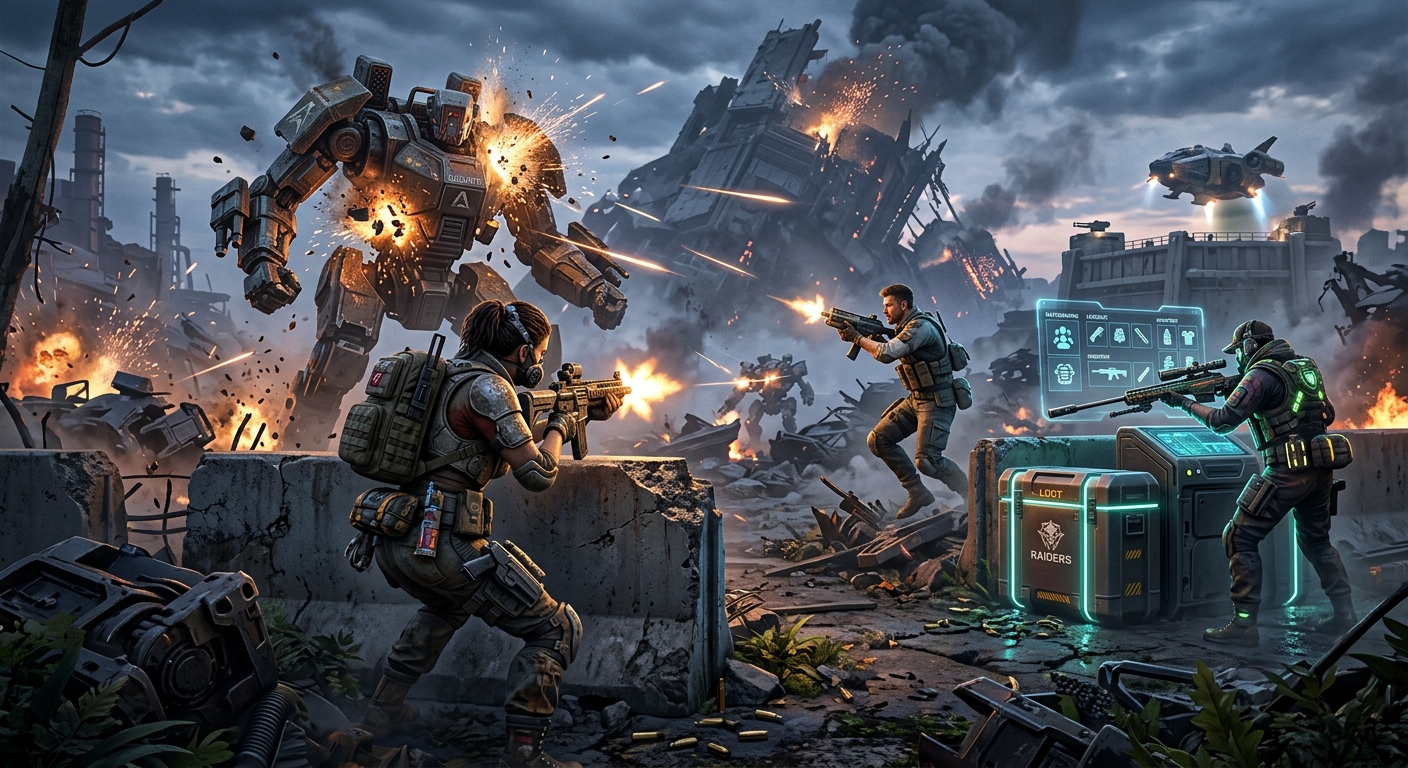
The Flashpoint update for Arc Raiders is more than just a routine patch. It touches matchmaking, player loadouts, enemy behavior, and the in-game economy in ways that directly address long-standing frustrations. Instead of simply dropping new guns and minor balance tweaks, the update targets how, when, and where players drop into a raid, and how rewarding those raids feel.
This article breaks down the most important changes introduced by the Flashpoint update, focusing on:
- Why custom loadout players are now more likely to join fresh servers
- How free loadouts are repositioned as a safety net instead of a main option
- What new map conditions, traders, and loot adjustments mean for progression
- How ARC enemies and map navigation tweaks alter the threat landscape
- Practical tips for getting the most out of the new systems
Matchmaking Overhaul: Prioritizing Custom Loadouts
One of the headline features of the Flashpoint update is a targeted change to matchmaking logic. Players who bring custom loadouts into a raid are now more likely to be placed into a fresh server rather than dropped into a match that is halfway over.
Why This Matchmaking Bias Matters
Before the update, players frequently reported spawning into raids late, discovering that other players had already cleared key areas, opened locked rooms, or looted high-value locations. For players who invested time and resources into building their own kits, joining an almost-finished session felt like a waste of their gear and time.
The Flashpoint update introduces a bias in matchmaking that tries to solve this problem:
- Custom loadouts — Preferentially matched to newly created servers, maximizing available mission time.
- Free loadouts — More likely to be used to backfill ongoing raids that need additional players.
This does not guarantee a brand-new match every time, since matchmaking still has to consider region, ping, and population, but it substantially improves the odds.
Impact on Different Player Types
| Player Type | Old Experience | Post-Update Experience |
|---|---|---|
| Custom loadout players | Often dropped into partial raids; gear value undermined. | More likely to start from the beginning, maximizing raid time and payoff. |
| Free loadout players | Shared the same pool, sometimes starting late, sometimes early. | More frequently used as backfill, serving as a flexible, low-risk entry. |
| New / cautious players | Unpredictable session length and difficulty spikes. | Clearer separation between “investment” runs and “safety net” runs. |
Free vs Custom Loadouts: Reframing the Safety Net
The update doesn’t just tweak matchmaking; it also clarifies the philosophy behind free loadouts. Developer communication around the patch makes it clear that free loadouts are intended as a safety net for a player’s economy, not a permanent replacement for owned gear.
The Role of Free Loadouts
Free loadouts are there so that:
- You can keep playing even after losing valuable equipment in a bad raid.
- New or returning players aren’t locked out of the game when they’re short on resources.
- Backfilling into a nearly finished match doesn’t risk your best weapons.
This approach is consistent with general extraction-style game design, where some baseline kit is often provided to prevent players from being totally unable to participate after repeated losses. Comparable systems exist in other titles that emphasize persistent gear and risk-of-loss loops, which rely on a blend of earned equipment with some form of fallback gear so players are never entirely stuck.
Why Custom Loadouts Are Now More Rewarding
By steering custom loadout users toward fresh servers, the game aligns risk with opportunity. You commit resources, and the game responds by granting:
- Full mission time to explore, fight, and loot.
- Access to more event triggers and map conditions that may not occur late in the raid.
- Better control over your route since you’re present from the opening minutes.
This reinforces the idea that the best rewards should be tied to the greatest commitment and risk, a structure that researchers and designers often describe as essential to sustained player engagement and retention in live-service games.1
New Map Conditions and ARC Operations
Flashpoint also introduces new map conditions that alter how missions play out. One notable example, discussed by community coverage of the patch, is a condition that increases ARC-related loot while reducing the value of regular map rewards and disabling certain locked doors.
Risk–Reward Rebalanced by Map Conditions
These conditions act like modifiers that change the flavor and tempo of a raid:
- ARC-focused operations may reduce general loot but increase specialized rewards.
- Door and route changes limit obvious paths and force players to adapt.
- Spawn variation keeps enemy encounters from feeling predictable.
This type of design keeps repeat runs fresh and taps into a concept often found in roguelike and procedural games: varied conditions provide replayability and help the game avoid becoming a static, solved problem.
ARC Behavior and Targeting Improvements
The Flashpoint update includes several improvements to the behavior of ARC units (the game’s primary AI enemies). Patch notes and community breakdowns highlight changes such as:
- ARC becoming better at switching targets when priorities change.
- Adjustments so certain ARC types no longer instantly destroy themselves on impact when stunned.
- Faster recognition of nearby players, making close-range engagements more dangerous.
These modifications aim to make encounters feel more dynamic and fair. Instead of tunneling on one target or behaving erratically, enemies react more believably. Good AI behavior is crucial for maintaining immersion and challenge, and research in game AI design repeatedly underscores how target selection and state transition logic can dramatically alter perceived difficulty and fun.2
Enemy Variety, Spawn Logic, and Night Raids
On top of core AI improvements, the update adjusts where and how enemies appear. Spawn points for certain enemy types have been expanded, and the composition of ARC forces shifts more noticeably under specific conditions like night raids.
Expanded Spawn Points and Distribution
According to community analyses of the patch, players can expect:
- More sentinel spawn points across multiple maps, increasing the chance of patrols.
- Improved navigation for mobile enemy types, reducing pathfinding glitches.
- Greater variety of mid-tier enemies (such as leapers and bombardiers) during high-threat conditions.
The practical consequence is that map familiarity alone is less of a safety blanket. You might know the geometry of a location, but the mix and position of enemies can differ more dramatically from run to run.
Night Raid Conditions
Night raid conditions highlight the game’s atmospheric side and often increase tension. With Flashpoint:
- The enemy mix changes during night raids, making them feel distinct rather than merely “the same map in the dark.”
- Increased variety of opponents ensures that players can’t rely on a single pre-planned route or loadout for all night scenarios.
This aligns with best practices in encounter design, where variety and uncertainty are used to sustain engagement without simply inflating enemy health or damage values.
Loot Economy, Traders, and Locked Rooms
The Flashpoint update doesn’t ignore the game’s economy. Instead, it makes specific adjustments so that effort translates more clearly into rewards, especially through traders, locked rooms, and ARC loot.
Traders on Every Map (Under Certain Conditions)
One significant change is the broader presence of traders across maps, though they may still be tied to particular conditions or events. This offers:
- More frequent opportunities to offload loot and acquire needed materials.
- Additional incentives to explore more of the map instead of rushing exits.
- Alternative progression paths for players who prefer trading over pure scavenging.
In economy-driven multiplayer games, mid-run trading points help break up the intensity of combat while providing strategic decisions about what to keep, sell, or risk.3
Locked Room Rewards and Loot Value
The update also increases the loot value within locked rooms, scaling the rewards according to key rarity. This adds a clearer gradient of risk and reward:
- Common keys open rooms with modest but reliable loot upgrades.
- Rare keys become high-value assets, encouraging players to protect them carefully.
Additionally, loot spawns from specific environmental objects (like ruined husks) are improved in some conditions. Together, these changes make the act of exploring and using keys feel more meaningful and less like a gamble.
Crafting, Resource Transparency, and Time-to-Action
Beyond on-map changes, Flashpoint introduces UI and quality-of-life improvements around crafting and resources. One of the more impactful additions is a clearer interface that shows where to acquire missing materials when trying to craft items.
Guided Crafting: Finding Missing Materials Faster
When you attempt to craft something you can’t yet afford, the game now provides more explicit information on how to obtain the missing ingredients. This may include:
- Indicating which activities or map conditions drop the needed material.
- Highlighting whether the resource is available from traders.
- Showing multiple alternative paths to obtain the item, such as dismantling certain gear.
This approach is consistent with broader trends in live-service UI design. Many modern games now provide more direct guidance, helping players minimize downtime between deciding what they want and knowing what they need to do next.4
Shorter Downtime, Faster Back-to-Game Loop
By making the acquisition path for materials clearer, the game reduces guesswork and allows players to:
- Plan their next few raids more efficiently.
- Avoid wasted runs focused on the wrong activities.
- Return from the lobby or inventory screen back into active play more quickly.
For a game centered on repeated raids and incremental progression, this faster loop is crucial to retaining player interest session after session.
Practical Tips for Playing After Flashpoint
To take full advantage of the Flashpoint update, it helps to adjust how you approach loadouts, match selection, and map exploration.
1. Use Custom Loadouts for Serious Raids
Now that custom loadouts are more likely to get a fresh server, you should:
- Reserve your best gear for runs where you’re prepared to spend the full match time.
- Coordinate with friends so everyone brings custom kits when pushing for high-value objectives.
- Consider building specialized loadouts for different map conditions and night raids.
2. Embrace Free Loadouts as Recovery Tools
Don’t treat free loadouts as your default, but as a way to:
- Recover from a heavy loss without risking more of your stash.
- Backfill late-session raids where the stakes are lower.
- Experiment with routes and map layouts before committing better gear.
3. Follow the Crafting Guidance
Whenever you’re blocked by missing materials:
- Open the crafting interface to see where those materials drop.
- Prioritize activities that align with multiple resource goals.
- Use traders strategically to fill gaps instead of hoarding currency indefinitely.
4. Learn New Enemy Patterns and Night Raid Behavior
With smarter ARC behavior and varied spawns:
- Stay mobile; enemies are better at switching targets and punishing static positions.
- Expect different enemy compositions at night and build accordingly.
- Use verticality and cover thoughtfully, as navigational improvements make some enemies more reliable at closing distance.
FAQs About the Flashpoint Update
Does choosing a custom loadout guarantee a fresh server?
No. The matchmaking system biases custom loadout players toward fresh servers, but it still has to consider factors like region, latency, and current player population. You are more likely, not guaranteed, to start at the beginning.
Are free loadouts being removed or nerfed?
No. Free loadouts remain in the game and still function as a safety net. The main change is how matchmaking uses them and how the developer frames their intended purpose: emergency gear, not your primary progression path.
Do traders always spawn on every map now?
Traders are more widely available across maps, but their presence can depend on specific map conditions. It’s still worth scouting each raid for their locations rather than assuming they’ll always be in the same place under all circumstances.
How do map conditions affect loot?
Some conditions concentrate value into certain kinds of rewards. For example, an ARC-focused condition might reduce general loot value while significantly increasing ARC-specific rewards. Locked rooms and rare keys have also become more rewarding, especially under the right conditions.
What should new players do after this update?
New players should experiment with free loadouts to learn the maps and enemy behavior, then gradually shift into custom loadouts as they accumulate gear. Paying attention to the crafting guidance UI and traders will help accelerate progression without unnecessary risk.
Why Flashpoint Matters for Arc Raiders’ Future
The Flashpoint update addresses pain points that strike at the heart of Arc Raiders’ design: how fair it feels to risk gear, how consistent matchmaking experiences are, and whether the rewards truly justify the time spent. By:
- Biasing fresh servers toward players who bring custom loadouts,
- Clarifying the role of free loadouts,
- Improving enemy AI and spawn variety,
- Enhancing traders, locked rooms, and loot clarity,
- And guiding players more directly toward needed crafting materials,
the update makes the core loop feel more intentional and respectful of player investment. The more a game can closely align risk, effort, and reward, the more satisfying it becomes to log in for “just one more raid.”
References
- Understanding Your Players’ Motivation — Game Developer (GDC / Informa). 2021-03-18. https://www.gamedeveloper.com/design/understanding-your-players-motivation
- Game AI Pro: Collected Wisdom of Game AI Professionals — Edited by Steven Rabin, CRC Press. 2013-10-08. https://www.routledge.com/Game-AI-Pro-Collected-Wisdom-of-Game-AI-Professionals/Rabin/p/book/9781466565962
- Virtual Economies: Design and Analysis — Vili Lehdonvirta, Edward Castronova, MIT Press. 2014-11-28. https://mitpress.mit.edu/9780262528083/virtual-economies/
- Designing Games: A Guide to Engineering Experiences — Tynan Sylvester, O’Reilly Media. 2013-03-16. https://www.oreilly.com/library/view/designing-games/9781449338022/
Similar Articles




Read full bio of Sneha Tete