Arknights: Endfield Best Operators and Tier Breakdown
A practical, spoiler-light tier breakdown to help you build strong teams and pick the best operators in Arknights: Endfield.
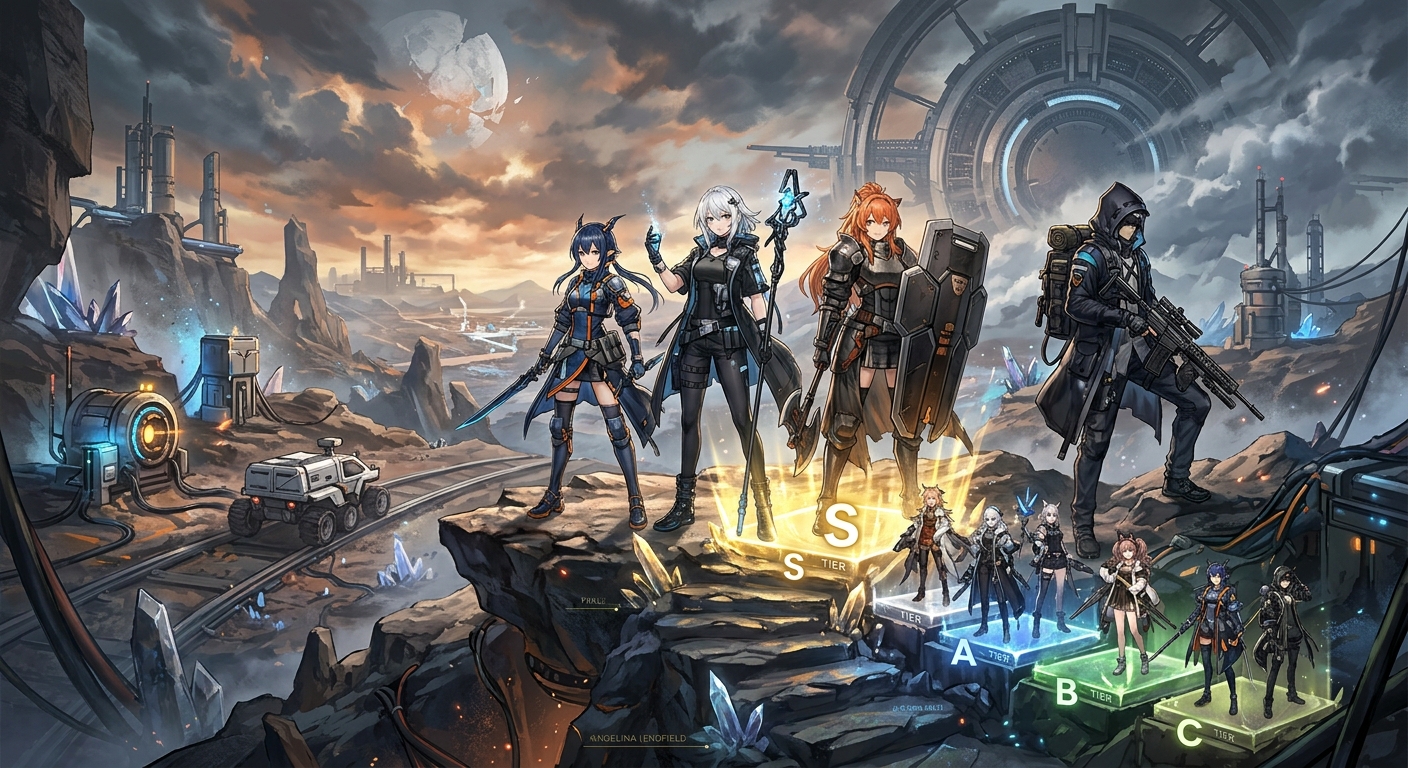
Arknights: Endfield brings the strategic positioning of the original Arknights into a fully 3D real-time action RPG. With a growing roster of operators and limited early resources, knowing which characters are truly worth building can save you a lot of grinding and reset tickets. This guide offers a broad tier breakdown, explains why certain operators rise to the top, and gives you practical team-building advice without assuming you already know every mechanic.
This article is inspired by existing tier lists and early impressions from major outlets and community discussions, but it is written from the ground up with a fresh structure and explanations. Treat it as a general compass, not a strict rulebook.
How Tiers Work in Arknights: Endfield
Before diving into specific operators, it helps to understand what a tier list is actually trying to show. Arknights: Endfield mixes action combat with tower-defense style control over multiple units, so a character’s value is about more than just raw DPS numbers.
What This Tier List Measures
The tiers described below assume:
- You are focusing on core PvE content such as story, general challenge stages, and early endgame.
- Characters are used in reasonable, not fully whale-level builds (i.e., not every operator at max investment).
- You prefer operators that perform well in many maps instead of those that dominate only one or two niche encounters.
Tier Definitions at a Glance
| Tier | Meaning |
|---|---|
| S-Tier | Extremely powerful or versatile operators that feel noticeably above the pack. They fit in many teams and stay useful across most of the game. |
| A-Tier | Strong, reliable picks that can carry content with the right team support. Often just a step below S due to smaller range, tougher setups, or narrower strengths. |
| B-Tier | Good, serviceable units that handle their job in typical stages. They may lack the ceiling or flexibility of higher tiers but are far from unusable. |
| C-Tier | Playably niche. These operators have clear weaknesses or are overshadowed by alternatives, yet can still be fun or effective in specific comps. |
| D-Tier | Heavily outclassed or too situational in the current meta. They can work with heavy investment and skill, but there is usually a better choice for their role. |
Why Tier Lists Should Not Dictate Everything
Tier lists can help you prioritize, but they are not a substitute for learning how the game works. Even within action RPGs more broadly, research shows that player learning, adaptation, and experimentation are core to long-term engagement and skill development, rather than simply copying optimal builds. The same principle applies here: use tiers for direction, not as rigid law.
Overview of the Current Operator Landscape
Arknights: Endfield organizes operators into familiar archetypes like vanguards, defenders, snipers, casters, and supporters, but their playstyle is more active than in the original tower-defense game. You are constantly moving, aiming abilities, and repositioning units while managing cooldowns and resource skills.
In broad terms, the current meta favors operators who can do at least one of the following extremely well:
- Maintain high uptime on damage or crowd control without relying on slow, risky setups.
- Provide multiple forms of utility (debuffs, buffs, positioning control, or elemental interactions) in the same kit.
- Remain safe while contributing so they do not force you to waste resources constantly rescuing or reviving them.
With that in mind, let’s walk through the tier bands and highlight what makes their operators stand out.
S-Tier: Core Carries and Premium Utility Picks
S-Tier operators represent the backbone of many powerful squads. They have kits that feel great in both casual and high-pressure content, often offering damage, control, and survivability in one package.
What S-Tier Operators Have in Common
- Reliability: They perform consistently well even when your execution is not perfect.
- Synergy-friendly kits: Their passives, ultimates, or elemental interactions make other operators stronger.
- Strong scaling: Investment in levels, gear, and skill upgrades gives noticeable gains rather than marginal boosts.
Example S-Tier Archetypes
While individual characters differ, S-Tier operators generally fall into a few archetypal roles:
- Main DPS Carry: Reliable high single-target or area damage with good survivability. These operators let you focus on dodging and positioning while they chip away at enemies.
- Amplifier / Support: Characters that multiply the damage of your whole team through debuffs, elemental inflictions, or powerful buffs. Their contribution scales with your roster.
- Premium Defender: Defenders that don’t just soak damage but also bring taunts, shields, stuns, or damage reflection. They anchor tough fights and keep squishier teammates safe.
In practice, one or two S-Tier units can carry an early account while you gradually level complementary roles.
A-Tier: Strong Picks That Shine in the Right Teams
A-Tier operators sit just below the absolute best, but with proper support they can feel nearly as strong. Often, their power is tied to specific elements, combo timings, or formations you must learn to exploit.
Why A-Tier Does Not Mean “Skip”
In many live-service games, especially team-based RPGs, characters one step below “top meta” remain perfectly viable for most content. Analyses from other team games like Overwatch and League of Legends consistently show that a wide portion of the roster sits in a healthy “playable” band where the differences are measurable but not game-breaking for non-professional players. Arknights: Endfield follows a similar pattern: A-Tier characters are usually more than enough for story and early challenges.
Common Traits of A-Tier Operators
- Power with conditions: They are amazing when you play to their strengths (e.g., certain elements, enemy types, or map layouts) but feel average outside those scenarios.
- A little more fragile or clunky: Maybe their animations are slower, their hitboxes unforgiving, or their skill windows shorter compared to S-Tier competitors.
- Role overlap: A-Tier operators sometimes compete with an S-Tier character who fills a similar niche more efficiently.
Still, building a handful of A-Tier units is absolutely recommended, especially when they cover roles your S-Tier picks don’t.
B-Tier: Solid Role Players and Transitional Units
B-Tier operators often make up the middle of your roster. They might not define the meta, but they help you clear difficult waves, cover elemental weaknesses, or act as backups when your main options are cooling down.
Where B-Tier Shines
- Early game and account progression: B-Tier characters are frequently easier to acquire or build than high-rarity operators. They fill gaps while you hunt for more specialized units.
- Specific map mechanics: Some characters rated B overall can be S-tier in a stage tailored to their gimmick (e.g., environmental hazards, clustered enemy spawns, or tight corridors).
- Experimental compositions: Because you don’t expect B-Tier to carry everything, they’re excellent for learning new elements or synergies without large investment.
Typical Weaknesses of B-Tier Units
You will usually notice one or more of the following:
- They need higher levels to survive or deal competitive damage.
- Their ultimate or signature skill has long downtime, making them feel inconsistent.
- They provide only one form of contribution (pure damage or pure sustain) instead of a more flexible kit.
If you enjoy a B-Tier operator’s playstyle, there is no reason to bench them entirely; just understand they may eventually be replaced in your primary team as your roster grows.
C- and D-Tier: Niche Picks and Passion Projects
C- and D-Tier operators are not “useless,” but their value is narrow in the current environment. They tend to have visible flaws or are overshadowed by alternatives that deliver similar effects with fewer drawbacks.
When Lower-Tier Operators Are Worth Using
- You love their playstyle or design: Arknights as a franchise has always emphasized character appeal. If a particular operator is your favorite, you can absolutely complete a lot of content with them.
- They fit a specific challenge stage: Certain gimmick stages or events can temporarily elevate a low-tier unit because they interact perfectly with environmental mechanics.
- You want variety: Using lower-tier picks forces you to rely more on positioning, timing, and knowledge of enemy patterns, which can make the game more engaging.
Recognizing the Limitations
Still, there are honest reasons these operators receive lower ratings:
- Poor scaling: Additional investment doesn’t meaningfully improve their performance relative to other units.
- Limited synergy: Their mechanics don’t interact strongly with meta elements or popular team cores.
- High opportunity cost: Using them in tight resource scenarios can slow your progression if you neglect stronger units.
Using lower-tier units is a valid choice, but it helps to do so consciously, understanding the trade-offs.
Key Roles and Why They Matter
Arknights: Endfield borrows role categories from other tactical RPGs, but the real-time 3D combat means you must constantly adjust. Investing in at least one strong operator for each core role will make your account much more flexible.
Main Damage Dealers
Your primary DPS operators are responsible for deleting priority targets and keeping waves under control. When choosing a main damage dealer, consider:
- Element and damage type: Physical damage may excel against low-armor enemies, while arts or elemental damage handles heavily armored or resistant foes.
- Area vs. single-target: Some characters obliterate clustered mobs, whereas others focus on bosses. Ideally, you want one of each in your full roster.
- Self-sustain: Carries with built-in lifesteal, shields, or damage reduction reduce stress on your healers and defenders.
Defenders and Frontline Bruisers
Defenders are more than damage sponges in Endfield; a well-placed tank can redirect enemy aggression, buy time for your DPS, and control choke points. Strong defenders usually offer:
- Reliable taunts or threat generation to pull enemies away from squishy allies.
- Mitigation tools such as shields, healing over time, or damage reduction for themselves and nearby units.
- Disruption in the form of knockbacks, slows, or stuns that keep dangerous enemies locked down.
Supports, Amplifiers, and Healers
Support operators may not top the damage charts, but they dramatically increase the effectiveness of your whole squad. According to long-standing design concepts in cooperative games, “support” roles are often force multipliers that make everyone else feel stronger. In Endfield, they can:
- Apply debuffs that increase damage taken or reduce enemy attack power.
- Spread or trigger elements (such as electrification, cryo, or nature) that synergize with your DPS units.
- Provide burst or sustained healing to keep your frontline standing during big enemy pushes.
Utility and Crowd Control Specialists
These operators manipulate positioning and tempo more than raw HP bars. They:
- Group enemies into narrow kill zones.
- Buy time during boss phases with stuns, roots, or movement impairments.
- Handle mobile elites that would otherwise slip through your defensive line.
Tier lists often underrate these characters because their impact is map-dependent, but on certain stages they are absolutely vital.
Practical Team-Building Tips for New Players
Instead of chasing every S-Tier operator you see in a ranking, focus on building a balanced squad around what you already own. The following guidelines apply even if your actual characters differ from popular examples.
1. Cover the Core Roles First
As a starting point, aim for a team template like:
- 1–2 main DPS (preferably of different elements or ranges)
- 1 defender or bruiser to anchor the frontline
- 1 support or amplifier who can boost or debuff consistently
- 1 healer or hybrid sustain unit
- 1 flexible slot (utility, secondary DPS, or extra sustain based on the stage)
2. Invest Deeply in a Few Operators
A common mistake in live-service RPGs is spreading resources too thin across many characters. Studies of progression-focused games show that large power spikes typically occur when you finish key upgrades on a few units rather than partially upgrading a wide bench. For Arknights: Endfield, that means:
- Pick 2–3 core carries and commit to raising their levels, gear, and skills.
- Bring your main defender and healer to at least a solid baseline so they don’t get one-shot.
- Only then experiment with secondary or niche characters.
3. Think in Terms of Elemental and Status Synergy
Many of the most devastating setups in Endfield come from combining elements or status effects:
- Supports that apply debuffs (e.g., increased damage taken) make burst windows more rewarding.
- Operators who inflict or consume specific statuses can chain abilities to keep enemies constantly crowd-controlled.
- Mixing damage types (physical and arts/elemental) prevents you from hard losing to armor-heavy or resistant foes.
When browsing tier lists, look not only at a character’s letter grade, but also at what status or element they interact with and how that fits into your existing team.
4. Build Around Comfort and Control
Because combat is real-time, the best operator on paper might not be the best for you. Ask yourself:
- Can you reliably land their skills under pressure?
- Does their movement, attack range, and animation timing feel natural?
- Do they let you focus on macro decisions instead of micromanaging one fragile unit?
An A- or B-Tier character that you control confidently will usually outperform an S-Tier that you struggle to use.
Frequently Asked Questions
Do I need S-Tier characters to clear story content?
No. Story and early endgame stages are designed to be cleared by a reasonably developed roster, not just top-tier units. Good positioning, understanding enemy patterns, and having a balanced team can compensate for not owning every S-Tier operator.
Should I reroll my account for specific operators?
Rerolling can help you start with a powerful carry, but it is not mandatory. Arknights games tend to release new, strong operators over time, and events often hand out useful characters or resources. If rerolling feels tedious, you can safely play with what you have and still progress.
Is higher rarity always better?
Higher-rarity operators generally have stronger kits and better scaling, which is why they dominate the top tiers. However, some lower-rarity characters bring unique utility or are cheaper to develop early on. Rarity is a useful guide, but not an absolute rule for who you should invest in first.
Why do different websites have different tier lists?
Tier lists are partly subjective and depend on assumptions: which game modes they prioritize, what level of investment they consider, and how they value flexibility versus raw damage. Patch updates and new operators also shift rankings. It’s normal to see differences; focus on the reasoning behind each tier, not just the final letter grade.
How often will the meta change?
The meta will shift whenever new characters, balance patches, or challenging stages arrive. In other live-service titles, balance updates typically occur on a cadence of weeks or months. You can expect Arknights: Endfield to evolve similarly. Build a strong core team, but stay open to adjusting your roster as new operators release.
References
- Video Gaming as a Valuable Learning Environment — Tobias, S. & Fletcher, J. D., in Computer Games and Instruction, Information Age Publishing. 2011-01-01. https://apps.dtic.mil/sti/pdfs/ADA550775.pdf
- Overwatch 2 Patch Notes — Blizzard Entertainment. 2024-03-12. https://overwatch.blizzard.com/en-us/news/patch-notes/
- League of Legends Patch Notes Archive — Riot Games. Accessed 2026-05-20. https://www.leagueoflegends.com/en-us/news/tags/patch-notes/
- Game Design Workshop: A Playcentric Approach to Creating Innovative Games (3rd ed.) — Fullerton, T. CRC Press. 2014-03-26. https://www.routledge.com/Game-Design-Workshop-A-Playcentric-Approach-to-Creating-Innovative-Games/Fullerton/p/book/9781138098770
- Genshin Impact Developer Discussion: Character and Combat Design — HoYoverse (miHoYo). 2022-11-18. https://genshin.hoyoverse.com/en/news/detail/104504
Similar Articles



Read full bio of medha deb