Battlefield 6 Tank Loadouts for Every Playstyle
Master Battlefield 6 armor gameplay with tailored tank builds, practical tactics, and survivability tips for both MBTs and IFVs.
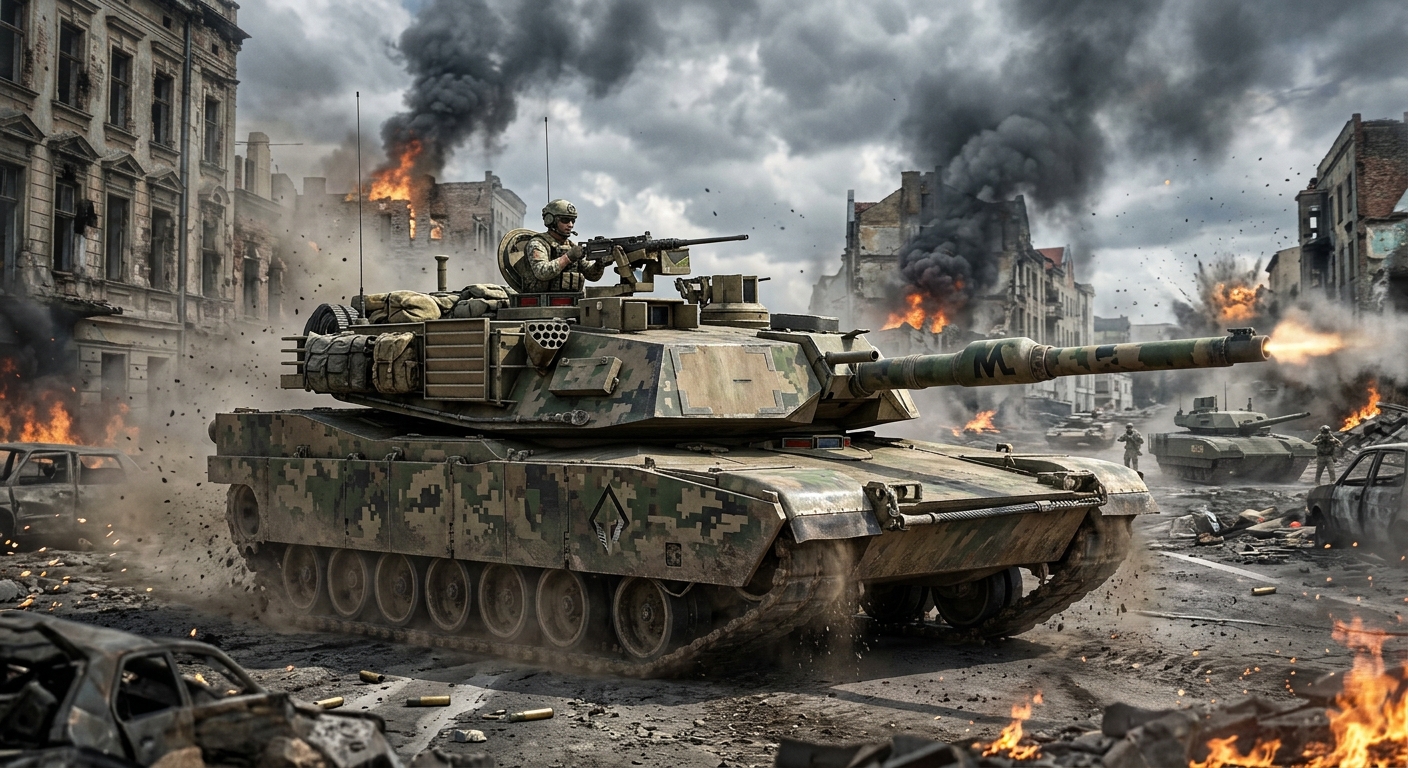
Dominating with armor in Battlefield 6 is about more than just driving a big gun up the lane and hoping for the best. The game’s main battle tanks (MBTs) and infantry fighting vehicles (IFVs) can be customized with different ammo types, secondary weapons, and defensive gadgets, and the right setup can be the difference between carrying the match and being scrap metal on the roadside.
This guide breaks down practical, battlefield-tested loadouts for both MBTs and IFVs, aimed at players who want to specialize in anti-infantry, anti-vehicle, or general-purpose roles. You’ll also find tactical tips, a comparison table, and quick answers to common questions to help you get more out of every vehicle spawn.
Understanding Battlefield 6 Tank Roles
Before diving into specific builds, it helps to think about what each vehicle is actually meant to do. Battlefield games traditionally divide armored vehicles into heavy front-line bruisers and more flexible support platforms. Battlefield 6 continues this design trend by giving each tank class its own strength profile.
Main Battle Tanks: Front-Line Fire Support
Main Battle Tanks are your heavy hitters. They trade speed and flexibility for raw durability and high-damage shells. MBTs are best at medium to long range where they can angle their armor, control sightlines, and punish anything that dares to cross open ground.
- Strengths: High armor, strong single-shot damage, excellent anti-vehicle capability.
- Weaknesses: Vulnerable to flanking, slower repositioning, limited ability to fight targets above or behind buildings.
This mirrors the way real-world MBTs are designed: they’re optimized to fight other armored threats while relying on infantry and support units to protect them from close-range attacks and overhead threats.
Infantry Fighting Vehicles: Versatile Hybrid Platforms
IFVs in Battlefield 6 occupy a flexible space between tanks and light vehicles. They usually have faster turret handling, better mobility, and weapons that excel at clearing infantry, while still fielding tools for engaging enemy armor.
- Strengths: Good mobility, rapid-fire or multi-purpose weapons, strong anti-infantry potential.
- Weaknesses: Less armor than MBTs, must avoid prolonged duels with multiple enemy tanks.
IFVs resemble their real-world counterparts, which are designed to transport and support infantry while still mounting weapons capable of damaging armored threats when needed.
Core Components of a Tank Loadout
When creating a loadout, think in terms of four main components that most Battlefield-style tank systems share:
- Primary ammunition – Your main cannon’s default shell type.
- Alternate ammunition – A situational shell for specific targets (armor or infantry).
- Secondary weapon – Coaxial MG, launcher or remote weapon for flexible engagements.
- Utility and defensive systems – Smoke, APS-style interceptors, repair perks, and armor upgrades.
The builds below simply rearrange these parts to emphasize different roles. Once you understand the building blocks, you can tweak any of the suggested configurations to better match your personal style.
MBT Loadout 1: Hybrid Anchor for Objective Control
This build is intended for players who want a single MBT setup that can handle most match situations. It trades a bit of anti-armor burst for strong flexibility against infantry and light vehicles, making it ideal for defending objectives or slowly advancing with your team.
Recommended Setup
- Primary shell: Multi-purpose high explosive (HE) or similar hybrid round
- Alternate shell: Aim- or lock-guided armor-piercing (AP) round
- Secondary weapon: Coaxial light/medium machine gun
- Defensive utility: Thermal-blocking or smoke screen system
- Upgrade: Reinforced armor plating or hull durability upgrade
- Gunner weapon: Heavy machine gun (HMG)
- Gunner equipment: Mine countermeasure or similar defensive tool
How to Use This Build
Play this MBT like an anchor for your team:
- Hold medium-range sightlines overlooking contested objectives rather than diving in alone.
- Use HE against infantry clustered around cover, doorways, or vehicles.
- Swap to guided AP shells whenever an enemy tank, IFV, or attack vehicle appears.
- Pop smoke or thermal-blocking whenever you are focused by multiple launchers or long-range vehicles.
Anchor builds work best when you coordinate with infantry. Keeping friendly soldiers in front of you or to your sides helps prevent engineers from slipping in with rockets or explosives, a principle that’s widely recognized in armored warfare: tanks are most effective as part of combined arms teams.
MBT Loadout 2: Dedicated Tank Hunter
When the enemy team is stacking vehicles or a particularly skilled tanker is shutting down your side, you’ll want a more specialized anti-armor build. This MBT loadout sacrifices some infantry-clearing potential in exchange for faster and more reliable vehicle kills.
Recommended Setup
- Primary shell: Armor-piercing kinetic round
- Alternate shell: High-damage guided missile or sabot shell
- Secondary weapon: Coaxial MG or auto-cannon for light vehicles
- Defensive utility: Active protection system (APS) or projectile intercept system
- Upgrade: Mobility or turret rotation upgrade to help with flanking
- Gunner weapon: Heavy MG or automatic grenade launcher
- Gunner equipment: Target designator or additional defense gadget
How to Use This Build
The tank hunter MBT thrives when you play patiently and pick favorable engagements:
- Engage from long range whenever possible to reduce the chance of being flanked.
- Lead with your front armor, keeping your hull facing known threats.
- Time your APS/intercept system for incoming rockets or enemy guided shells; activating too early wastes your protection window.
- Rotate between primary AP and guided shells to maximize pressure and finish low-health vehicles quickly.
Because this build is focused on vehicles, you should avoid pushing into dense infantry areas without strong support. Use your power to clear out enemy armor that threatens friendly pushes, then reposition to new firing angles.
IFV Loadout 1: Infantry Eraser and Linebreaker
IFVs excel at shredding infantry and lighter vehicles. This first IFV build focuses on clearing capture points, escorting friendly troops, and punishing exposed enemies trying to cross open spaces or move between buildings.
Recommended Setup
- Primary shell: High explosive or fragmentation rounds
- Alternate weapon: Guided rockets or multi-purpose missile pod
- Secondary weapon: Coaxial MG or rapid-fire auto-cannon
- Defensive utility: Thermal-blocking smoke or standard smoke
- Upgrade: Reinforced plating or health bonus
- Gunner weapon: Heavy MG for suppressing rooftops
- Gunner equipment: Mine countermeasures or explosive detection
How to Use This Build
Think of this IFV as a mobile fire support platform for your infantry squads:
- Stay just behind your frontline soldiers as they move into contested areas.
- Use HE rounds to clear windows, balconies, and common hiding spots around objectives.
- Employ rockets on enemy light vehicles, emplacements, or entrenched positions that HE shells struggle to dislodge.
- Use smoke to obscure line of sight when you need to cross open ground or escape anti-tank fire.
Because IFVs are lighter than MBTs, you must respect enemy anti-vehicle weapons and heavy tanks. Avoid prolonged duels with fully healthy MBTs unless you have strong positional or numerical advantages.
IFV Loadout 2: Anti-Armor Support Hybrid
This build leans more into anti-vehicle duties while still retaining enough anti-infantry capability to remain useful in mixed fights. It’s ideal for players who want a faster, more agile alternative to the MBT tank hunter setup.
Recommended Setup
- Primary shell: Armor-piercing or high-velocity round
- Alternate weapon: Lock-on or aim-guided anti-vehicle missile
- Secondary weapon: Coaxial MG for soft targets
- Defensive utility: APS/projectile intercept or evasive smoke
- Upgrade: Engine or mobility upgrade for faster repositioning
- Gunner weapon: HMG or cannon with good vehicle penetration
- Gunner equipment: Spotting or rangefinding gadget
How to Use This Build
With this IFV, your job is to flank and harass enemy armor while staying mobile:
- Use terrain and buildings to get side or rear shots on distracted MBTs.
- Open with missiles to chunk enemy health, then follow up with AP rounds.
- Immediately reposition after firing to avoid return fire and make use of your mobility advantage.
- Fall back to friendly lines once you’ve lost a significant chunk of health; repairing is often more valuable than securing one more kill.
Because this build combines speed, guided anti-vehicle damage, and decent anti-infantry capability, it’s a great choice for players who enjoy hit-and-run tactics rather than static lane control.
Quick Comparison of Recommended Loadouts
| Loadout | Vehicle Type | Primary Focus | Best Map Types | Difficulty |
|---|---|---|---|---|
| MBT Hybrid Anchor | Main Battle Tank | Balanced anti-vehicle and anti-infantry | Mixed terrain, objective-heavy maps | Beginner–Intermediate |
| MBT Tank Hunter | Main Battle Tank | Anti-armor dominance | Open or mid-range maps | Intermediate–Advanced |
| IFV Infantry Eraser | Infantry Fighting Vehicle | Anti-infantry and light vehicles | Urban and objective-dense maps | Beginner–Intermediate |
| IFV Anti-Armor Hybrid | Infantry Fighting Vehicle | Flanking anti-vehicle support | Mixed maps with flanking routes | Intermediate–Advanced |
Positioning and Survivability Fundamentals
Even the best loadout will fail if you drive your tank into bad situations. A few universal principles apply across almost every Battlefield-style title and are consistent with real-world armored doctrine:
Maintain the Right Engagement Distance
- Stay at medium to long range whenever possible. This keeps infantry launchers, mines, and close explosives less effective.
- Avoid pushing alone into capture points or narrow alleys, especially in cities where enemies can shoot from upper floors or windows.
Keep Friendly Infantry Around You
- Use infantry as your close security screen; they can clear rooftops, spot anti-tank launchers, and protect your rear.
- Advance with your team instead of using the tank as a solo assault vehicle.
Angle Your Armor and Retreat Smartly
- Face your hull toward known threats so incoming rounds hit your front armor, where you are most protected.
- When retreating under fire, back up instead of turning around. This keeps your strongest armor toward the enemy while you disengage.
- Fall back and repair around half health if the situation allows. Staying alive often helps your team more than trading 1-for-1.
Use Defensive Gadgets Intelligently
- Time active protection to coincide with expected enemy volleys rather than popping it preemptively.
- Use smoke defensively and offensively: escape fire, or obscure sightlines while your team pushes.
- Equip mine countermeasures on maps where chokepoints and roadways are frequently trapped.
Frequently Asked Questions
Which tank should I pick first in Battlefield 6?
If you’re new to armored gameplay, start with a main battle tank running the hybrid anchor loadout. It’s more forgiving than an IFV because of higher armor, and its mixed ammo setup lets you contribute in most situations without constantly swapping vehicles or builds.
How do I deal with enemy aircraft while in a tank?
Tanks are generally not meant to hard-counter aircraft in Battlefield-style games. If your build allows, use HMGs or auto-cannons to harass low-flying helicopters, but your best defense is positioning and cover. Stay near buildings, under overhangs, or in terrain depressions that break line of sight, and rely on friendly AA units for true air denial.
Is it better to specialize or run a balanced loadout?
Balanced loadouts are ideal for solo players and casual matches, because they let you contribute regardless of how the enemy comp shifts. Specialized anti-armor or anti-infantry builds shine in coordinated squads or lobbies where you know what you’re facing and can rely on teammates to cover your weaknesses.
How important is communication when playing tanks?
Communication is crucial if you want to fully leverage armored vehicles. Calling out spotted enemies, coordinating pushes with infantry, and syncing your defensive gadgets with your gunner’s actions can dramatically increase your survivability and impact. Many competitive and military analyses of armored warfare emphasize the importance of coordination and shared situational awareness for tank crews.
What’s the biggest mistake new tank players make?
The most common mistake is overextending: driving too far ahead of friendly lines into dense enemy territory. This exposes your vulnerable sides and rear, makes it easy for enemies to surround you, and cuts you off from repairs and support. If you look left and right and see no allies beside or ahead of you, you’re probably too far forward and should pull back.
References
- Armored Brigade Combat Team — U.S. Army Field Manual 3-96. 2018-10-18. https://armypubs.army.mil/ProductMaps/PubForm/Details.aspx?PUB_ID=1008185
- Infantry Fighting Vehicle (IFV) Overview — U.S. Army Acquisition Support Center. 2023-03-01. https://asc.army.mil/web/portfolio-item/infantry-fighting-vehicle-ifv/
- Closing the Gap: How to Harness the Combat Potential of Tanks — RAND Corporation. 2019-05-01. https://www.rand.org/pubs/research_reports/RR2929.html
- Guide to Modern Main Battle Tanks — International Institute for Strategic Studies (IISS). 2022-11-10. https://www.iiss.org/blogs/military-balance/2022/11/guide-to-modern-main-battle-tanks
Similar Articles




Read full bio of medha deb