Best Sniper Rifles and Loadouts in Battlefield REDSEC
A complete breakdown of the strongest sniper rifles, attachments, and tactics to dominate long‑range combat in Battlefield REDSEC.
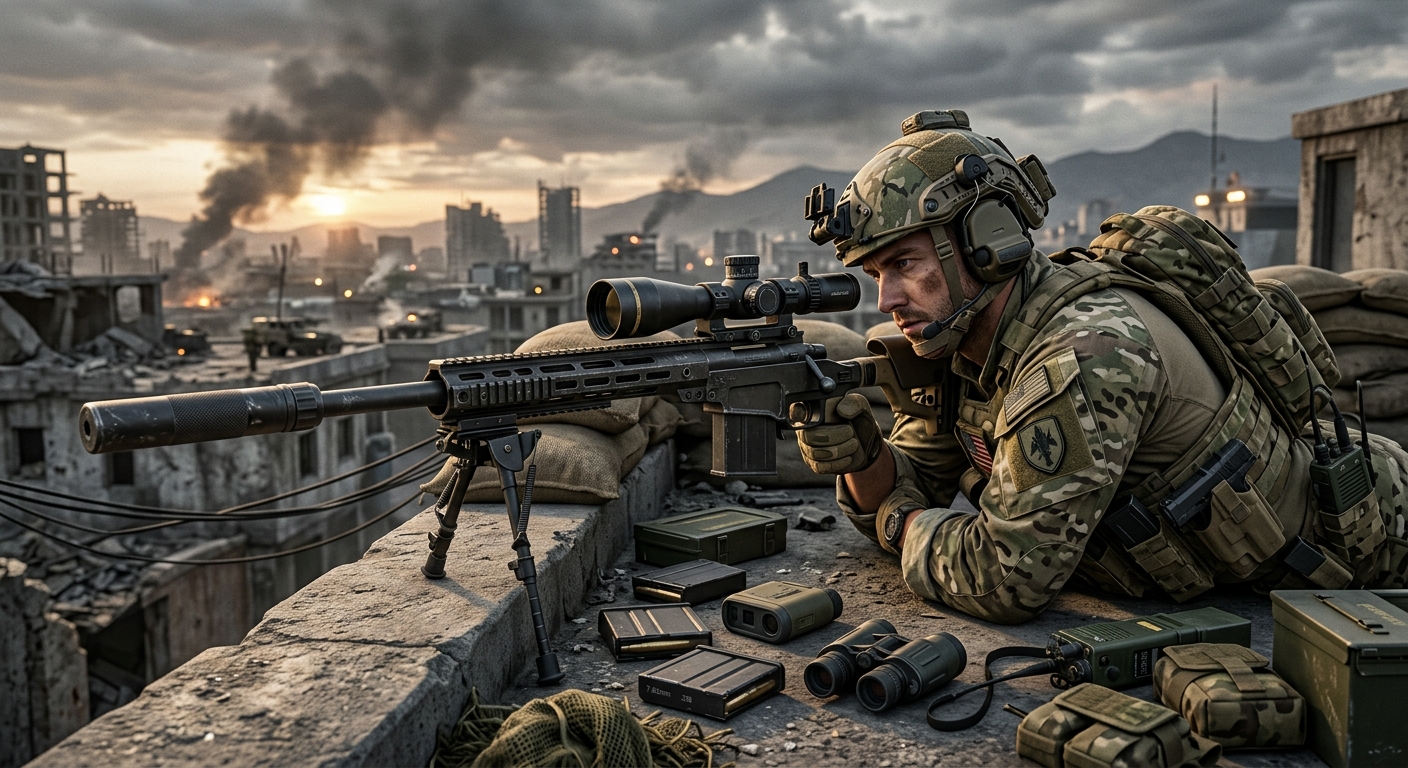
Sniping in Battlefield REDSEC sits at the heart of the game’s large-scale combat. Open sightlines, complex elevation, and objective-focused modes give skilled marksmen a chance to dictate the pace of a match. This guide breaks down the sniper rifles that define the current meta, explains how to build them with the most effective attachments, and offers practical tips so you can consistently win long-range engagements.
While specific weapon balance values can shift with patches, the core principles of sniping — precision, situational awareness, positioning, and loadout synergy — remain largely consistent across Battlefield titles, as DICE has followed a broadly similar design philosophy for sniper weapon roles over multiple games.1 Using that context, plus current in-game performance, this guide focuses on how to translate raw weapon stats into actual on-the-ground effectiveness in REDSEC.
Understanding Sniper Roles in REDSEC
Not every sniper rifle fills the same niche. REDSEC offers options tuned for different kinds of maps, player skill levels, and team roles. Before jumping into specific guns, it helps to clarify how snipers naturally fall into a few archetypes.
Key Sniper Archetypes
- Traditional long-range bolt action — High damage, aggressive bullet drop, slow rate of fire. Designed to delete enemies with one or two clean hits at distance, but punishes misses.
- Flexible mid-range marksman rifles — Semi-automatic or faster-firing rifles with moderate damage and lighter recoil. Ideal for active objective play, counter-sniping at mid range, and supporting a push instead of living off in the hills.
- Rapid-fire aggressive snipers — Faster handling, slightly lower per-shot damage, and scopes that support quick target transitions. These reward players who play closer to the fight, holding chokepoints and peeking angles quickly.
Balancing these archetypes is part of DICE’s broader aim of maintaining distinct weapon class identities, which has been central to Battlefield design for years.1 Each category shines in different parts of REDSEC’s map pool, so your best sniper rifle is partly defined by how you actually like to play.
Current Top Sniper Rifles in the REDSEC Meta
Within the current balance environment, a handful of rifles consistently perform at the top level. Player stats from community tracker sites and early competitive trends typically highlight a small set of stand-outs for range, ease-of-use, or raw killing power. Below is an overview of the main contenders and what makes each one special.
| Rifle | Role | Strengths | Key Weakness |
|---|---|---|---|
| PSR | Extreme long-range bolt action | Highest effective range, massive damage, great one-shot potential | Slow firing and punishing for missed shots |
| Mini Scout | Mobile mid-range sniper | Fast handling, great for repositioning, strong at medium distances | Weaker beyond long range compared to heavier rifles |
| SV98-style rifle | Versatile bolt action | Balanced damage and handling, comfortable in most ranges | Does not dominate any single range as much as specialists |
| Semi-auto DMR-type rifle | Marksman / objective support | High rate of fire, great for follow-up shots and suppressing | Requires multiple hits; weaker against armor and heavy cover |
Names and exact stats can vary with balance updates, but these categories reflect how REDSEC snipers are typically used in practice. Let’s break down the top performers, why they feel so strong in the meta, and how to build them.
PSR: The King of Long Range
The PSR-style rifle is currently the headline pick for players who want the classic Battlefield sniper experience: powerful, unforgiving, and absolutely lethal when mastered. It behaves similarly to traditional high-caliber bolt actions from earlier Battlefield games, where one well-placed shot can remove an enemy at extreme ranges.
Why the PSR Dominates
- Exceptional bullet velocity — High muzzle velocity means you spend less time leading targets and compensating for drop. On larger maps, this dramatically improves your reliability on moving targets and airborne enemies.
- High damage model — The rifle is tuned so that upper-torso and headshots at range often delete a target in one hit, or leave them low enough that a teammate can finish easily.
- Effective at cross-map control — You can remove enemy squad leaders, vehicle gunners, or stationary support players from positions that many other weapons cannot reach in time.
Recommended PSR Meta Loadout
Adjust exact attachment names to what exists in your build of REDSEC, but prioritize the following traits:
- Optic: High-magnification scope (10x–12x equivalent) with a clear reticle. If available, choose one with minimal scope sway or a clean central crosshair.
- Muzzle: Muzzle brake or compensator to keep vertical recoil manageable between shots. Suppressors are tempting, but the PSR’s job is raw power, not stealth, so don’t sacrifice bullet velocity unless you’re playing coordinated stealth squads.
- Barrel: Long barrel or precision barrel to maximize bullet velocity and damage retention over distance.
- Underbarrel: Bipod or stability attachment. A bipod, when deployed, can drastically reduce scope sway and recoil, letting you chain accurate shots from cover.
- Ammunition: High-velocity or long-range ammo if available. Skip close-range or subsonic ammo types; they undercut the rifle’s core advantage.
Best Playstyle for PSR Users
With this sort of rifle, you are a dedicated overwatch asset rather than a front-line brawler.
- Pick elevated, covered positions overlooking high-traffic objectives, roads, or chokepoints.
- Shift positions after a few kills to avoid counter-snipers and smart flankers; long-range tracers make you easy to triangulate.
- Prioritize high-value targets such as enemy medics, squad leaders, and players on mounted weapons.
This style of play mirrors classic Battlefield recon roles, where the goal is not just kills, but map control and information for your squad.2
Mini Scout: The Mobility-Focused Sniper
The Mini Scout-type rifle was introduced with REDSEC’s first season and quickly gained popularity thanks to its responsive feel and forgiving handling. It trades some extreme-range potency for faster aim-down-sights (ADS) time, quicker follow-up shots, and better mobility.
What Makes the Mini Scout Strong
- Rapid handling — Snappy ADS and relatively low scope-in time let you react quickly when enemies peek or flank your power positions.
- Forgiving recoil — Lighter recoil and less punishing kick means you can re-center your reticle after each shot without losing track of targets.
- Great mid-range consistency — On most Conquest and Breakthrough maps, combat happens at medium distances. The Mini Scout thrives in these conditions, where ultra-long-range rifles feel overkill and clunky.
Recommended Mini Scout Loadout
- Optic: Medium zoom scope (6x–8x equivalent) or a variable zoom optic you can scale up or down based on the engagement.
- Muzzle: Lightweight compensator or suppressor depending on your style. Suppressed Mini Scout builds work well for flanking and aggressive recon because the rifle already has modest recoil.
- Barrel: Balanced or short barrel that improves handling and ADS speed rather than max range.
- Underbarrel: Angled grip or similar stability attachment to help with quick follow-up shots when you miss the first.
- Ammunition: Standard or extended-mag ammo. You’ll often put multiple shots into several enemies in a row, so capacity matters.
Best Playstyle for Mini Scout Users
Think of the Mini Scout as a bridge between a traditional sniper and a marksman rifle:
- Play closer to the front lines, using buildings, rocks, and vehicles as temporary cover.
- Frequently reposition, rotating between flanks and rooftops to pressure enemies from unexpected angles.
- Support pushes by quickly removing enemies on headglitches, windows, or rooftop nests, rather than just farming distant targets.
Used this way, you combine the threat of one-shot headshots with the flexibility to move with your squad instead of camping the back of the map.
Balanced Bolt Actions: The All-Rounder Sniper Choice
Below the PSR and Mini Scout in raw specialization sits a versatile class of bolt-action rifles similar to the classic SV98 — weapons that can comfortably handle both long-range duels and more dynamic mid-range skirmishes. These rifles rarely top the charts in any single metric, but they’re reliable in nearly every scenario.
Why All-Rounders Stay Relevant
- Balanced damage and range — They still reward headshots at distance, but don’t feel unusably slow or heavy on tighter maps.
- Manageable recoil — Enough kick to feel powerful, but not so much that it takes forever to resettle on target.
- Flexible attachment builds — You can tune them for either long-range overwatch or more mobile flanking play depending on how a match is flowing.
Example All-Rounder Loadout Direction
- Optic: Variable 6x–10x scope to cover both medium and long engagements.
- Muzzle: Compensator or hybrid brake that tames recoil without crippling range.
- Barrel: Slightly longer barrel than a Mini Scout build, but not the full extreme-range setup of the PSR.
- Underbarrel: Bipod or light grip according to playstyle; bipod if you play static lanes, grip if you move a lot.
- Ammunition: Standard, with extended mags if you frequently face multiple enemies at once.
If you’re unsure which sniper to invest in first, this category of rifle is usually the safest bet, as it gives you room to experiment while learning how REDSEC map design encourages particular sightlines and angles.
Semi-Auto Marksman Rifles: Objective-Focused Sniping
Semi-auto DMR-style rifles straddle the line between aggressive sniping and classic assault rifle play. They’re excellent for players who like long optics but don’t want to fully commit to bolt-action pacing.
Strengths of Semi-Auto Snipers
- High rate of fire — Miss a shot? No problem. Tap again immediately. This makes them very forgiving in hectic firefights.
- Multi-target potential — You can rapidly tag several enemies as they cross open ground, softening them up for your squad.
- Great for defending objectives — Holding a building or rooftop overlooking an objective lets you apply constant pressure without worrying as much about reload downtime.
Recommended Loadout Direction for Semi-Autos
- Optic: 3x–6x scope or a hybrid option you can swap between close-to-mid and mid-to-long range.
- Muzzle: Suppressor or flash hider to avoid instantly revealing your position when spamming shots.
- Barrel: Stabilizing or balanced barrel; you don’t need extreme range as much as consistent recoil control.
- Underbarrel: Vertical or angled grip to keep shots on target during quick follow-up taps.
- Ammunition: Extended mags are highly recommended; the rifle’s value lies in volume of fire.
These rifles are excellent for players transitioning from assault or support classes to recon, as they maintain a similar pacing and battlefield role, supported by the same strong emphasis on objective play that characterizes modern Battlefield maps.2
Core Attachment Principles for Snipers
Regardless of which rifle you choose, a few universal principles apply to attachments and tuning. Understanding them helps you adapt quickly if a patch changes specific weapon stats.
Optics and Zoom Levels
- High zoom (10x+) — Best for wide, open maps and static overwatch roles. Harder to use in urban environments due to tunnel vision.
- Medium zoom (6x–8x) — Ideal all-round choice for mixed-range maps, allowing you to handle both hillside and street firefights.
- Low zoom (3x–4x) — Works for marksman rifles and aggressive urban sniping where targets are within a few dozen meters.
Muzzles and Suppression
Choosing between raw performance and stealth is a constant trade-off:
- Suppressors hide your firing position from mini-maps and reduce tracer visibility, at the cost of bullet velocity and sometimes damage range.3
- Muzzle brakes and compensators boost recoil control without reducing effective range, making them ideal for long-range rifles.
Barrel and Ammunition Choices
- Long barrels — Improve bullet velocity and damage over range at the cost of ADS speed and handling.
- Short or carbine barrels — Improve mobility but reduce effective range, best suited for aggressive snipers.
- Special ammo types — High-velocity rounds support long-range sniping, while subsonic ammo aids stealth at close-to-mid range.
Practical Sniping Tips to Dominate REDSEC
Even with a meta loadout, poor fundamentals will hold you back. Consistently strong snipers combine mechanical skill with good battlefield instincts. Research on first-person shooter skill emphasizes the importance of perception, reaction time, and movement in high-level play,4 all of which are relevant to sniping.
Map Knowledge and Positioning
- Memorize high-traffic routes where infantry and vehicles repeatedly travel between objectives.
- Abuse verticality — Rooftops, hills, and cranes give you angles that most players don’t expect on their first peek.
- Rotate with the front line — Don’t cling to a dead lane; move as your team captures or loses objectives so you always have relevant sightlines.
Aiming Fundamentals
- Adjust your sensitivity so you can smoothly track moving targets at your preferred zoom levels; this is more important than raw reaction time.
- Practice leading targets in the training range or low-pressure modes, focusing on consistent hits at known distances.
- Center your crosshair where an enemy is most likely to appear instead of snapping from one side of the screen to the other.
Teamplay and Spotting
- Use spotting tools to mark enemies for your squad. Battlefield games are built around spotting as a core mechanic for coordination.2
- Call out high-value enemies in voice or text chat when you tag or wound them.
- Protect your support players by clearing angles they’re exposed to while reviving, repairing, or resupplying.
Quick FAQ: Battlefield REDSEC Sniper Meta
Which sniper rifle is best overall right now?
For pure long-range dominance, the PSR-style rifle stands out thanks to its incredible velocity and damage. For everyday play on mixed-range maps, a Mini Scout-type rifle or mid-tier bolt action usually feels more practical because of its mobility and more forgiving handling.
What is the best sniper setup for new players?
Start with a balanced bolt-action rifle using a 6x–8x optic, a compensator, a moderately long barrel, and a stability-focused underbarrel. This gives you a manageable learning curve while still rewarding accurate shots at range.
Should I always use a suppressor on my sniper?
No. Suppressors are excellent for aggressive recon and flanking play, but the reduction in bullet velocity and effective range can significantly weaken long-range rifles like the PSR. Use suppressors on mobile snipers and semi-autos, but stick to pure performance attachments on dedicated long-range builds.
How do I counter enemy snipers?
Use smoke grenades, vehicles, and alternative routes to break sightlines. Equip a mid-range DMR or your own sniper to retaliate, and coordinate with teammates to flank entrenched snipers. Remember that staying still makes you an easy target; constant micro-movement during peeks is crucial.
Does sniping really help my team to win objectives?
Yes, if you focus on supporting the objective instead of farming distant kills. Remove defenders on headglitches, suppress enemy revives, and deny specific angles that make it hard for your squad to push. This objective-focused sniping is consistent with DICE’s design philosophy of encouraging team-based play across all classes.2
Mastering the Battlefield REDSEC sniper meta means more than copying a loadout from a video or guide. Use these builds as a foundation, then refine them based on your maps, modes, and personal strengths. With the right rifle and solid fundamentals, you can turn every open lane into a no-go zone for the enemy team.
References
- Battlefield V – Weapons and Gunplay — Electronic Arts / DICE. 2018-10-24. https://www.ea.com/games/battlefield/battlefield-5/news/weapons-and-gunplay
- Battlefield 2042 Official Overview — Electronic Arts. 2021-06-09. https://www.ea.com/games/battlefield/battlefield-2042/game-overview
- Battlefield V – Tides of War Chapter 1: Overture Update Notes — Electronic Arts / DICE. 2018-12-03. https://www.ea.com/games/battlefield/battlefield-5/news/tides-of-war-chapter-1-overture-update-notes
- Fast-Paced Multiplayer Games and Cognitive Performance — Adam C. Oei & Michael D. Patterson, PLOS ONE. 2013-01-23. https://doi.org/10.1371/journal.pone.0050313
Similar Articles




Read full bio of medha deb