
How Clair Obscur: Expedition 33 Turns Broken Builds into Brilliant Design
Inside the French JRPG that actively encourages players to crack its combat wide open with outrageous, rule-bending builds.
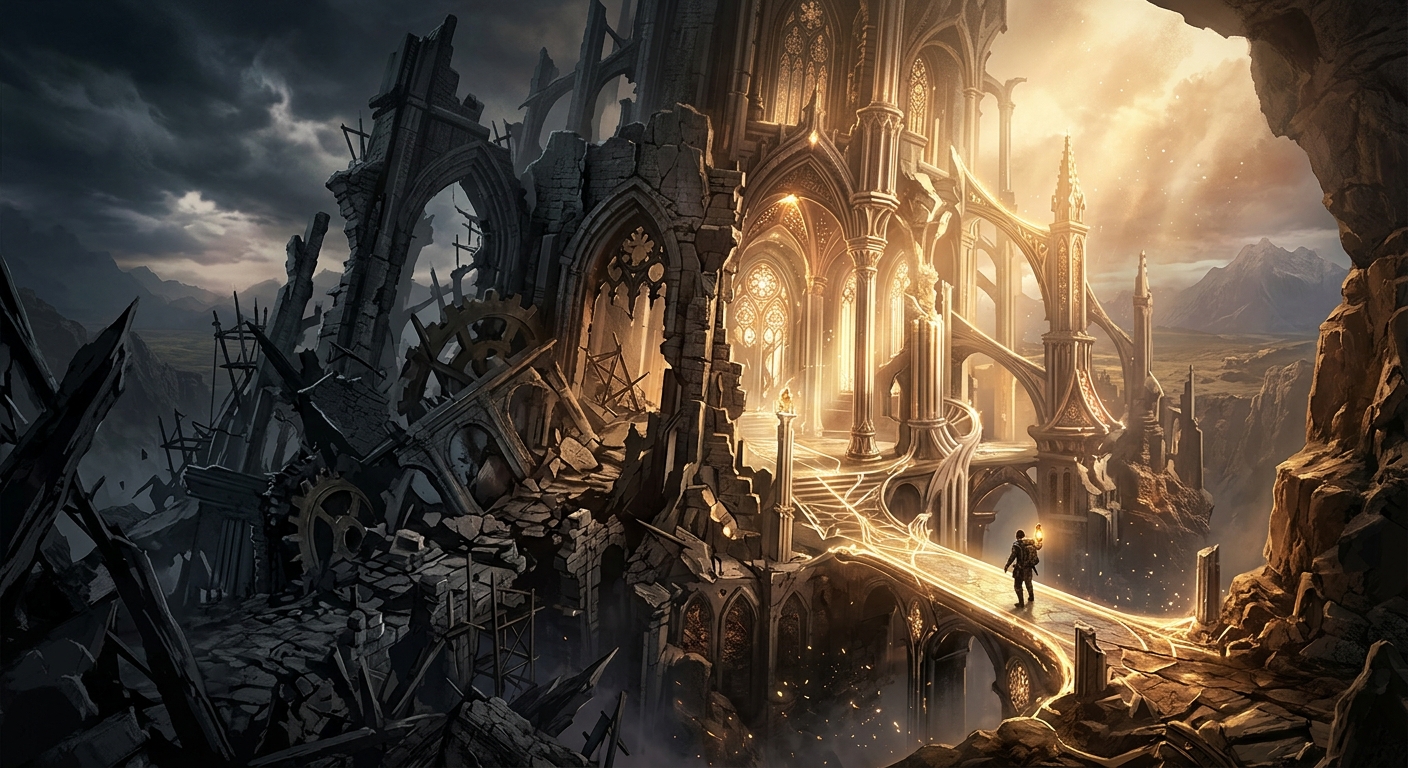
Clair Obscur: Expedition 33 arrives in a crowded field of turn-based RPGs, yet it has already carved out a distinctive identity. Beyond its striking painterly aesthetic and French setting, what truly sets it apart is a combat philosophy that not only tolerates players breaking its systems, but quietly celebrates it. The designers have built a JRPG where discovering outrageous combinations and seemingly “unfair” character builds is not a balance failure – it is a core part of the intended experience.
This article explores how the game’s systems, pacing, and encounter design all lean into that philosophy, why the team is comfortable letting players outsmart them, and what it reveals about modern RPG design.
The Appeal of a French-Born JRPG
On the surface, Clair Obscur: Expedition 33 feels familiar to anyone who has grown up on Japanese RPGs. It has:
- Party-based, turn-driven combat with timing elements
- Highly stylized characters and enemies
- Layered resource management involving skills, cooldowns, and gauges
- Boss encounters built around learning patterns and exploiting openings
What makes it unusual is that these JRPG hallmarks are filtered through European sensibilities. Players explore a world shaped by French art history and culture, rather than anime tropes. That cultural blend matches the mechanical blend: classical turn-based structure infused with ideas pulled from action games and modern character-build RPGs.
Why JRPG Structure Still Works
Turn-based combat remains a powerful design choice because it gives players time to think, plan, and tinker. The U.S. Entertainment Software Association notes that strategy and role-playing games appeal strongly to players who value “problem-solving, experimentation, and mastery” in their leisure time.1 A system that rewards creative builds taps directly into this desire. Clair Obscur leans into this by making every encounter feel like a small tactical puzzle, but one with multiple valid answers.
Combat Philosophy: Outwitting the Designers
The developers have openly described their favorite moments as seeing players invent combinations that they never anticipated. Rather than nerfing everything that looks powerful, they tend to ask whether the path to that power requires knowledge, experimentation, and some risk. If the answer is yes, they are happy to leave it in.
That mindset puts Clair Obscur in contrast with many competitive games, where balance patches are driven by the need for fairness between players. Because this is a single-player RPG, the priority shifts from fairness to engagement: if a build trivializes fights only after hours of experimentation, that is seen as a reward, not a problem.
Power Curves as a Reward Structure
In many RPGs, character progression follows a predictable curve: each level gives incremental boosts, and the player’s power roughly tracks enemy difficulty. In Clair Obscur, progression feels more punctuated. You may:
- Unlock a passive that suddenly makes a previously average skill incredible
- Discover that a niche status effect becomes devastating when stacked with a particular ally
- Realize a certain timing-based mechanic can be reliably abused with practice
The resulting leap in power can be dramatic. Importantly, the game does not hide these possibilities behind obscure secrets; instead, it provides enough transparency that attentive players can connect the dots.
| Design Aspect | Conventional Approach | Clair Obscur Approach |
|---|---|---|
| Very strong combos | Quickly nerfed or restricted | Left intact if they require planning and skill |
| Players trivializing fights | Treated as a balancing failure | Treated as a reward for system mastery |
| Build diversity | Balanced toward a few optimal paths | Encourages wild experimentation and extremes |
| Developer intent | Keep players within expected parameters | Invite players to test the limits of the rules |
Systems That Invite “Obscene” Builds
It is one thing to say you welcome wild builds; it is another to architect systems that actually make them possible. Clair Obscur: Expedition 33 does this in several key ways.
Interlocking Resources and Synergies
Several overlapping resources play off each other in combat, including:
- Standard skill costs that dictate how often you can use strong abilities
- Special gauges fueled by aggression or defensive play
- Buffs, debuffs, and status effects that modify incoming and outgoing damage
- Timing-based mechanics that can multiply the effectiveness of actions
Each of these is fairly straightforward on its own. The fireworks begin when you start combining them: a passive that increases gauge generation, a skill that spends that gauge for extra hits, and another character who extends the duration of a key buff. Because there are no hard caps on many of these interactions, they can snowball into spectacular damage, or into a nearly unbreakable defensive shell.
Freedom to Specialize Instead of Generalize
Many RPGs actively discourage extreme specialization by tuning encounters to punish one-dimensional parties. In contrast, Clair Obscur gives just enough coverage to keep specialized teams viable, while setting up specific fights where your choices really shine.
Players can build toward, for example:
- Hyper-offense: maximizing burst turns to delete enemies before they act
- Reactive defense: converting blocking, parrying, or timed inputs into massive counter-damage
- Control and denial: stacking debuffs, stagger, or interruption effects to keep bosses locked down
- Hybrid support engines: creating loops of buffs, heals, and resource generation to sustain the rest of the party
Because these archetypes can all be pushed to extremes through gear and ability selection, players naturally drift toward wanting to “break” the game – and the game quietly nods along.
Outsmarting the AI: Pattern Learning as a Skill Test
The sense of outsmarting the developers is heightened by the way enemies behave. Modern AI techniques in games often focus on making encounters feel responsive rather than purely scripted.2 While Clair Obscur still uses readable patterns, those patterns can react based on your playstyle. Bosses may shift into new phases or counters if you lean too heavily into a single tactic.
This creates a back-and-forth dynamic:
- You discover a powerful engine or combo.
- The boss responds in a way that exposes a weakness.
- You adjust your build or timing to overcome that counter.
When you finally find a configuration that flows smoothly through these shifting behaviors, it feels less like exploiting a bug and more like cracking a sophisticated puzzle.
Difficulty, Fairness, and Player Perception
Research on game difficulty suggests that players enjoy challenges they perceive as fair, where failure feels like a learning opportunity rather than randomness or hidden rules.3 Clair Obscur grounds its wild builds in this principle. Even when you become very strong, the path to that strength is visible and learnable:
- Enemies telegraph major moves, allowing you to plan counters.
- Tooltips and UI communicate how modifiers stack and interact.
- Difficulty spikes are often tied to new mechanics rather than pure stat inflation.
As a result, when you dismantle a late-game boss in just a few turns thanks to a carefully tuned build, it feels earned rather than cheap.
Experimentation as a Core Loop
The way progression is structured nudges players to iterate. You are never far from your next ability point, piece of equipment, or unlock that might rewrite how your party functions. The game makes it quick and relatively painless to respect your priorities or try unfamiliar combinations.
Design Choices That Encourage Tinkering
Several design elements push you toward experimentation:
- Frequent small upgrades: Rather than long droughts between major milestones, you regularly pick new perks, skills, or items.
- Clear feedback: Damage numbers, turn order changes, and visual effects make it obvious when a tweak had a big impact.
- Low penalty for failure: Being able to retry encounters quickly lets you test risky builds without a huge time sink.
This aligns with broader findings in game design research that rapid feedback loops help players form mental models and deepen their understanding of complex systems.4
Why Developers Celebrate “Broken” Builds
From the outside, it might seem odd that the creators enjoy seeing their systems “broken.” But this mindset makes sense when you look at the design goals behind Clair Obscur: Expedition 33.
Validation of System Depth
If no one can find overpowered combinations, it could mean your system is perfectly balanced – but it might also mean it is shallow. Wild builds demonstrate that:
- There are enough moving parts for emergent behavior to appear.
- Players are engaging deeply enough to search for non-obvious synergies.
- The game supports multiple playstyles without collapsing into a single “correct” solution.
From a design perspective, every surprising player solution is a form of feedback about how rich the system really is.
Single-Player Freedom vs. Competitive Constraints
Because Clair Obscur is not a competitive multiplayer title, the team is not bound by the same constraints as a live-service PvP game. They do not have to homogenize everything for the sake of fairness. Instead, they can preserve the joy of discovery and the thrill of feeling overpowered, so long as the journey there is engaging.
This approach echoes commentary from experienced developers who emphasize that the core of a great game is a strong, well-defined experience, with all systems reinforcing that identity rather than chasing trend-driven balance targets. In developer talks and postmortems, this principle is often framed as “finding the soul of your game” and protecting it from unnecessary complexity.5
Practical Tips for Building Wild Parties
For players stepping into Clair Obscur: Expedition 33 who want to lean into its buildcrafting potential, a few general principles can help guide experimentation (without spoiling specific discoveries).
1. Pick a Core Identity Per Character
Instead of scattering points across many roles, decide what each character is primarily for:
- Main damage dealer
- Tank or protector
- Support and resource engine
- Debuff and control specialist
Once that identity is chosen, prioritize passives and gear that multiply that role rather than dilute it.
2. Look for Loops, Not Just Numbers
The most outrageous builds usually involve feedback loops, such as:
- Using one skill to generate a resource that powers another skill
- Stacking a debuff that makes subsequent hits increasingly potent
- Extending buffs so that their benefits outlast their intended window
When two or three such effects interact, your power can ramp up rapidly across a fight.
3. Exploit Encounter Knowledge
Once you understand a boss’s key threats, you can tailor builds to them:
- High burst builds for enemies with dangerous late-phase moves
- Heavy mitigation for foes that telegraph massive single hits
- Interrupt and control for enemies that rely on charging abilities
Because the game encourages replaying challenging battles with new setups, it rewards this kind of targeted tinkering.
What Clair Obscur Says About Modern RPG Design
Clair Obscur: Expedition 33 signals a trend among contemporary RPGs: a shift away from tightly controlled, “perfectly fair” balance and toward systems that embrace player-driven chaos. Instead of fearing that players will skip content by becoming too strong, designers are increasingly comfortable treating that outcome as a badge of honor for those who engage deeply.
For players, this means a more expressive, creative relationship with the game. For developers, it highlights the importance of building robust rule sets that can survive – and even shine – when pushed to extremes.
Frequently Asked Questions
Is Clair Obscur: Expedition 33 suitable for players new to JRPGs?
Yes. While its buildcrafting depth will appeal to veterans, the early hours introduce mechanics gradually. Timing-based elements and resource systems are explained clearly, and difficulty tuning allows newer players to succeed without mastering complex builds immediately.
Do I have to exploit powerful builds to finish the game?
No. The campaign is designed to be cleared with a wide range of parties. Over-the-top builds act more as a reward for curious players than a requirement. Standard, well-rounded setups remain viable for most encounters.
Will overpowered combinations be patched out?
Because the game emphasizes single-player creativity over competitive balance, the developers have expressed interest in keeping strong combinations that require planning and skill. Only genuinely game-breaking exploits that undermine the experience are likely candidates for adjustment.
How does its combat compare to classic JRPGs?
It retains familiar party turns and menu-driven choices but layers in real-time timing elements and more intricate resource interactions. The result feels closer to a hybrid between traditional JRPG structure and modern action-influenced design.
Is experimentation time-consuming or punishing?
Build adjustments are relatively quick, and retries for tough encounters are not heavily penalized. This makes it easy to test new ideas without losing significant progress, supporting the game’s philosophy of playful tinkering.
References
- 2024 Essential Facts About the Video Game Industry — Entertainment Software Association. 2024-07-01. https://www.theesa.com/resource/2024-essential-facts-about-the-video-game-industry/
- Artificial and Computational Intelligence in Games — IEEE Computational Intelligence Society. 2023-11-15. https://cis.ieee.org/publications/newsletters/artificial-and-computational-intelligence-in-games
- Difficulty in Videogames: An Experimental Analysis of Player Enjoyment — A. Denisova, P. Cairns, & G. Guckelsberger, Proceedings of CHI PLAY. 2017-10-15. https://doi.org/10.1145/3116595.3116602
- Feedback in Games and Learning — MIT Game Lab. 2022-05-10. https://gamelab.mit.edu/research/feedback-in-games-and-learning/
- Postmortems from Game Developers Conference — GDC Vault. 2023-08-01. https://www.gdcvault.com/browse/post-mortem
Similar Articles






Read full bio of Sneha Tete