Code Vein 2 Preview: Anime Soulslike With Time‑Twist Stakes
Bandai Namco’s anime-inspired Soulslike returns with time travel, partner drama, and a dungeon that makes every decision hurt.
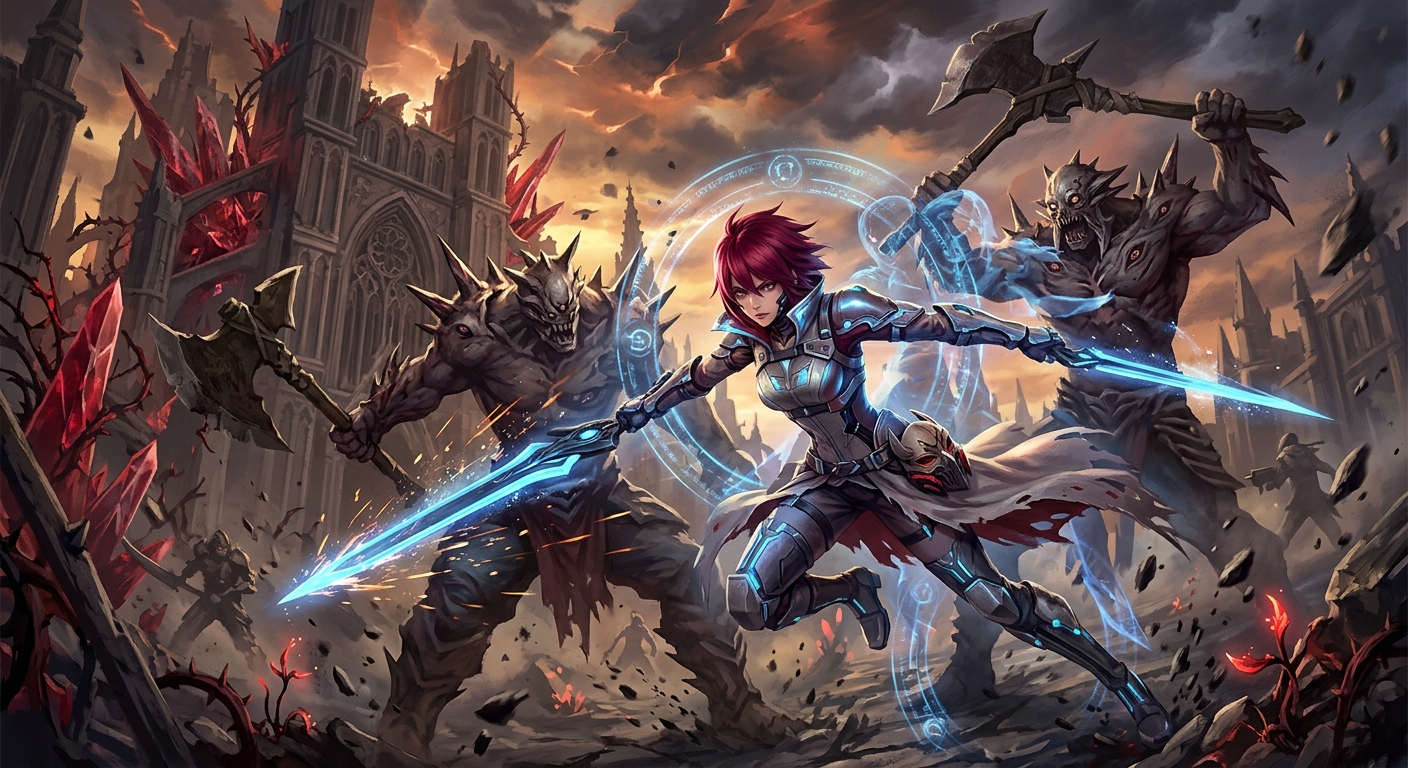
Bandai Namco is returning to its anime-infused Soulslike universe with Code Vein 2, a sequel that doubles down on dramatic storytelling, stylish combat, and the idea that your relationships matter just as much as your build. Drawing inspiration from the original game while charting a new course, this follow-up leans into an ambitious time-travel narrative, a more expansive world, and a dungeon that hits harder emotionally than some final bosses in other RPGs.
Instead of simply chasing difficulty, Code Vein 2 seems focused on making every victory and sacrifice feel personal. Your custom revenant still slashes through monstrous horrors, but this time your actions resonate across two different eras, reshaping characters’ fates and the state of the world itself.
An Anime-Tinted Soulslike That Knows What It Is
Soulslike fans will immediately recognize the foundation: demanding combat, punishing enemies, and intricate levels packed with shortcuts and secrets. What sets Code Vein apart is its unabashed embrace of anime aesthetics and melodrama.
- Highly stylized character designs with bold silhouettes and ornate weapons
- Cinematic cutscenes and emotional dialogue between missions
- Signature boss introductions that feel like season finales of a dark fantasy anime
Bandai Namco, which publishes FromSoftware’s Dark Souls series, has been steadily pushing into anime-styled action RPGs. The original Code Vein positioned itself as an experiment in merging Soulslike combat with partner-driven storytelling. The sequel refines that identity: less experimental, more confident in its own flavor.
A World Split Between Past and Present
The heart of Code Vein 2’s narrative is a new disaster and a new role for the player. You step into the boots of a Revenant Hunter, a resurrected warrior tasked with tracking down rogue revenants and horrors after a catastrophic event known as the Resurgence.
Early on, the protagonist forges a bond with Lou, a mysterious ally with the power to manipulate time. Through Lou, you gain the ability to traverse two timelines separated by a century:
- The Past: A world still fighting for survival, where key characters are human or only beginning their transformations.
- The Present: A ruined landscape scarred by the Resurgence, populated by horrors, corrupted revenants, and the consequences of history gone wrong.
This dual structure is more than a narrative gimmick. It influences how you explore, what quests you can undertake, and which relationships you can shape. As you fix anomalies in the past, the present world responds—sometimes in hopeful ways, sometimes with disturbing side effects.
| Timeline | What You Do | Impact on the Other Era |
|---|---|---|
| Past | Rescue key figures, uncover the origins of anomalies, acquire relics and keys. | Opens new areas, shifts character fates, and alters enemy presence in the present. |
| Present | Hunt horrors, cleanse corrupted versions of characters you met long ago. | Reveals the outcomes of your past choices and can unlock extra quests in the past. |
It’s a structure reminiscent of time-loop and branching-path narratives in other media, where each resolved anomaly is less a discrete quest and more a thread in an evolving tapestry of cause and effect.
The Emotional Weight of a Single Dungeon
One of the most striking parts of the preview build is a dungeon built around a seemingly simple objective: purify a contaminated water source. On paper, it’s a classic RPG setup; in practice, it becomes a case study in how Code Vein 2 wants to make its dungeons feel like emotional gauntlets, not just mechanical ones.
In the past, you meet a determined ally whose entire identity is wrapped up in protecting their community’s access to clean water. You fight alongside them, learn their doubts and fears, and gradually understand the cost of the choices they’re about to make. In the present, you face the corrupted horror that they eventually become, now guarding the very place they once swore to save.
The result is a dungeon that operates on two levels:
- Mechanically: A multi-phase quest split across eras, with environmental puzzles and escalating combat encounters.
- Emotionally: A tragedy you’re forced to witness from both ends—before corruption and after.
This approach echoes broader narrative design trends where player agency is tied to empathy. Instead of just mowing down bosses, you’re prompted to ask: How did they end up like this, and could things have gone differently? This aligns with observations from narrative game design research that players tend to form stronger memories around choices that affect character relationships than around pure mechanical challenges alone.1
Partners as More Than Combat Assistants
The original Code Vein made its mark with an AI partner system that accompanied you into battle. Code Vein 2 retains and expands on that idea, treating partners not simply as mobile spellbooks but as fully realized narrative anchors.
During the preview, partners serve several roles:
- Combat Support: They provide crowd control, healing, buffs, and clutch rescues when you’re on the brink of death.
- Story Carriers: They trigger bespoke dialogue in specific locations, react to enemy types, and contextualize the history of each area.
- Emotional Mirrors: Their responses subtly reflect the state of the timeline—hopeful in the past, weary or jaded in the present.
This emphasis on character interplay echoes Bandai Namco’s broader design philosophy in series like Tales of Arise, where party banter and relationship building are central to the experience.2 In Code Vein 2, that same DNA gets filtered through a darker, more melancholic lens.
Combat: Soulslike DNA With Anime Flair
Code Vein 2 remains firmly in the Soulslike space, but its moment-to-moment combat feels tuned around the synergy between your build and your partner. Expect the usual discipline of stamina management, dodge timing, and situational awareness, wrapped in a more flamboyant presentation.
Key Combat Elements
- Customizable Weapon Loadouts: Heavy blades, polearms, guns, and hybrid setups give you multiple ways to approach encounters.
- Blood- or energy-style abilities: Special attacks and buffs that can reshape your role mid-fight, allowing you to pivot between damage, support, or control.
- Synergy Attacks: Coordinated moves with your partner that reward timing and positioning, reinforcing the idea that you’re fighting as a duo.
What differentiates Code Vein 2 from some of the more punishing Soulslikes is its apparent willingness to offer more tools and safety nets. You may still die often, but you’re better equipped to respond—whether by experimenting with new abilities, adjusting partner choices, or leveraging timeline-specific advantages.
Progression Across Two Eras
Progression in Code Vein 2 looks to intertwine character growth with world restoration. You’re not just leveling up a stat sheet; you’re gradually mending a fractured timeline.
Based on early information and patterns from the first game, you can expect:
- Character Leveling: Standard experience-based progression, enhancing health, stamina, and damage output.
- Ability Unlocks: New skill trees or ability sets tied to exploration, boss drops, and story milestones.
- Relationship Progression: Deeper bonds with partners that unlock additional dialogue, side quests, or combat perks.
- World-State Changes: Areas of the present that visually and mechanically evolve as you fix anomalies in the past.
This approach is in line with a broader industry shift where many action RPGs tie progression not only to numbers but to visible changes in the game world, which can increase player satisfaction and perceived impact.3
Why Time Travel Works for a Soulslike
Time travel is notoriously tricky to pull off in storytelling-heavy games, often leading to paradoxes or narrative hand-waving. In Code Vein 2, it functions as a structural backbone rather than pure sci-fi spectacle.
Storytelling Advantages
- Seeing Causes and Consequences: Meeting a character as a hopeful fighter in the past, then confronting their monstrous form in the present, creates a tight loop of cause and effect.
- Layered Mystery Design: You can discover clues in one era that reframe your understanding of events in the other.
- Multiple Emotional Angles: A single location can tell several stories depending on which timeline you’re in.
This structure aligns with narrative design techniques seen in other games that span multiple eras, where revisiting familiar spaces under new circumstances can deepen emotional resonance and narrative cohesion.4
Accessibility and Approachability
Not every player wants the most brutal expression of the Soulslike formula. The first Code Vein was often praised for being more approachable than its inspirations, thanks to features like partners and flexible builds. Early impressions of Code Vein 2 suggest the sequel continues this trend, making the genre more accessible while preserving tension.
Potential accessibility-friendly elements include:
- AI partners that can revive you or draw aggro, smoothing out difficulty spikes.
- Build flexibility that encourages experimentation instead of punishing early-game choices.
- Story-first design: Emotional payoffs and character arcs that reward players who persist, even if they’re not Souls veterans.
This direction aligns with a wider move in the industry to offer more inclusive difficulty structures and options, as documented in accessibility guidelines championed by studios and organizations focused on player inclusion.5
What This Sequel Means for Anime Soulslikes
Code Vein 2 isn’t just another sequel; it’s a test of whether the anime Soulslike subgenre can stand on its own identity. Rather than chasing FromSoftware’s exact tone and difficulty, Bandai Namco seems to be embracing a niche where:
- Story and character drama are as central as boss design.
- Combat supports, rather than overshadows, emotional stakes.
- Visual style and tone lean toward high-drama anime rather than subdued gothic realism.
If Code Vein 2 delivers on its time-travel promise and emotional dungeon design, it could signal that the Soulslike template is flexible enough to support more story-forward, relationship-focused experiences without losing its core appeal.
Quick FAQ About Code Vein 2
Frequently Asked Questions
Is Code Vein 2 a direct continuation of the first game?
Code Vein 2 is positioned as a standalone follow-up. It builds on the universe and systems of the original but centers on a new cataclysm, a new protagonist, and a new cast. Knowledge of the first game will enhance your understanding of the world, but it’s not required.
Do I have to play solo, or are partners mandatory?
The design emphasizes having a partner with you in dungeons, both for mechanical variety and story reasons. Partners are tightly woven into the structure of combat and narrative, although final details about toggling or customizing partner behavior will depend on the full release build.
How important are my choices across the two timelines?
While the full branching structure hasn’t been fully detailed, the preview suggests your actions in the past can alter conditions in the present, influence character fates, and unlock new quests. Expect at least some key decisions to carry emotional and mechanical weight.
Is the game as difficult as Dark Souls?
Code Vein 2 aims for challenging but more approachable gameplay. Partner support, build flexibility, and time-based mechanics seem designed to give players more tools than classic Souls titles, though major boss encounters still demand focus and pattern recognition.
Does the time travel make the story confusing?
From early impressions, the game uses clear time markers and visual distinctions between eras, helping you track when and where events occur. The complexity comes from emotional consequences rather than from hard-to-follow chronology.
References
- Exploring Narrative Design in Video Games — Oxford University Press (chapter excerpt). 2018-05-10. https://global.oup.com/academic/product/storytelling-for-interactive-digital-media-and-video-games-9781138947839
- Tales of Arise Official Website — Bandai Namco Entertainment. 2023-11-15 (last updated). https://en.bandainamcoent.eu/tales-of/tales-of-arise
- The Psychology of Video Game Engagement — American Psychological Association (Monitor on Psychology). 2017-11-01. https://www.apa.org/monitor/2017/11/video-game
- Designing Games with Meaningful Choices — GDC Vault (Game Developers Conference). 2019-03-20. https://gdcvault.com/play/1026126/
- Xbox Accessibility Guidelines — Microsoft. 2023-09-12 (last updated). https://learn.microsoft.com/en-us/gaming/accessibility/xag/
Similar Articles



Read full bio of medha deb