Crimson Desert’s Empty Endgame: Why the Map Needs More Enemies
Crimson Desert’s early hours overflow with content, but players say the late-game map turns strangely quiet and combat-starved.
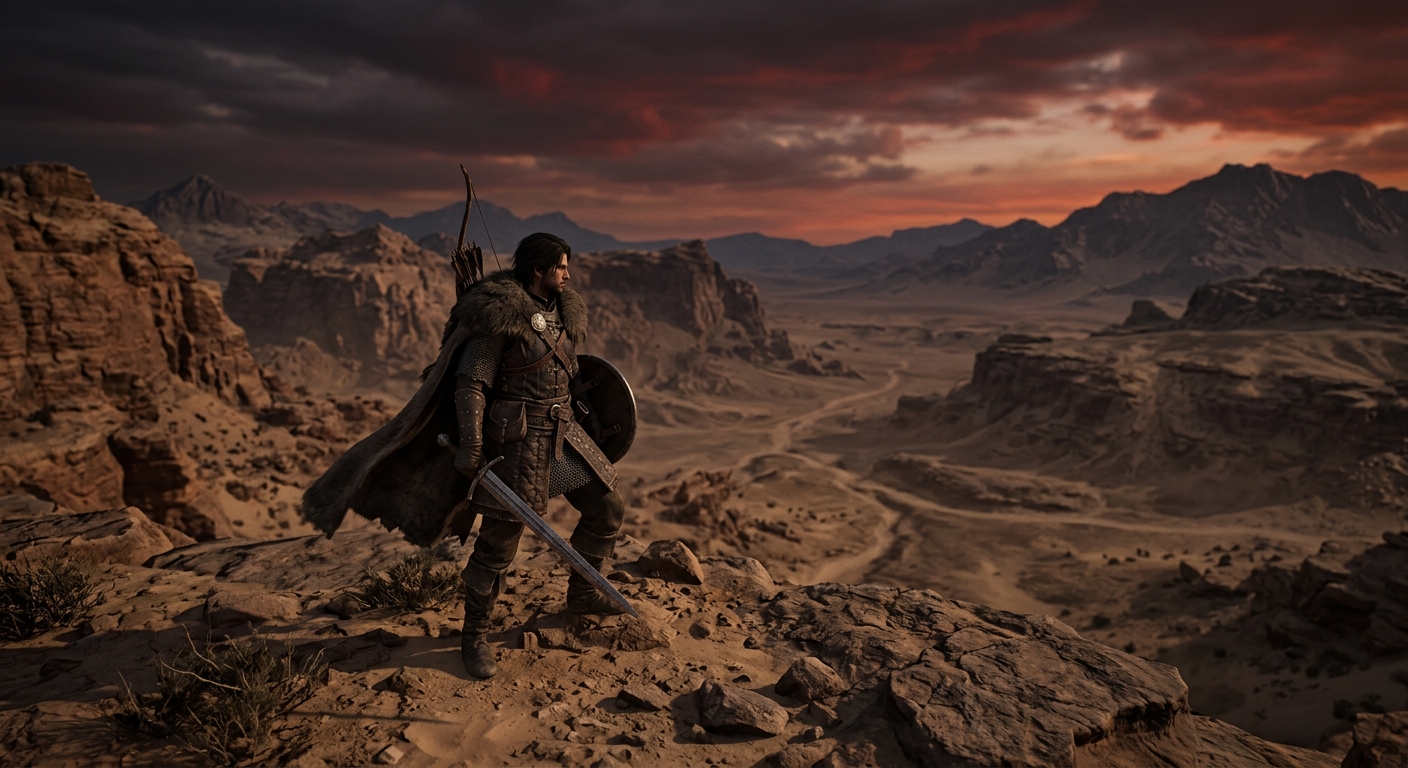
Crimson Desert has quickly built a reputation as a huge, lavish action-RPG where you can lose dozens of hours just wandering through its starting lands. Yet as more players blast their way into the late game, a very different pattern is emerging: the map looks enormous, but high-level players are literally running out of enemies to fight.
Reports from dedicated fans suggest that once you push past the opening regions and approach the endgame, large stretches of the world feel oddly quiet. Enemy density drops, combat encounters dry up, and your massive world map starts to feel more like a scenic backdrop than an active battlefield. That tension between early-game abundance and late-game emptiness raises questions about how the game’s map is structured and where Pearl Abyss should focus future updates.
This article digs into why players feel the endgame is underpopulated, how open-world design can unintentionally lead to sparse high-level content, and what practical steps the developer could take to transform Crimson Desert’s late-game map into something worthy of its spectacular visuals.
From Overwhelming Start to Underwhelming Finish
One of the most striking things about Crimson Desert is how much content it pours into the opening hours. Many players report spending well over a hundred hours in the initial region alone, binging on side quests, bounties, collectibles, and exploration detours before even touching higher-level areas.
That early-game density sets strong expectations:
- Side activities everywhere: Bandit camps, small dungeons, and event markers crowd the map.
- Frequent combat: You rarely travel more than a short distance without stumbling into a fight.
- Reinforcing progression: Loot, experience, and crafting materials are tightly woven into exploration.
By the time players break out of the starting area, they expect the rest of the map to escalate that formula: more danger, tougher enemies, and even richer rewards. Instead, many are finding a strangely quiet world that seems to thin out just as their characters become powerful enough to handle more intense opposition.
Why High-Level Players Say the Map Feels Empty
When players describe the map as “empty” in the endgame, they rarely mean there is literally nothing on it. Instead, they’re reacting to a mismatch between what the world visually promises and the amount of actual combat content available at high level.
Key complaints about the late-game world
- Sparse enemy spawns in high-level zones: Large areas contain only scattered groups of foes, leaving long stretches of travel without meaningful combat.
- Out-leveled regions stay trivial: Earlier zones do not scale up, so returning there offers little challenge or incentive beyond nostalgia and cleanup.
- Limited repeatable combat activities: Once major strongholds, bosses, and story dungeons are cleared, there are few systems that keep enemies and encounters cycling.
- Visual scale vs. gameplay density: The map is vast, but the number of high-level enemy hot spots doesn’t match its apparent size.
The net result is that players capable of handling the game’s toughest content end up hunting for fights instead of being pulled naturally into them. For a combat-focused action RPG, that’s a serious pacing issue.
How Open-World Design Can Accidentally Create Empty Endgames
Crimson Desert is not the first large RPG to wrestle with an endgame that feels thinner than the rest of the experience. Many open-world titles face a similar problem: front-loaded worlds that lose steam once the main story and major side quests are complete.
Content front-loading and burn-out
RPG developers often pack the opening regions with activities for a simple reason: that’s where most players spend their time. Early content is designed to hook people, teach systems, and showcase the best of the game. Later zones, especially optional high-level areas, can sometimes receive less iteration and stress-testing, because fewer players reach them during development and testing schedules are constrained.
Research on player completion rates backs this up. For example, data collected by Steam and various publishers over the years shows a large percentage of players never finish long RPGs or big open-world games.1 That reality can push teams to invest heavily in the first 20–40 hours, sometimes at the expense of the final stretch.
Static level bands vs. scaling systems
Crimson Desert appears to lean toward distinct level bands for regions, rather than a fully dynamic scaling system. Static level ranges can be satisfying because they allow you to feel stronger as you progress, but they also introduce issues:
- Low-level regions quickly become trivial and are rarely revisited for challenge.
- High-level regions must carry most of the endgame burden, compressing demand onto a limited slice of the map.
- If enemy density in those top-tier zones is low, endgame players have nowhere to go for challenging fights.
Other RPGs and MMOs, such as Guild Wars 2, have used level scaling to keep old regions relevant by adjusting enemy levels and player stats when revisiting earlier zones.2 Crimson Desert does not need to copy that model exactly, but the current static structure makes thin late-game density much more obvious.
Enemy Density: The Heart of Combat-Driven Satisfaction
In an action RPG built on kinetic combat, enemy density is one of the most important levers the developer can tune. It affects pacing, perceived danger, and the feeling that the world is alive. When density drops too far below player expectations, the environment starts to feel more like a staging area than a living ecosystem.
What makes enemy density feel satisfying?
Even without knowing the game’s internal spawn logic, player reports highlight several underlying design principles:
| Design Element | Impact on Player Experience |
|---|---|
| Regular, predictable encounters | Reduces downtime; players feel consistently engaged while traveling. |
| Occasional high-threat clusters | Spikes of difficulty add excitement and encourage gearing and build optimization. |
| Regional identity | Distinct enemy types and behaviors make each part of the map feel unique. |
| Dynamic respawns/events | World feels reactive; previously cleared areas don’t stay permanently empty. |
When one or more of these pieces is missing in late-game zones, you get the sensation players are describing: vast swaths of terrain with little resistance, and a loop that turns from “fight, loot, move” into just “move.”
Why Running Out of Enemies Hurts Long-Term Engagement
A sparse endgame doesn’t just affect moment-to-moment enjoyment; it also undermines the systems that keep players invested post-story.
Weakens progression and loot hunting
Modern action RPGs rely on repeatable combat content to support:
- Gear progression: Farming specific enemies or areas for rare drops.
- Build experimentation: Testing new skills and combos on durable, threatening foes.
- Resource gathering: Obtaining upgrade materials from combat-heavy activities.
If there are too few high-level enemies to grind or too few challenging locations to farm, those systems stall out. Players geared for serious combat end up over-prepared for the content available, which removes the motivation to refine builds further.
Discourages exploration of late-game regions
Another casualty of low density is exploration itself. A big map is only as compelling as the reasons you have to traverse it. When new areas deliver stunning scenery but little resistance, exploration becomes something you do once for checklist completion rather than a loop you want to repeat.
Open-world design research suggests that players are more likely to revisit spaces that offer a mix of discovery, challenge, and reward rather than just one of those elements alone.3 Crimson Desert already nails the visual and atmospheric side; the missing ingredient in late-game regions is persistent danger and reward-driven combat.
Lessons from Other Large-Scale RPGs
Crimson Desert is arriving in a landscape crowded with other large RPGs and MMOs, many of which have already wrestled with similar problems. Looking at how other games addressed sparse endgames and lifeless maps offers clues for Pearl Abyss.
Dynamic events and rotating threats
Games like Destiny 2 and The Elder Scrolls Online use public events, world bosses, and rotating activities to keep zones alive long after release. Over time, these games have increased the frequency and variety of such events in response to feedback about emptiness or repetition.4
A comparable system in Crimson Desert could involve:
- Periodic invasions where enemy factions overrun parts of the map.
- Roaming boss-level monsters that move between regions on a schedule.
- Timed contracts or bounties targeting specific enemy types in high-level zones.
Re-leveling old areas
Some MMOs and live-service RPGs have retrofitted scaling systems into older content to keep maps relevant. For example, World of Warcraft has repeatedly re-tuned old zones in expansions, while games like Final Fantasy XIV use synced content and level caps to keep older dungeons viable.5
Crimson Desert does not necessarily need to scale every area, but a system that introduces high-level variants of existing regions, or that periodically boosts enemy levels in selected zones, could turn “dead” map sections into viable late-game hunting grounds.
What Pearl Abyss Could Do to Fix the Endgame Map
Given player feedback, there are several concrete directions Pearl Abyss could pursue to make Crimson Desert’s late-game more combat-rich without tearing up the existing world.
1. Increase enemy density in high-level corridors
The most straightforward adjustment would be to identify primary endgame travel routes and key wilderness corridors, then significantly boost enemy spawn rates and group sizes there. This avoids flooding the entire map while ensuring that late-game travel is rarely quiet.
- Create designated “war fronts” where factions are constantly clashing.
- Populate these corridors with elite enemies that drop desirable loot.
- Use visual cues like smoke, banners, and fortifications so players know where the action is.
2. Add repeatable endgame combat loops
To sustain long-term interest, players need repeatable activities that remain rewarding after clearing the main story content. Some possible frameworks include:
- Scalable strongholds: Enemy bases that can be re-occupied by stronger foes on higher tiers.
- Elite monster contracts: Daily or weekly missions to hunt powerful roaming enemies.
- Gauntlet-style arenas: Combat trials with escalating waves, tuned for best-in-slot gear and high-skill play.
These systems could be layered on top of existing locations to minimize new asset creation while dramatically increasing the amount of combat available.
3. Introduce limited, opt-in level scaling
Instead of fully dynamic scaling across the entire game, Pearl Abyss could adopt selective scaling options aimed at endgame players:
- A toggle or item that temporarily raises enemy levels in a chosen region.
- Faction incursions that temporarily scale the level and density of enemies in affected areas.
- High-level versions of key dungeons and strongholds unlocked after finishing the story.
This approach respects players who enjoy stomping low-level foes while giving those who want challenge a way to reactivate old zones.
4. Tie map changes to ongoing narrative updates
Pearl Abyss has already shown, through its patch notes and communication around known issues, that it is actively maintaining Crimson Desert and responding to technical feedback.6 Enemy density and endgame content could be folded into that live update strategy.
For example:
- Seasonal campaigns in which new enemy factions invade parts of the map.
- Story-driven map updates where the outcome of limited-time events permanently alters control of certain regions.
- New high-level zones gradually unlocked over time to expand endgame capacity.
Treating the world map as something that evolves in response to player actions and new patches would help counteract the perception that it’s “finished but empty” in the late game.
Balancing Performance, Visuals, and Density
Increasing enemy numbers is not just a design question; it also intersects with performance and technical constraints. More enemies on screen can mean heavier loads on consoles and PCs, especially in graphically demanding games like Crimson Desert that lean on advanced rendering techniques.
Pearl Abyss has already been shipping optimizations and technical fixes, including updates to upscaling technologies like AMD FSR and addressing platform-specific stability issues, as noted in recent video breakdowns and patch analyses.7 Any plan to raise enemy density must be dialed in carefully to avoid reintroducing performance problems.
Possible solutions include:
- Concentrating high density in limited hot spots rather than globally.
- Using more aggressive level-of-detail systems and culling for distant enemies.
- Providing a “performance-friendly” option where enemy cluster size is reduced on lower-end hardware.
FAQ: Crimson Desert’s Enemy Density and Endgame
Does Crimson Desert actually run out of enemies?
The game does not literally run out of enemies, but many high-level players report that once they reach the endgame, enemy clusters become much rarer, especially in certain regions. The map looks huge, yet the number of meaningful late-game combat opportunities feels limited.
Is the early game still worth playing?
Yes. Most feedback agrees that the early and mid-game are packed with content, including plentiful battles, story quests, and activities. The concern is mainly about how the experience changes once you move into the final stretch and post-story phase.
Why doesn’t Pearl Abyss just add more enemies everywhere?
Simply flooding the map with enemies can cause new issues: performance drops, repetitive combat, and difficulty spikes that feel unfair. The better approach is to strategically increase density in key areas, add repeatable endgame systems, and potentially introduce selective scaling.
Could future patches fix the empty-map feeling?
Yes, and that’s one reason players are urging Pearl Abyss to address this now. The studio is already issuing patches, balancing changes, and technical improvements. Expanding enemy density and endgame loops fits naturally into that ongoing live support roadmap.
Should I wait to play Crimson Desert until the endgame is improved?
That depends on what you value most. If you mainly care about a rich single-playthrough experience and story, the current version offers a substantial journey. If your focus is long-term endgame grinding and a constantly active map at max level, you may want to watch how Pearl Abyss responds to these concerns in upcoming updates.
Final Thoughts: A Great World That Needs a Busier Battlefield
Crimson Desert succeeds at building a vast, visually striking world and hooking players in its early hours with dense, satisfying combat. The problem is that this strong start raises expectations that the late game, with its powerful gear and advanced abilities, will turn the whole map into a grand battlefield. Instead, many high-level players are finding themselves with fewer enemies to fight just when they are most eager to flex their builds.
This isn’t an unsalvageable flaw; it’s a signpost for where Pearl Abyss can focus its live support. By carefully increasing enemy density in key regions, adding repeatable endgame combat systems, experimenting with selective scaling, and tying map changes to ongoing narrative updates, the studio could transform Crimson Desert’s endgame from a quiet stroll through beautiful scenery into the relentless, high-stakes adventure its world design clearly deserves.
References
- 2021 Year in Review — Steam (Valve). 2022-02-01. https://store.steampowered.com/news/group/4145017/view/3094541762401976435
- Guild Wars 2: Level Scaling — ArenaNet / GuildWars2.com. Accessed 2026. https://www.guildwars2.com/en/news/a-new-way-of-looking-at-leveling/
- Open-World Game Design: Enabling Player-Led Exploration — GDC (Game Developers Conference), talk by Matthias Worch. 2014-03-19. https://www.gdcvault.com/play/1020583/Open-World-Game-Design-Case
- This Week at Bungie – May 25, 2023 — Bungie. 2023-05-25. https://www.bungie.net/7/en/News/article/this_week_in_destiny_05252023
- Letter from the Producer LIVE Part LXXVII — Square Enix / Final Fantasy XIV. 2023-05-12. https://na.finalfantasyxiv.com/lodestone/topics/detail/6c54c4c555f2c52a5a8c3ee75b5a96b8f8905f2e
- [Notices] Known Issues – Crimson Desert — Pearl Abyss. 2026-03-05 (updated periodically). https://crimsondesert.pearlabyss.com/en-US/News/Notice/Detail?_boardNo=68
- AMD FidelityFX Super Resolution (FSR) 2 — Advanced Micro Devices (AMD). 2022-05-11. https://gpuopen.com/fidelityfx-superresolution-2/
Similar Articles






Read full bio of Sneha Tete