Crimson Desert Fan’s Marathon Trophy Quest
A Crimson Desert player pushed past exhaustion to secure platinum.
A platinum chase that went far beyond ordinary dedication
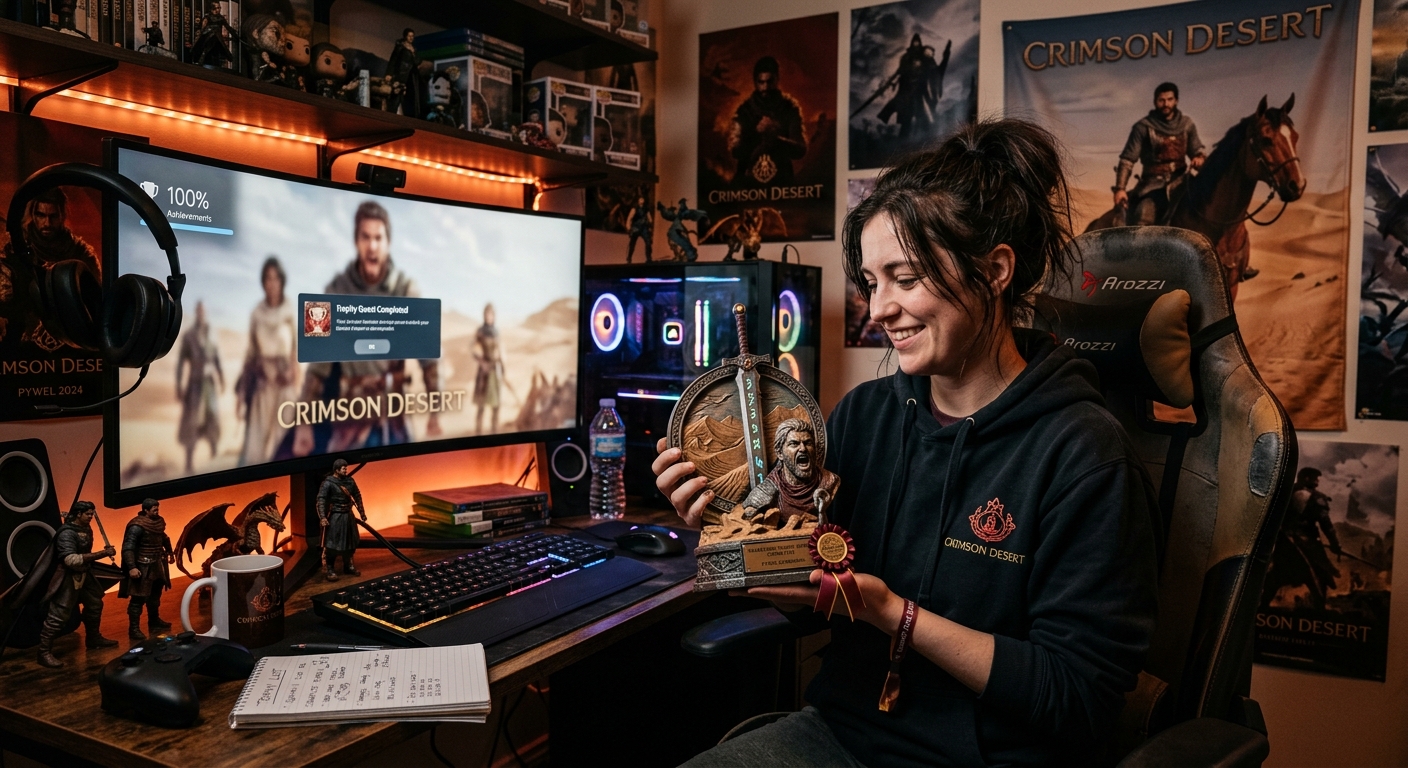
Every trophy hunter knows that some games ask for patience, persistence, and a little bit of obsession. Crimson Desert, the ambitious open-world action RPG from Pearl Abyss, appears to be one of those games. But one player took that commitment into territory that most people would consider impossible to sustain: a grueling routine of ultra-long play sessions paired with only brief sleep windows.
The story quickly spread through gaming communities because it wasn’t just about finishing a difficult checklist. It became a conversation about endurance, self-control, and the strange way modern games can turn completion into a test of human limits. Pearl Abyss even reacted with surprise, and not because the player was merely efficient. The company seemed genuinely alarmed by the strategy used to reach the platinum milestone.
What makes the tale so striking is that it sits at the intersection of two very different realities. On one side is the reward loop built into trophy systems, where every collectible, side activity, and hidden objective can tempt players to keep going. On the other is the body’s basic need for rest, which does not disappear just because a game is especially engrossing. That tension is what gave this story its unusual staying power.
Why this kind of gaming feat draws attention
Platinum trophies have a special status in console gaming. They are not usually awarded for a single victory or a straightforward campaign clear. Instead, they represent total mastery or near-total completion. That often means side quests, mini-games, combat challenges, collectibles, and other time-consuming tasks all need to be cleared before the final reward appears.
For many players, earning that badge is less about practical value and more about personal satisfaction. It signals that a game has been explored thoroughly and that the player has gone well beyond the critical path. In that sense, the prestige of a platinum trophy comes from effort, not just skill.
In the case of Crimson Desert, the sense of achievement is magnified because the game is sprawling and content-heavy. Completion can demand a large time investment even under normal circumstances. That means any unusual run to the platinum mark instantly becomes notable, especially when it happens far sooner than expected and under conditions that sound more like a survival experiment than a leisure activity.
The routine that shocked fellow players
The player at the center of the story described a highly regimented schedule: exceptionally long stretches of play followed by only a short sleep break, repeated again and again until the trophy list was finished. The explanation was simple, direct, and unsettling. In short, the player believed that eating properly reduced the need for sleep, allowing marathon sessions to continue with minimal interruption.
That method helped the player progress quickly through the many chores that trophy hunters often dread most. Time-heavy objectives, repeated mini-games, and collectible cleanup can stretch a completion route into dozens or even hundreds of hours. By minimizing downtime, the player essentially compressed the calendar cost of the hunt, even if the total fatigue cost was much higher.
According to the account, this was not a one-off burst of concentration. It was a repeatable cycle built around long gaming blocks and short rest periods, broken only for necessities like showering or buying food. The result was a completion pace that made other players pause and do the math.
Pearl Abyss reacts to the achievement
Developers are used to seeing players do creative, difficult, and sometimes ridiculous things in pursuit of 100% completion. Still, the response from Pearl Abyss showed that this case stood out even by those standards. A company representative reportedly expressed admiration for the speed of the feat while also sounding uneasy about the apparent sleep schedule behind it.
That reaction is understandable. Game studios often celebrate passionate communities, but they also know that some forms of dedication can edge into unhealthy territory. When a player is compressing a massive completion grind into a near-constant loop of play and brief rest, the accomplishment becomes impossible to separate from questions about well-being.
What Pearl Abyss noticed was not just the trophy itself, but the scale of effort required to get there so quickly. The studio’s surprise helped turn a niche gaming achievement into a broader talking point. Instead of simply becoming another impressive completion story, it became a cautionary anecdote with a viral edge.
How long platinum hunts can really take
Completionists often underestimate the difference between “finishing” a game and truly clearing everything it offers. A title like Crimson Desert may contain enough optional material to turn the platinum journey into a long-term project. That is one reason why a dramatic speedrun to the top of the trophy ladder stands out so clearly.
Even when a player is highly skilled, efficient trophy hunting usually involves planning. Many completionists work from roadmaps, checklists, and community guides to avoid wasted motion. But even perfect routing does not eliminate the hours required for repetition-heavy tasks. A trophy list can be technically simple and still be physically draining because of sheer volume.
Below is a simplified look at why platinum hunts in large open-world games can become so time-consuming.
| Factor | Why it adds time |
|---|---|
| Open-world size | Large maps create more traversal, more discoveries, and more side tasks. |
| Collectibles | Hidden items often require repeated searching or guide use. |
| Mini-games | Optional activities can be fun, but they still need repeated completion. |
| Combat challenges | Difficulty spikes or special objectives can require retries and optimization. |
| Knowledge tracking | Some trophies depend on filling out in-game encyclopedias or records. |
The hidden cost of “efficient” endurance gaming
From the outside, the routine may look like extreme discipline. The player is awake for long stretches, focused on a single objective, and determined enough to keep going despite fatigue. But efficiency in gaming does not always mean safety in real life. Short sleep windows can affect attention, mood, reaction time, and decision-making, even when the person feels they are functioning normally.
That is why the player’s own warning matters. They reportedly acknowledged that the routine was unhealthy and advised others not to copy it. That admission is important because it separates the story from celebration-only coverage. This was not presented as a recommended tactic, but as an extreme personal choice made to get through a long checklist quickly.
Games are designed to reward persistence, and trophy systems can make progress feel tangible in a way that is deeply satisfying. Yet there is a difference between a disciplined session and a sleep-starved grind. If the body is pushed too hard, the risk is not just fatigue; it is also impaired judgment, reduced focus, and a higher chance of making mistakes both in and out of the game.
Why the story resonated with the gaming community
Part of the reason this story spread so quickly is that it combines several things gamers immediately understand: the grind of full completion, the bragging rights of a platinum trophy, and the universal temptation to keep playing just one more hour. It also introduces an unexpectedly human element. Most people have experienced a moment of poor sleep after “getting in the zone,” but very few have turned that into a repeated schedule.
There is also a comic contrast at the center of the story. A prestigious game company notices a player’s accomplishments and then becomes concerned that the method used to achieve them may be worse than the challenge itself. That tension makes the achievement feel both impressive and slightly absurd.
In a broader sense, the reaction says something about the modern relationship between players and large games. As worlds become bigger and checklists become denser, the line between playing for fun and working through a massive project can blur. Some players embrace that challenge with pride. Others look at it and wonder how anyone could possibly maintain that pace.
What trophy hunters can take from it
Not every completion run needs to turn into a physical stress test. The real lesson here is not that longer sessions equal better results, but that planning and pacing matter. Trophy hunters who want to finish demanding games efficiently can still do so in a way that respects rest and attention span.
- Break goals into smaller chunks instead of trying to clear everything in one push.
- Use guides strategically to reduce wasted movement and repeated mistakes.
- Take short breaks before fatigue starts to affect decision-making.
- Track progress so you do not repeat tasks you have already completed.
- Remember that a faster finish is not worth sacrificing health or basic recovery.
The strongest completion stories are not always the most extreme ones. Often, they are the ones built on steady progress, smart route planning, and enough rest to stay sharp. That approach may not generate the same viral reaction as a 56-hour session, but it is much more sustainable for anyone who wants to enjoy gaming over the long term.
Frequently asked questions
Was the player trying to speedrun the entire game?
No. The focus was on earning the platinum trophy, which means completing all trophy requirements rather than racing through the main story as quickly as possible.
Why did Pearl Abyss respond so strongly?
The studio was impressed by the accomplishment but concerned by the sleep pattern described by the player. The combination of endurance and minimal rest made the story stand out.
Is this a normal way to get a platinum trophy?
Not at all. Most players who go for full completion spread the work across more balanced sessions and do not rely on extreme sleep restriction.
Does this kind of play schedule sound healthy?
No. Even the player acknowledged that the routine was unhealthy and advised others not to imitate it.
References
- Crimson Desert super fan “played 56 hours straight and slept 8” on repeat to earn its Platinum trophy, and even Pearl Abyss is concerned — GamesRadar. 2026-05-20. https://www.gamesradar.com/games/open-world/crimson-desert-super-fan-played-56-hours-straight-and-slept-8-on-repeat-to-earn-its-platinum-trophy-and-even-pearl-abyss-is-concerned-thats-not-enough-sleep/
- Crimson Desert Player Unlocks Platinum With 56-Hour Sessions — MP1st. 2026-05-20. https://mp1st.com/news/crimson-desert-player-earns-platinum-in-56-hour-sessions
- Crimson Desert Trophy Guide & Roadmap — PowerPyx. 2026-05-20. https://www.powerpyx.com/crimson-desert-trophy-guide-roadmap/
Similar Articles






Read full bio of Sneha Tete