
Crimson Desert Focus Gliding: How Players Broke the Speed Limit
A deep dive into Crimson Desert’s fan-discovered focus gliding tech, why it’s so powerful, and what it reveals about open-world traversal design.
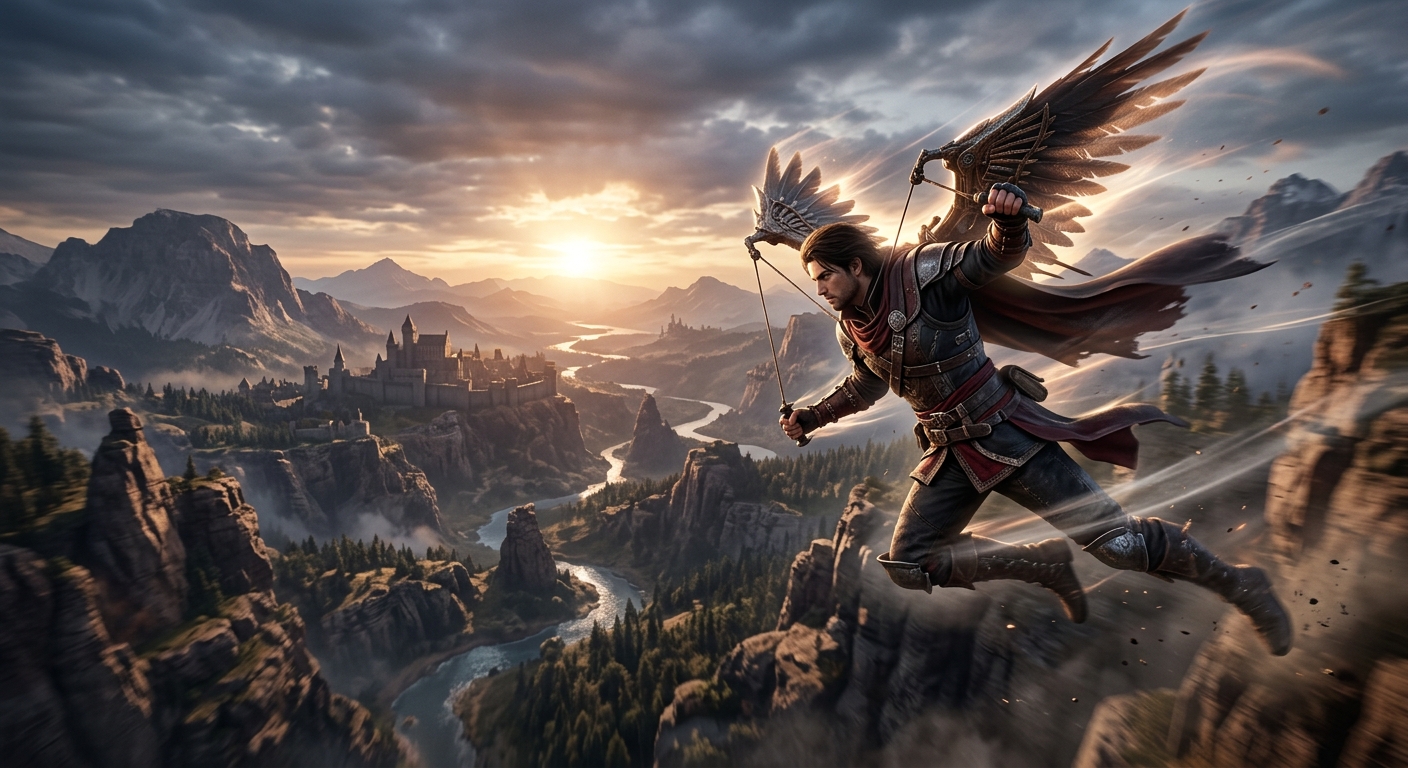
Crimson Desert’s world is built for dramatic movement: soaring glides, mid-air martial arts, and gravity-defying stunts. But within days of launch, players uncovered a movement trick that pushes the game’s flight system far beyond its intended limits. By combining focus mode with aerial abilities, you can maintain a boosted glide speed for huge distances, essentially turning your character into a living airship.
This guide explores how the technique works, why the community is so excited about it, and what it reveals about modern open-world design. It’s based on community discoveries and reporting, but all explanations and structure here are original and written from scratch.
Why This Gliding Tech Is a Big Deal
Open-world games live and die by how fun it is to move from place to place. If traversal feels sluggish, even the most beautiful landscapes start to feel like chores. That’s why players get so enthusiastic when they find techniques that increase speed and freedom of movement.
In Crimson Desert, the focus gliding tech (often called “focus boost” or similar by the community) matters because it:
- Drastically increases travel speed compared to standard gliding.
- Lets you cross huge stretches of the map with very efficient stamina use.
- Makes the act of traveling feel like a skill to master, not just a means to an end.
- Encourages experimentation with the game’s physics, skill trees, and gear systems.
The result is a traversal style that feels closer to high-level movement tech in character action games than a simple “hold button to glide” mechanic.
How Focus-Based Gliding Works at a High Level
At its core, the trick exploits how Crimson Desert handles momentum and time dilation during focus. Focus slows the world around you while your character executes precision actions. The flight system, meanwhile, is designed around gradual loss of speed and stamina while gliding.
When players discovered that a forward-moving aerial maneuver could be frozen at its peak speed by entering focus at the right time, a new kind of travel emerged: a glide that feels permanently boosted for as long as your stamina (or spirit) holds out.
Although people use slightly different names and exact inputs, most versions of the tech share the same pillars:
- Launch yourself into the air using jumps or aerial skills.
- Begin gliding as usual.
- Trigger focus mode just as your wings deploy or just as a forward-moving aerial roll kicks in.
- Trigger a forward propulsion ability (often tied to the focus tree) at the optimal moment.
Executed correctly, your character rockets forward and stays at this higher speed while the game’s usual deceleration is dampened or delayed.
The Skills and Systems That Make It Possible
While exact skill names and trees can vary depending on your build, most community-discovered versions of the tech rely on a few categories of abilities. Here’s a conceptual breakdown of what you typically need, without copying any one guide’s exact labels or inputs.
| System | What It Contributes | Why It Matters for the Tech |
|---|---|---|
| Basic Flight / Glide | Lets you sprout wings and travel through the air. | Forms the baseline state that gets overwritten by the boosted momentum. |
| Aerial Roll / Evade | A quick, forward-moving maneuver while airborne. | Provides the burst of horizontal acceleration that the trick locks in. |
| Focus Mode | Slows the world and alters stamina and timing. | Prevents your speed from dropping normally and lets you chain abilities. |
| Focus-Based Propulsion | A forward blast or strike triggered during focus. | Stacks on additional momentum and can catapult you into maximum glide speed. |
| Height-Generating Skills | Launches and aerial strikes that push you upward. | Give you enough altitude to convert into long-distance boosted glides. |
Because this tech depends on mid-to-late skill unlocks, it effectively turns advanced traversal into a kind of reward for players who invest in mobility-related upgrades.
Step-by-Step: A Generic Focus Glide Sequence
The exact button icons differ across platforms, and community versions of the trick vary. But conceptually, most players follow a pattern similar to the one below. This is presented in abstract terms to avoid copying any one source, and to make it easier to adapt to your own control scheme.
- Gain altitude
- Jump or double-jump off a cliff, rooftop, or elevated terrain.
- Optionally, chain in air-launch skills to go even higher if your stamina allows.
- Initiate your glide
- Trigger your wings at a point where you still have a good chunk of stamina.
- Keep your directional input neutral for a moment to observe your base glide speed.
- Enter focus at the critical instant
- Activate focus just as your wings appear, or shortly after, depending on the variant.
- The goal: be in focus while your next aerial maneuver kicks in.
- Perform a forward aerial roll or evade
- While in focus and gliding, execute your aerial roll toward your desired direction.
- This roll temporarily accelerates you forward.
- Trigger your focus-based propulsion
- After the roll has moved you forward a bit, trigger your focus-linked burst (often a skill from the focus or spirit-related tree).
- If you activate it too early, you may not get the full boost; too late, and you’ll lose momentum.
- Ride the boosted glide
- Maintain your forward direction and remain in focus as long as your resources allow.
- If timed correctly, your glide maintains a much higher speed than normal, often feeling almost like a rocket-powered dash through the sky.
Some players choose to skip the propulsion step and rely only on the roll inside focus. This version tends to be slower but more stamina-efficient, trading raw speed for distance.
Speed vs. Endurance: Choosing Your Glide Style
One of the most interesting aspects of this tech is that there isn’t just a single “correct” version. Depending on your priorities, you can tune the technique in different ways.
High-Speed Burst Gliding
If you care about maximum speed over moderate distances, you can lean on a more aggressive version of the tech:
- Use multiple upward skills to gain significant height.
- Combine focus, aerial roll, and propulsion as often as your cooldowns and stamina allow.
- Accept that you’ll burn through your resources quickly, but cross large chunks of the map in record time.
Efficient Long-Range Gliding
If your goal is to cover the most ground per point of stamina, a more conservative approach works better:
- Use the aerial roll within focus but skip the extra propulsion when possible.
- Allow your glide to stabilize at a slightly boosted speed that consumes stamina more slowly.
- Use height-generating skills only when necessary to clear terrain or reach specific objectives.
Having both options gives players a sense of agency in how they traverse Pywel: sprinting when they’re in a hurry, or leisurely soaring when they want to appreciate the scenery.
Why Players Hope It Never Gets Patched
Whenever a powerful movement tech emerges, the community quickly starts debating whether it’s an intentional feature or an exploit. In this case, the answer isn’t obvious: the interaction sits at the intersection of multiple legitimate systems (flight, focus, aerial combat), which makes it feel like a happy accident rather than a simple bug.
Players are vocal about wanting this tech to stay for several reasons:
- Traversal feels skill-based. Mastering inputs and timing turns travel into a mini-game, rewarding practice in the same way advanced combos do in action titles.
- It unlocks the map’s potential. The world feels more connected when you can glide from mountain to city in a single streak of motion.
- It matches the game’s fantasy. Crimson Desert heavily markets cinematic movement and airborne combat; high-speed gliding supports that fantasy.
- It encourages experimentation. Players feel a sense of ownership when they discover a technique the developers didn’t explicitly spell out.
Other games have encountered similar situations. In Warframe, for example, advanced mobility techniques like “coptering” were so central to the community’s playstyle that future updates reworked movement rather than removing high-speed traversal entirely, leading to the modern bullet-jump system documented by its developer Digital Extremes in patch notes and movement updates.1
Movement Tech and the Culture of Discovery
At a broader level, the focus gliding phenomenon highlights how crucial player-discovered tech has become in action and open-world games. Many of the most beloved systems in modern titles began as tricks that players found by experimenting with physics, animation cancels, or systemic interactions.
Designers today often choose to embrace these discoveries. Research on player agency in open-world design suggests that systems which allow for emergent actions—things the designers didn’t tightly script—tend to increase long-term engagement and player satisfaction.2 When traversal becomes a canvas for experimentation, the map feels less like content to be consumed and more like a playground.
Crimson Desert’s gliding tech sits squarely in this tradition. Even if it was not intentionally designed as a formal feature, its popularity shows that players value depth and expression in how they move.
Tips for Practicing the Technique
If you want to reliably incorporate focus gliding into your everyday play, it’s worth practicing deliberately rather than trying to improvise during important quests.
- Find a safe training ground. Choose a tall cliff or tower with a clear drop and minimal enemies so you can repeat attempts without interruption.
- Separate the components. First, practice smooth takeoffs and glides. Then practice entering focus cleanly in mid-air. Finally, add the aerial roll and propulsion.
- Pay attention to stamina. Learn how many attempts you can make from a single jump before dropping dangerously low.
- Record your runs. Using built-in recording tools on PC and consoles helps you see exactly when your inputs land relative to animation frames.
- Experiment with camera angles. A slightly lowered camera can make it easier to feel the moment when your roll finishes and your propulsion should trigger.
What This Means for Future Patches
Live-service and modern AAA games evolve rapidly through patches and balance updates. Flight mechanics and stamina systems are frequent targets for tuning in open-world titles; for instance, Genshin Impact and other action RPGs have adjusted stamina costs and movement speeds multiple times based on player feedback, as documented in their official patch notes.3
For Crimson Desert, several outcomes are possible:
- Full embrace. The developers might treat focus gliding as a feature, polishing it, documenting it in tutorials, and maybe even designing challenges around it.
- Soft adjustment. They could leave the general idea intact but tweak stamina costs, cooldowns, or speed caps to prevent extreme abuse.
- Direct removal. They might change how focus interacts with aerial momentum so the exploit no longer functions, replacing it with more predictable flight behavior.
The community’s reaction will likely influence this decision. Research on player-developer communication in online games notes that studios who transparently explain balance changes and reference community concerns often retain more trust when controversial tech gets nerfed.4 If the developers do adjust focus gliding, clear patch notes and rationale will be key.
Frequently Asked Questions (FAQ)
Is focus gliding considered cheating or bannable?
Based on typical industry practice with physics-based movement tricks, using focus gliding as described by the community would normally be treated as using in-game systems as provided, not as cheating. Enforcement actions are usually reserved for third-party software, malicious exploits, or network manipulation, as noted in many studios’ official terms-of-service and anti-cheat policies.5 Always consult Crimson Desert’s official support pages if you’re unsure.
Do I need late-game gear to use the tech?
You generally need mid-game skills tied to flight, focus, and aerial maneuvers; you don’t necessarily need rare gear. Certain equipment and elemental effects can enhance the experience by giving you more height or stamina recovery, but the core interaction relies on abilities, not loot.
Can this be used in story missions and boss fights?
In open areas and large arenas, yes, you can often use focus gliding to enter encounters from unusual angles or quickly reposition. In tightly scripted missions, indoor segments, or instanced boss rooms, your opportunities may be limited simply because you lack space to build altitude and momentum.
Does it work on all platforms?
The underlying systems—focus, aerial rolls, and flight—are part of the core game, so the tech is conceptually platform-agnostic. The exact timing and feel can differ slightly due to frame rate and controller differences, but players on PC and consoles can all perform variants of the technique with practice.
What if it gets patched out?
If a future patch removes or heavily nerfs focus gliding, you can still apply the skills you developed to other forms of movement. Precision timing, camera control, and resource management are transferable to any traversal system, and developers sometimes replace removed tricks with more polished, official versions in later updates.
Final Thoughts
Crimson Desert’s focus gliding phenomenon shows how much joy players find in bending the rules of a game’s physics without fully breaking them. It’s fast, stylish, and surprisingly deep—exactly the kind of discovery that fuels community videos, guides, and debates.
Whether the developers lean into it or tune it down, the tech has already done something important: it’s made traversal itself feel like a high-skill activity worth learning and mastering. In a sprawling open world, that might be the most valuable feature of all.
References
- Update 17: Parkour 2.0 — Digital Extremes (Warframe). 2015-08-31. https://www.warframe.com/news/update-17-parkour-20
- Emergent Gameplay: Past, Present, and Future — Miguel Sicart, IT University of Copenhagen. 2014-06-01. https://itu.dk/people/sicart/docs/EMERGENTGAMEPLAY.pdf
- Version 1.2 Update Details — miHoYo / HoYoverse (Genshin Impact). 2020-12-21. https://genshin.hoyoverse.com/en/news/detail/7993
- Communities of Play: Emergent Cultures in Multiplayer Games and Virtual Worlds — Celia Pearce & Artemesia, MIT Press. 2009-08-28. https://mitpress.mit.edu/9780262162578/communities-of-play/
- Xbox Enforcement: Terms of Use & Code of Conduct — Microsoft. 2023-09-01. https://www.xbox.com/legal/enforcement
Similar Articles





Read full bio of Sneha Tete