Crimson Desert Mod Revives Hidden Food Risk System
How a fan-made mod uncovers Crimson Desert’s dormant survival-style food mechanics and turns every meal into a tactical risk.
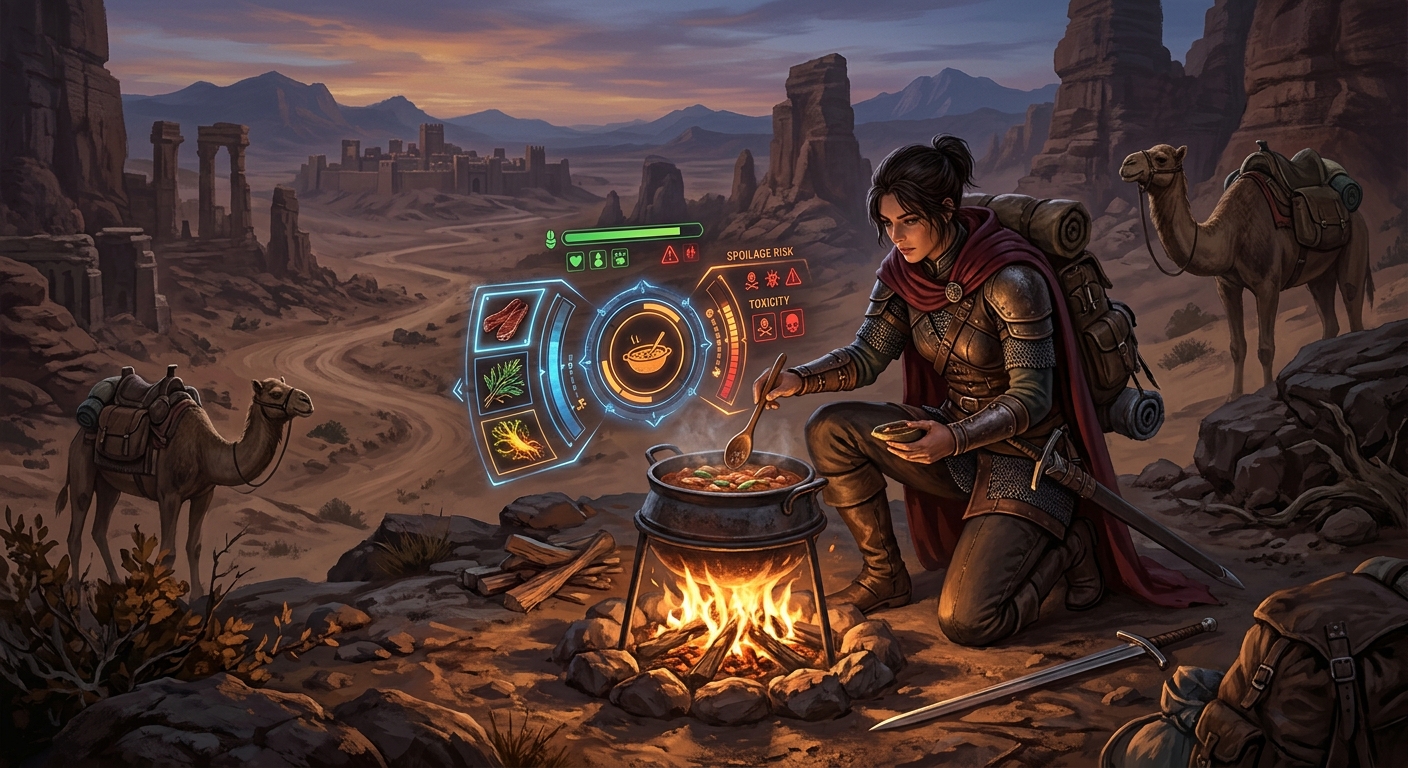
Crimson Desert launched as a vast action RPG with a dense world, cinematic story moments, and a fast-paced combat loop. Under the surface, however, modders have discovered that the game was shipped with a surprisingly elaborate food consequence system that never made it into the final release. A new fan-made mod digs that dormant design out of the game files and activates it, transforming meals from simple healing items into high-stakes survival tools.
This article explores what the mod changes, how the hidden system works, why it matters for RPG design, and what it reveals about modern game development practices.
From Simple Healing to Strategic Eating
In the base version of Crimson Desert, food largely functions as expected for many action RPGs: you eat or drink to restore health, tweak a few stats, or gain short-term buffs. It is helpful, but rarely interesting, and almost never dangerous. The newly restored system reimagines food as a two-edged sword with long-lasting repercussions.
By reactivating dormant data and logic found in the game files, the mod turns food into an integrated survival mechanic. Instead of being a risk-free source of recovery, powerful dishes can now:
- Grant strong elemental resistances and combat buffs.
- Protect against specific endgame threats and status effects.
- Inflict adverse conditions such as poisoning or drunkenness when abused.
The result is a loop where every bite carries a meaningful decision. Overreliance on powerful foods can backfire, while safer meals offer modest benefits with minimal risk.
The Hidden Food Framework Inside Crimson Desert
The modder behind this restoration project reports finding an extensive framework for food-related skills and modifiers inside Crimson Desert’s shipped data. Although the system was never fully activated by the developers, the foundations were already there.
Food Skills and Categories
According to the mod author’s analysis, the dormant system includes dozens of food-related skills grouped into numerous categories. These categories cover a broad range of effects, such as:
- Temperature management (heat and cold resistance).
- Elemental damage resistances.
- Combat-oriented buffs for offense and defense.
- Protection from late-game mechanics and exotic status conditions.
By wiring these skills back into active gameplay, the mod provides a glimpse of how Crimson Desert might have played if Pearl Abyss had fully embraced its survival leanings at launch.
Types of Effects Enabled by the Mod
While exact values and categories are tuned by the mod, the underlying vision is to connect food with a wide spectrum of mechanical hooks. Representative examples include:
- Recovery: Health regeneration, spirit recovery, and resource sustain over time.
- Elemental protection: Resistance against fire, ice, lightning, and other damage types.
- Endgame immunities: Protection from otherwise punishing late-game status effects.
- Negative outcomes: Food poisoning, intoxication, and other harmful debuffs for overeating or depending on potent dishes.
Because all of this logic already exists in the code and asset data, the mod’s main role is to expose and rebalance it rather than invent an entirely new mechanic.
Risk and Reward: Why Food Now Feels Dangerous
The defining feature of the restored system is that power comes with a price. The more dramatic an item’s positive effect, the more likely it is to carry serious drawbacks. This changes how players approach food across the entire game.
Safe Snacks vs. High-Risk Meals
The mod splits food into rough tiers of safety. Low-impact meals remain mostly harmless; they provide modest bonuses without notable side effects. High-impact meals deliver stronger advantages but can unleash severe consequences if misused.
Conceptually, foods are:
- Low-risk: Mild buffs, generally safe to spam.
- Moderate-risk: Stronger effects and a chance of debuffs, especially if stacked or overused.
- High-risk: Powerful buffs balanced by significant debuffs, status effects, or cumulative risk.
| Food Tier | Positive Effects | Potential Consequences | Best Use Case |
|---|---|---|---|
| Low-risk | Small healing, light resistance boosts | None or very minor debuffs | Routine adventuring, trash mobs |
| Moderate-risk | Noticeable buffs, regen, better defenses | Chance of mild to moderate debuffs | Elite fights, tough exploration zones |
| High-risk | Strong buffs, niche immunities | High chance of nasty status effects | Boss battles, desperate situations |
Debuffs That Change Your Playstyle
Negative statuses introduced or emphasized by the mod can alter how players approach combat and exploration. For example:
- Drunkenness: May affect movement, accuracy, or control responsiveness, forcing players to adapt.
- Food poisoning: Could reduce health over time or weaken recovery rates, undermining the very healing players tried to secure.
- Other exotic debuffs: Certain foods protect against specific threats but might leave the character more vulnerable to others.
These drawbacks transform food from a passive background system into a feature that actively shapes moment-to-moment gameplay.
Difficulty Presets: Customizing How Punishing Food Can Be
Not every player wants their RPG to feel like a survival game, and the mod takes that into account. The author provides several difficulty presets that regulate how harsh the food system becomes, allowing players to pick a level that matches their tolerance for risk.
More Forgiving Settings
On the gentler end, a preset often described as an “adventure-friendly” option ensures that only the most powerful foods carry moderate risk. Under this configuration:
- Everyday meals are mostly safe and convenient.
- Mid-tier foods offer robust buffs with manageable side effects.
- High-end dishes remain dangerous but not overwhelmingly so.
This setup is ideal for players who want added depth without having the entire game revolve around resource anxiety.
Hardcore Survival Mode
At the other extreme is a preset that effectively transforms Crimson Desert’s culinary system into a full-blown survival challenge. In this mode:
- Even moderate foods can carry significant drawbacks.
- Every meal becomes a serious tactical choice.
- Stacking multiple dishes can result in layered debuffs that must be carefully managed.
Players who enjoy permadeath settings or brutal survival titles will likely gravitate to this configuration, as it forces them to plan each meal as carefully as each battle.
How the Mod Changes Exploration and Combat
Reactivating a complex food consequence system has ripple effects across nearly every aspect of Crimson Desert. Exploration, combat, and preparation all become more deliberate and interconnected.
Planning for the Environment
Environmental hazards play a larger role once temperature and elemental resistances are tightly linked to food. Players may now need to:
- Stock up on heat-resistant dishes before trekking into scorching regions.
- Keep cold-friendly rations ready for snowbound mountains or icy dungeons.
- Balance the need for environmental protection against the risk of consuming high-tier meals.
This mirrors broader trends in RPG and survival design, where weather and climate increasingly influence tactical choices.
Battles Shaped by Dietary Choices
In combat, pre-fight preparation takes on a new weight. The right combination of dishes can provide:
- Improved regeneration, allowing for longer endurance in drawn-out fights.
- Specific resistances to enemy elemental damage types.
- Immunity to particular status effects used by bosses or elite enemies.
However, these benefits must be weighed against the chance of entering a critical encounter with a lingering debuff from earlier meals. A boss fight becomes not just a mechanical challenge, but a test of resource timing and foresight.
Food Systems in Context: Survival and RPG Design
Food mechanics have long been a staple of survival and RPG titles. The restored system in Crimson Desert sits at the intersection of these genres, borrowing elements from both.
Survival Game Influences
Survival games often use hunger, thirst, and environmental hazards to drive resource management and exploration pacing. Research analyzing player motivation in survival games notes that such systems can create a continuous tension between safety and risk, encouraging planning and adaptive strategies.1 Crimson Desert’s hidden food framework echoes this philosophy by:
- Attaching meaningful costs to high-value resources.
- Encouraging players to think about long-term consequences.
- Linking diet to environmental navigation and endurance.
RPG Depth Through Status Effects and Buffs
RPGs often use status effects, resistances, and buffs to add mechanical depth. Studies of RPG design highlight that layered status interactions can increase strategic complexity and player agency when clearly communicated.2 By extending food into this realm, the mod:
- Makes consumables part of the game’s broader buff/debuff ecosystem.
- Provides new ways to specialize a build for particular encounters.
- Adds variety to pre-combat planning, beyond skill points and gear.
Why This Cut System Matters for Game Development
Finding a fully built, yet disabled, system inside a shipped game raises questions about development priorities, scope, and time pressure. Crimson Desert is not unique in this regard: industry reporting has often highlighted cases where mechanics are left partially or fully unused due to schedule constraints or design pivots late in development.3
Scope, Deadlines, and Design Pivots
Complex mechanics like food consequence systems require:
- Extensive balancing across early, mid, and endgame content.
- User interface work to communicate risks and benefits clearly.
- QA time to test edge cases, exploits, and unintended synergies.
In big-budget productions, these factors often collide with deadlines and shifting design goals. Cutting or disabling a feature late in development, while leaving its data behind, can be a pragmatic decision aimed at stabilizing the game for release.
The Growing Role of Modders
Modding communities have a long history of restoring cut content and experimenting with alternative design directions. Research on player-created content emphasizes that modders often act as co-creators, extending the lifespan and variety of a game’s experience beyond what the original team can provide.4 In this case, the modder effectively completes and curates a system that the developers had partially built but never shipped in full.
By doing so, they:
- Give players a window into the game’s unrealized design potential.
- Enable niche playstyles—such as survival-focused runs—that official patches may never prioritize.
- Increase community engagement and discussion around alternative balance philosophies.
Installation and Compatibility Considerations
The restored food consequence system is distributed via a popular modding platform for Crimson Desert. While specifics will evolve as the mod updates, players should generally expect to:
- Back up their save files before installing any gameplay-altering mod.
- Read the mod description carefully to understand compatibility notes and load order recommendations.
- Check for conflicts with other mods that modify items, stats, or survival-related mechanics.
Because this mod hooks into a wide range of consumables, it is especially important to pay attention to any other modifications that touch healing, buffs, or UI elements related to food.
Frequently Asked Questions
Does the mod add completely new items to Crimson Desert?
No. The mod is primarily focused on reactivating and tuning a system that already exists in the game’s data. It leverages pre-existing food items, skills, and status effects rather than introducing a large set of custom assets.
Can I adjust how punishing the food system is?
Yes. The mod author provides multiple presets that range from relatively forgiving to extremely punishing. Players can select the preset that best matches their preferred difficulty curve and survival tolerance.
Will this make the game feel like a hardcore survival title?
It can, depending on the preset you choose. At higher difficulty settings, every meal becomes a strategic gamble, and the experience can resemble dedicated survival games. At more moderate settings, the system simply adds depth to exploration and combat planning without dominating the entire game.
Does the restored system affect all food or only specific dishes?
The mod aims to cover a broad range of consumables, but it differentiates between low-risk and high-risk items. Basic foods remain relatively safe, while more powerful dishes often carry more serious side effects.
Is this feature likely to be integrated officially by the developers?
There is no public guarantee that the developers will adopt or support this system in an official update. For now, it remains a community-driven restoration that reveals one possible direction the game’s design could have taken.
Why This Mod Is Worth Trying
The restored food consequence system offers a distinct way to experience Crimson Desert. For players who felt that consumables were too straightforward, or who enjoy planning and survival elements, this mod:
- Turns food into a major strategic pillar alongside combat and gear.
- Makes environmental hazards and enemy status effects more meaningful.
- Showcases a side of the game’s design that otherwise remains hidden.
Whether you are interested in a mild strategic twist or a punishing survival run, the mod’s configurable presets give you room to tailor the experience. More broadly, it stands as an example of how modders can uncover and refine ambitious systems that large teams did not have the time—or the risk appetite—to fully ship.
References
- Game design patterns for survival games — Arsenault D, Perron B. 2019-04-01. https://doi.org/10.1007/978-3-030-24326-5_11
- Role-Playing Game Design: Narrativity, Mechanics, and Player Agency — Mortensen T. 2018-06-15. https://press.uchicago.edu/ucp/books/book/distributed/R/bo27815187.html
- The Labor of Game Development: A Case Study of AAA Production — O’Donnell C. 2014-06-01. MIT Press. https://mitpress.mit.edu/9780262028192/developer-s-dilemma/
- Player-Created Content and Its Impact on Video Game Longevity — Sotamaa O. 2010-09-01. University of Tampere. https://trepo.tuni.fi/handle/10024/65613
Similar Articles







Read full bio of Sneha Tete