Crimson Desert’s Storage Problem
Why players want more room in Crimson Desert, and what smart inventory design could solve.
Why storage has become the loudest quality-of-life request
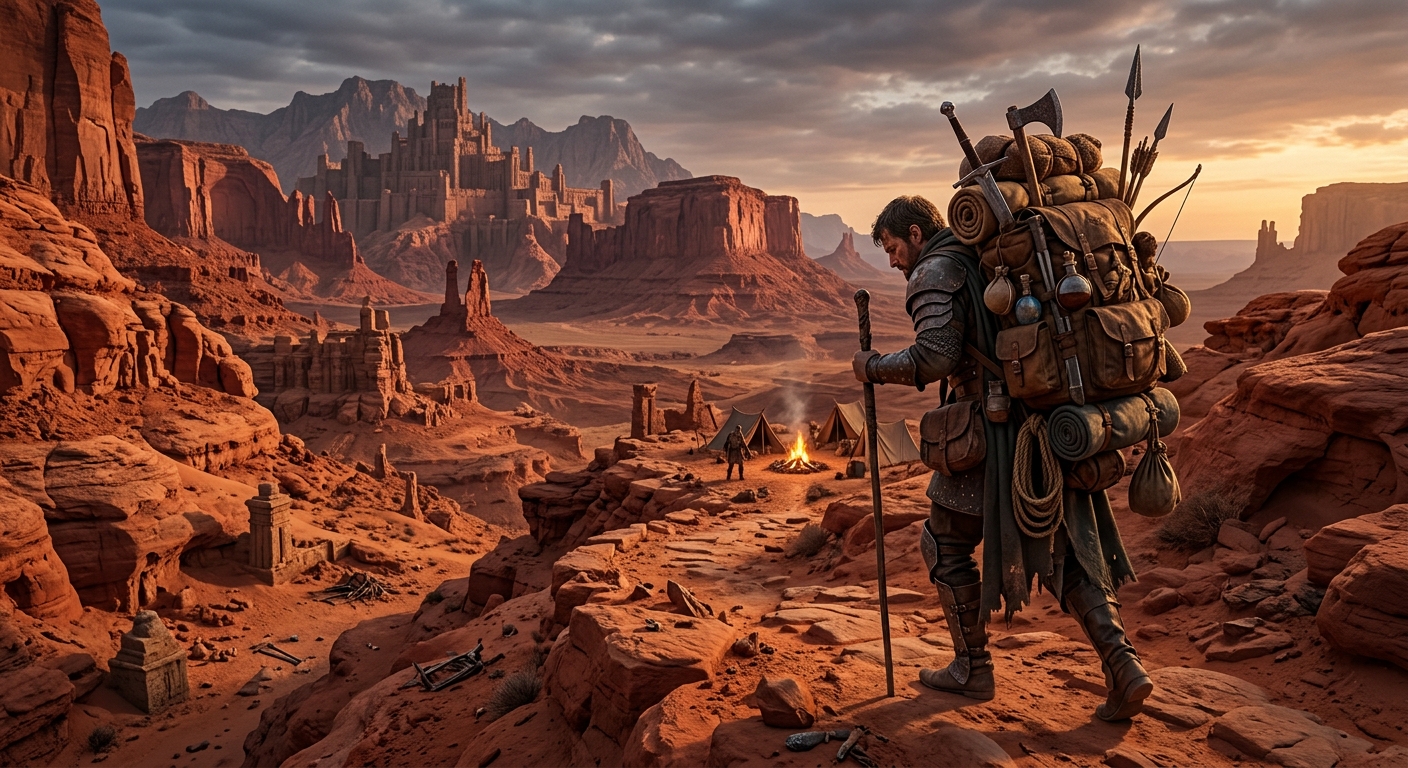
In a game built around roaming, harvesting, crafting, and collecting, inventory space is never just a background detail. It shapes how relaxed or frustrating the entire experience feels. That is why the growing conversation around Crimson Desert has centered on storage. Players are not simply asking for convenience; they are asking for a system that respects how much the game encourages them to pick up, keep, and use later.
The complaint is easy to understand. Open-world action RPGs routinely flood players with rocks, herbs, hides, books, recipes, gear, food, and one-off quest items. When the game invites you to gather everything in sight, but then makes it difficult to sort or stash that haul, the result is constant friction. What starts as a minor annoyance can become a repeated interruption in the core loop of exploration and crafting.
That tension is especially noticeable in a title like Crimson Desert, where survival-style gathering and broader RPG progression appear to overlap. If a player wants to keep valuable materials for later, they need a clean place to put them. If they want to role-play as a thorough collector, the system should support that impulse rather than punish it.
What players are actually running out of room for
When people talk about needing more storage, they are not only talking about armor sets or rare equipment. They are talking about the full mess of items that accumulate during a normal play session. The practical issue is not just how many slots exist, but how many categories of items are competing for those same slots.
- Crafting resources: ores, stones, hides, fibers, and other materials that are easy to gather in bulk.
- Consumables: food, ingredients, and cooking materials that players often want to save rather than sell.
- Progression items: books, notes, recipes, keys, and collectible objects that may only be useful later.
- Gear and fashion items: spare armor pieces, cloaks, boots, and alternate outfits.
- Miscellaneous loot: quest souvenirs, event rewards, and items players are hesitant to discard.
That mix creates a simple but persistent issue: valuable things keep getting buried under less valuable things. A player may want to keep every interesting item in case it becomes useful, but the game’s storage limits push them toward uncomfortable choices. Keep the rock, or keep the meal ingredient? Keep the spare gloves, or the recipe book? Over time, these decisions stop feeling strategic and start feeling tedious.
Why a bigger chest is not the whole answer
It is tempting to think that the best fix is a single giant stash. More slots would certainly help, but raw capacity alone does not solve the deeper problem. A huge unsorted pile can still be a nuisance if the items are all mixed together with no logic. In many RPGs, the real pain comes from hunting through clutter rather than from the number itself.
A more useful system separates storage by purpose. That means materials stay with materials, gear stays with gear, and quest-related clutter stays out of the way until it can be turned in or consumed. When storage is organized around how players actually use items, the whole loop becomes faster. Less time is spent rearranging and more time is spent playing.
This is why the storage debate around Crimson Desert matters beyond one patch or one feature. It is a design question. The discussion is really about whether the game wants inventory management to be a meaningful part of the challenge or a background service that quietly disappears when it works well.
The case for specialized storage categories
One of the most sensible responses to inventory pressure is to divide storage into clear categories. That approach lets players keep important materials close without forcing every item into the same container. It also helps developers create rules that feel intuitive. Food should be stored differently from clothing, and collectible notes should not sit beside a pile of ore.
Here is how a well-designed system could be framed:
| Storage Type | Best For | Player Benefit |
|---|---|---|
| Material storage | Ore, stone, hides, plants, crafting parts | Keeps gathering efficient and reduces bag clutter |
| Food storage | Raw ingredients, meals, fish, grains, produce | Makes cooking preparation less cumbersome |
| Wardrobe storage | Armor, cloaks, boots, clothing, cosmetics | Supports outfit changes without overloading inventory |
| Collection storage | Books, documents, recipes, key items | Removes story clutter from everyday loadouts |
This approach is effective because it mirrors player intent. A crafting resource is not used the same way as a recipe book, so they should not be treated the same way by storage logic. When a game recognizes that distinction, the entire interface feels more thoughtful.
How storage design affects the pace of an RPG
Inventory management is often dismissed as a minor systems feature, but it has a real impact on pacing. Too little space can create constant interruptions. Too much friction can make gathering feel pointless. Too little organization can make crafting feel like housework. In a world designed around discovery, those problems quietly drain enthusiasm.
Good storage does more than hold items. It changes how the player moves through the game. A generous and well-structured system encourages experimentation. Players are more likely to try odd recipes, collect unusual ingredients, or keep a few alternate weapons if they know they can store them without creating chaos in their bags. In that sense, storage is not just a backend feature; it is part of the game’s emotional rhythm.
The Crimson Desert conversation also touches on a familiar RPG fantasy: the idea of becoming a self-sufficient adventurer with a believable home base. If the game offers cabins, camps, or workshops, players naturally expect those spaces to serve as functional hubs. Decorative furniture is nice, but practical storage gives those locations meaning.
What players are really asking for
Behind the jokes about hoarding rocks and stuffing every drawer full of junk is a reasonable request: make the game easier to live in. Players do not want to spend their time micromanaging essentials. They want to gather freely, craft confidently, and swap gear without feeling punished for engaging with the systems the game provides.
- More total storage capacity for long play sessions.
- Better sorting tools so important items are easier to find.
- Dedicated storage for items that naturally belong together.
- Shared access across relevant locations so players are not forced to travel unnecessarily.
- Clear labeling that prevents confusion between temporary and permanent loot.
These are not extravagant demands. They are the basics of making a modern RPG feel polished. If the game encourages players to pick up nearly everything, then it needs to provide a humane way to manage that behavior.
Lessons from long-running RPG inventory design
Many successful RPGs have learned that players tolerate complexity better when they feel in control. Systems become frustrating when they are opaque, but they become satisfying when they offer meaningful organization. The best inventory designs tend to reduce decision fatigue rather than add to it.
There is also a psychological element at work. A cluttered inventory can make progress feel smaller than it really is. A tidy storage system, by contrast, gives players a sense of ownership over their journey. It tells them that their collection habits matter and that the game has made room for them to play in their own style.
That lesson is especially relevant in an open-world title where players are likely to spend many hours wandering, collecting, and returning to a base. If the game can make those cycles effortless, then its world feels larger and more inviting. If it cannot, even a beautiful landscape starts to feel like a chore.
A smarter path forward for Crimson Desert
The best version of Crimson Desert’s storage system would not just add more slots. It would create a set of clear, purpose-built containers that match the way players naturally organize their adventures. Food could go in one place, gear in another, and long-term collectibles somewhere safe and separate. That kind of structure lowers friction without removing the satisfaction of gathering and managing loot.
It would also help if storage were integrated cleanly into the player’s routine. If a cabin, workshop, or camp serves as the main hub, then the most common item types should be easy to deposit and retrieve there. For materials and cooking ingredients especially, shared access would be a major improvement. The less players have to think about logistics, the more they can think about the actual game.
That does not mean every item should be infinitely storable or instantly accessible. Limits can still matter. But limits should feel designed, not arbitrary. They should guide player behavior, not constantly interrupt it.
Frequently asked questions
- Why are players asking for more storage in Crimson Desert?
- Because the game’s gathering, crafting, and loot systems create a large number of items, and limited space makes it hard to keep everything organized.
- Is bigger storage better than more organized storage?
- Both help, but organization is usually more important. Separate categories make it easier to use items without scrolling through clutter.
- What kinds of items create the most inventory pressure?
- Materials, food ingredients, quest-related books or notes, and spare gear tend to fill space the fastest.
- Why do RPG players care so much about storage systems?
- Because storage directly affects pacing, convenience, and how rewarding exploration feels over long play sessions.
Conclusion
The storage debate around Crimson Desert is really a discussion about respect for player time. When a game asks people to collect broadly and prepare carefully, it should also give them the tools to manage that collection without frustration. Better storage does not just make inventory prettier; it makes the whole game easier to enjoy.
Whether the solution is more room, smarter categories, or both, the goal is the same: let players gather freely and spend less time wrestling with menus. In a genre built on adventure, that is the kind of convenience that can make a big difference.
References
- Crimson Desert players beg for more storage as their rock collections start getting out of hand — GamesRadar+. 2026-05-20. https://www.gamesradar.com/games/action-rpg/crimson-desert-players-beg-for-more-storage-as-their-rock-collections-start-getting-out-of-hand-if-they-can-do-it-in-oblivion-back-in-the-day-they-can-do-it-now/
- Can you store items in Crimson Desert? — PC Gamer. 2026-05-20. https://www.pcgamer.com/games/action/crimson-desert-store-items/
- Crimson Desert Specialized Storage Explained — Crimson Desert HQ. 2026-05-20. https://crimsondeserthq.com/blog/crimson-desert-specialized-storage-explained
- Known Issues | Crimson Desert — Pearl Abyss. 2026-05-20. https://crimsondesert.pearlabyss.com/News/Notice/Detail?_boardNo=68
Similar Articles





Read full bio of medha deb