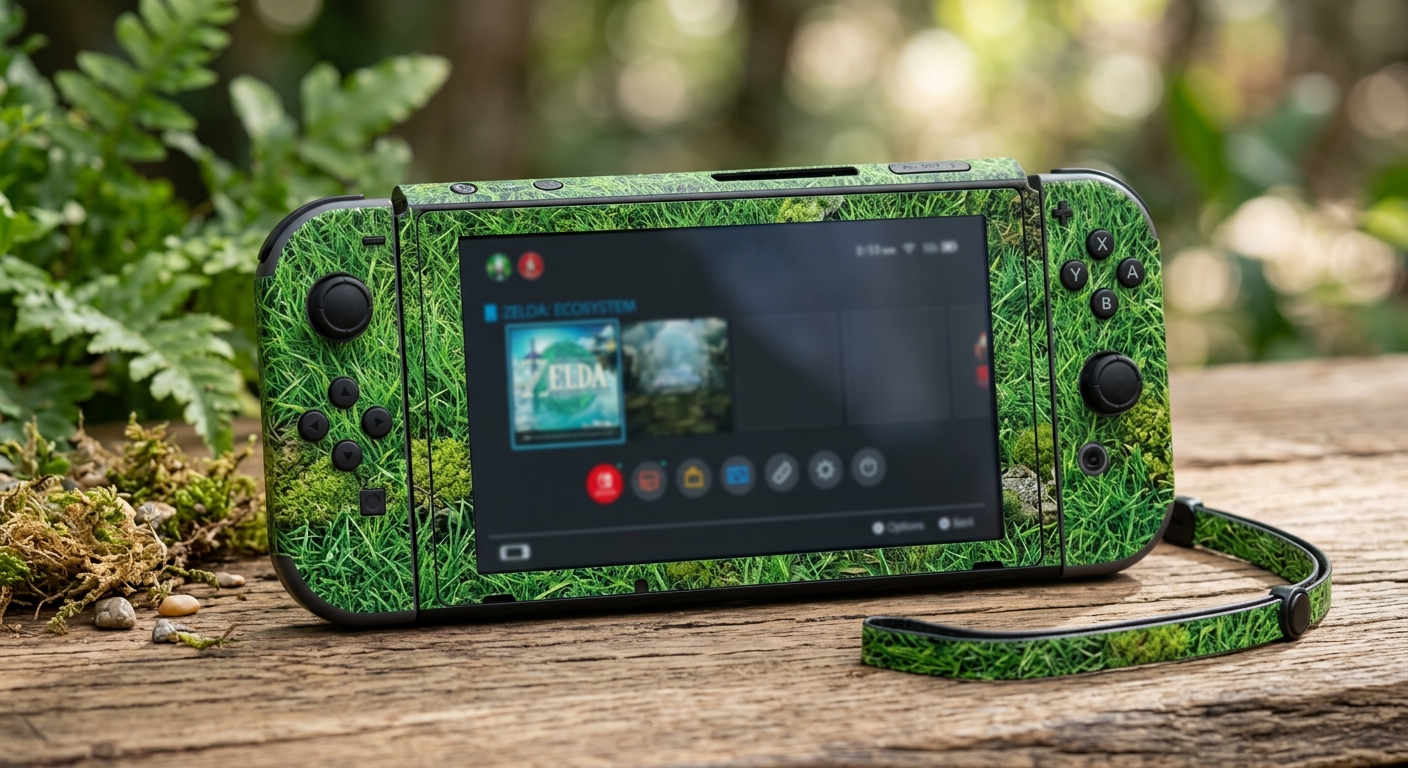
Dbrand’s Grass-Themed Switch 2 Skins
A playful look at dbrand’s latest Switch 2 skins and why their joke still lands.
When a Console Becomes Part Gadget, Part Personality
Accessory makers have learned a simple truth about modern gaming gear: people do not just want protection, they want a statement. A console used to be something you placed on a shelf or tucked under a TV and forgot about until the next update. Now, especially with handheld hybrids, the device is something you carry, show off, and interact with constantly. That shift has made cosmetic add-ons feel less like vanity and more like a natural extension of ownership.
That is why a company like dbrand can make a joke out of something as humble as a skin and still find an audience. A well-made wrap does more than change the color of plastic. It can add personality, reduce the feeling that every device looks identical, and give owners a sense that their hardware is truly theirs. In the case of Nintendo’s latest handheld, the combination of playful branding and practical fit turns a novelty into something that many players may genuinely want.
What makes this especially interesting is the tone. Rather than trying to sell a skin as a serious technical breakthrough, the presentation leans into humor. The result is a product that feels self-aware: it understands that most consumers are not seeking destiny-changing hardware innovations from a vinyl shell. They are looking for a better-looking console, a bit of flair, and maybe a reason to smile when they pick it up.
Why Skinning a Handheld Still Makes Sense
At first glance, a skin seems like the least necessary accessory in the gaming world. A console already works, and unlike an internal upgrade, a wrap does not improve frame rates or battery life. Yet skins remain popular because they solve a different problem: sameness. A mass-produced device, no matter how elegant, ends up looking like everyone else’s. The simplest way to change that is to alter the surface.
There is also a practical side. People who handle handheld systems often want to reduce the appearance of wear from fingerprints, light scuffs, and repeated travel. A skin will not make a console indestructible, but it can help preserve the original finish and reduce the anxiety that comes with carrying an expensive gadget everywhere. For players who throw a system into a bag, a wrap can be part style choice and part insurance policy.
That balance between form and function is the core reason accessories like these survive beyond the initial joke. A skin can be whimsical, but it is also useful. It does not need to transform the device completely. It just needs to feel like a thoughtful layer between the owner and the hardware.
The Appeal of Loud, Playful Design
Most console accessories take one of two paths: they imitate the original product so closely that they disappear, or they go boldly in the opposite direction. Dbrand has built a reputation around the second approach. Its designs often feel like they are trying to start a conversation rather than merely blend in. That is part of the brand’s appeal. It sells customization with attitude.
A grass-themed skin is a perfect example of how that attitude can work. It is cheeky, a little absurd, and instantly understandable. You do not need a long explanation to get the joke. The visual does the work on its own. That simplicity matters because good novelty design should be legible at a glance. If a skin needs a paragraph of context to make sense, the idea is probably too complicated.
There is also a nostalgia factor at play. Gaming culture has always embraced playful aesthetics, from themed controller shells to limited-edition handhelds and retro-inspired colorways. A bold skin taps into that tradition while adding a modern twist: it is temporary, customizable, and easy to swap. The owner gets the fun of a special edition without being locked into it forever.
What Buyers Expect From a Premium Skin
Any skin worth considering has to do three things well. First, it must fit accurately. A misaligned wrap is worse than no wrap at all because it highlights seams, makes buttons awkward to access, and creates the impression of poor craftsmanship. Second, it needs durable adhesive that stays put without leaving a messy residue when removed. Third, it has to look deliberate rather than like a sticker slapped onto a device in a rush.
For a premium accessory, fit and finish matter as much as the graphic itself. This is especially true on a handheld, where users constantly touch edges, triggers, sticks, and rails. If the material feels flimsy or starts peeling around the corners, the joke wears thin quickly. But when the wrap is cut precisely and installed cleanly, the design becomes part of the device’s identity.
That is the standard consumers should apply to any brand selling custom shells or wraps:
- Precise cutouts for buttons, ports, and cooling areas
- Adhesive that holds without becoming a mess later
- Material that resists peeling at the edges
- Visual design that stays crisp after repeated use
- Instructions that make installation manageable for normal buyers
A Closer Look at the Humor Behind the Product
The funniest accessory campaigns usually work because they are only half-joking. They make fun of the very idea they are selling while still respecting the buyer’s desire to personalize. That tension creates charm. If the brand were too earnest, the design might feel awkward. If it were too cynical, it would read as a gimmick. The sweet spot is a product that winks without shrugging.
Grass imagery is a particularly effective joke because it plays on a common internet phrase about spending too much time indoors. Applied to a gaming device, the visual turns into a small self-own: yes, this is a machine for staying inside and playing games, but it can still carry a sense of humor about that reality. Instead of pretending gaming accessories are serious lifestyle objects, the design celebrates the opposite.
That playfulness is part of a larger trend in tech culture. Consumers increasingly respond to products that acknowledge meme language, internet humor, and niche identity. A good accessory no longer has to be solemn to feel valuable. Sometimes a little absurdity is exactly what makes it memorable.
How This Fits Into the Switch 2 Accessory Boom
Whenever a major console arrives, accessory makers rush to fill the space around it. Protective cases, charging stands, travel shells, grips, screen protectors, and decorative wraps all compete for attention. The reason is simple: early adopters are eager to make their new hardware feel complete, and the market is happy to oblige. Cosmetic personalization sits right alongside protection as one of the first purchases people consider.
The Switch 2, in particular, is well suited to this wave of add-ons because a handheld hybrid invites frequent handling. That makes owners more likely to care about both comfort and appearance. If a product can improve the feel of the device, even slightly, it gains value. If it can do that while making the console look funny, stylish, or distinctive, so much the better.
| Accessory Type | Main Benefit | Why Buyers Consider It |
|---|---|---|
| Skin | Visual customization | Changes the console’s look without permanent modification |
| Grip case | Better handling | Improves comfort during longer sessions |
| Screen protector | Front-facing protection | Helps guard against scratches during transport |
| Travel cover | Portability | Makes it easier to carry the device safely |
Is It Worth Paying Extra for Style?
That question always comes up with cosmetic gear. The honest answer is that it depends on how you value ownership. Some players want the most practical setup possible and would rather spend money on games or storage. Others see hardware as something they will be looking at and touching every day, which means aesthetic satisfaction is part of the purchase.
For those in the second camp, a skin can absolutely be worth it. The cost of customization may feel minor compared with the price of the console itself, particularly if the product is high quality and easy to apply. A device that feels special can also make the overall experience more enjoyable. There is a real pleasure in using equipment that reflects your taste, even if that taste is intentionally silly.
On the other hand, buyers should be realistic. A skin is not a substitute for a proper protective case if their main concern is impact resistance. It is a style upgrade first and a light layer of defense second. Knowing that distinction helps prevent disappointment and makes the purchase feel more intentional.
FAQ
Are console skins mainly decorative?
Mostly, yes. Their biggest benefit is customization, though they may also help reduce visible wear and fingerprints on the surface.
Do themed skins have a real audience?
Absolutely. Many players enjoy accessories that show personality, reference internet humor, or create a unique visual identity for their gear.
Can a skin replace a protective case?
No. A skin is usually a cosmetic layer, while a case is designed to provide more substantial protection and handling benefits.
Why do brands use jokes in product design?
Humor makes products more memorable and helps them stand out in a crowded accessory market. It also makes the brand feel more distinctive.
Who is most likely to buy a playful wrap like this?
People who enjoy customization, internet culture, and accessories that make their hardware feel less generic are the most likely audience.
Final Thoughts
It is easy to laugh at a grass-themed skin and just as easy to dismiss it as another bit of internet-era marketing. But the joke works because it arrives with enough design confidence to be more than a punchline. It acknowledges the seriousness of gaming hardware only to poke fun at it, then circles back to the practical reality that people genuinely like making their devices look different.
That is the broader lesson here: accessories do not need to be solemn to be useful. They can be playful, weird, ironic, or a little over-the-top, and still earn a place in a buyer’s setup. In a world of black plastic and standard finishes, even a ridiculous idea can feel refreshing if it is well executed.
So if a company wants to tell players to touch grass while selling them a grass-inspired console skin, the joke may land a little differently than intended. Some of us are perfectly happy to keep our gaming indoors — especially if the console looks this good doing it.
References
- Nintendo Switch 2 system information — Nintendo. 2025-06-05. https://www.nintendo.com/us/switch-2/
- Play games on Nintendo Switch 2 — Nintendo Support. 2025-06-05. https://en-americas-support.nintendo.com/app/answers/detail/a_id/67609
- Product page for Nintendo Switch 2 skins — dbrand. 2025-06-05. https://dbrand.com/shop/skins/nintendo-switch-2-skins
- Accessory compatibility and dock use guidance — Nintendo. 2025-06-05. https://www.nintendo.com/us/support/
Similar Articles




Read full bio of medha deb