Definitive Guide to the Best Open-World RPGs
Discover the most immersive open-world RPGs, why they matter, and how to pick the right adventure for your style of play.
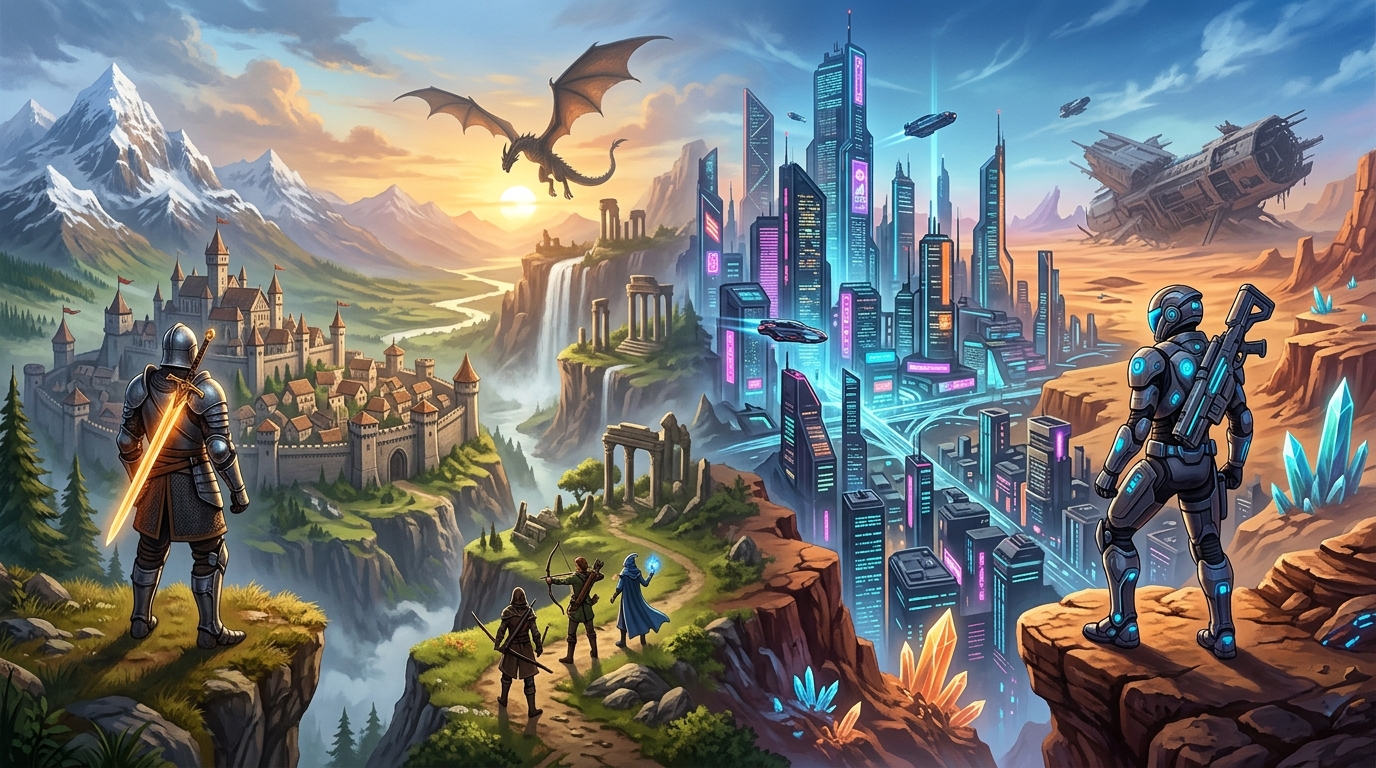
Open-world role-playing games have become the backbone of modern gaming. They offer vast landscapes to explore, branching stories to uncover, and countless systems that interact in surprising ways. This guide draws inspiration from some of the most celebrated open-world RPGs, explaining what makes them special and how they differ, while helping you decide which worlds you should get lost in next.
What Makes an Open-World RPG Truly Great?
Not every game with a big map counts as a great open-world RPG. The best examples blend several ingredients into a cohesive whole:
- Player freedom: The ability to approach objectives in multiple ways, tackle content out of order, or ignore the main quest for hours.
- Meaningful progression: Character builds, gear, and choices that noticeably affect how you play and how the world reacts.
- Dense, reactive worlds: Environments filled with secrets, dynamic encounters, factions, and systems that respond to your actions.
- Narrative depth: Stories and side quests that go beyond simple fetch tasks, often with moral ambiguity and memorable characters.
- Strong sense of place: Distinct regions, cultures, and atmospheres that make the world feel like a living setting rather than a backdrop.
Players are increasingly drawn to these experiences: industry data from the Entertainment Software Association shows that story, open-ended gameplay, and immersion rank among the most important factors in how people choose games.1
Key Subgenres of Open-World RPGs
Open-world RPGs span many styles. Understanding these subgenres will make it easier to navigate recommendations.
1. Story-Driven Fantasy Epics
These games focus on narrative first, often in high-fantasy settings with deep lore and branching choices. They typically feature:
- Richly written main quests and side stories.
- Dialogue-heavy interactions and complex moral decisions.
- Party systems or companions with their own arcs.
Ideal for players who want to live through a novel-length saga and care about how their decisions shape the outcome.
2. Systems-Heavy Immersive Sandboxes
Instead of focusing primarily on linear stories, these games emphasize simulation:
- Detailed physics or survival systems.
- Dynamic weather and day-night cycles that affect gameplay.
- Multiple overlapping systems (crafting, AI behavior, stealth, combat) that produce emergent moments.
They appeal to players who enjoy experimenting with mechanics and finding creative solutions to problems.
3. Action-Oriented Open-World RPGs
These worlds put fast-paced combat front and center, often blending action-game responsiveness with RPG progression:
- Real-time, skill-based combat with dodging, parrying, or combo systems.
- Loot and builds that meaningfully change your combat style.
- Explorable maps designed around fights, dungeons, and bosses.
They are perfect for players who want a constant gameplay challenge without sacrificing character growth.
4. Sci‑Fi and Space-Faring Role-Playing Worlds
Sci-fi open-world RPGs replace medieval villages and magic with starships, cybernetics, or futuristic cities:
- Exploration of planets, megacities, or space stations.
- Sci‑fi morality tales about corporations, technology, and identity.
- Customization of ships, implants, or high-tech gear.
These games resonate with players who love science fiction themes and expansive universes.
Comparing Open-World RPG Experiences
While each major open-world RPG has its own personality, many can be compared along a few core axes: narrative focus, combat complexity, exploration freedom, and build depth. The table below outlines general patterns you will often find among leading titles in this space.
| Type of Open-World RPG | Narrative Focus | Combat Style | Exploration Freedom | Build / Progression Depth |
|---|---|---|---|---|
| Story-Driven Fantasy Epic | Very high: branching choices, heavy dialogue | Moderate: tactical or action with pauses | High: many optional side areas and quests | High: classes, feats, skills, and reputations |
| Systems-Heavy Sandbox | Moderate: narrative exists, but is not the main draw | Varies: can be deliberate and physics‑driven | Very high: often minimal gating and strong emergent discovery | Moderate to high: crafting and survival systems |
| Action-Oriented Open-World RPG | Moderate: cinematic beats with room for side content | High: responsive, skill-based action | High: exploration often rewards combat upgrades | Moderate: skill trees and gear, but streamlined |
| Sci‑Fi / Space RPG | High: political and philosophical choices | Moderate: shooting or hybrid action systems | High: multi‑planet or multi‑city travel | High: ship or implant customization alongside character builds |
Standout Elements in the Most Beloved Open-World RPGs
From the sprawling fantasy realms many players associate with classic role-playing to newer, experimental worlds, certain elements consistently define the best titles:
Deep Character Building and Playstyles
In top-tier open-world RPGs, your build is not just a stat sheet; it is your identity in that universe. Games inspired by tabletop systems, for instance, bring:
- Class archetypes that dramatically change your approach (stealth archetypes, heavy melee, summoners, etc.).
- Feats or talents that specifically support creative problem solving, such as mind-control, environmental manipulation, or dialogue advantages.
- Choices that lock or unlock entirely different quest paths and endings.
Research into game engagement indicates that such autonomy and self-expression foster immersion and long-term motivation because players feel that their decisions genuinely matter.2
Quest Design that Respects Your Intelligence
Memorable open-world RPG quests are rarely about fetching arbitrary items. Instead, they often feature:
- Moral ambiguity: No obvious “right” choice, and consequences that play out hours later.
- Multiple solutions: Combat, stealth, diplomacy, or creative environmental use.
- Strong themes: Stories about power, prejudice, grief, or hope, grounded in the world’s lore.
Some titles are particularly known for side quests that rival or surpass their main story, turning what would normally be filler content into the emotional core of the experience.
Reactive Worlds and Dynamic Systems
The most immersive open-world RPGs make you feel that the world moves even when you are not looking at it:
- Factions that change territory based on your actions.
- Random encounters that evolve as you level up or change allegiance.
- NPC schedules, economic shifts, or environmental alterations caused by major plot events.
These techniques draw on simulationist design approaches, where developers model systems and allow them to interact, producing emergent behaviors rather than scripting every detail.
Choosing the Right Open-World RPG for You
With so many acclaimed games available, it helps to filter by your preferences. Consider the following criteria when choosing your next epic.
How Much Time Do You Want to Invest?
Some open-world RPGs can easily exceed 100 hours for completionist runs, while others are more focused and can be finished in 30–50 hours. Surveys show that the average U.S. player spends around 8.5 hours per week gaming,1 so your available time will shape what feels satisfying rather than overwhelming.
- Long-form epics (80+ hours): Best if you enjoy settling into one world for months.
- Mid-length journeys (40–70 hours): Good balance of depth and completion.
- Compact experiences (under 40 hours): Ideal for sampling multiple games without burnout.
Solo Experience vs. Cooperative Adventures
Open-world RPGs now span both single-player and co-op experiences:
- Single-player only: Often offer the strongest handcrafted narrative and personal choices.
- Optional co-op: Allow a friend or two to drop into your world while maintaining narrative focus.
- Persistent online worlds: Feature large numbers of players sharing the same space, with live events and seasonal updates.
Official data from online RPGs shows that social features increase retention, but many players still prefer narrative-rich single-player experiences for deep immersion.3
Difficulty and Accessibility Considerations
Not every player wants a punishing challenge. When choosing a game, look for:
- Difficulty settings: Being able to tailor combat challenge to your preferred intensity.
- Accessibility options: Remappable controls, subtitle options, scalable UI, color-blind modes, and assist features.
- Combat flexibility: Games that support stealth, diplomacy, or build choices that reduce reliance on reflex-heavy play.
Major platform holders and studios have increasingly published accessibility guidelines to make games more inclusive, emphasizing clear visuals, control customization, and text readability.4
Core Design Lessons from Leading Open-World RPGs
Looking across the most celebrated open-world RPGs, several design lessons emerge that can help gamers understand why these titles feel so compelling—and offer insight to aspiring designers.
1. Quality Over Quantity in Map Content
Players quickly notice the difference between handcrafted encounters and repetitive icon spam. Many recent standouts have shifted away from filling the map with identical outposts toward:
- Unique quest chains with their own characters and resolutions.
- Hidden dungeons or areas with bespoke mechanics.
- Environmental storytelling that rewards close observation.
This trend reflects a broader industry recognition that meaningful content density is more engaging than raw map size.
2. Integrating Narrative with Exploration
The best open worlds weave story into exploration rather than treating them separately. For example:
- Backstory revealed via ruins, documents, or visual cues encountered off the beaten path.
- Companions reacting dynamically to locations or player decisions.
- Optional activities that meaningfully affect main-story outcomes.
Research on narrative transportation in media suggests that when players feel like agents within a story, their emotional engagement rises significantly.5
3. Encouraging Experimentation and Player Stories
Open-world RPGs are at their best when they generate personal anecdotes: the time a random encounter spiraled into a multi-hour quest, or when a risky dialogue choice paid off spectacularly. Games cultivate this by:
- Allowing multiple solutions to quests.
- Providing tools (spells, gadgets, traversal options) that interact creatively with the environment.
- Designing systems that collide in unexpected ways, like physics-based combat or AI that reacts to disguises.
These design philosophies turn scripted content into a springboard for emergent storytelling.
FAQs About Open-World RPGs
Are open-world RPGs suitable for beginners?
Yes. Many modern titles include robust tutorials, scalable difficulty settings, and well-signposted main quests that guide new players. If you are new, look for games that offer story-focused modes or clear quest tracking, so you can learn systems gradually.
Do choices really matter in most open-world RPGs?
In many of the most acclaimed examples, yes—choices can alter endings, reshape factions, or permanently affect companions. However, some games use choices more for flavor than structural change. If consequential decision-making is important to you, research whether a game advertises multiple endings or branching paths before diving in.
Is bigger always better when it comes to world size?
No. A massive map can feel empty if it lacks meaningful activities. Many players now prefer moderately sized worlds that are densely packed with hand-crafted content over giant spaces padded with repetitive tasks.
What hardware do I need for the latest open-world RPGs?
Requirements vary. High-end games may push modern consoles and PCs with demanding graphics and AI systems. Check each title’s official system requirements or console performance notes. If you are on PC, pay particular attention to recommended (not just minimum) specs for smooth performance at your target resolution.
How do open-world RPGs compare to MMORPGs?
Open-world RPGs typically emphasize narrative and personal agency in mostly solo or small-group contexts, even if they include optional online features. Massively multiplayer online RPGs are built around a shared, persistent world with many players, structured around group activities, social systems, and long-term progression.
Tips for Getting the Most Out of Any Open-World RPG
Regardless of which specific game you choose, a few strategies can help you enjoy the experience more fully:
- Resist the urge to clear every icon: Focus on quests and locations that sound interesting rather than chasing 100% completion from the start.
- Experiment with builds early: Try different skills and playstyles in the first 10–15 hours to find what feels best before committing.
- Read quest text and listen to dialogue: The richest stories in these games are often hidden in side content.
- Take breaks: Long open-world games can lead to burnout. Alternating with shorter titles keeps them fresh.
- Lean on accessibility options: If a specific mechanic frustrates you, look for settings that can reduce repetition or adjust difficulty.
Why Open-World RPGs Continue to Dominate the Landscape
Open-world RPGs stand at the intersection of storytelling, systems design, and player expression. They are sandboxes where you can play a role, test moral boundaries, and explore intricate landscapes at your own pace. As technology improves—enabling more sophisticated AI, denser worlds, and richer simulation—the genre is likely to expand even further, blending solo, co-op, and live-service elements in new ways.
Whether you are drawn to intricate fantasy realms, bleak post-apocalyptic landscapes, or neon-drenched cybercities, there is an open-world RPG that can become your next gaming obsession. Understanding the core subgenres, systems, and design philosophies outlined above will make it much easier to identify the worlds where you will feel most at home.
References
- 2023 Essential Facts About the U.S. Video Game Industry — Entertainment Software Association. 2023-05-01. https://www.theesa.com/resource/2023-essential-facts-about-the-u-s-video-game-industry/
- Self-Determination Theory and the Facilitation of Intrinsic Motivation, Social Development, and Well-Being — Deci, E. L., & Ryan, R. M., American Psychologist. 2000-01-01. https://doi.org/10.1037/0003-066X.55.1.68
- Why We Play: The Emotional and Social Motivations Behind Gaming — Internet Advertising Bureau UK. 2020-06-01. https://www.iabuk.com/research/why-we-play-emotional-and-social-motivations-behind-gaming
- Xbox Accessibility Guidelines — Microsoft. 2023-02-10. https://learn.microsoft.com/en-us/gaming/accessibility/fundamentals/accessibility-guidelines
- Transportation into Narrative Worlds — Green, M. C., & Brock, T. C., Journal of Personality and Social Psychology. 2000-11-01. https://doi.org/10.1037/0022-3514.79.5.701
Similar Articles




Read full bio of medha deb