How AdventureQuest Worlds: Infinity Broke Kickstarter Math
A tiny $1 funding goal, a nostalgic MMO remake, and a community that turned clever design into a multi‑million dollar Kickstarter phenomenon.
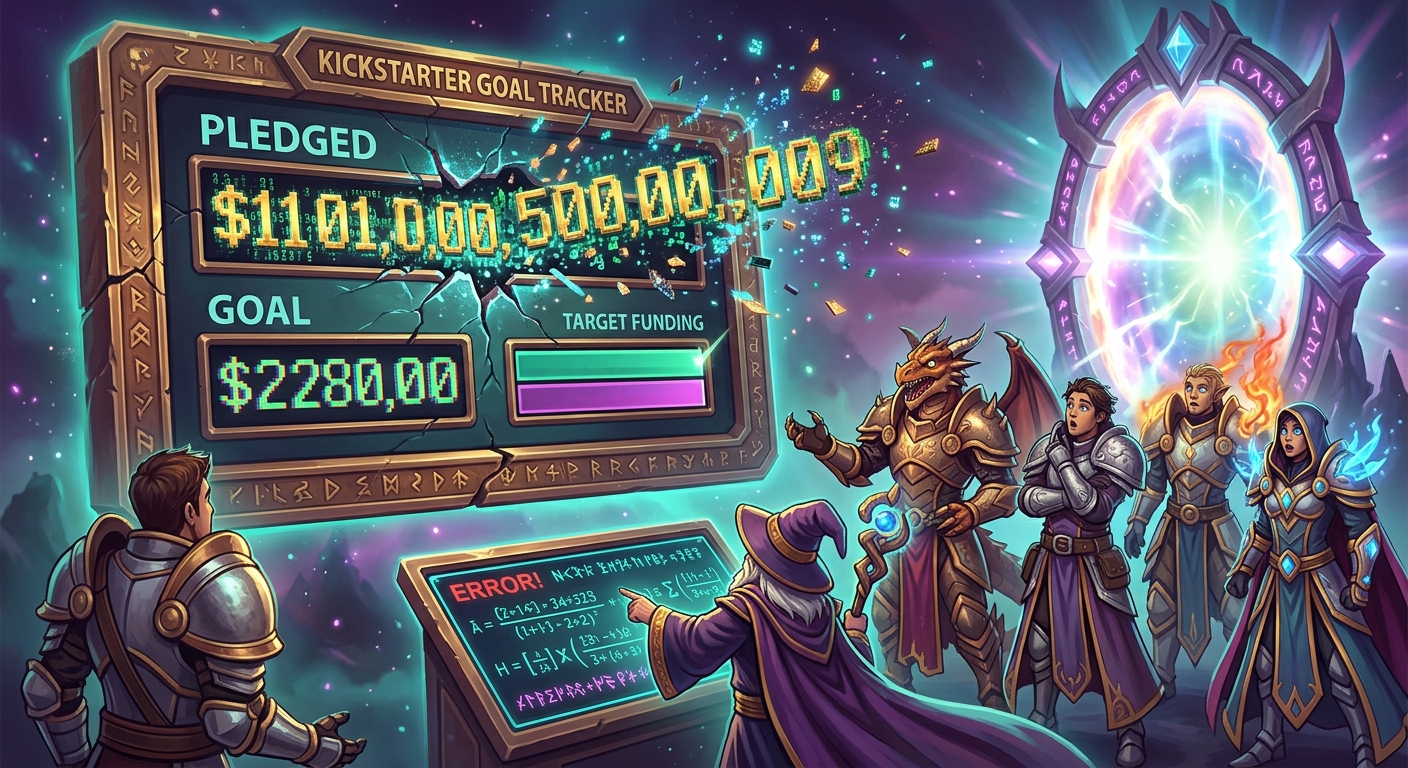
AdventureQuest Worlds: Infinity, a modern remake of the 2008 browser MMO AdventureQuest Worlds, has become one of the most fascinating recent stories in videogame crowdfunding. By setting a funding goal of just one US dollar and rallying a community that has stuck with the franchise for well over a decade, Artix Entertainment turned a symbolic target into a campaign worth well over a million dollars and a headline‑grabbing percentage funded figure.
This article explores what the project is, why the studio asked for only a dollar, how the community drove the total into the millions, and what this means for the future of cross‑platform MMOs and Kickstarter campaigns in general.
The Legacy Behind AdventureQuest Worlds: Infinity
To understand the excitement around AdventureQuest Worlds: Infinity, it helps to look back at the original game and its developer.
From browser RPGs to a full MMO universe
Artix Entertainment began in the early 2000s with simple, free‑to‑play browser RPGs like AdventureQuest and DragonFable. These games ran in the web browser, required no powerful hardware, and catered to students and younger players logging in from school computer labs or budget home PCs. Over time the studio grew a reputation for:
- Weekly content updates that made the world feel alive
- Humorous storytelling and genre parodies
- Accessible, low‑spec gameplay that nearly any machine could run
In 2008 the studio launched AdventureQuest Worlds (AQW) as its first full MMO, built on Adobe Flash. Players could team up, defeat bosses, acquire rare items, and take part in holiday events that quickly became a trademark of the game.
Why a remake became inevitable
The original AQW relied on Flash, a technology that has since been retired from mainstream browsers. Adobe officially ended support for Flash in 2020, and major browsers removed it for security and performance reasons shortly thereafter.1 For a live MMO built entirely around this technology, the long‑term future was always going to be a problem.
Artix Entertainment had three choices:
- Let the game sunset and move on to new titles
- Maintain a shrinking niche using workarounds and legacy platforms
- Rebuild the game on modern technology and platforms
AdventureQuest Worlds: Infinity is the studio’s answer to that challenge: a remake designed to preserve the spirit and content of the original AQW while migrating to modern platforms such as PC and mobile. The goal is not simply to port an old MMO, but to refresh it with contemporary features, cross‑play, and long‑term maintainability.
What AdventureQuest Worlds: Infinity Aims to Deliver
Infinity is pitched as a way to bring a beloved MMO forward into the current era without forcing long‑time players to abandon their progress and characters. Based on the information the studio has shared publicly, the remake focuses on several pillars.
Cross‑platform, cross‑progression MMO
Modern MMOs increasingly support play across multiple devices, letting players move seamlessly between PC, console, and mobile. Examples such as Genshin Impact and Final Fantasy XIV (with planned Xbox support) show how valuable this flexibility has become to players.2 AdventureQuest Worlds: Infinity embraces this trend by targeting:
- PC clients instead of browser‑based Flash
- Mobile platforms, enabling play on the go
- Shared progression between devices so that progress, items, and characters carry across
This cross‑platform approach positions Infinity as a long‑term home for the community rather than a temporary stopgap.
Rebuilt visuals and user interface
While the original AQW had a charming, cartoon‑styled aesthetic, it was constrained by Flash and older display standards. Infinity rebuilds the game’s visuals using modern engines and tools. The aim is to keep the recognizable style while providing:
- Higher resolution artwork and smoother animations
- Modern UI design that scales better on HD and mobile screens
- Improved responsiveness in combat and navigation
The result is intended to feel familiar to long‑time players while also being approachable for new players who have never used a Flash‑based MMO.
Preserving accounts and the Chaos Saga
One of the biggest selling points for veterans is the intention to preserve or meaningfully recognize player progress. The campaign messaging emphasizes that the team wants existing players to feel rewarded for their years of commitment, not forced to start over from scratch. That includes honoring inventories, achievements, and characters within the constraints of the new engine.
The plan also includes recreating the original game’s core storyline—the long‑running Chaos Saga—within Infinity. Funding milestones are tied to converting key storylines, boss fights, and areas, giving backers a sense that they’re directly supporting the preservation of AQW’s narrative history.
The $1 Kickstarter Goal: A Clever Psychological Move
Most game Kickstarters set ambitious funding goals that reflect development costs: tens of thousands or even millions of dollars. AdventureQuest Worlds: Infinity did the opposite, choosing a funding goal of just one US dollar. In practice the team clearly needed more than a single dollar to complete the project, but this symbolic decision had several strategic benefits.
Instant success, guaranteed momentum
Because the project was essentially guaranteed to hit its goal, the campaign avoided the most stressful and uncertain part of crowdfunding: the risk of public failure. Instead of asking whether the project would fund, backers were encouraged to think about how far past the goal they could push it and which stretch goals they could unlock.
Within minutes, a few backers could fund the project outright. From there, every additional pledge simply increased the “percent funded” figure, producing dramatic statistics such as being millions of percent funded—numbers that are eye‑catching, shareable, and newsworthy in their own right.
Accessibility and inclusivity
The symbolic $1 goal paired well with a low entry tier. A pledge as small as a single dollar could secure:
- Digital in‑game rewards and cosmetic items
- Badges or titles marking backers as early supporters
- Participation in a communal milestone for the game’s history
For a community that includes students and younger players, low‑cost tiers made it easy for thousands of people to contribute. Research into crowdfunding behavior shows that modest contribution levels can still meaningfully support creators when the number of backers is large.3 By designing tiers that respect smaller budgets, Artix leveraged the size and passion of its existing player base.
Publicity through absurd percentages
On Kickstarter, percentage funded is calculated as total pledged divided by the initial goal. When the goal is only $1, every extra dollar multiplies that percentage. Passing $1,000,000 pledged equates to being over 100,000,000% funded—an absurd number that makes for viral headlines and social media fascination.
In a crowdfunding climate where thousands of projects compete for attention, this approach gave AdventureQuest Worlds: Infinity a simple marketing hook: a record‑breaking percentage funded figure that no typical campaign could reach. The goal was never about accurately representing development costs; it was about creating a story people would want to talk about.
Stretch Goals: Turning Nostalgia into Concrete Features
Once the base goal was guaranteed, the real structure of the campaign came from its stretch goals. These milestones translated additional funding into tangible expansions of the project.
Funding arcs of the Chaos Saga
One of the earliest major milestones involved funding the conversion of the main story and boss fights into Infinity. The Chaos Saga—featuring the 13 Lords of Chaos—is the central long‑term narrative of the original AQW. By tying specific arcs and fights to stretch thresholds, the campaign made the stakes clear:
- Reaching a mid‑range milestone ensured the main storyline would be fully rebuilt
- Additional milestones enabled more side zones, challenge fights, and quality‑of‑life systems
This structure helped backers feel that their contributions directly preserved the parts of AQW they cared most about. Rather than vague promises of “more content,” each tier was framed as a concrete narrative or feature unlock.
Reward packs and early‑backer incentives
To motivate early participation, the campaign offered incentives for backing within specific time windows, such as the first 24 hours. These incentives included:
- Exclusive cosmetic items like weapons, armor, or house decorations
- Special badges acknowledging early commitment
- Founders‑style recognition reminiscent of earlier Artix games
Kickstarter data suggests many campaigns experience a spike in early funding, a lull mid‑campaign, and a surge close to the end.3 By offering early perks, Artix ensured that they maximized the momentum of the initial surge and built buzz while the campaign was still fresh.
Sample breakdown of pledge impact
| Pledge Range (Approx.) | Typical Backer Motivation | Likely Impact |
|---|---|---|
| $1–$10 | Show support, get a badge and small cosmetic items | High volume, drives massive percentage funded |
| $20–$50 | Secure more robust reward bundles and cosmetics | Core funding base, fuels story and feature stretch goals |
| $100+ | Dedicated fans seeking founder‑style status | Smaller in number but significant for reaching late milestones |
This broad spectrum ensured that almost any AQW player who wanted to participate could find a comfortable pledge level.
Community Power: Fifteen Years of Goodwill Paying Off
AdventureQuest Worlds: Infinity would not have succeeded on gimmicks alone. The campaign was built on nearly two decades of relationship‑building between Artix Entertainment and its community.
Long‑term engagement and trust
Artix has historically focused on persistent, player‑driven live service games with frequent updates. Games like AdventureQuest Worlds and AQ3D have been maintained for many years, creating a sense that the studio does not abandon its projects lightly. This matters for crowdfunding: backers are more likely to support teams with a track record of shipping content and maintaining live services over the long run.4
For many players, AdventureQuest titles were part of their formative gaming years. Supporting the Infinity Kickstarter was not just about buying a future product; it was a way to say thank you and ensure that the world they grew up with continues to exist in a playable form.
Leveraging social platforms and creators
The campaign also benefited from content creators, streamers, and community leaders who covered the Kickstarter in detail. Videos explaining the $1 goal, the stretch rewards, and the future of AQW helped convert curiosity into pledges. While individual creators might only reach thousands of viewers, the aggregate effect across platforms like YouTube, Twitch, and Discord amplified the message.
This aligns with broader observations about crowdfunding: campaigns that achieve wide social reach and clear communication tend to attract more support than those that rely solely on the Kickstarter page itself.3
Why This Campaign Resonated in Today’s MMO Landscape
AdventureQuest Worlds: Infinity’s success doesn’t exist in a vacuum; it reflects broader shifts in how online games are funded and sustained.
MMOs as long‑term community projects
MMOs require significant ongoing resources: server infrastructure, content development, live operations, and customer support. Industry reports have noted that many live service games shut down within a few years if they fail to achieve scale or maintain player engagement.5 By contrast, AQW’s longevity and Infinity’s crowdfunding demonstrate a different approach: treating the game as a long‑term collaborative project between developers and players.
Crowdfunding allows studios to:
- Gauge demand before committing full resources
- Secure funding directly from the audience most invested in the game’s future
- Offer community members a more meaningful stake in the project’s development
Nostalgia as a sustainable design asset
Many successful modern games blend nostalgia with updated design. The Infinity campaign shows that nostalgia is not just about re‑releasing old content; it can be a foundation for sustainable development when combined with technical upgrades, platform expansion, and new monetization models that respect players’ history with the game.
Transparency and early communication
Successful crowdfunding campaigns often emphasize transparency—sharing development plans, acknowledging risks, and updating backers regularly. Kickstarter’s own guidelines encourage creators to clearly explain how funds will be used and what challenges may arise.3 Artix has leaned into this by outlining how various funding levels map to specific content conversions and technical features, and by actively communicating with players before, during, and after the campaign.
What Comes Next for AdventureQuest Worlds: Infinity?
Funding is only the beginning. With a multi‑million dollar campaign completed, the work of delivering on those promises continues. Several key priorities stand out.
Technical execution and platform certification
Rebuilding a Flash MMO on modern engines involves challenges in:
- Network code and server stability
- Cross‑platform input design (keyboard/mouse versus touch)
- Performance optimization for a wide range of hardware
Platforms such as mobile app stores and PC storefronts also have their own certification standards and content policies developers must meet.6 Ensuring that Infinity meets these requirements while staying true to AQW’s identity will be a key test.
Balancing new players and veterans
Infinity must serve two audiences simultaneously:
- Veteran players who want their history and items honored
- New players who need a smooth onboarding experience and clear progression
This balance affects everything from early‑game difficulty tuning to how rare items from the original AQW are treated in the new ecosystem. If executed well, Infinity can become both a nostalgic homecoming and a welcoming gateway MMO for a new generation.
Ongoing content cadence
Once the foundational rebuild is complete, Infinity’s long‑term health will depend on a consistent flow of new content: story chapters, challenge bosses, seasonal events, and social features. Artix’s history of frequent releases suggests the studio understands this need, but the shift to new technology will require adjustments to pipelines and workflows.
FAQ: AdventureQuest Worlds: Infinity and Its Kickstarter
Is AdventureQuest Worlds: Infinity replacing the original AQW?
The goal is to provide a modern home for AQW’s world, story, and characters on current platforms. While specific timelines and support plans for the original game are up to the developer, Infinity is positioned as the future‑proof evolution of the experience.
Why did the campaign use a $1 funding goal?
The $1 goal was a symbolic and strategic choice. It virtually guaranteed instant funding, eliminated the risk of public failure, and created viral percentage‑funded numbers. Actual development plans relied on surpassing that goal through stretch targets.
Did small pledges really make a difference?
Yes. With a large, engaged player base, even one‑dollar pledges add up. Crowdfunding research indicates that many backers contribute modest amounts; success often comes from volume rather than a handful of large pledges.3
Will my old AQW account matter in Infinity?
The campaign messaging emphasizes recognizing and rewarding existing AQW players. While implementation details may evolve, the intent is for long‑time players to see their history reflected and appreciated in the new game.
When will Infinity be fully released?
Release windows, early access plans, and platform rollouts are controlled by Artix Entertainment and may change as development progresses. Backers can watch official channels for updated timelines and testing opportunities.
Takeaways for Future Game Crowdfunding Campaigns
AdventureQuest Worlds: Infinity offers several lessons for other studios considering crowdfunding:
- Symbolic goals can generate outsized attention, but must be backed by clear stretch plans.
- Long‑term community building pays off; goodwill built over years can translate into substantial crowdfunding support.
- Inclusivity in pledge tiers increases participation, especially in communities with many younger players.
- Concrete stretch goals beat vague promises, particularly in content‑heavy genres like MMOs.
- Transparent communication about risks and roadmap builds trust and keeps backers engaged beyond the campaign.
Infinity’s campaign did not just resurrect a classic MMO; it demonstrated how smart design, deep community ties, and a bit of playful mathematical mischief can turn a one‑dollar goal into a multi‑million dollar statement about what players value in online worlds.
References
- Adobe Flash Player End of Life — Adobe. 2020-12-31. https://www.adobe.com/products/flashplayer/end-of-life.html
- Square Enix and Microsoft Announce Final Fantasy XIV Online Coming to Xbox Series X|S — Xbox Wire. 2023-07-28. https://news.xbox.com/en-us/2023/07/28/final-fantasy-xiv-online-coming-to-xbox-series-x-s/
- Creator Handbook: Kickstarter Basics — Kickstarter. 2023-06-01. https://www.kickstarter.com/help/handbook
- 2023 Essential Facts About the Video Game Industry — Entertainment Software Association. 2023-07-01. https://www.theesa.com/resource/2023-essential-facts-about-the-video-game-industry/
- Newzoo’s Global Games Market Report 2023 — Newzoo. 2023-10-01. https://newzoo.com/insights/trend-reports/newzoos-global-games-market-report-2023-free-version
- App Store Review Guidelines — Apple Developer. 2024-01-09. https://developer.apple.com/app-store/review/guidelines/
Similar Articles






Read full bio of medha deb