How Lost Court Files Rewrote Donkey Kong’s Origin
Unearthed legal documents reveal bizarre early ideas, rejected titles, and the legal battle that quietly secured Donkey Kong’s legacy.
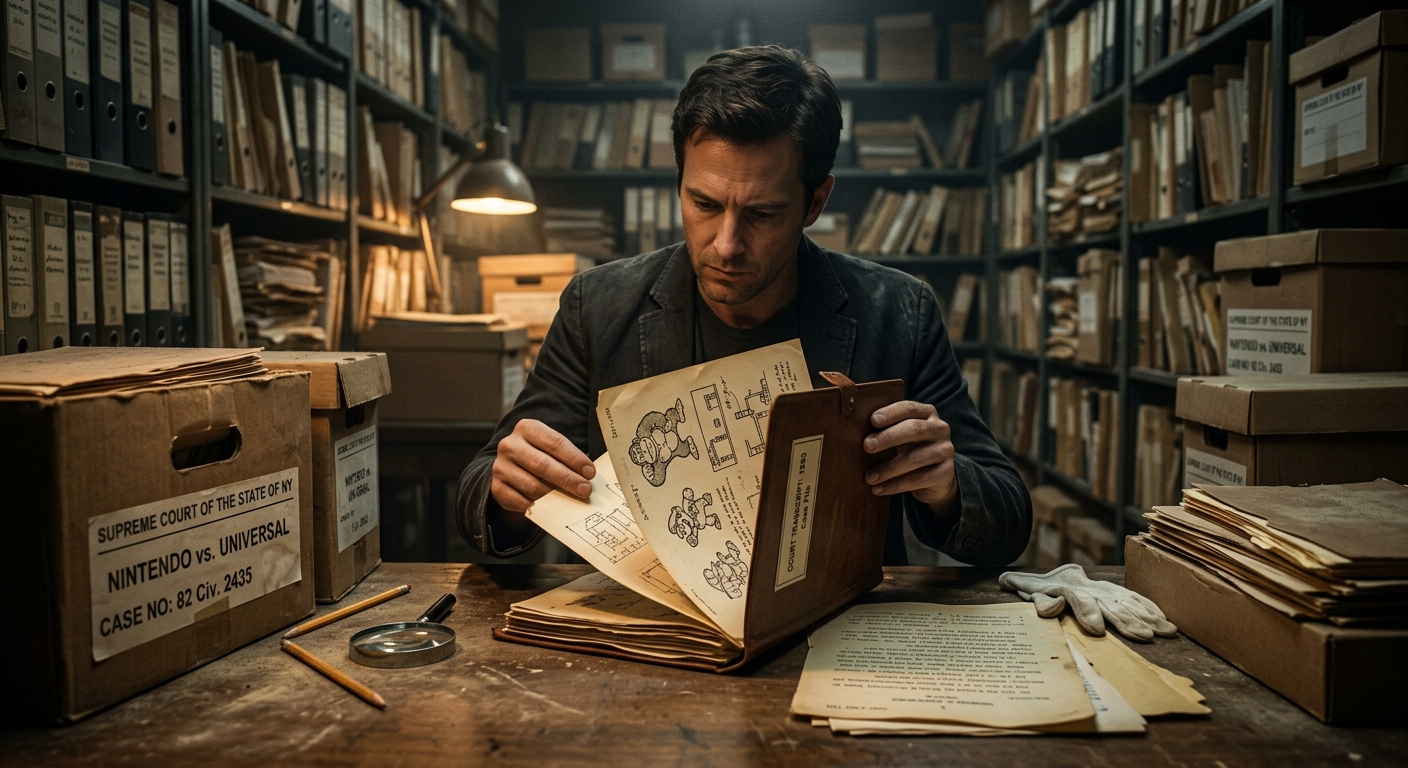
Newly digitized legal documents from the 1980s have cast fresh light on one of gaming’s most recognizable characters: Donkey Kong. Hidden for decades in the paperwork of a high-profile lawsuit between Nintendo and Universal, these records reveal surprising early concepts, rejected titles, and the way a single court case helped secure Nintendo’s future in video games.
Using the revelations highlighted by coverage of these documents as inspiration, this article walks through what the files show about Shigeru Miyamoto’s original vision, how Donkey Kong almost had a totally different name, and why a dispute over King Kong changed the trajectory of the entire industry.
The Lawsuit That Dragged Donkey Kong Into the Spotlight
To understand why these documents exist at all, you have to go back to the early 1980s. Donkey Kong was a surprise hit in arcades, and its success inevitably drew legal scrutiny. Universal Studios claimed Nintendo’s game infringed on its rights to the iconic movie monster King Kong and filed a lawsuit in 1982 in U.S. federal court.
The case, Universal City Studios, Inc. v. Nintendo Co., Ltd., became a landmark for copyright and trademark law in games. The decision, handed down in 1984, concluded that Universal did not actually hold exclusive rights to King Kong in the way it claimed, and that consumers were unlikely to confuse Donkey Kong with King Kong. The court also highlighted that the King Kong character was largely in the public domain and that Universal had previously argued as much in other legal contexts, undermining its own position.1
Because the case hinged on whether Donkey Kong was derivative of King Kong, the court requested detailed testimony from Nintendo’s creators and executives. That led to depositions from Shigeru Miyamoto, Gunpei Yokoi, and then-president Hiroshi Yamauchi, alongside internal design notes and concept explanations. For years, only fragments of this material were widely circulated; now, scanned archives have exposed the full breadth of those discussions.
Why the Documents Matter Today
- They preserve early creative thinking at Nintendo in a rare, unfiltered form.
- They clarify legal arguments that helped secure the status of original game characters in law.
- They offer a snapshot of how game development, marketing, and legal strategy intertwined in the formative years of the industry.
Miyamoto’s Strange, Human-Like Donkey Kong Concept
One of the most surprising details in the newly prominent documents is Miyamoto’s own description of Donkey Kong’s character design. Instead of talking about a realistic animal, he framed the ape as something closer to a performer in costume.
According to translations circulated from the deposition, Miyamoto explained that he aimed to design Donkey Kong less like an anatomically correct gorilla and more like an actor in a gorilla suit – the visual equivalent of a stuffed costume worn by a person. The documents describe how he wanted the character’s movement and facial expressions to read as human-like, with broad, theatrical gestures rather than animal behavior.
Why A “Man in a Gorilla Suit” Makes Sense
This might sound bizarre at first, but in context it actually fits with how early arcade games had to be designed:
- Technical limits: Early arcade hardware had minimal resolution and color palettes. Simple, exaggerated shapes read better on low-resolution screens, and human-like silhouettes were easier for players to interpret quickly.
- Cartoon logic: Nintendo’s early characters borrowed heavily from the language of animation and mascots, where animals move and emote like humans. Thinking of Donkey Kong as a costumed actor made it easier to justify cartoonish expressions and antics.
- Legal distance: From a legal point of view, emphasizing that Donkey Kong was stylized – practically a caricature – helped distinguish him from the more serious, cinematic King Kong monster Universal claimed to own.
In hindsight, this “guy in a gorilla costume” idea anticipates something that still defines Nintendo’s character design today: the company routinely prioritizes strong silhouettes and clear, readable expressions over realism. Even decades later, when Donkey Kong was redesigned for newer games, Miyamoto has said the goal was to make him more expressive rather than more realistic.2
The Arcade Classic That Nearly Had a Very Different Name
The legal files also reveal a list of alternative names that were considered before the team settled on “Donkey Kong.” Some were focused on the ape, others on the construction-site setting, and at least one – the one that has drawn the most attention – barely sounds like a game title at all.
Among the rejected ideas was “Build On,” which appears in court records as a proposed title for the arcade game during development. Other names highlighted in coverage of the documents include combinations with “Kong” and phrases that emphasized running, chasing, or the relationship between the ape and the player character. It’s clear that Nintendo was weighing how much the game’s marketing should center on the big ape versus the platforming action on the construction frame.
Comparing the Real and Hypothetical Titles
| Proposed / Final Name | Focus | Marketing Implication |
|---|---|---|
| Donkey Kong (final) | Character-first, quirky tone | Memorable, strange, easy to trademark and differentiate |
| Build On (proposed) | Environment and action (construction) | Evokes stacking or building; less personality, more generic |
| Other “Kong” variants | Ape character and movement | Closer to King Kong linguistically, but with a playful spin |
The final title choice, combining the odd adjective “Donkey” with “Kong,” ultimately gave Nintendo something distinctive. It also contributed to Universal’s argument that the game was leaning on the cultural cachet of King Kong. For Nintendo, establishing that “Donkey Kong” was a unique invention with its own identity became a key piece of the legal defense.1
How Developers and Executives Explained Donkey Kong in Court
The lawsuit pulled multiple senior figures into the spotlight. Miyamoto, Gunpei Yokoi, and Hiroshi Yamauchi each had to explain, in different ways, what Nintendo thought it was making when it created Donkey Kong.
Miyamoto: Story and Character Over Tech Specs
Miyamoto’s testimony revolved around design intent:
- He outlined the narrative concept: a mischievous ape abducting a woman, with a heroic carpenter (the character later known as Mario) in pursuit.
- He stressed the game’s foundation in slapstick humor and cartoon-style storytelling, not horror or monster-movie drama.
- He framed Donkey Kong as a stubborn, almost pet-like character, not as an ominous giant beast threatening civilization.
Framing the ape as a costumed performer and the game as light-hearted comedy helped differentiate it from King Kong’s more serious, cinematic image.
Yokoi and Hardware Constraints
Gunpei Yokoi, who oversaw hardware and game development at Nintendo at the time, contributed to explaining how the game was engineered around existing arcade boards. Donkey Kong was built to repurpose unsold hardware cabinets from Radar Scope, an earlier Nintendo arcade game that underperformed in North America. That technical constraint shaped level design, sprite sizes, and animation.
Yokoi’s broader philosophy – often summarized as “lateral thinking with withered technology” – was to use proven, affordable components in inventive ways. While the phrase itself predates the lawsuit’s resurfaced documents, Nintendo has publicly described this approach in later interviews and retrospectives, including in coverage of the Game & Watch and Game Boy lines.3 Donkey Kong’s hardware reuse fit that mindset perfectly.
Yamauchi and Business Risk
Hiroshi Yamauchi, then president of Nintendo, had to address broader business questions: how Nintendo decided to export the game, what expectations it had for arcade performance, and whether it intentionally sought to trade on King Kong’s fame.
The documents, as discussed by modern commentators, suggest Yamauchi strongly maintained that Nintendo’s goal was to build its own characters and that the company did not rely on Universal’s movie brand. The later court opinion echoed this view, emphasizing that Nintendo’s marketing materials focused on its original characters and gameplay, not any association with King Kong.1
The Court’s Decision and Its Industry-Wide Impact
When the dust settled, the judge sided decisively with Nintendo. The court concluded that Universal had previously argued that King Kong was in the public domain, undermining its present claim of exclusive rights. It also found little risk of marketplace confusion between Universal’s licensed King Kong products and Nintendo’s Donkey Kong game.1
Key Legal Takeaways
- Public domain status matters: The ruling reinforced that once a character or story is in the public domain, companies cannot claim sweeping, exclusive control over it.
- Distinctiveness of game characters: Donkey Kong’s stylized appearance and comedic framing helped the court view him as an original creation, not a thinly veiled copy.
- Precedent for future disputes: The case became a frequently cited example in later intellectual property discussions around video games, helping define how far inspiration can go before it becomes infringement.
Legal scholars and historians have since pointed to Universal v. Nintendo as an important early test of IP rights in the interactive entertainment sector.4 Without this favorable verdict, Nintendo’s expansion into North America might have been seriously hindered at a critical moment.
From Courtroom Evidence to Historical Archive
For decades, only parts of the lawsuit record were easily accessible to fans and researchers. That changed when a preservation-minded creator scanned the surviving files and uploaded them to the Internet Archive, while also sharing them with the Video Game History Foundation, a non-profit dedicated to safeguarding gaming’s past.5
Why Preservation Organizations Matter
The Video Game History Foundation and similar groups work to rescue documents, prototypes, marketing materials, and other ephemera that might otherwise vanish. Their efforts help future generations understand not just what games were like, but how and why they were made.
In this case, having a searchable, complete record allows historians to:
- Trace the evolution of early Nintendo character concepts.
- Examine how legal strategies were shaped by creative decisions.
- Compare contemporary marketing claims with internal design discussions.
The surge of interest prompted by coverage of these scans demonstrates how much appetite there is for deep, primary-source-based histories of beloved games.
How These Revelations Change Our View of Donkey Kong
On a surface level, the idea that Donkey Kong was conceived as a “human in a gorilla costume” and that the game might have been called “Build On” is amusing trivia. But looking deeper, the documents reinforce broader patterns in Nintendo’s approach and in the industry’s development.
Reinforcing Nintendo’s Character-First Philosophy
The court statements show that even at this early stage, Nintendo was thinking holistically about characters: how they should look, move, and be perceived by audiences. Donkey Kong, Mario, and the damsel (later named Pauline) were treated as cartoon actors performing a story, not just clusters of pixels representing generic roles.
That philosophy remains central to Nintendo’s brand today, where characters like Mario, Link, and Kirby are defined as much by their silhouettes and expressions as by their mechanical roles in gameplay.
Highlighting the Fragility of Game History
It’s striking that such influential material remained largely obscure for so long. If not for personal initiative and preservation work, much of this context could have remained buried or been lost entirely. That reality underlines why archivists argue that video game history is in a precarious state, especially as physical media degrade and corporate archives remain closed.
Frequently Asked Questions
Did Nintendo really see Donkey Kong as a human in a costume?
According to translated excerpts from Miyamoto’s court testimony, he described Donkey Kong as being designed more like an actor in a gorilla suit or a person wearing a stuffed costume than a realistic animal. This was meant to explain the exaggerated, human-like movements and expressions and to emphasize the character’s cartoonish nature.
Was “Build On” actually close to becoming the final title?
The development documents indicate that “Build On” was one of several candidate names discussed during Donkey Kong’s creation. While it’s unclear how close it came to being chosen, its presence in the court records shows that Nintendo seriously considered foregrounding the construction aspect of the game rather than the ape himself.
What was the legal outcome of the Nintendo vs. Universal case?
The U.S. court ruled in favor of Nintendo. It found that Universal did not hold the exclusive King Kong rights it claimed, and that Donkey Kong was unlikely to be confused with King Kong. This ruling allowed Nintendo to continue selling and licensing Donkey Kong without paying damages to Universal.
Why are these documents appearing now?
While the case has been known for decades, a full set of scanned documents only recently became widely available, thanks to preservation efforts and uploads to public archives. News outlets and historians then highlighted specific, previously obscure details from those files, bringing them to wider attention.
How did this case influence later video game law?
Legal scholars often cite Universal v. Nintendo when discussing character protection, parody, and the use of public-domain stories in games. It helped establish that stylized, original characters based loosely on shared cultural ideas can be legally distinct, paving the way for many later titles that riff on familiar myths and tropes.
References
- Universal City Studios, Inc. v. Nintendo Co., Ltd., 746 F.2d 112 (2d Cir. 1984) — United States Court of Appeals for the Second Circuit. 1984-10-04. https://law.justia.com/cases/federal/appellate-courts/F2/746/112/327681/
- Iwata Asks: Donkey Kong Country Returns — Nintendo Co., Ltd. 2010-11-24. https://www.nintendo.co.uk/Iwata-Asks/Iwata-Asks-Donkey-Kong-Country-Returns/Iwata-Asks-Donkey-Kong-Country-Returns/1-Beginning-with-Donkey-Kong/1-Beginning-with-Donkey-Kong-224589.html
- Gunpei Yokoi’s Philosophy of Game Design — The Strong National Museum of Play. 2015-07-01. https://www.museumofplay.org/blog/gunpei-yokois-philosophy-of-game-design/
- Game Archives as Essential Cultural Heritage — Library of Congress, Digital Preservation. 2014-03-26. https://www.digitalpreservation.gov/blog/2014/03/game-archives-as-essential-cultural-heritage/
- About the Video Game History Foundation — Video Game History Foundation. 2023-06-15. https://gamehistory.org/about/
Similar Articles





Read full bio of medha deb