Metro 2039 Guide: What We Know
A fresh look at the next Metro game, from setting to platforms and story clues.
Metro 2039: What Fans Can Expect From the Next Chapter
The Metro series has always thrived on tension. It mixes oppressive atmosphere, survival mechanics, and a world that feels both devastated and strangely alive. With the next mainline entry now on the horizon, interest has shifted from speculation to anticipation. Although many details are still being kept under wraps, there is already enough information to sketch a clear picture of what this new installment may deliver.
This guide brings together the most useful publicly available details about the upcoming game, including its setting, launch timing, platforms, and the creative direction behind the project. Rather than repeating promotional language, the goal here is to organize what matters for players who want a practical overview.
A return to the underground
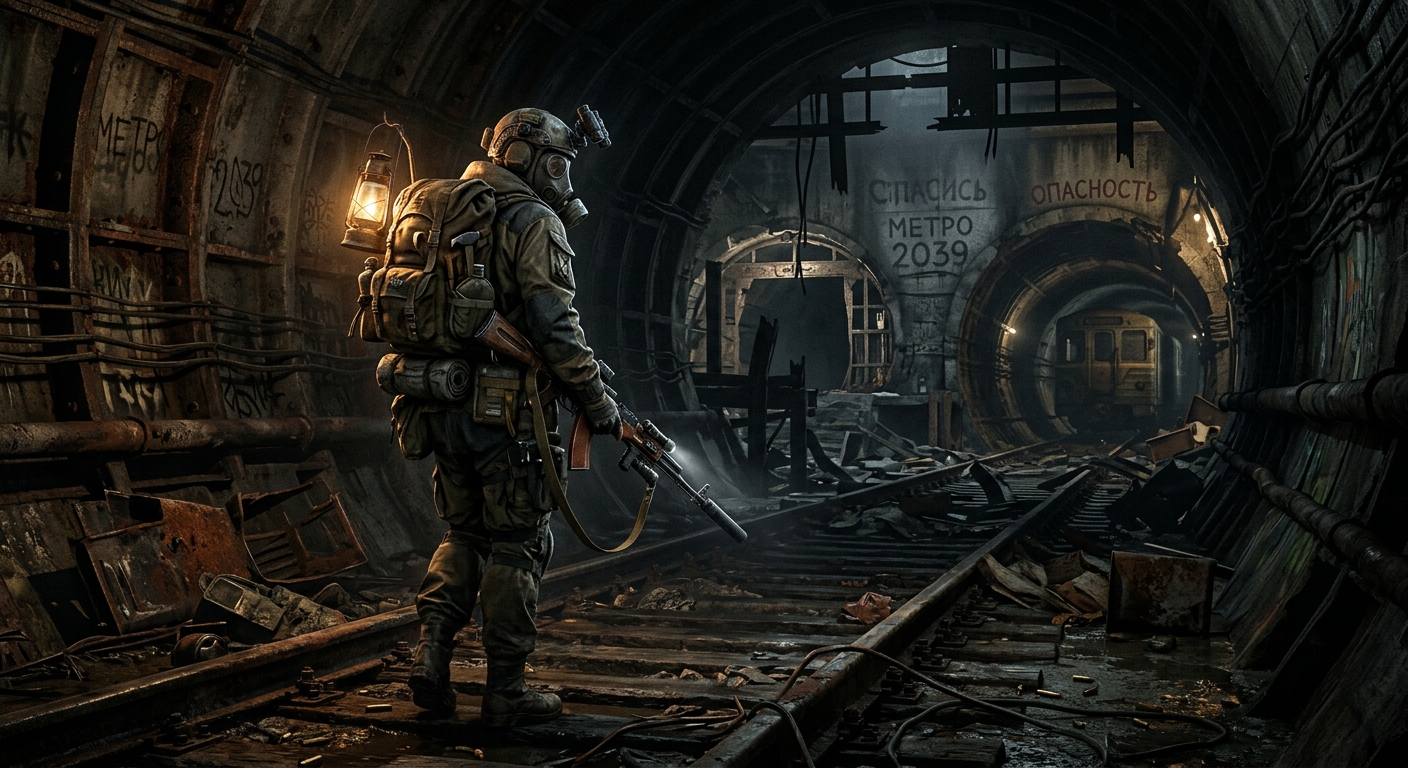
One of the defining traits of Metro has always been its sense of confinement. While some entries expanded the series into larger outdoor areas, the franchise remains strongest when it leans into tunnels, darkness, scarcity, and the feeling that danger is never far away. The next game appears to be stepping back toward that core identity.
Publicly released information suggests a story rooted in the aftermath of long-term conflict beneath Moscow. That means players should expect environments built around cramped corridors, damaged infrastructure, improvised settlements, and the constant struggle to survive in a poisoned world. This is not a setting designed for comfort; it is designed to make every step feel uncertain.
- Expect heavy emphasis on enclosed spaces and survival pressure.
- Underground hubs and transit routes are likely to remain central to exploration.
- The hostile surface may still matter, but the series’ signature mood comes from the metro itself.
When the game is expected to arrive
The current launch target is broad rather than exact. The most reliable information points to a winter 2026 release window. That gives the studio room to finalize development while still signaling that the game is not a distant project. In practical terms, that kind of window usually suggests a launch somewhere between late autumn and the end of the year, unless scheduling changes push it back.
For players planning their backlog, that means the title is close enough to keep an eye on but far enough away that more updates are still needed before a precise date can be trusted. Release windows can shift for many reasons, especially for large single-player games with heavy technical demands, so a firm date will likely come later.
| Topic | Current status |
|---|---|
| Release timing | Winter 2026 window |
| Exact date | Not announced |
| Launch confidence | Promising, but subject to change |
Where you will be able to play it
The upcoming game is expected to launch on current-generation consoles and PC. That includes PlayStation 5, Xbox Series X and Series S, and PC storefronts such as Steam and Epic Games Store. In other words, the game is not being positioned as a platform exclusive. For the community, that is good news, because it means the launch will not be restricted to a single ecosystem.
A simultaneous release across platforms also suggests that the developer is aiming for a broad audience from day one. This usually benefits multiplayer-focused games, but it is equally important for a story-driven shooter like Metro, where fans on different platforms want to experience the campaign at the same time.
- PlayStation 5 is included in the launch plan.
- Xbox Series X and Series S are confirmed targets.
- PC players should be able to access the game through major storefronts.
- No platform exclusivity has been indicated so far.
What the story seems to be about
Every Metro game asks a different question about survival, morality, and human nature. The new entry appears to focus less on the immediate mechanics of staying alive and more on the political and emotional consequences of long-term conflict. Rather than simply asking how people survive underground, the story seems to explore what happens when factions stop merely enduring and start reshaping the world around them.
Early information points to a fractured society in the tunnels beneath Moscow, where competing powers, propaganda, and desperate leadership shape daily life. The idea of a unified underground faction controlling a broken population gives the setting a harsher edge. Instead of a straightforward war story, this looks like a tale about control, belief, and the cost of following a cause that may not be what it promises.
That approach fits Metro well. The series has never been just about monsters or gunfights; it has always used its world to ask how fear changes people. If this new chapter leans into ideology and manipulation, it may offer some of the most overtly political storytelling in the franchise so far.
The new lead character changes the tone
One of the most notable shifts is the choice of protagonist. The game is expected to place players in the role of a new central figure rather than relying on the familiar perspective of earlier entries. That alone can change the emotional rhythm of the experience. A fresh lead opens the door to a different voice, a different relationship to the world, and a different kind of vulnerability.
Reports indicate that this character is more than a silent observer. A fully voiced lead would mark a significant step for the series, making the story feel more personal and more direct. In practice, that can deepen the connection between player and narrative, especially in a game that depends so heavily on atmosphere and internal conflict.
The shift also hints that the new game may be trying to be more cinematic without losing the grounded survival feel that defines the franchise. A voiced protagonist can strengthen dialogue-driven scenes, but it also raises expectations for writing and performance. If handled well, it could make the journey feel more intimate than ever.
Why this entry matters for long-time fans
For players who have followed the series since its earliest days, the next installment looks important for another reason: it may bridge the gap between the series’ original identity and its more expansive recent direction. Some fans loved the larger scope of previous entries, while others preferred the pressure-cooker design of the underground-focused games. This new project appears to be trying to reconcile both impulses.
By returning to the metro and emphasizing conflict within the tunnels, the developers are signaling that the franchise’s roots still matter. At the same time, the new story setup suggests a broader thematic ambition. That combination could help the game feel both familiar and refreshed.
- It may recapture the claustrophobic tone that defined earlier Metro games.
- It could expand the series’ political and emotional themes.
- It may offer a more character-driven experience through its new lead.
What kind of gameplay to expect
Detailed gameplay systems have not been fully outlined yet, but the franchise’s identity gives some strong clues. Players should anticipate a first-person experience built around limited resources, tense combat, stealth opportunities, and the constant need to think ahead. Metro games work because they force you to treat every bullet, filter, and encounter as meaningful.
It is likely that the next installment will keep that philosophy intact even if some mechanics are modernized. This means players may still manage ammunition carefully, watch equipment durability, and decide when to fight, hide, or conserve resources. The best Metro moments are rarely about power fantasy; they are about surviving by the skin of your teeth.
There is also likely to be a strong focus on environmental storytelling. The series often communicates as much through collapsed tunnels, warning signs, abandoned rooms, and improvised camps as it does through dialogue. If the new game embraces that strength, it should feel rich even when the screen is quiet.
Why the setting is so effective
Post-apocalyptic fiction is common, but Metro stands out because its world is not just ruined — it is inhabited. The tunnels are not empty backdrops. They are social spaces filled with rival communities, uneasy alliances, and fragile routines. That makes every encounter feel grounded in a larger living system.
The year 2039 matters because it places the story far enough after catastrophe for society to have adapted, but not so far that hope has become normal. The result is a world where survival has become culture. People are not merely hiding from the apocalypse; they are building identities around it. That gives the series a distinct emotional texture that pure action games often lack.
Because of that, the next game has an opportunity to explore how generations born into crisis view freedom, leadership, and truth. Those ideas are especially relevant in a world shaped by faction politics and controlled information.
How to think about the release window
Whenever a game is announced with a seasonal window rather than a fixed date, it is wise to treat the timing as an estimate rather than a promise. Winter 2026 tells us the project is active and targeted for a reasonably near launch, but it does not guarantee a holiday release. Delays remain common for large-scale games, especially when technical polish and performance matter as much as atmosphere.
Still, even a loose window can be useful. It indicates that development is advanced enough for the team to commit publicly. It also gives fans a sensible period for watching trailers, gameplay updates, and store page changes. If you want to track the game without overhyping it, this is the moment to stay informed rather than speculative.
Frequently asked questions
Is this a sequel or a spin-off?
It is being presented as the next mainline Metro game, not a side project. That means it should continue the franchise’s central storyline and tone rather than experimenting as a separate offshoot.
Will it be on older consoles?
Current information points to PlayStation 5 and Xbox Series systems, along with PC. Older console support has not been indicated, so players should assume it is targeting modern hardware.
Does the game have a final release date yet?
No exact date has been confirmed publicly. The most concrete timing available is a winter 2026 release window.
Will the game stay underground like earlier Metro entries?
The available details strongly suggest a return to more confined environments and metro-based storytelling. That said, final design specifics are still limited, so there may still be some surface exploration.
Is the protagonist a returning character?
No, the lead appears to be a new character rather than a familiar returning hero. That change may give the story a different emotional perspective.
Bottom line
Metro 2039 is shaping up to be a meaningful evolution of the series rather than a simple repeat of familiar ideas. The combination of a winter 2026 target, broad platform support, a darker underground setting, and a new voiced protagonist suggests a game that wants to respect the franchise’s roots while widening its narrative scope.
For fans, that is encouraging. The strongest Metro stories have always balanced fear with purpose, and isolation with human drama. If the next chapter captures that balance, it could become one of the most memorable entries in the series.
References
- METRO 2039 | Official Website — Deep Silver. 2026-04-01. https://www.deepsilver.com/games/metro2039
- Metro 2039 recap: The story so far — Epic Games Store. 2026-04-01. https://store.epicgames.com/news/metro-2039-recap-the-story-so-far?lang=en-US
- Metro 2039: Everything you need to know about the next Metro game — GamesRadar. 2026-04-01. https://www.gamesradar.com/games/metro-2039-guide/
- Metro 2039 release date window, story, and trailers — PCGamesN. 2026-04-01. https://www.pcgamesn.com/metro-2039/guide
Similar Articles



Read full bio of Sneha Tete