Metroid Prime 4’s New Samus Voice and the Switch 2 Talent Shift
Metroid Prime 4: Beyond recasts Samus and signals how Nintendo’s next‑gen era is quietly elevating a new wave of voice talent.
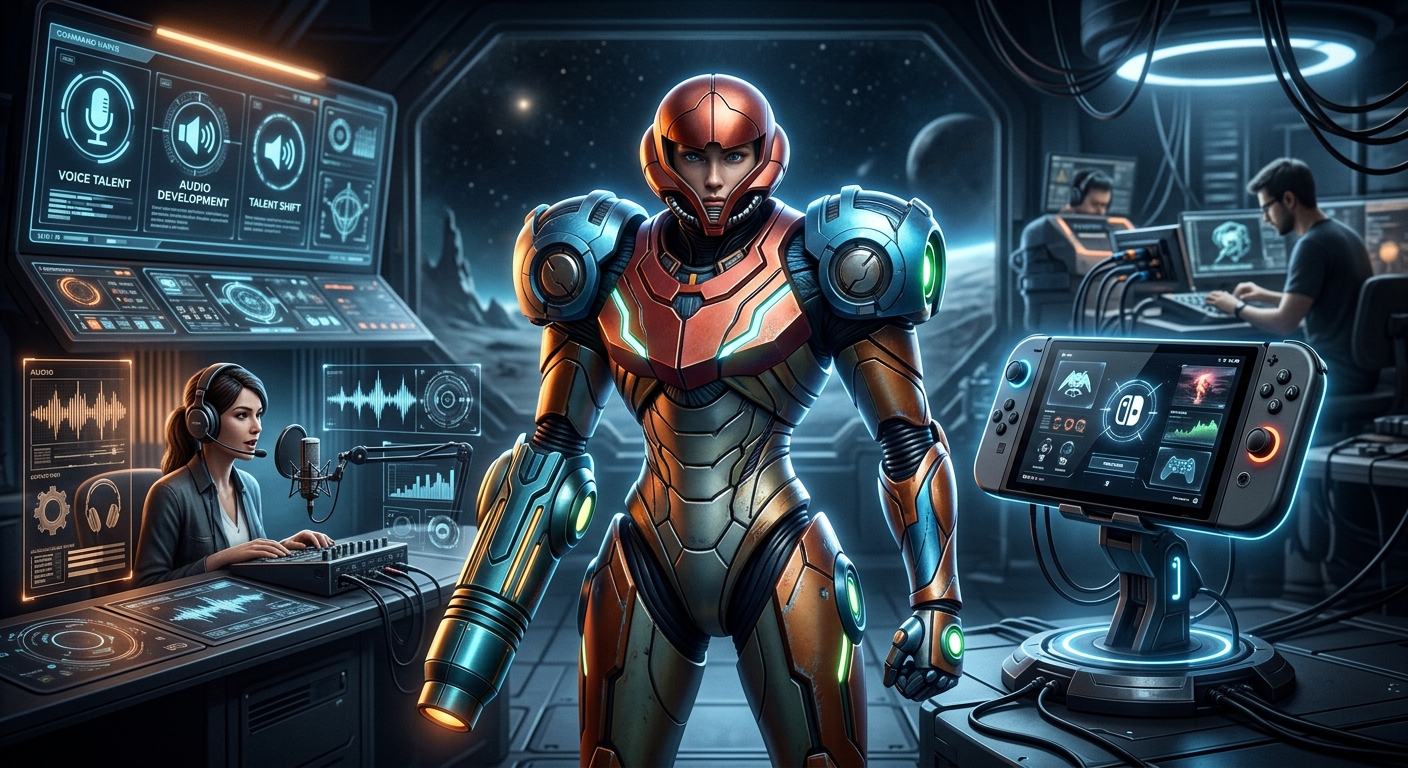
Metroid Prime 4: Beyond is not just another long-awaited sequel; it is also a turning point for one of Nintendo’s most iconic heroes. For the first time in years, Samus Aran is being voiced by someone other than Mass Effect star Jennifer Hale, with a performer best known for work on Hades 2 and the narrative adventure Dispatch stepping into the role. This casting choice doesn’t exist in a vacuum. It reflects a wider Nintendo Switch 2-era pattern: spotlighting emerging acting talent while slightly reimagining how characters are presented and heard.
Below, we explore what the recasting means for Samus, how it fits into a broader shift in voice casting across Nintendo’s lineup, and why this quiet evolution matters for players, developers, and performers alike.
Samus Aran Finds a New Voice
For many players, Jennifer Hale’s association with Samus stems from her work in Metroid Prime titles and marketing, as well as her high-profile roles such as Commander Shepard in Mass Effect. Seeing a fresh name attached to Samus in Metroid Prime 4: Beyond is therefore a notable departure. Nintendo’s decision to recast is part of a broader pattern of experimenting with new voices for familiar characters in recent years.
While Samus has historically been a largely silent protagonist, modern Metroid entries lean more heavily on voice and sound design to express emotion, threat, and atmosphere. Even short vocal reactions, grunts, and exertion noises materially shape how players perceive her. Giving that responsibility to a different actor opens the door to subtle changes in characterization, tone, and presence.
From Hades 2 and Dispatch to Metroid Prime
The new actor joining Metroid Prime 4: Beyond previously worked on Hades 2 and the narrative mystery Dispatch. Both projects lean heavily on strong vocal performances to carry emotion and exposition:
- Hades 2 relies on a cast of expressive, often conversational performances to bring gods and mythic figures to life.
- Dispatch uses voice acting in a tight, narrative-focused context where every line matters for tension and character development.
Bringing that background into Metroid Prime 4: Beyond suggests Nintendo wants Samus to feel grounded and expressive, even if she still speaks sparingly. It also points to a willingness to look beyond a small circle of mega-famous voice actors to find performers who have proved themselves in acclaimed, story-driven indie and AA games.
Why Metroid Prime 4 Is a Natural Moment for Change
Metroid Prime 4: Beyond represents a soft relaunch for the Prime sub-series. The game is positioned as a jumping-on point even for players who never touched the original trilogy, and it arrives alongside Nintendo Switch 2 hardware. With that new starting line, Nintendo has an opportunity to refresh aesthetics, narrative, and casting without alienating long-time fans.
The series’ long gap also plays a role. Metroid Prime 3: Corruption launched in 2007, nearly two decades before Beyond. In that time, expectations around voice acting and performance capture in games have changed dramatically, driven by titles like The Last of Us, God of War, and Hellblade: Senua’s Sacrifice, which treat performance as a linchpin of storytelling rather than a cosmetic layer.1 Launching Metroid Prime 4: Beyond without reconsidering casting choices and vocal direction would risk making the game feel behind the curve on day one.
Balancing Legacy and Reinvention
Recasting a long-running character inevitably sparks comparison and, sometimes, backlash. Developers have to balance several factors:
- Continuity: How much does the new performance resemble earlier portrayals in tone and delivery?
- Story needs: Does the new game demand different emotional shading, such as vulnerability, anger, or quiet humor?
- Production realities: Scheduling, budgets, union agreements, and long-term availability all influence casting decisions.2
For Samus, the continuity challenge is milder than for chatty protagonists because she speaks relatively little. That gives Nintendo more freedom to prioritize how the character should sound now, in a modern narrative context, over strict adherence to past performances.
The Nintendo Switch 2 Era and New Talent
The recasting of Samus isn’t an isolated decision; it sits comfortably within a wider shift as Nintendo prepares for the Switch 2 generation. Recent and upcoming first-party titles already reflect a strategy that places more emphasis on:
- Bringing in less familiar actors for big roles.
- Redefining what iconic characters sound like.
- Aligning performances more closely with modern cinematic storytelling.
Nintendo’s own financial and corporate reports over the past decade highlight a growing focus on expanding the appeal of its IP through polished presentation and transmedia projects, including movies and theme parks.3 Voice casting that feels contemporary and expressive is a natural complement to that strategy.
Why Publishers Embrace Emerging Voices
Several industry dynamics help explain why a company like Nintendo might favor newer or lesser-known actors, even for flagship roles:
- Creative flexibility: Fresh voices arrive without the baggage of iconic past roles, making it easier for writers and directors to shape performances to fit a new creative vision.
- Long-term planning: Publishers often want actors who can stay with a role across multiple games, spin-offs, and cross-media appearances.
- Diversity and inclusion: As awareness of representation grows, casting directors are actively broadening their talent pool.4
- Cost and scheduling: High-profile actors can come with higher fees and stricter schedules, which may not align with lengthy game development cycles.
Metroid Prime 4: Beyond lands squarely within this context. By choosing a performer whose profile is growing through acclaimed titles but who is not yet a household name, Nintendo can support rising talent while giving Samus a performance tailored to this new chapter.
How New Voice Casting Shapes Player Experience
Voice acting is not just cosmetic; it fundamentally shapes how players relate to characters and stories. Research into narrative engagement in interactive media suggests that vocal performance significantly influences emotional investment and perceived authenticity of characters.5 Even a character who speaks rarely, like Samus, benefits from carefully directed vocal expressions.
Samus as a Mostly Silent Protagonist
Unlike talkative RPG heroes, Samus often communicates via:
- Brief vocal reactions to damage, exertion, or surprise.
- Subtle non-verbal cues tied to animation and sound design.
- Occasional lines delivered in cutscenes or mission briefings.
This places unusual pressure on the actor to make every sound count. Tiny variations in breath, exertion, or frustration can suggest confidence, weariness, or fear. Players may not consciously analyze these details, but they register them emotionally, shaping the sense of who Samus is beneath the armor.
Immersion, Atmosphere, and Sound Design
Metroid games are renowned for their atmosphere: isolation, exploration, and a sense of alien wonder. Voice acting is intertwined with music and environmental soundscapes. When Samus speaks into a helmet comm, reacts to a sudden enemy ambush, or lets out a controlled breath after a boss fight, those choices either reinforce or undercut the mood.
Metroid Prime 4: Beyond appears designed to leverage modern sound mixing and surround audio capabilities on Switch 2. That technical leap makes it even more important that vocal performances are recorded and directed with a clear understanding of how they will sit within the broader soundscape.
Metroid Prime 4: Beyond in the Current Landscape
Modern players are used to richly voiced experiences in big-budget games. Nintendo’s own titles historically relied on minimal voice acting, but that has gradually changed, especially in series like Fire Emblem and The Legend of Zelda. Metroid Prime 4: Beyond arrives at a moment when players expect more from character performances, even in traditionally gameplay-first franchises.
How Other Series Handle Recasting
Metroid is far from the only series to recast major roles. Across the industry, recasting is relatively common:
| Franchise | Character | Recasting Context |
|---|---|---|
| Metal Gear Solid | Snake | Shifts between David Hayter and Kiefer Sutherland created debate but also refreshed tone. |
| Resident Evil | Multiple leads | Frequent recasts between remakes and numbered entries to match new story approaches. |
| Halo | Cortana & others | Expanded casting and changes alongside new console generations and narrative arcs. |
Fans generally adapt when recasting is accompanied by strong performances and thoughtful direction. The key factor is not whether a voice is different, but whether it feels right for the character in the story being told.
What This Means for Fans of Jennifer Hale and Classic Samus
Jennifer Hale’s contributions to gaming are widely recognized, and her work will remain part of Metroid’s legacy. At the same time, the opportunity for a new actor to define Samus in the Switch 2 era does not diminish those earlier performances—it adds another layer to the character’s history.
For fans, the recasting invites a mix of curiosity and skepticism. How quickly players accept the new voice will depend on:
- Consistency: Does Samus sound like the same person throughout the game’s many hours?
- Direction: Are moments of quiet, rage, and determination balanced effectively?
- Fit with design: Does the voice match the game’s art style, writing, and pacing?
Given the actor’s grounded work in narrative-heavy games like Hades 2 and Dispatch, there is reason to expect a performance that leans into nuance rather than bombast—an approach well-suited to Samus’s introspective, professional demeanor.
Looking Ahead: The Future of Nintendo Voice Casting
If Metroid Prime 4: Beyond resonates with players, it may further encourage Nintendo to stick with its emerging strategy of pairing iconic characters with newer talent. This could mean:
- Fresh takes on supporting cast members in Metroid’s universe.
- More fully voiced story sequences in future Nintendo titles.
- Greater cross-pollination between indie/AA voice talent and first-party blockbusters.
Voice acting has become one of the most visible points of contact between players and the people who make games. As the industry continues to evolve—with shifting labor conditions, union negotiations, and conversations about crediting and working conditions—how publishers like Nintendo cast and support their actors will remain a critical part of game production.2
Quick FAQ
Who voices Samus in Metroid Prime 4: Beyond?
Nintendo has replaced long-time Samus performer Jennifer Hale with a newer actor known for roles in Hades 2 and Dispatch. The choice reflects a broader move toward highlighting emerging talent in the Switch 2 era.
Why did Nintendo recast Samus instead of reusing Jennifer Hale?
Publishers recast for many reasons, including scheduling, creative direction, and long-term plans for a character. In this case, Metroid Prime 4: Beyond acts as a soft reset for the series, making it a natural moment to re-evaluate how Samus should sound.
Does Metroid Prime 4: Beyond feature more voice acting than past games?
While Samus remains relatively reserved, modern production values and an emphasis on cinematic storytelling suggest that dialogue, vocal reactions, and audio logs will be more prominent than in early Prime entries.
How does the Switch 2 generation influence casting decisions?
Switch 2’s updated hardware supports richer audiovisual experiences, and Nintendo is using the opportunity to modernize presentation across key franchises. That includes working with actors who can deliver performances that match current expectations for game storytelling.
What should fans listen for in the new Samus performance?
Pay attention to how the voice actor communicates determination, vulnerability, and exhaustion in brief moments. The subtleties of breath, exertion, and tone will say as much about Samus’s character as any line of dialogue.
References
- Hellblade: Senua’s Sacrifice – Behind the Scenes — Ninja Theory. 2017-08-08. https://www.hellblade.com
- Interactive Media Agreement — SAG-AFTRA. 2022-10-21. https://www.sagaftra.org/contracts-industry-resources/contracts/interactive-media
- Corporate Management Policy Briefing — Nintendo Co., Ltd. 2021-02-01. https://www.nintendo.co.jp/ir/pdf/2021/210202_2e.pdf
- Equality, Diversity and Inclusion for Voice-over — Equity UK. 2020-09-10. https://www.equity.org.uk/advice-and-support/equality-diversity-inclusion/voice-over
- Storytelling in Video Games: The Role of Narrative and Player Experience — M. Calleja, Games and Culture (SAGE Journals). 2011-10-01. https://journals.sagepub.com/doi/10.1177/1555412011402672
Similar Articles





Read full bio of Sneha Tete