Minecraft Java Deobfuscation Revolution
Mojang's bold move to expose Java Edition's source code after 16 years boosts modding and innovation in the block-building universe.
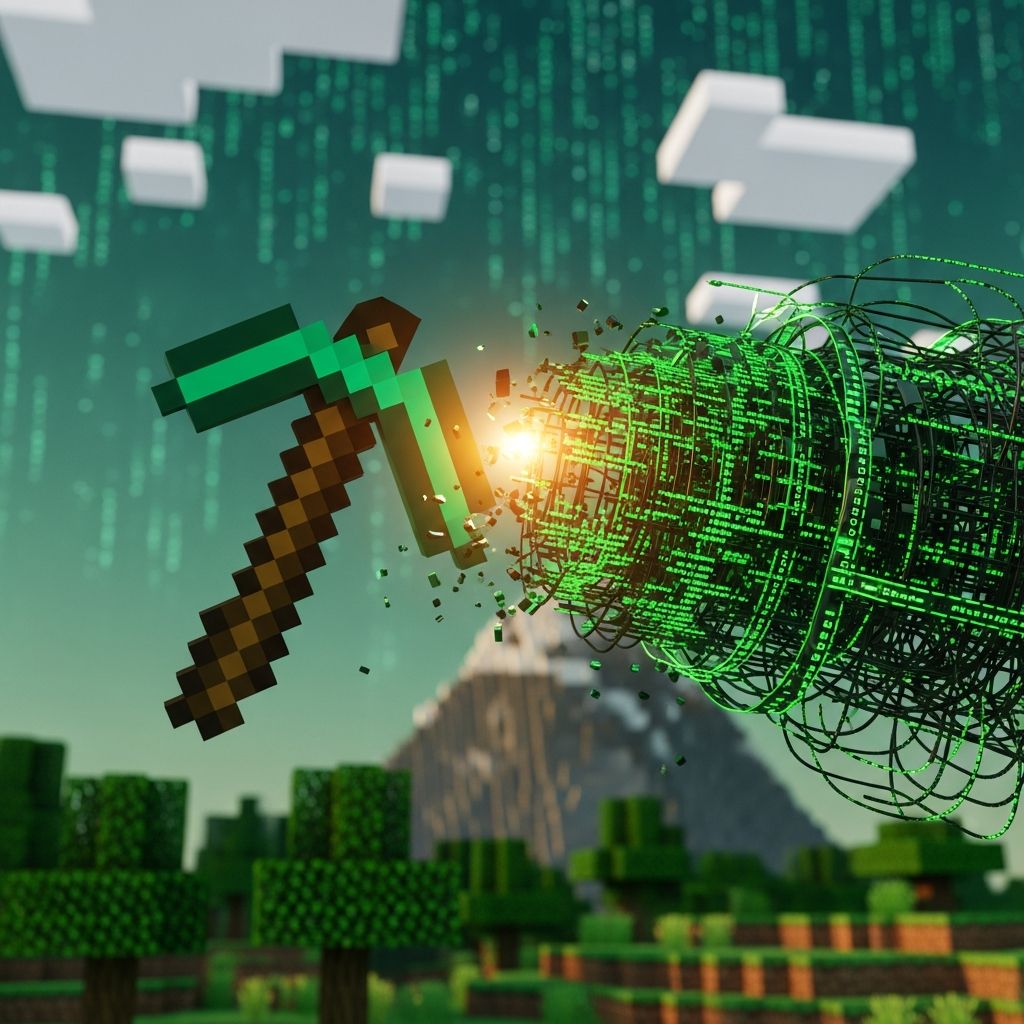
Mojang Studios is ushering in a transformative era for Minecraft Java Edition by completely removing code obfuscation, a practice that has shrouded the game’s internals for over 16 years since its full release in 2011. This decision, announced in late 2025, promises to streamline mod development, enhance debugging capabilities, and foster deeper community engagement with the game’s core mechanics.
The Dawn of Transparent Code in Minecraft
Obfuscation involves deliberately complicating source code to deter reverse engineering and protect proprietary elements, a standard tactic in game development to safeguard intellectual property. In Minecraft Java Edition, this meant modders faced cryptic variable names, scrambled functions, and convoluted structures that made customization arduous. Mojang’s shift eliminates these barriers entirely, starting with experimental releases in snapshots following the Mounts of Mayhem update.
This isn’t a partial tweak; it’s a full pivot. Future versions, aligned with the new 2026 numbering system like 26.1.1, will ship with readable, human-friendly code. Players and creators can now dissect how blocks generate, entities behave, and worlds render without third-party deobfuscation tools.
Why Now? Modding as Minecraft’s Lifeblood
Modding has defined Java Edition’s longevity, powering everything from texture packs to sprawling adventure overhauls. Yet, obfuscation forced developers to map obfuscated names to meaningful ones manually—a time sink that stifled innovation. By exposing the code, Mojang aims to accelerate mod creation, updates, and fixes, directly addressing community feedback.
- Faster Development Cycles: Modders skip the deobfuscation step, diving straight into editing.
- Improved Collaboration: Clear code enables shared understanding across teams.
- Better Education: Aspiring programmers learn real-world Java through Minecraft’s codebase.
The timing coincides with Minecraft’s version overhaul, where 2026 releases prefix with ’26’ for Java and Bedrock, simplifying cross-edition tracking despite differing cadences.
Technical Implications for Modders and Tools
Existing modding ecosystems like Forge and Fabric rely on obfuscated mappings. Mojang acknowledges potential disruptions and is rolling out transitional support: un-obfuscated experimental snapshots alongside traditional ones. This dual-track approach lets toolmakers adapt gradually.
| Aspect | Before Deobfuscation | After Deobfuscation |
|---|---|---|
| Code Readability | Scrambled names (e.g., ‘a’ instead of ‘playerEntity’) | Clear, descriptive identifiers |
| Debugging | Unreadable crash logs | Intuitive stack traces |
| Mod Update Time | Weeks for mappings | Hours for tweaks |
| Tool Compatibility | Obfuscation-dependent | Native support phased in |
Crash reports, once a modder’s nightmare, will now pinpoint issues precisely, reducing downtime and frustration.
Historical Context: From Obfuscated Origins to Open Future
Minecraft Java Edition evolved from Notch’s 2009 experiments through pre-Classic, Classic, and Indev phases to its 2011 launch. Updates like the Nether expansion in 1.16 marked milestones, but obfuscation persisted as an industry norm.
Past efforts in 2019 cleaned select code segments, hinting at this evolution. Now, in 2026, full transparency aligns with Mojang’s community ethos, unaffected by the EULA—no new restrictions on mods emerge from this.
Bedrock Edition: Unaffected but Watching
This change targets Java Edition exclusively, leaving C++-based Bedrock untouched. Bedrock’s modding via add-ons differs, focusing on behavior packs and resources without source access. However, clearer Java insights might inspire cross-edition tools.
Community Reactions and Anticipated Innovations
Excitement ripples through forums and dev blogs. Modders foresee a renaissance: performance mods optimizing rendering, AI-driven NPCs, and seamless multiplayer enhancements. Educational potential soars—students could study procedural generation or physics simulations directly.
Challenges linger: legacy mods may break, demanding updates. Mojang pledges guidance, potentially via official mappings or workshops.
Broader Industry Ripple Effects
Minecraft’s move could influence peers. Games like Terraria or Stardew Valley, mod-friendly but obfuscated, might follow. It underscores open-source trends in gaming, balancing accessibility with protection via EULAs.
Getting Started with the New Era
To experiment:
- Update to latest launcher, select ‘Latest Release’ for 26.1.1 or snapshots.
- Download experimental un-obfuscated jars from Mojang’s site.
- Use IDEs like IntelliJ for direct editing.
- Test mods on obfuscated vs. clean versions.
Future Outlook: 2026 and Beyond
As 26.x versions roll out, expect mod explosions. Combined with features like new mounts, this cements Java Edition’s dominance for creators. Mojang’s transparency signals trust in its community, potentially birthing Minecraft’s most vibrant era yet.
Frequently Asked Questions (FAQs)
Does deobfuscation mean full source code release?
No, it’s deobfuscated binaries—readable but compiled. Full source remains proprietary.
Will my existing mods break?
Potentially; transitional snapshots aid adaptation.
Is Bedrock getting this too?
Not currently; it’s Java-specific.
When does it start?
Post-Mounts of Mayhem snapshots, fully in 2026 releases like 26.1.
Does it violate EULA?
No impact; modding rules unchanged.
References
- Minecraft is removing Code Obfuscation in Java! — Febucci Blog. 2025-10-31. https://blog.febucci.com/2025/10/minecraft-is-removing-code-obfuscation-in-java/
- Mojang is finally revealing all of Minecraft: Java Edition’s code — GamesRadar. 2025. https://www.gamesradar.com/games/adventure/mojang-is-finally-revealing-all-of-minecraft-java-editions-code-after-16-years-to-make-it-quicker-and-easier-for-modders-to-create-and-improve-mods/
- Minecraft Java Edition 26.1.1 — Minecraft.net (official). 2026. https://www.minecraft.net/en-us/article/minecraft-java-edition-26-1-1
- Minecraft new version numbering system — Minecraft.net (official). 2026. https://www.minecraft.net/en-us/article/minecraft-new-version-numbering-system
Similar Articles





Read full bio of Sneha Tete