Nexon’s AI Ambition After Arc Raiders
A successful shooter becomes a case study for cheaper, faster game creation.
Why Nexon’s latest leadership move matters
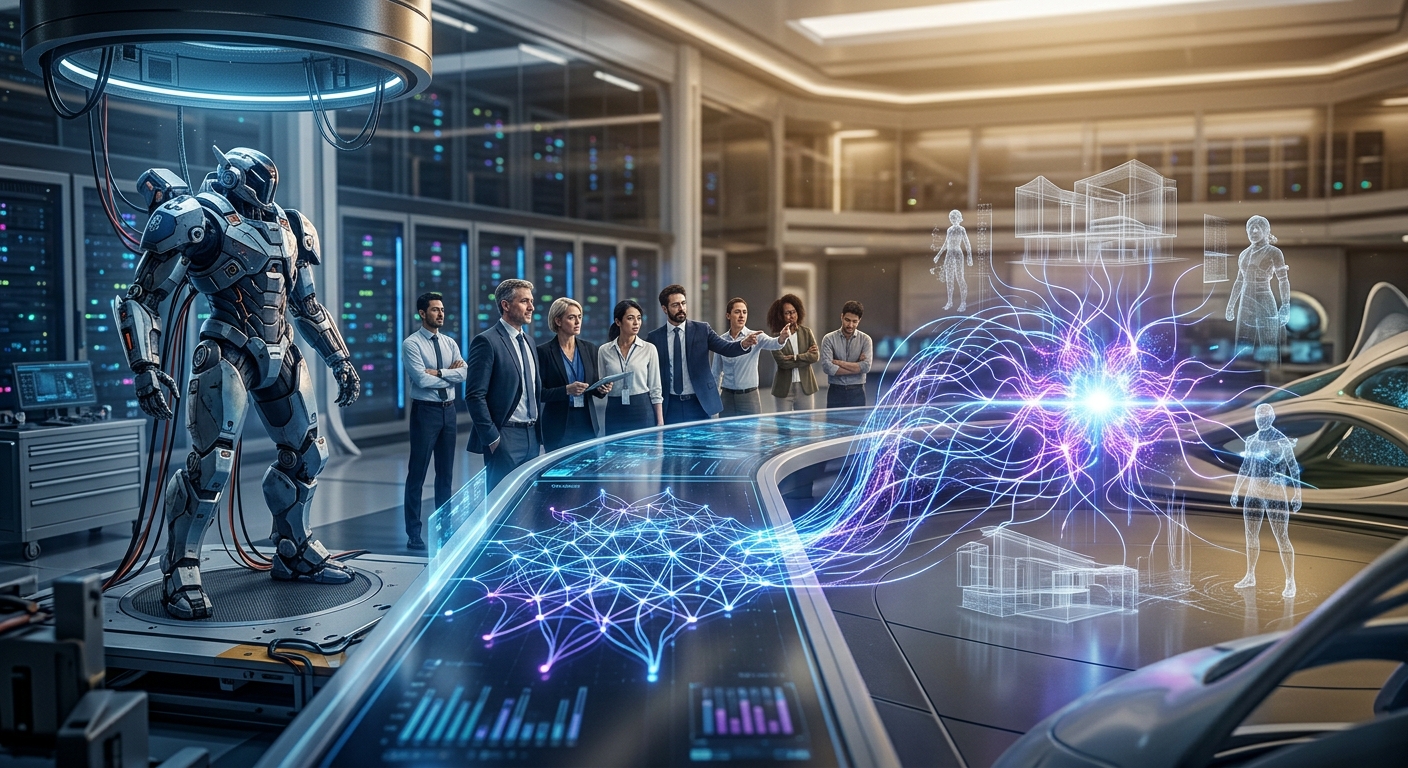
Nexon’s decision to elevate Patrick Soderlund, the executive tied to the hit shooter Arc Raiders, is more than a routine corporate reshuffle. It signals confidence in a development model that blends leaner production, modern tooling, and a stronger willingness to experiment with artificial intelligence. In an industry where budgets can balloon and timelines can stretch for years, a successful game made with a relatively restrained cost structure becomes a powerful proof point.
The publisher’s message is simple enough: if a smaller, sharper team can build a game that connects with players, then the methods behind that result deserve attention. AI, in that context, is not being sold as a magic wand. Instead, it is being framed as a practical tool that can remove repetitive labor, reduce friction in production, and help studios spend more time on design choices that actually shape the player experience.
What the promotion suggests about Nexon’s direction
Promoting a leader associated with a successful new IP usually says two things at once. First, the company believes the person can help steer broader strategy. Second, it wants to keep the momentum of a win from being limited to one studio. By moving Soderlund into a higher-profile role, Nexon appears to be rewarding a development philosophy that emphasizes efficiency without abandoning ambition.
That matters because the game business has become increasingly polarized. On one side are blockbuster projects with massive teams and huge technical overhead. On the other are smaller, more focused titles that can move quickly, adapt faster, and sometimes outperform expectations. Nexon seems to be betting that the second path can be scaled up through better production systems, and that AI may be one of the tools that makes that scale possible.
AI as a production tool, not just a buzzword
The debate around AI in games often turns heated because people hear the term and imagine automated worlds with no human touch. But the more practical use cases are usually much narrower. Studios are already exploring systems that can assist with text generation, animation cleanup, asset iteration, testing, localization support, and internal prototyping. Those are not glamorous tasks, but they consume enormous amounts of time and budget.
From a publisher’s perspective, that is where the upside lies. If teams can cut the hours spent on repetitive work, they can redirect effort toward art direction, balancing, combat feel, level flow, and live-service tuning. AI does not replace those decisions; it can create room for them. That distinction is important because it separates a realistic workflow improvement from the more exaggerated claims that often dominate headlines.
Why a successful shooter became the example
Arc Raiders has become the reference point because it combines a strong market response with an apparent development philosophy that avoided the scale creep seen in many AAA projects. A game that earns praise while avoiding the cost profile of a mega-budget production instantly becomes attractive to executives looking for a roadmap. It shows that quality does not always require the largest possible team or the longest possible pipeline.
That result can also influence how publishers think about risk. When a studio proves it can deliver excitement without overbuilding, leadership is more likely to ask whether other parts of production can be streamlined as well. AI then enters the picture not as a replacement for creativity, but as a way to preserve the parts of development that audiences notice while reducing the parts they never see.
The broader business case for automation
Game development is expensive because it combines many disciplines: design, engineering, art, audio, narrative, QA, marketing, and ongoing operations. Every new feature can multiply work across several departments. This is why executives pay close attention to technologies that promise even modest efficiency gains. Small improvements can compound quickly across a large project.
There are several ways AI can help business performance:
- Speeding up early concept work and internal mockups
- Assisting with repetitive asset creation or variation
- Supporting localization and text-heavy tasks
- Improving testing workflows by surfacing edge cases faster
- Reducing the burden of manual iteration in live-service updates
None of these uses is revolutionary on its own. Together, however, they can change the economics of a project. That is why publishers are increasingly talking about “redesigning” development instead of merely “using AI.” The shift is about workflow architecture, not a single feature.
What players usually worry about
Whenever AI enters the discussion, players tend to raise a familiar set of concerns. Will games become generic? Will studios lean on automation and reduce the human identity that makes their work memorable? Could AI-generated content flood the market with shallow, interchangeable products? Those worries are not unfounded, especially if the technology is used carelessly.
The strongest criticism is that efficiency can come at the cost of originality. If every studio uses the same systems in the same way, creative output may drift toward sameness. That risk is real. The solution is not to ignore AI, but to treat it as a support layer rather than a substitute for authorship. The studios most likely to benefit are the ones that use automation to expand what their teams can do, not to flatten their voice.
How a studio can use AI without losing identity
Successful teams will likely draw a clear line between foundation work and final creative decisions. AI can help generate options, surface alternatives, and remove bottlenecks. Humans still need to choose what fits the tone, what feels fun, and what communicates the game’s personality.
In practice, that could look like this:
| Area | Possible AI role | Human role |
|---|---|---|
| Concepting | Rapidly draft variations and mood references | Pick the direction that matches the project vision |
| Testing | Identify patterns, bugs, and repetitive issues | Decide which problems matter most to players |
| Localization | Translate or pre-process large volumes of text | Refine tone, context, and cultural nuance |
| Live operations | Monitor data and suggest balancing options | Approve changes aligned with design goals |
This hybrid approach is where the promise becomes most believable. It protects the studio’s creative identity while still reducing the waste that frustrates producers and executives alike.
Can leaner development really scale?
One successful launch does not prove a universal formula. A shooter with a strong core loop is not the same as a narrative RPG, an open-world survival game, or a competitive sports title. Each genre has different production pressures. Still, a notable win does create leverage. It gives leadership permission to ask whether a leaner structure can work in more places.
If Nexon can translate the lessons of one project into a broader playbook, the company could influence how other publishers approach staffing, scheduling, and tool adoption. That would not mean every game shrinks in scope. It would mean that more projects are measured against a new baseline: how much can be achieved without the inefficiencies that have become normalized in modern AAA development?
The strategic bet behind the technology
The smartest reading of Nexon’s posture is that AI is being treated as a strategic multiplier. Publishers are under pressure from rising costs, audience fragmentation, and the need to keep content flowing for live games. If AI can improve throughput without damaging quality, then it becomes a competitive advantage rather than a novelty.
But the real challenge is management, not software. Technology only works when the organization is willing to redesign processes around it. That means training teams, setting guardrails, defining where automation is appropriate, and preserving standards so that speed does not become an excuse for mediocrity. In other words, the publisher is not just buying tools; it is trying to reshape how games are made.
What this could mean for the industry
Nexon’s approach may encourage other companies to think less about whether AI should be used and more about where it creates the most value. That could lead to a wave of workflow experimentation across the industry. Some studios will focus on art pipelines. Others will target QA and analytics. A few may rework entire preproduction systems around AI-assisted iteration.
If that happens, the industry may not end up with fewer jobs so much as different jobs. Developers could spend less time on rote work and more time on judgment, taste, and problem-solving. That outcome is not guaranteed, and it depends heavily on how companies choose to implement the tools. But it is a more balanced future than the alarmist idea that AI simply replaces creative labor wholesale.
A measured conclusion
The promotion of the Arc Raiders leader gives Nexon a chance to turn one breakout success into a larger philosophy. The company appears to believe that games can be made differently: with tighter teams, smarter pipelines, and a more deliberate use of AI to reduce friction. That view will not satisfy everyone, especially those wary of automation’s effect on creative culture.
Still, the logic is hard to ignore. The industry has spent years treating ever-growing budgets as normal. A hit that arrives with a leaner footprint challenges that assumption. Whether AI becomes the foundation of a new model or just one ingredient in it, Nexon is clearly trying to position itself on the front edge of that shift. For players and developers alike, the key question is whether the promise of efficiency can coexist with the originality that makes games worth caring about.
Frequently Asked Questions
Why is Nexon talking about AI now?
Because it sees an opportunity to improve game production after a successful release, using AI to speed up repetitive work and reshape development workflows.
Does this mean AI will make the games itself?
No. The more realistic goal is to use AI as a support tool for teams, not as a replacement for creative direction or human decision-making.
Why is Arc Raiders important in this discussion?
It serves as proof that a successful, well-received game can be built without the most expensive version of the AAA playbook.
What is the biggest risk of AI in game development?
The main risk is sameness: if studios rely too heavily on identical tools and outputs, games could start to feel generic or uninspired.
Could this change how studios are structured?
Yes. If AI meaningfully reduces production bottlenecks, studios may reorganize teams, timelines, and budgets around faster iteration and leaner pipelines.
References
- Nexon Co., Ltd. Investor Relations — Nexon. 2025-11-07. https://www.nexon.co.jp/en/ir/
- OpenAI API Documentation — OpenAI. 2026-01-15. https://platform.openai.com/docs/
- AI and the Future of Work in Creative Industries — OECD. 2024-10-02. https://www.oecd.org/en/publications/
- Games Growth and Development Economics — World Bank. 2024-06-18. https://www.worldbank.org/en/topic/digitaldevelopment
Similar Articles




Read full bio of Sneha Tete