Overwatch 2’s Most Hated Map Gets A Second Chance
Blizzard’s flashpoint overhaul aims to fix Overwatch 2’s most controversial map with smarter flow, flanks, and clearer fights.
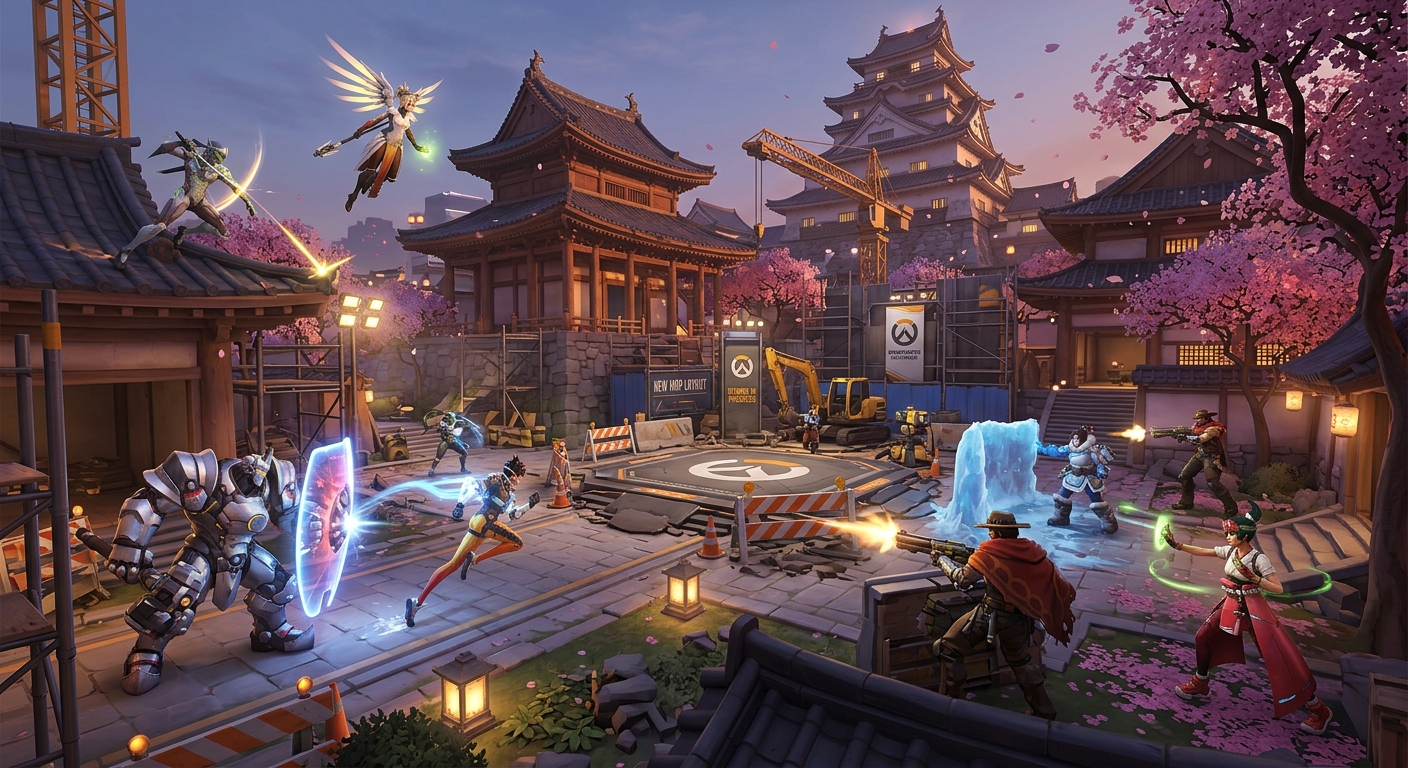
Overwatch 2’s newest core mode, Flashpoint, launched with ambitious multi-stage battles and sprawling layouts. It also quickly developed a reputation problem: one of its flagship maps was widely viewed as the worst in the entire rotation. Now, Blizzard is bringing that map back to the spotlight with one of the most substantial reworks the game has seen, aiming to transform a community punching bag into a competitive highlight.
This article breaks down what went wrong with the original design, what Blizzard has changed, and what it could mean for competitive and casual players as the reworked map returns to the live game.
Why Flashpoint Maps Were So Controversial
Flashpoint introduced a new twist on objective gameplay in Overwatch 2. Instead of pushing a single payload or capturing a fixed pair of points, teams fight over a series of randomized capture locations across a huge map. While the concept was intriguing, the first two Flashpoint maps, New Junk City and Suravasa, drew mixed reactions from players and pros alike.
Common complaints centered on three issues:
- Confusing navigation: Long corridors and looping side paths made it easy to get lost, especially when rotating between points.
- Frustrating chokes: Some approaches to objectives felt cramped and one-dimensional, funneling attackers through narrow tunnels with limited options.
- Poor readability: Players struggled to orient themselves, recognize landmarks, or quickly understand where fights would occur.
Blizzard has publicly acknowledged these shortcomings and has committed to large-scale reworks of Flashpoint maps. In an official Weekly Recall update, the Overwatch team described a multi-pronged effort to improve readability, strengthen visual themes, and smooth the flow through objectives without losing what made the mode unique in the first place.
The Map With The Worst Reputation
Although Flashpoint as a mode has its supporters, one specific map developed an especially bad reputation in community discussions and tier lists: the Antarctic-themed Flashpoint battleground, often singled out as one of Overwatch 2’s most disliked designs.
Across social media, forums, and YouTube breakdowns, players repeatedly cited this map as:
- Too punishing for attackers on several points, with defenders able to hold narrow choke doors indefinitely.
- Overly labyrinthine in key indoor sections, making it hard to maintain team cohesion.
- Unfun to rotate between objectives, with long runs back to the fight after each death.
Content creators ranking every Overwatch map frequently placed this Flashpoint entry near the bottom, often comparing it unfavorably to historically unpopular Assault maps such as Paris or Horizon Lunar Colony, which were removed from competitive rotations years ago. Blizzard appears to have taken this feedback seriously, choosing this map as a showcase for its broader Flashpoint overhaul philosophy.
Blizzard’s Design Philosophy For The Rework
In explaining the latest wave of changes, the Overwatch 2 developers highlighted three guiding principles for reworking Flashpoint maps. While these goals apply to New Junk City and Suravasa, they mirror the broader approach used for improving Antarctica’s design as well.
| Design Goal | What It Means In Practice |
|---|---|
| Improved Readability | Clearer entrances, distinct landmarks, reduced vertical clutter, and easier orientation when rotating between objectives. |
| Stronger Visual Themes | More distinct zones that look and feel different so players can recognize where they are at a glance. |
| Better Objective Flow | Less claustrophobic choke points, additional flanking paths, and wider combat spaces that support multiple playstyles. |
According to Blizzard’s official communication, entrances around objectives are being highlighted more clearly, building heights are reduced to keep attention on key spaces, and cover placements are reworked to encourage more varied engagements and fewer one-sided hold angles.1
What Actually Changed On The Reworked Map?
While Blizzard has not published every micro-adjustment in fine detail, several categories of change define the rework to the most hated Flashpoint map and its siblings. Based on official patch previews and gameplay demonstrations, players can expect the following types of updates:
1. Chokes That Aren’t Suffocating
One major pain point was how narrow and unforgiving some choke points felt. Defenders could set up with spam-heavy heroes and punish attackers who had little choice but to walk directly into oncoming fire. To address this, Blizzard has:
- Widened key entrances into objective rooms.
- Added alternate doorways and side corridors to avoid single-file tunnels.
- Adjusted cover so attackers can use corners and walls to safely contest.
This follows the same logic Blizzard has applied to earlier map reworks: the goal is not to eliminate defensive advantage, but to make attacking feel like a skill-based challenge rather than a coin flip on cooldowns.
2. New Flanking Routes And Rotational Options
The rework heavily emphasizes new pathways around and between objectives. In the Weekly Recall article, Blizzard notes the addition of “various pieces of cover, new flank routes, and updated connecting paths” designed to give players more options to approach fights.1 For this map, that likely means:
- More lateral routes so DPS and tanks can pressure from multiple directions.
- Extra mid-level walkways or ramps that heroes without high mobility can still use.
- Safer transitions between points, reducing the feeling of running through empty hallways.
These new flanks should especially benefit heroes like Tracer, Sombra, Genji, and Baptiste, who can thrive when they have multiple angles to create crossfires or backline pressure.
3. Cleaner Visual Language
Flashpoint maps are large, and players often cited confusion about where they were or where they should go next. Blizzard has responded by:
- Clarifying color palettes and visual motifs for different zones.
- Emphasizing landmarks near spawn rooms and objectives.
- Reducing vertical clutter so the most important sightlines stand out.
This focus on readability aligns with broader design best practices in competitive shooters. Clear visual communication and intuitive level layouts help reduce cognitive load and allow players to focus on teamwork, ability usage, and aiming instead of guessing where doors lead. Research into esports map design emphasizes the importance of recognizable landmarks and consistent visual language to support high-level play.2
4. More Intuitive Layout Around Objectives
Objective areas themselves have been opened up. Blizzard reports that Flashpoint objectives are now “less contained” and that layout changes are meant to give teams more opportunities to approach and contest points rather than being pinned outside indefinitely.1
In practical terms, players should expect:
- Broader capture zones with multiple entry points.
- Reworked cover in the point area, balancing defender nests with attacker footholds.
- Clearer routes from spawn to the point, minimizing confusion when objectives rotate.
How The Rework Could Shift The Meta
Any large map update in Overwatch 2 has ripple effects on the hero meta. Because Flashpoint maps require sustained fights across several points, changes to chokepoints and rotations can significantly impact which compositions feel optimal.
Tank Choices
Previously, extremely tight chokes favored defensive tanks with strong area denial, such as Ramattra or Sigma, and made initiating tank roles feel frustrating. More open engagements and wider flanks could:
- Increase the viability of dive tanks like Winston and Wrecking Ball.
- Encourage flexible brawl comps with Reinhardt or Mauga on certain points.
- Reward tanks who can control multiple angles rather than just one doorway.
DPS And Support Dynamics
New paths and clearer lines of sight offer opportunities and challenges for both DPS and support players:
- Hitscan heroes such as Cassidy and Ashe may benefit from cleaner sightlines on mid-range engagements.
- Flankers like Tracer and Sombra gain more routes to pressure backlines or contest points late.
- Supports may find more safe pockets to rotate through, but also need improved positioning awareness to avoid getting isolated on expanded flanks.
Overwatch League and professional scrim environments have historically shaped meta understanding for new and reworked maps. Analyses of past map changes show that when new routes are added, the dominant strategies can shift dramatically over a few weeks as teams experiment with different approaches.3
Impact On Competitive And Casual Play
The reworked Flashpoint map will re-enter multiple queues, affecting different segments of the player base in different ways.
Ranked And Pro-Level Play
For competitive players, especially those near the top of the ladder, the map rework should bring several advantages:
- More strategic depth: Additional flank routes and clearer rotations increase the value of coordinated pushes and pre-planned engagements.
- Fairer defensive vs. offensive balance: Attacking teams should no longer feel hard-stuck outside of impossible doors.
- Smoother scrim practice: With better readability, teams can more easily review VODs and calibrate their setups for each objective.
In the long term, balanced map design is crucial for the competitive integrity of any esports title. Research on competitive game balance suggests that perceived fairness and clarity of rules and spaces strongly influence player trust and long-term engagement.4
Quick Play, Arcade, And New Players
For casual players, the biggest wins may come from reduced frustration and improved clarity:
- Less time spent lost in confusing hallways.
- More opportunities to contribute to fights, even with limited map knowledge.
- Fewer one-sided stomps where one team gets locked at spawn or outside a choke.
New players in particular benefit from intuitive layout and strong visual cues. Studies on level design and learning curves in action games show that early experiences in confusing environments can increase churn, while readable maps help players quickly develop spatial understanding and confidence.5
Tips For Adapting To The Reworked Map
When the reworked Flashpoint map returns to rotation, both solo queue players and full stacks will need to adjust. Here are some practical tips to get ahead of the curve.
1. Spend Time In Custom Games
Before you dive into ranked, load the map in a custom game and walk through each objective transition:
- Trace the shortest paths from each spawn to every point.
- Identify at least two attack routes and one defensive fallback route for each objective.
- Look for health pack locations near likely fight areas.
2. Use Pings To Call New Routes
Overwatch 2’s ping system is especially valuable on complex maps. When you discover a strong flank or safer rotation, mark it for your team. Simple callouts such as “right side flank” or “high ground path” combined with pings can quickly align your teammates.
3. Adjust Hero Picks For Each Point
Flashpoint maps have multiple objectives with different geometries. Don’t be afraid to swap heroes between points if you notice the environment favors different roles:
- Switch to mobile heroes on points with long rotations or open flanks.
- Favor short-range brawlers on tight indoor objectives.
- Consider flexible supports who can survive pressure from multiple angles, such as Kiriko or Lucio.
4. Review Replays To Understand Flow
After a few games on the reworked map, review your replays and look specifically at transitions between points:
- Where did your team waste time rotating?
- Did you consistently take the most contested choke instead of using safer flanks?
- Were supports left without cover during swaps between objectives?
Small adjustments in pathing can significantly improve your team’s ability to contest successive points in Flashpoint.
FAQ: Overwatch 2’s Reworked Flashpoint Map
Which Overwatch 2 map was considered the worst in Flashpoint?
Among Flashpoint maps, the Antarctic-themed map often drew the most criticism from players for its confusing layout, punishing chokes, and awkward rotations. It became a frequent target in community tier lists and commentary, prompting Blizzard to give it an extensive rework alongside other Flashpoint locations.
What are the main goals of Blizzard’s Flashpoint map reworks?
Blizzard’s stated goals are to improve readability, strengthen visual theming, and enhance the flow through objective spaces. In practice, that means clearer entrances, more distinct areas, less claustrophobic chokes, and additional flank routes and connecting paths so players have more strategic options when attacking or defending objectives.
How will the reworked map affect competitive play?
In competitive modes, the reworked map should reduce one-sided defensive holds and reward teams that coordinate rotations and use multiple attack angles. Tank and DPS selections may diversify as wider chokes and new flanks create room for dive and hybrid compositions. Over time, pro play and high-level ranked games will likely refine optimal strategies for each objective.
Do these changes help new players, or just veterans?
Both groups benefit. New players should find it easier to navigate the map, understand where fights happen, and contribute to team pushes. Veterans gain deeper strategic options and more balanced engagements that better reward planning and coordination rather than memorizing a few oppressive hold spots.
What can players do to prepare for the map’s return?
Players can prepare by exploring the map in custom games, learning multiple routes to each objective, practicing clear callouts and pings for new flanks, and reviewing replays to refine rotations. Swapping heroes between points to match the environment will also be more important than ever on the updated Flashpoint layout.
Why Map Reworks Matter For Overwatch 2’s Future
Overwatch’s history shows that unpopular maps do not have to be permanent mistakes. Blizzard previously removed and later reworked several problematic maps and modes, including two Assault maps that were widely criticized by both casual players and professionals. Addressing community feedback through concrete level design changes is a key part of keeping a live-service competitive game healthy.
Flashpoint is still relatively new, and its ultimate success will depend on how well its maps support both fair competition and moment-to-moment fun. By dramatically revisiting one of its least-loved battlegrounds, Blizzard is signaling a willingness to iterate aggressively, learn from past missteps, and turn early pain points into long-term strengths.
Whether this rework is enough to redeem Overwatch 2’s most hated map will ultimately be decided by the players who jump back into the snow and fight it out point by point. But with clearer paths, less suffocating chokes, and more options to outplay your opponents, the map is finally being given a fair chance to shine.
References
- Weekly Recall: Flashpoint Map Reworks — Blizzard Entertainment. 2024-05-07. https://overwatch.blizzard.com/en-us/news/24215719/weekly-recall-flashpoint-map-reworks/
- Overwatch League 2023 Season Recap — Overwatch League / Blizzard Entertainment. 2023-11-30. https://overwatchleague.com/en-us/news/overwatch-league-2023-season-recap
- Designing Competitive Levels for Multiplayer Games — Game Developers Conference (GDC), Valve presentation. 2012-03-07. https://www.gdcvault.com/play/1015730/Designing-Competitive-Game-Levels
- Understanding E-sports Game Design — Z. Qian et al., International Journal of Computer Games Technology. 2019-02-14. https://doi.org/10.1155/2019/2340952
- Game Level Design: Learning Curves and Engagement — M. Bopp et al., CHI Conference on Human Factors in Computing Systems. 2016-05-07. https://doi.org/10.1145/2858036.2858282
Similar Articles





Read full bio of medha deb