Pragmata Beginner Guide: Smart Tips For Your First Run
Master hacking, upgrades, combat movement, and exploration in Pragmata with a focused, spoiler‑light guide for new players.
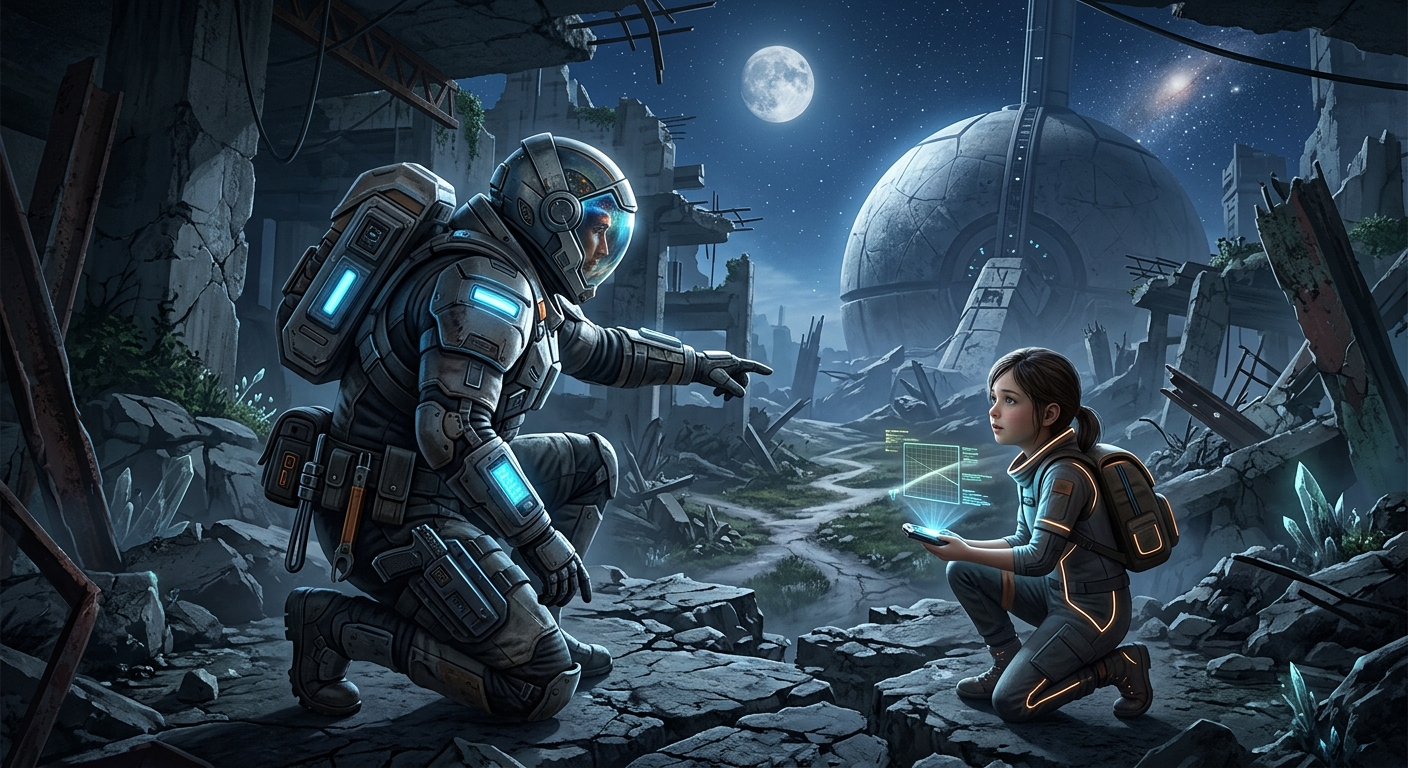
Pragmata blends third-person shooting with a deep hacking system, light RPG progression, and constant risk-reward decisions. The game can feel overwhelming in its opening hours, especially when you are juggling weapon management, node-based hacking, and upgrade choices. This guide gathers practical, spoiler-light tips inspired by hands-on coverage to help you build good habits from the start and avoid common early mistakes.
Getting Comfortable With The Shelter Loop
Your shelter functions as a hub, upgrade terminal, and safety net. The game frequently nudges you to return there, and you are rewarded every time you listen.
Why You Should Return Often
Instead of treating the shelter as a mere checkpoint, think of it as the center of your progression loop:
- Refill consumable healing: Your reusable health tanks only replenish at the shelter, so going back regularly keeps you stocked before tough encounters.
- Convert exploration into power: Materials and REM-type currencies you collect in the field don’t help until you spend them at upgrade terminals.
- Adjust your loadout: You can switch weapons, hacking modules, and suit abilities, letting you respond to enemies that are giving you trouble.
Because survival in action-heavy games is tightly linked to resource management and planning, regularly returning to the hub to restock and upgrade is a common and effective design pattern in modern games.1
Fast Travel And Route Planning
As you push deeper into the story, you unlock more fast travel points. Use them to shape a smooth loop:
- Push forward until your healing tanks, ammo, or hacking nodes are running low.
- Use a nearby fast travel point to warp back to the shelter.
- Upgrade, refill, and then travel directly to the next unlocked point instead of re-clearing old areas.
This rhythm keeps your risk manageable while still letting you explore aggressively.
Building Efficient Hacking Habits
The hacking grid is at the heart of Pragmata’s combat. Used well, it lets you control enemies, debuff them, or blow them up outright. Used poorly, it burns valuable nodes for minimal benefit.
Understanding Node Roles
While the exact node names vary, most of them fall into a few broad categories:
| Node Type (Concept) | Typical Effect | Best Use Case |
|---|---|---|
| Damage / Combust | Direct damage, often scales with prior setup | Chunking tanky enemies or finishing weakened foes |
| Debuff / Expose | Makes targets more vulnerable to subsequent hacks or shots | Prepping bosses and elite enemies |
| Spread / Multi-hack | Shares effects to nearby enemies or multiple subsystems | Groups of mobs, or enemies with several weak points |
| Utility / Control | Stuns, disables, or manipulates behavior | Buying time, setting up clean shots, crowd control |
Spend a few battles experimenting with each node type on weaker enemies to see what they actually do. This experimentation phase is critical for understanding complex action systems and is often encouraged by developers through low-risk early encounters.2
Prioritizing Hacks In Combat
Not every enemy deserves a full, resource-heavy hack. Conserve your best nodes for high-impact targets:
- Trash mobs: Use cheap, basic hacks or just shoot them. Save premium nodes.
- Elites and bosses: Stack debuff and damage nodes, then exploit openings with your strongest weapons.
- Annoying ranged enemies: Quick control hacks (stuns, slows) can turn a chaotic firefight into something manageable.
Making The Most Of Overdrive And Auto-Hack
The overdrive-style gauge that builds as you hack is extremely valuable. You can spend portions of it on auto-hacking, or you can save it for powerful skills and burst windows. For new players, a balanced approach works well:
- Use manual hacks in calm moments when you can focus, banking meter.
- Spend auto-hacks on hectic fights where your attention is divided and a mistake would be costly.
- Reserve a chunk of your gauge for overdrive-like abilities just before big encounters, similar to saving ultimates in hero shooters for pivotal moments.3
Combat Movement And Positioning
Standing still is one of the fastest ways to die in Pragmata. Most enemy attacks punish static targets, and you are often hacking and shooting at the same time.
Always Be In Motion
During fights, try to maintain a baseline level of movement even when you are focusing on the hacking grid:
- Circle around enemies while hacking to avoid ambushes from behind.
- Use dodge rolls or quick dashes to break line of sight and avoid telegraphed attacks.
- Combine jumps with glides or hover moves (where available) to buy extra time in the air while aiming.
Design research in third-person action games consistently shows that encouraging players to move and dodge, instead of “turtling,” increases engagement and perceived responsiveness.2
Weapon Synergy And Quick Swapping
Many enemies have brief windows where they are stunned, exposed, or otherwise vulnerable after a successful hack. To capitalize on this:
- Equip a high-damage weapon in one slot and a reliable, low-ammo-cost weapon in another.
- Hack, quick-swap, unload your big weapon during the vulnerability window, then swap back.
- For heavily armored enemies, consider stagger tools (like a riot-style blaster) to knock them down and reveal weak points.
Smart Upgrade Planning
Upgrade materials are limited, especially in the early game. Spending them carelessly can make the mid-game harder than it needs to be.
Balancing Core Stats Early
Many guides recommend avoiding over-specialization during the first several levels of progression. The same logic applies in Pragmata:
- Upgrade your core firmware stats (damage, survivability, hacking capability) in a roughly even fashion until each hits a baseline threshold.
- After you reach that point, start leaning into the style you enjoy most (e.g., hacking-focused, gun-focused, or hybrid).
Game design analyses of action RPGs frequently highlight that “flat” early upgrades create a stable foundation, whereas early overspecialization can lead to difficulty spikes later on.2
Specializing Around Your Playstyle
Once your fundamentals are solid, pick a direction:
- Hacking-centric: Improve hack speed, node effectiveness, and overdrive generation. You will win fights with brains more than bullets.
- Gun-centric: Focus on weapon damage, recoil control, and ammo efficiency. Hacks become setup tools instead of the main course.
- Survivor build: Prioritize maximum health, shields, and defensive suit attachments if you struggle with reaction-based gameplay.
Revisiting the shelter after a few hours is a good time to reassess whether your upgrades match how you are actually playing.
Using Training And Simulations
Training simulations and optional scenarios are more than tutorials. They are efficient ways to learn interactions and earn resources.
Why Training Is Worth Your Time
Rather than skipping these modes, treat them as a low-risk laboratory:
- Practice complex hack chains without worrying about losing progress.
- Test new weapons and nodes before committing upgrade materials.
- Earn extra currency to accelerate your early upgrades.
Many action games use training or simulation spaces specifically so players can master advanced systems before facing them in real missions, which improves overall performance and reduces frustration.2
Exploration: Scanning, Secrets, And Optional Content
Progression in Pragmata is tied directly to what you find off the main path. Skipping exploration means fewer upgrades and tougher combat.
Make Object Scanning A Habit
Use your object scan frequently as you move through environments:
- Highlight upgrade items and currencies in cluttered areas.
- Reveal interactable objects like switches or breakable debris.
- Spot hidden enemies that are otherwise difficult to see.
Scanning mechanics, similar to those in sci-fi shooters and adventure games, are widely used to reduce visual overload and help players distinguish relevant objects from background detail.4
Pay Attention To Visual And Audio Clues
The game quietly rewards players who notice environmental hints:
- Holographic walls: Some barriers flicker or show distortion, and disappear if you approach and interact. Behind them often lie rare materials or shortcuts.
- Companion commentary: Your AI companion, Diana, frequently reacts to points of interest or upcoming danger. If she comments on a corridor, room, or object, it often means there is something special there.
- Unusual sounds: Mechanical whirs, beeping, or electrical buzzes can signal hidden devices or objects.
Side Activities And When To Tackle Them
Throughout the campaign, you will encounter optional challenges and side detours. A few guidelines for approaching them:
- If an optional fight feels far above your power level, it is fine to mark it mentally and come back later after upgrading.
- Many side activities provide unique rewards like new attachments, special weapons, or large amounts of resources.
- Use these as difficulty barometers: if you suddenly struggle, you may need to improve your build or learn a new enemy pattern.
Managing Difficulty And Accessibility
Pragmata can be punishing, but the game offers some tools to tune the experience. Adjusting difficulty is not a failure; it is a way to keep the game enjoyable.
When To Consider Casual Mode
If repeated deaths on the standard setting are grinding down your enjoyment, switching to a more forgiving mode may be wise:
- Use Casual mode if you are primarily here for the story and atmosphere.
- Switch down temporarily for a single boss or encounter that is blocking progress, then switch back later if you wish.
Game accessibility research suggests that flexible difficulty options help more players finish games and experience their full narrative and mechanics.5
Leveraging Auto-Systems
If the manual hacking minigame becomes overwhelming during hectic fights, do not hesitate to lean on automation tools:
- Auto-hack is excellent for enemies that must be disabled quickly, such as heavy melee units charging your position.
- Reserve auto-hack for high-stress situations so you still build skill with manual hacking over time.
Frequently Asked Questions About Pragmata
Is it bad to go back to the shelter too often?
No. Returning frequently is encouraged. You trade a small amount of travel time for consistent upgrades, refilled health tanks, and better loadout management. Especially early on, err on the side of going back more often rather than less.
Which upgrades should I take first?
Focus on a balanced spread across basic survivability (health or shields), weapon effectiveness, and hacking reliability until each feels comfortable. After that, specialize in the style you enjoy most, knowing you have a stable foundation.
Should I use my rare hacking nodes on regular enemies?
Generally no. Save your most powerful nodes for bosses, elites, or dangerous ranged enemies that can wipe you quickly. Regular mobs are usually better handled with basic hacks and gunplay.
What if a side encounter feels impossible?
Walk away and return later. Pragmata is designed so that some content is easier after you have gained new gear and upgrades. Use the difficulty spike as a signal to improve your build or explore other areas.
Is changing difficulty mid-game cheating?
Not at all. Modern design philosophy from many major studios treats difficulty as a tool to shape your personal experience, not as a strict test of skill. Adjust it to keep the game challenging but not discouraging.
Bringing It All Together
Success in Pragmata depends less on raw reflexes and more on paying attention to systems and using them deliberately. Return to your shelter often, treat hacking as a strategic resource, stay in motion during fights, invest in balanced early upgrades, and make a habit of scanning and exploring. With those fundamentals in place, you will be ready to experiment with more advanced combos and tackle the toughest encounters the game has to offer.
References
- Player Resources and Health in Game Design — Game Developer (formerly Gamasutra). 2019-06-10. https://www.gamedeveloper.com/design/player-resources-and-health-in-game-design
- Level Design Workshop: Arena Combat Design in Third-Person Action Games — Game Developers Conference (GDC). 2018-03-22. https://www.gdcvault.com/play/1025201/Level-Design-Workshop-Arena-Combat
- Designing Player Abilities in Action Games — Game Developers Conference (GDC). 2020-03-18. https://www.gdcvault.com/play/1026633/Designing-Player-Abilities-in-Action
- Visual Communication in Games: How to Keep Players From Getting Lost — Game Developers Conference (GDC). 2017-03-01. https://www.gdcvault.com/play/1024005/Visual-Communication-in-Games-How
- Game Accessibility Guidelines — GameAccessibilityGuidelines.com. 2023-05-01 (ongoing resource). https://gameaccessibilityguidelines.com
Similar Articles




Read full bio of Sneha Tete