Pragmata, Mega Man, and Capcom’s Perfect April Fools Tease
How a long-running fan theory, a sci‑fi mystery, and a cheeky April Fools joke turned Pragmata into one of Capcom’s most talked‑about new IPs.
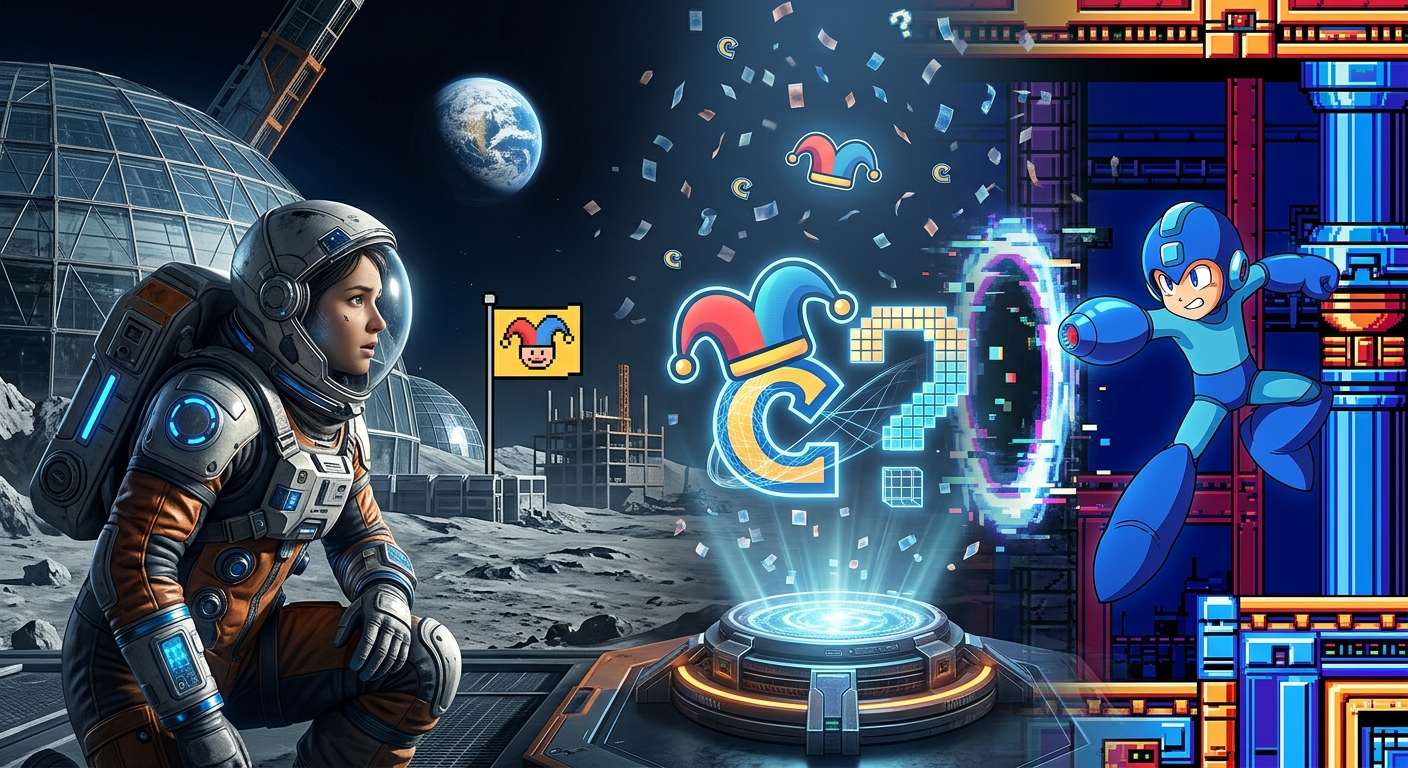
Capcom’s enigmatic sci-fi action game Pragmata has been the subject of wild speculation ever since its reveal. The most persistent theory? That it’s secretly a stealth Mega Man game. After years of fan detective work, memes, and trailer dissections, Capcom finally leaned into the discourse with a tongue-in-cheek April Fools joke that playfully “confirmed” what theorists desperately wanted to believe.
That prank didn’t actually rewrite canon or turn Pragmata into a blue bomber reboot, but it did crystallize something important: the way modern game marketing, community speculation, and legacy franchises intersect to generate hype. This article breaks down the origins of the theory, how Capcom weaponized it for April Fools, and what the whole saga reveals about fandom and the future of Pragmata.
From Mystery Trailer to Meme Fuel: What Is Pragmata?
When Capcom first unveiled Pragmata in 2020 as a new IP for next-gen consoles, it immediately stood out. The debut trailer showed a figure in a bulky spacesuit wandering a deserted cityscape, interacting with a young, seemingly artificial girl, and eventually being flung into a surreal lunar setting. The imagery was striking but deliberately opaque, with no clear explanation of who the characters were or what the game actually played like.
Capcom described Pragmata as a narrative-driven sci-fi action title set in a dystopian near-future. That high-level pitch put it alongside other ambitious new IPs announced for the current console generation, like Returnal or Starfield, but without the immediate brand recognition those games enjoyed. To compensate, Capcom relied heavily on mood and mystery, letting the audience fill in the gaps.
That ambiguity proved fertile ground for theories. The presence of a mysterious girl, advanced technology, and a world warped by some kind of digital or physical anomaly all echoed themes Capcom fans had seen before in series like Resident Evil and Mega Man. But while the horror lineage was obvious, the visual language of the robotic girl and the moon base stirred a very specific kind of deja vu among longtime Mega Man followers.
Why Pragmata Turned Heads Inside Capcom’s Portfolio
Capcom is primarily known for long-running franchise pillars: Resident Evil, Monster Hunter, Street Fighter, and Mega Man. A genuinely new IP is comparatively rare and strategically significant. According to Capcom’s own integrated reports, the company has been investing in creating original brands and expanding digital sales to diversify its portfolio beyond a handful of legacy hits.1 Pragmata is one of the clearest examples of that push.
At the same time, Capcom has also leaned into leveraging nostalgia. The Mega Man Battle Network Legacy Collection, for example, packaged classic titles for modern platforms and performed strongly in digital distribution charts.2 That combination—new IP experimentation plus revival of older brands—created the perfect ecosystem for fans to wonder whether Pragmata might secretly be more than it appeared.
The Mega Man Connection: How a Fan Theory Took Over
The idea that Pragmata was a stealth Mega Man project did not emerge out of nowhere. It evolved over years as new trailers dropped and as Capcom stayed unusually quiet about minute story details. Fans pored over every frame, extracting clues and, sometimes, seeing patterns where none were intended.
Visual Parallels Fans Latched Onto
Some of the most-cited reasons for the theory included:
- The robotic girl: The child companion in Pragmata, often shown with glowing eyes and subtle mechanical cues, reminded players of characters like Roll, Tron Bonne’s Servbots, and other synthetic companions in the Mega Man universe.
- The color palette and suit design: Screenshots and cinematic shots featured bright blues and whites, with the protagonist’s suit featuring glowing segments that some fans argued evoked the armor plating of various Mega Man incarnations.
- Moon base and machine uprising themes: The idea of humanity living alongside, or under threat from, intelligent machines is foundational to the Mega Man series. Pragmata’s setting on a lunar facility overridden by malfunctioning technology seemed thematically adjacent.
In isolation, any one of these similarities might have been shrugged off as generic sci-fi overlap, but combined—and fueled by Capcom’s silence—they snowballed into a compelling narrative for fans hungry for a new Mega Man.
Past Precedent: When Capcom Projects Morph Mid-Development
The plausibility of the theory gained extra traction from Capcom’s own history. Famously, Devil May Cry began as an experimental Resident Evil project before diverging into its own franchise. Capcom itself has acknowledged in interviews that the direction shifted enough that it was rebadged as a completely separate IP.
This history seeded the idea that Pragmata could be undergoing a similar transformation—starting life as a Mega Man title and morphing into something new while retaining structural and thematic DNA. The more Capcom declined to confirm or deny, the more fans interpreted that silence as a meaningful hint rather than the standard opacity that often accompanies long development cycles.
Capcom’s April Fools Gambit: Playing Along With the Theory
On April Fool’s Day, Capcom finally weighed in—just not in the straightforward way some might have expected. The company released a playful video and messaging that appeared, at first glance, to confirm everything conspiracy-minded fans wanted to hear. Suddenly, Mega Man was literally occupying space inside Pragmata’s world, replacing the suited protagonist in tongue-in-cheek promotional assets.
For a brief moment, social media timelines flooded with celebratory posts declaring the theory “proven,” followed by an equally swift wave of realization: the date. With that context, the entire stunt snapped into focus. This was Capcom’s way of acknowledging the community’s creativity while also gently puncturing the idea that Pragmata was anything other than its own distinct IP.
How the Prank Was Structured
While exact visuals varied by platform, the core elements of the April Fools gag included:
- A visual mashup: Mega Man inserted into Pragmata-style footage, juxtaposing the classic mascot with the game’s stark sci-fi environments.
- Winking copy: Marketing text framing the announcement as a grand revelation, while careful wording and the obvious April 1 timing signaled that fans shouldn’t take it at face value.
- Community callbacks: Implicit references to specific fan theories and memes that had circulated for months, especially around the robotic girl and viral machine themes.
The joke functioned on multiple levels: as a reward for plugged-in fans, as low-stakes marketing content, and as a safety valve to manage expectations. By dramatizing a world in which Pragmata really was a Mega Man game, Capcom simultaneously satisfied curiosity and created clear distance between fantasy and reality.
No, It’s Not Actually Mega Man: Clarifications and Reality Check
Beyond the April Fools tease, Capcom has directly and repeatedly stated that Pragmata is not a hidden Mega Man game. In an interview highlighted by Video Games Chronicle, Pragmata producer Naoto Oyama was asked point-blank about the theory and responded that the title is “a completely new game from Capcom,” acknowledging fans’ passion for Mega Man but firmly debunking the crossover idea.3
Capcom has given a few key pieces of concrete information:
- New IP status: Pragmata is explicitly positioned as an original property, not a spin-off or reboot.
- Distinct narrative universe: The setting, characters, and lore are built from scratch, even if they share familiar sci-fi motifs.
- Separate from Mega Man roadmaps: The company’s plans for Mega Man revolve around legacy collections and, potentially, future dedicated projects—not stealth rebranding inside other games.
Third-party coverage has reinforced this point. Outlets like VGC and KitGuru have reported on Capcom’s comments and clarified that the company considers the matter settled: Pragmata is its own entity, and the April Fools content is a joke, not a stealth reveal.3,4
Why Fans Wanted the Theory to Be True
It’s worth asking why this particular theory became so sticky, especially when the evidence was circumstantial. Several overlapping factors were at play.
The Long Wait for a Mainline Mega Man
The Mega Man franchise, despite its iconic status, has experienced long stretches of relative quiet in terms of new mainline entries. After Mega Man 11, fans hoped Capcom would commit to a steady cadence of sequels or major spin-offs. Instead, the company focused heavily on collections and remasters.
While these compilations have done well—Capcom itself has reported strong digital performance for Legacy Collections—many players equate franchise health with new installments rather than archival releases.2 That hunger for something fresh made Pragmata feel like a possible secret answer to a long-standing wish.
Mystery Marketing Encourages Narrative Filling
Modern game marketing often favors evocative teaser trailers over detailed breakdowns, especially in early stages. Academic research on media fandom notes that when official information is scarce, communities tend to build elaborate interpretive frameworks, effectively co-authoring speculative narratives around a text.5 Pragmata is a textbook case: deliberate ambiguity invited viewers to invent connective tissue, and the Mega Man theory became one of the most compelling frameworks.
Capcom’s Nostalgia Strategy
Capcom’s broader strategy of reviving classic IPs and celebrating heritage further blurred the lines between past and future. Fans saw Resident Evil remakes, Street Fighter 6, and multiple Mega Man collections and reasonably assumed that the company might experiment with more daring ways to reinvigorate dormant series.
Against that backdrop, the dream of a prestige, big-budget sci-fi reimagining of Mega Man started to look less implausible—and more like a clever, if risky, move Capcom might actually try.
Hype, Humor, and Risk: What Capcom Gains From Playing Along
Capcom’s decision to acknowledge the theory with an April Fools gag was not without risk. Miscommunication around tone, or players missing the date context, could have fueled confusion or frustration. Yet, on balance, the move achieved several marketing goals.
Benefits of the April Fools Strategy
| Benefit | How It Showed Up |
|---|---|
| Community Engagement | Sparked conversation across social media, forums, and news outlets, keeping Pragmata top-of-mind. |
| Expectation Management | Playfully closed the door on the Mega Man theory while rewarding fans for their enthusiasm. |
| Brand Personality | Positioned Capcom as self-aware and willing to joke with its audience, strengthening goodwill. |
| Cross-Brand Visibility | Put Mega Man and Pragmata in the same conversation without actually merging the IPs. |
From a marketing analytics perspective, these kinds of stunts can meaningfully affect brand engagement metrics. Industry case studies on social media campaigns show that humorous or participatory content often drives higher click-through and sharing rates compared to standard promotional posts.6 While Capcom hasn’t published specific data for this stunt, the community response suggests the gamble paid off.
What This Means for Pragmata’s Identity Going Forward
Now that the April Fools dust has settled and Capcom has reiterated that Pragmata stands on its own, the conversation can shift from “Is this Mega Man?” to “What kind of game is Pragmata actually going to be?” Although detailed hands-on impressions are still limited, the broad strokes are becoming clearer.
- Focus on narrative and companionship: Trailers emphasize the relationship between the armored protagonist and the mysterious girl, hinting at a story-led experience where protecting and understanding her drives the plot.
- Blend of action and puzzle-like sequences: Footage showcases real-time combat interspersed with environmental manipulation, suggesting gameplay that alternates between kinetic and cerebral moments.
- High-budget sci-fi presentation: The emphasis on lunar vistas, shifting gravity, and reality-bending visual effects positions Pragmata as a showcase for modern hardware.
Rather than thinking of Pragmata as the “Mega Man that never was,” it may be more useful to treat it as part of a broader wave of high-concept sci-fi action games that explore isolation, AI, and human-machine relationships in different ways. If the game succeeds, it could become the foundation for a new Capcom pillar alongside the publisher’s legacy franchises.
FAQs: Pragmata, Mega Man, and Capcom’s April Fools Joke
Is Pragmata actually a secret Mega Man game?
No. Capcom developers have explicitly stated in interviews that Pragmata is a completely new IP and not a hidden Mega Man title.3 The April Fools content was a self-aware joke, not a canonical reveal.
Why did so many people believe the Mega Man theory?
Visual parallels, thematic overlap (robots, AI, lunar settings), Capcom’s history of reusing ideas across series, and the company’s silence about detailed story elements all encouraged fans to draw connections. Long gaps between major Mega Man releases further fueled the desire to see a new entry anywhere possible.
Did Capcom confirm or deny the theory outside of April Fools?
Yes. Interviews with producers, as reported by outlets like Video Games Chronicle, quote Capcom staff directly stating that Pragmata is not a Mega Man game and that the two properties are separate.3
Will Pragmata have any official crossover with Mega Man?
As of now, Capcom has not announced any canonical crossover. The April Fools material is framed as a gag. While cosmetic collaborations are always possible in the future, nothing official has been confirmed.
What platforms and general release window is Pragmata targeting?
Capcom originally announced Pragmata for current-gen consoles and PC, with multiple public delays pushing the release window back. Reporting from major gaming outlets indicates the launch is now expected around 2026, although specific dates may shift as development progresses.3,4
Why This Story Resonates: Fandom, Speculation, and Shared Worlds
The Pragmata–Mega Man saga is about more than a single April Fools joke. It encapsulates how modern game audiences interact with new IP, how publishers leverage legacy franchises, and how online communities co-create hype cycles. In an era where every frame of trailer footage is analyzed in slow motion, mystery isn’t just a marketing tactic; it’s fuel for participatory storytelling.
Capcom’s response—acknowledging the theory, confirming the reality, and then playfully blurring the line for a day—reflects a mature understanding of that relationship. Rather than pushing back against speculation, the company folded it into the conversation, giving fans a moment of catharsis while still steering expectations toward what Pragmata actually aims to be.
Whether Pragmata ultimately lives up to the mythology that’s grown around it remains to be seen. But even before release, it has already demonstrated that in modern gaming culture, the stories communities tell around a game can be almost as compelling as the story inside it.
References
- Integrated Report 2023 — Capcom Co., Ltd. 2023-09-29. https://www.capcom.co.jp/ir/english/data/pdf/annual/2023/annual_2023_01.pdf
- CAPCOM CO., LTD. Press Release: Mega Man Battle Network Legacy Collection surpasses 1 million units sold — Capcom Co., Ltd. 2023-07-26. https://www.capcom.co.jp/ir/english/news/html/e230726.html
- Capcom settles it: No, Pragmata isn’t a secret Mega Man game — Video Games Chronicle (Andy Robinson). 2023-09-22. https://www.videogameschronicle.com/news/capcom-settles-it-no-pragmata-isnt-a-secret-mega-man-game/
- Capcom confirms PRAGMATA isn’t a Mega Man title as the game goes Gold — KitGuru (Mustafa Mahmoud). 2026-03-27. https://www.kitguru.net/tech-news/mustafa-mahmoud/capcom-confirms-pragmata-isnt-a-mega-man-title-as-the-game-goes-gold/
- Textual Poachers: Television Fans and Participatory Culture — Henry Jenkins. Routledge. 1992-01-01. https://doi.org/10.4324/9780203114339
- How Brands Succeed in Social Media: Lessons from Campaigns — Harvard Business Review (Various Authors, HBR Analytic Services). 2021-06-15. https://hbr.org/2021/06/how-brands-succeed-in-social-media
Similar Articles





Read full bio of medha deb