PUBG’s New Strategy to Regain Western Players
Inside Krafton’s evolving roadmap to modernize PUBG with PvE action, UGC tools, and a stronger console and live-service focus.
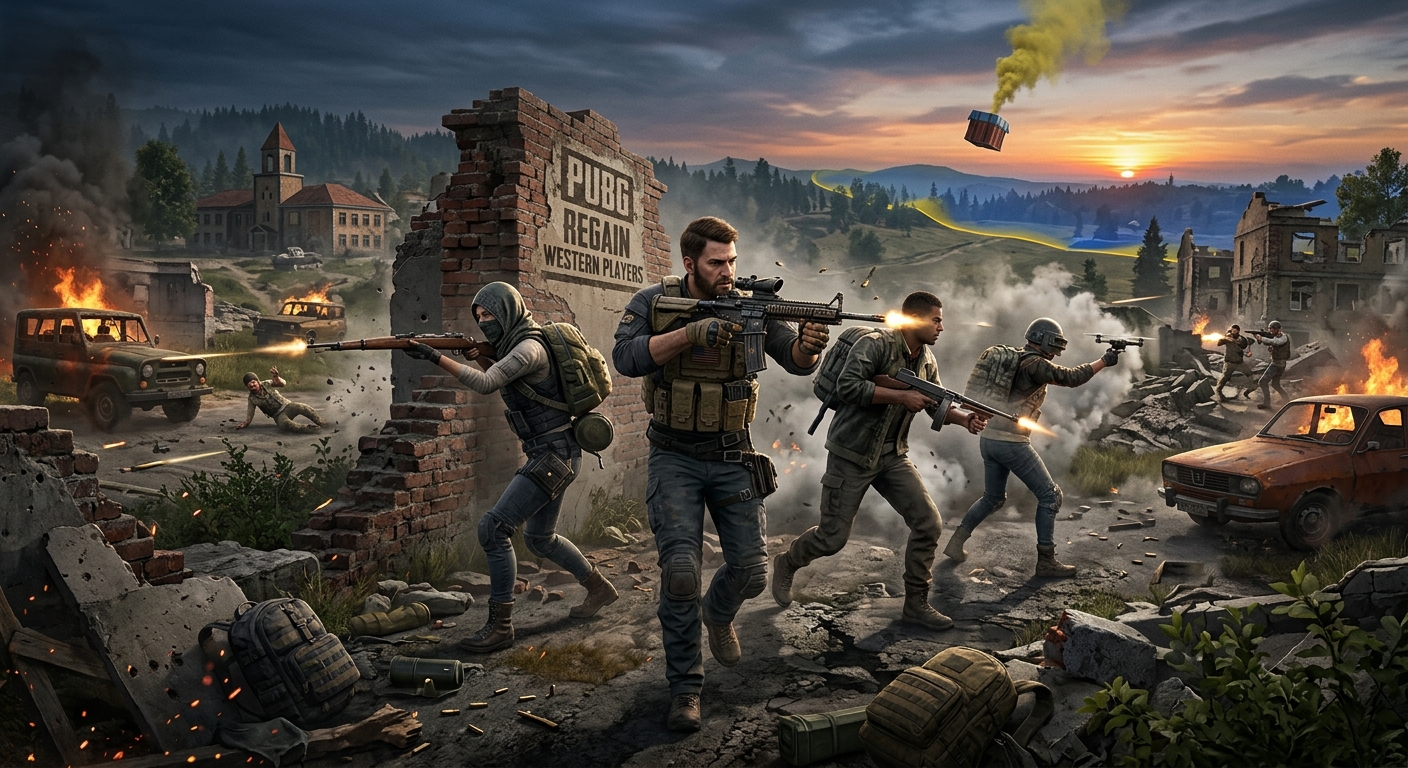
PUBG: Battlegrounds helped define the modern battle royale boom, yet in North America and Europe it no longer dominates the conversation the way it once did. Competitors like Fortnite, Apex Legends, and Call of Duty: Warzone grabbed huge portions of the market with aggressive live-service updates, slick console experiences, and powerful creator ecosystems. Krafton, PUBG’s publisher, is now mounting a multifaceted effort to reconnect with Western players, repositioning PUBG not just as a single game, but as a long-running platform.
Drawing on official Krafton updates and broader industry trends, this article examines how PUBG is evolving: from a new co-op PvE mode and user-generated content (UGC) tools to console-focused improvements and long-term service planning.
From Genre Pioneer to Underdog: PUBG’s Position in 2026
Released in 2017, PUBG: Battlegrounds popularized the 100-player, last-person-standing battle royale formula and quickly became a global hit, especially on PC.1 However, the Western market has changed dramatically. Free-to-play competitors invest heavily in seasonal content, esports, and cross-platform parity, while players’ expectations around polish and variety have risen.
At the same time, PUBG is far from a niche title. Krafton reported strong engagement and revenue from PUBG across PC, console, and mobile, particularly in regions such as Asia.2 The challenge is not survival—it’s relevance and growth in Western territories where attention and playtime are fragmented across multiple live-service games.
Why the West Became a Problem Market
While Krafton does not publish detailed, region-by-region player breakdowns, it has repeatedly highlighted the importance of global expansion and regional marketing in its investor communications.2 Industry observers and community sentiment point to several factors behind PUBG’s relative decline in the West:
- Stronger console competition: Games like Fortnite and Warzone launched with highly accessible console experiences, aggressive cross-play, and strong optimization, which made them more attractive to casual Western players.
- Live-service expectations: Regular updates, narrative events, and collaboration skins became standard across big shooters; PUBG’s update cadence and communication sometimes felt slower or less flashy by comparison.
- Perception of complexity and high skill barrier: PUBG’s slower pace, realistic ballistics, and punishing gunplay can be intimidating to newcomers compared with more arcade-style shooters.
Krafton’s current strategy is clearly shaped by these challenges. Rather than abandoning the core battle royale, the company is building complementary modes and systems designed to broaden PUBG’s appeal and create a more flexible, creator-friendly platform.
Xeno Point: Why a PvE Mode Matters for PUBG
The most visible symbol of PUBG’s renewed push in the West is a cooperative PvE mode, framed around an alien invasion theme and wave-based or objective-driven missions. This mode, commonly referred to as Xeno Point in Krafton’s communications, represents a significant departure from PUBG’s usual 100-player PvP format.
Lowering the Barrier to Entry
Traditional PUBG matches can be intense and unforgiving. New players face long stretches of tension followed by sudden elimination, often at the hands of highly skilled veterans. A structured co-op mode helps address this:
- Predictable encounters: AI-controlled enemies make it easier for players to learn aiming, movement, and use of cover without the same psychological pressure that comes from fighting exclusively against humans.
- Co-op onboarding: Playing with friends against bots can be a gentler way to introduce newcomers to PUBG’s weapon handling, audio cues, and map design.
- Shorter, goal-oriented sessions: PvE missions can be tuned for shorter playtimes with clear objectives, appealing to players who don’t always want a 30-minute battle royale session.
This is a strategy used successfully by other multiplayer shooters: for example, Call of Duty titles often include cooperative modes such as Zombies or Spec Ops to attract players who prefer PvE experiences alongside PvP.3
Experimenting with Theme and Storytelling
By introducing an alien invasion theme, Krafton can explore more overt narrative elements than PUBG’s relatively grounded battle royale setup typically allows. This serves several purposes:
- Visual variety: Alien enemies and futuristic technology create space for new art directions, effects, and environmental storytelling within the PUBG engine.
- Flexible event design: Themed PvE missions can be tied to limited-time events, seasonal arcs, or progression tracks that run alongside the primary battle royale mode.
- Cross-mode integration: Certain rewards—such as weapon skins or cosmetic items—obtained in PvE can carry over into the battle royale, encouraging players to engage with both experiences.
For Western players used to narrative-driven seasons in games like Fortnite, tying co-op content to a story arc and visual theme can help PUBG feel more contemporary without abandoning its more realistic gunplay.
The Platform Pivot: Turning PUBG into a Creation Hub
One of Krafton’s key long-term plays is turning PUBG into a platform for user-generated content. Instead of only shipping maps and modes built internally, the company is preparing more accessible tools that allow players and creators to design their own experiences—effectively a sandbox layer on top of the core game.
Why User-Generated Content Is Crucial
UGC has been a powerful growth engine for several major games and platforms:
- Roblox and Fortnite Creative: Both have demonstrated that giving players the ability to build and share game modes can dramatically increase engagement and session length, especially among younger audiences.4
- Modding and PC culture: PC shooters such as Counter-Strike and Arma (PUBG’s spiritual precursor) benefited from modding communities that extended their lifespan and occasionally spawned new genres.
Epic Games, for instance, has explicitly framed Fortnite as an evolving ecosystem where users create experiences that sit alongside the original battle royale.4 UGC effectively multiplies the content output of a game without the studio needing to build everything itself.
What a PUBG Creator Ecosystem Could Look Like
While the specifics of Krafton’s final toolset will evolve, a robust PUBG UGC platform for Western players would likely prioritize:
- Accessible map and mode editors: Simplified tools for assembling arenas, placing spawn points, and configuring game rules, potentially with templates for deathmatch, small-team modes, PvE challenges, and more.
- Discovery and curation: In-game browsers, playlists, and recommendation systems that surface popular or high-quality fan-made modes, supported by editorial spotlights.
- Monetization pathways: Over time, it’s possible Krafton will explore revenue-sharing models that reward top creators, mirroring trends seen in Fortnite and Roblox.4
| Stakeholder | Key Benefits |
|---|---|
| Players | More game modes, community events, and creative ways to use PUBG’s gunplay beyond standard battle royale. |
| Creators | Tools to build their own maps and experiences, potential monetization, and opportunities to grow audiences. |
| Krafton | Increased player retention, diverse content without fully internal development costs, and a stronger long-term ecosystem. |
Reinforcing the Core: Improvements to Battle Royale and Console Play
While new modes and UGC tools are eye-catching, PUBG’s long-term success in the West still depends heavily on the quality of its central battle royale mode, especially on consoles where many Western players spend most of their time.
Console Optimization and Quality-of-Life
Console performance and usability are particularly important for Western markets, where console install bases are large and expectations around smooth frame rates and intuitive menus are high. Krafton has laid out plans in its investor materials and patch notes to continuously update console performance, input responsiveness, and interface clarity.2
Key areas that matter for Western console audiences include:
- Frame rate stability and visual clarity: Better performance on current-generation hardware to minimize stutter and input lag, making gunfights feel more responsive.
- Controller ergonomics: Improved aim-assist settings, better default sensitivity curves, and streamlined inventory management tailored for gamepads.
- Cross-play experience: Ensuring matchmaking between PC and console is balanced, transparent, and optional where necessary, so controller users do not feel unfairly disadvantaged.
Keeping Battle Royale Fresh
The battle royale mode still defines PUBG’s identity, so it needs regular updates to stay competitive with other shooters. Krafton has been iterating on map rotations, weapon balancing, and in-game events via ongoing patch cycles.1,2 For Western players, particularly those accustomed to seasonal models, the following elements are vital:
- Rotating maps and limited-time modes: Switching map pools and introducing experimental rule sets keep the core loop from feeling repetitive.
- Structured seasonal progression: Battle passes, ranked seasons, and cosmetic reward tracks provide goals and reasons to return each week.
- Clear communication: Patch previews, detailed patch notes, and developer blogs or videos help maintain trust with committed Western players.
Designing for the Western Player Mindset
Beyond feature lists, PUBG’s comeback strategy in the West is also about understanding how Western audiences approach competitive shooters. Cultural preferences, platform habits, and community norms all shape what succeeds.
Session Length and Flexibility
Many Western players juggle several live-service games at once. PUBG’s historically longer matches are compelling for dedicated fans but can be a barrier for those with limited time. A diversified mode lineup—shorter PvE missions, smaller-scale PvP modes, and custom experiences created by the community—helps accommodate different schedules and playstyles.
Social and Streaming Appeal
Western growth is closely tied to streaming platforms such as Twitch and YouTube. Games that thrive there usually offer:
- High moments of tension and surprise: PUBG already excels here with end-game circles and long-range gunfights.
- Clear visual readability: Viewers should quickly understand what’s happening; improvements to UI clarity and spectator tools help.
- Variety for content creators: UGC, PvE, and rotating modes provide new angles for streamers to entertain their audiences.
If Krafton aligns its update cadence and creator tools with the needs of Western streamers and YouTubers, organic exposure can act as a strong multiplier for all the other changes being implemented.
Risks and Challenges in the New Roadmap
Any large-scale pivot carries risk. PUBG’s attempt to become a broader platform with new modes and extensive UGC tools must be carefully balanced to avoid alienating existing players while attracting new ones.
Maintaining Identity
PUBG’s appeal has always been its grounded, tactical combat and slower pacing compared with more arcade-style shooters. Leaning too heavily into sci-fi PvE or overly fantastical UGC creations could dilute the brand if not integrated thoughtfully.
Maintaining separate queues, clear labeling, and distinct aesthetic boundaries between core battle royale and more experimental content will help preserve the game’s identity while still allowing bold experiments.
Balancing Complexity and Accessibility
Adding more systems and modes can make the game feel complex to new or returning Western players. The key will be:
- Smart onboarding: Tutorials, guided missions, and recommended playlists that steer players toward appropriate content based on their experience.
- Interface restraint: Menus that highlight a manageable number of options rather than overwhelming players with every possible mode at once.
What Western Players Can Expect Next
Based on Krafton’s public roadmap, official announcements, and the broader direction of the live-service market, Western PUBG players can expect the following broad trends over the coming months and years:
- Continued expansion of PvE content built on the tech and learnings from modes like Xeno Point, possibly including more mission types, difficulty tiers, and narrative arcs.
- A gradual rollout and refinement of UGC tools, with more creators gaining access and an increasingly polished in-game discovery experience.
- Ongoing console-specific improvements aimed at reducing friction, improving controller feel, and leveraging current-generation hardware.
- Persistent iteration on core battle royale with fresh events, ranked adjustments, and weapon balancing guided by data and community feedback.
If these elements are delivered consistently and supported by clear communication, PUBG could regain meaningful mindshare in the West—not necessarily by outcompeting every rival directly, but by offering a distinctive blend of realism, tension, and player-driven creativity.
Frequently Asked Questions
Is PUBG still popular enough to justify all these changes?
Yes. According to Krafton’s financial disclosures, PUBG remains a major revenue driver across PC, console, and mobile, particularly in Asia.2 The Western-focused initiatives are less about saving a dying game and more about unlocking growth in regions where competition is strongest.
Will the new PvE mode replace the classic battle royale?
No. The PvE content is designed as a complementary experience. PUBG’s core identity is still rooted in realistic, high-tension battle royale matches. Co-op modes provide an alternative way to enjoy PUBG’s mechanics and can serve as a training ground for new players.
Do I need to pay to access creator-made content?
The basic ability to play user-made modes is expected to be part of the standard PUBG experience. Over time, Krafton may explore monetization options for premium creations or cosmetics tied to them, but the central goal of UGC is to expand the game’s variety, not wall off most content behind paywalls.
How is PUBG addressing console performance in the West?
Krafton has repeatedly highlighted technical optimization and quality-of-life improvements in patch notes and investor briefings.2 The focus is on better frame rates, input responsiveness, controller-friendly interfaces, and refined matchmaking for cross-play, which collectively aim to provide a smoother experience on modern consoles.
Is there a risk that PUBG becomes too similar to Fortnite or other platform-style games?
There is always a risk of homogenization in live-service games, but PUBG’s realistic gunplay, slower pacing, and grounded visual style help differentiate it. As long as new features like UGC and PvE are built around those strengths, PUBG can borrow successful platform ideas without losing its distinct identity.
References
- PUBG: Battlegrounds — Krafton (Game overview and store page). 2017-12-21 (original release, subsequent updates ongoing). https://store.steampowered.com/app/578080/PUBG_BATTLEGROUNDS/
- KRAFTON, Inc. Business Report & IR Materials — KRAFTON, Inc. 2024-03-28 (and related 2023–2024 filings). https://www.krafton.com/en/ir/ir-materials/
- Call of Duty: Modern Warfare III – Coop and Zombies Overview — Activision Publishing, Inc. 2023-10-05. https://www.callofduty.com/modernwarfare3
- Unreal Editor for Fortnite and Creator Economy 2.0 Announcement — Epic Games. 2023-03-22. https://www.epicgames.com/news/unreal-editor-for-fortnite-available-now-on-pc
- Global Video Games Market Report — Newzoo (Market research on live-service and battle royale trends). 2023-06-21. https://newzoo.com/insights/trend-reports
Similar Articles




Read full bio of Sneha Tete