How Resident Evil Fans Turned Zayne Into Leon and Ada’s ‘Son’
A mobile otome hero, a legendary survival horror couple, and a fandom that cheerfully connects two universes into one chaotic family tree.
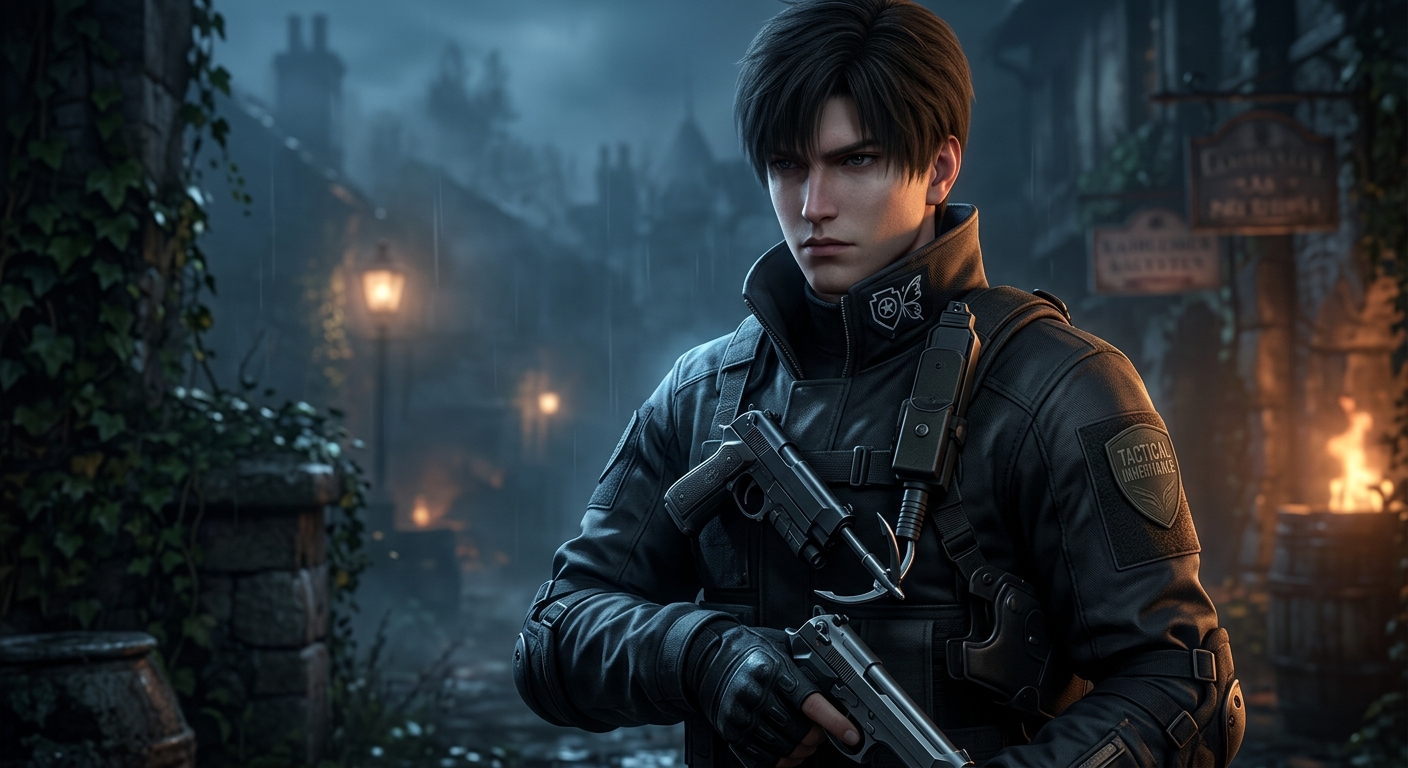
Every so often, gaming fandoms collide in a way that feels completely absurd and yet instantly right. That’s exactly what happened when players discovered Love and Deepspace, a sci-fi otome mobile game, and collectively decided that one of its main love interests, Zayne, must secretly be the son of Resident Evil icons Leon S. Kennedy and Ada Wong.
This playful crossover isn’t canon in either franchise, of course, but it has spread widely across social platforms. Fan art, memes, reaction videos, and long joke-laden threads now explore the idea of the “Kennedy family” in a universe where survival horror and romantic space adventures coexist. Using that article as a jumping-off point, this piece looks at why fans made the connection, how it fits into longstanding fandom culture, and what it says about the way we engage with games and characters today.
From Raccoon City to the Stars: The Two Games Involved
To understand why people were quick to connect these very different characters, it helps to briefly recap both worlds.
Resident Evil’s Leon and Ada: A Decades-Long Entanglement
Resident Evil launched in 1996 and helped define the survival horror genre. Leon S. Kennedy first appeared in Resident Evil 2 (1998) as a rookie cop trapped in the Raccoon City zombie outbreak. Ada Wong debuted in the same game, a mysterious spy whose motives are rarely clear. Over multiple titles and remakes, they’ve become one of gaming’s most enduring “will-they-won’t-they” pairs.
- Leon is often portrayed as principled, earnest, and chronically unlucky, constantly pulled into bioterror disasters around the world.
- Ada is equally capable but far more morally ambiguous, slipping between sides and identities while maintaining an undeniable connection to Leon.
Capcom leans into that tension without ever resolving it. Their bond is canon, but anything resembling a stable domestic life for them is not. That gap has left room for years of speculation, shipping, and fan-created stories.
Love and Deepspace’s Zayne: A Brooding Space Protector
Love and Deepspace is a mobile otome (romance-focused) game that blends sci-fi action with visual novel storytelling. The player character navigates a future world threatened by alien-like creatures while developing relationships with several male leads, one of whom is Zayne.
Zayne is typically depicted as:
- Tall, conventionally handsome, and slightly aloof
- Protective and competent in combat
- Quietly vulnerable once you get through his defenses
These traits feel remarkably familiar to anyone who has spent time with Leon or Ada. In gameplay, Zayne’s romance arcs often emphasize emotional distance slowly turning into trust—again echoing themes long associated with the Kennedy–Wong dynamic in Resident Evil.
Why Fans Decided Zayne Is Their Kid
On paper, the two franchises share almost nothing structurally. One is grounded (if over-the-top) horror about corporate bioweapons; the other is stylized sci-fi romance. Yet fans rapidly latched onto an idea: Zayne looks and acts like someone who would be the child of Leon and Ada if their relationship ever had a future.
Visual and Personality Parallels
Fandom theories usually start with some kind of resemblance, and this one is no exception. Fans highlight a few common threads:
- Visual DNA – Zayne’s overall vibe can look like a blend of Leon’s classic “pretty-boy hero” styling and Ada’s cool, poised elegance. Even when the art styles differ, the combination of sharp features and a composed presence invites comparison.
- Combat competence – Like Leon and Ada, Zayne is framed as a highly capable fighter whose emotional restraint contrasts with his willingness to step into danger.
- Guarded emotions – All three characters present a calm front while carrying emotional baggage. That mix of competence and quiet vulnerability is a core reason fans ship Leon and Ada—and why they see Zayne as spiritually connected.
None of these details mean the characters are literally related, but they provide enough overlap for the fandom’s collective imagination to run with the idea.
The Running Joke of “Hidden Kennedy Children”
For years, fans have joked that Leon and Ada’s off-screen moments might have resulted in a secret child somewhere in the Resident Evil universe, especially because both characters disappear for long stretches between games. Franchise timelines leave generous narrative gaps where headcanons and fan fiction thrive.
When a new, popular character like Zayne appears with traits that fit those headcanons, the joke practically writes itself. The line of thinking tends to look like this:
- Leon and Ada clearly care about each other, even if they never truly settle down.
- Their lives are chaotic enough that any canonical child would likely grow up in secrecy for safety.
- Zayne appears, carrying familiar energy, in a completely different game.
- Therefore, the fandom concludes—with tongue firmly in cheek—that he must be the “missing Kennedy heir.”
It’s not meant to be literal canon speculation so much as a shared in-joke that binds two communities together.
Cross-Fandom Storytelling: How the Meme Spread
Once players began calling Zayne the “son” of Leon and Ada, the idea spread quickly through typical fandom channels: social media, fan art posts, short comics, and reaction videos that drew both player bases together.
Fan Art, Edits, and Mini-Comics
Artists started experimenting with “Kennedy family” scenarios, such as:
- Domestic scenes where Leon acts like an overprotective father and Ada rolls her eyes but clearly cares.
- AU (alternate universe) setups where Zayne grows up aware of his parents’ dangerous history.
- Comedic strips where Zayne’s brooding nature is explained as “inheriting the drama” from both sides.
Edits often splice together cutscenes and artwork from both games, creating the illusion of a shared universe. Even without dialogue, the juxtaposition of imagery can sell the gag.
Reactions, Streams, and Short-Form Video
Streamers and content creators played a big role in amplifying the crossover. Reaction videos to Zayne, especially from people already familiar with Resident Evil, often introduce him as “Leon and Ada’s kid” right from the start, priming audiences to see the resemblance.
Short-form clips then circulate across TikTok, YouTube Shorts, and similar platforms. These typically include:
- Side-by-side shots of Zayne and Leon or Ada
- Caption jokes about him inheriting Leon’s tendency to get dragged into disasters
- Text overlays calling back to long-running Leon/Ada memes, such as their doomed romantic timing
Once a shorthand like “Welcome to the Kennedy family, Zayne” becomes recognizable, it acts as a banner for any content that mixes the two fandoms.
What This Says About Modern Fandom
On one level, the Zayne-as-Kennedy meme is simply funny. On another, it shows how players now treat character relationships and emotional continuity as freely portable across games.
From Franchise Loyalty to Character-Centric Fandom
Many players today follow particular character archetypes more than single franchises. A fan might love:
- Stoic but soft-hearted male leads
- Morally gray spies or assassins
- Enemies-to-lovers or complicated romance arcs
Those preferences span genres and platforms. So when a new character like Zayne hits similar emotional notes to older favorites, fans instantly map connections—sometimes sincere, sometimes comedic.
Game studies and media research have observed that audiences often create “transmedia” narratives that stitch together characters and plots across different works, even when the creators never intended a connection. This participatory play is a hallmark of contemporary fandom culture, where fans don’t just consume stories but actively reshape them.
The Appeal of Found (and Chaotic) Families
Another reason the “Kennedy family” concept resonates: found families and unconventional households are a deeply beloved trope. Leon and Ada, as portrayed across multiple games and remakes, lead unsafe and unstable lives. The idea of them raising a child—especially one who grows into a capable, emotionally complex adult—is both absurd and emotionally satisfying.
It lets fans imagine:
- Leon and Ada surviving long enough to build any kind of future
- A child inheriting their strengths without repeating all their tragedies
- A softer, more domestic angle on characters normally shown only in crisis
Zayne, as a separate character with his own storyline, becomes a symbolic continuation of that emotional arc. Players can project onto him the stability and intimacy Leon and Ada rarely get to enjoy on-screen.
Canon, Headcanon, and the Joy of “What If”
Capcom has never suggested that Leon and Ada have a child, and the creators of Love and Deepspace are not secretly tying their game into Resident Evil. This is purely fan-driven speculation—what fandom calls headcanon.
| Term | Meaning | Who Decides? |
|---|---|---|
| Canon | Official story details confirmed by the creators | Game developers, writers, publishers |
| Headcanon | Personal or community-invented details that feel true but are not officially confirmed | Fans and fan communities |
The Zayne-as-Kennedy theory sits firmly in the headcanon column. Its popularity doesn’t change the actual stories, but it layers additional meaning and humor onto both games for the people who share the joke.
Respecting Both Franchises While Playing With Ideas
Healthy headcanon culture tends to do a few things:
- Stay clearly labeled as unofficial so new fans aren’t misled about the actual plot.
- Respect creators’ work by not insisting that their story “must” go a certain way.
- Celebrate the underlying material—people remix characters they genuinely care about.
The Kennedy family meme fits this pattern. It doesn’t demand that either game change; it simply adds an extra layer of enjoyment for those in the know. Newcomers can still experience Resident Evil and Love and Deepspace exactly as intended, while others enjoy the unofficial, cross-universe “family tree.”
How This Kind of Meme Shapes Future Fandom
Cross-fandom connections like this one are likely to become even more common as more games blend cinematic storytelling with character-driven design.
Character-Driven Design Encourages Emotional Echoes
Both survival horror and otome titles increasingly focus on nuanced character arcs, high-quality art, and expressive performances. When studios lean into familiar archetypes—such as the stoic protector, the enigmatic spy, or the secretly soft-hearted loner—players instinctively trace lines between games.
That doesn’t mean creators are copying each other; many archetypes are simply effective narrative tools. But the result is a landscape where it’s easy to imagine “family resemblances” between characters in different universes.
Fandom as a Collaborative Story Engine
When players create fanfic, fan art, memes, and edits, they effectively become co-authors of a broader shared narrative—one that stretches across official boundaries. Researchers in media and communication have described this as a form of participatory culture, where audiences contribute to and transform the stories they love rather than passively consuming them.
The Zayne/Leon/Ada connection is a small but vivid illustration of that phenomenon. No official crossover was required. A few observations, some art, and a lot of shared laughter were enough to bring two distant galaxies—Raccoon City and deep space—into the same imaginative orbit.
FAQ: Zayne, Leon, Ada, and the Fandom Connection
Is Zayne officially Leon and Ada’s son?
No. There is no official connection between Love and Deepspace and Resident Evil. The idea that Zayne is their son is a fan-created joke and headcanon, not canon.
Why do people say Zayne is a “Kennedy”?
Fans think Zayne’s personality, demeanor, and visual style echo traits from both Leon S. Kennedy and Ada Wong. That resemblance inspired the humorous nickname and the idea of him as part of the “Kennedy family.”
Did the developers intend any Resident Evil reference?
There’s no evidence that the Love and Deepspace team deliberately based Zayne on Resident Evil characters. Any resemblance appears to be coincidental or archetype-driven, with the connection coming from fans, not developers.
Is it wrong to mix characters from different games like this?
As long as fans are clear that crossovers are unofficial and respect the original works, this kind of playful speculation is a normal part of modern fandom. It can even help introduce players to games they might not have tried otherwise.
Where can I see more of the “Kennedy family” fan content?
Look for tags and captions that combine terms like “Leon,” “Ada,” “Zayne,” and “Kennedy” on major social platforms. You’ll find fan art, edits, short comics, and reaction clips that treat Zayne as their unofficial son.
Final Thoughts: A Family Tree Written in Fan Jokes
Nobody truly believes Leon and Ada secretly stashed their son in a totally different game, but that’s not the point. By embracing Zayne as the unofficial “Kennedy heir,” fans are acknowledging something deeper: the emotional through-line that connects character-driven stories, even when they live in wildly different genres and universes.
In that sense, the meme is less about strict lore and more about shared affection. Leon’s beleaguered heroism, Ada’s elegant duplicity, and Zayne’s quiet devotion all tap into the same well of character archetypes that players love. Calling them a family is fandom’s way of saying, “These stories matter to us, and we’re going to have fun with them.”
References
- Resident Evil 2 — Capcom. 1998-01-21 (original release); various remakes and ports. https://www.capcom-games.com/en-jp/games/re2/
- Resident Evil Series Official Portal — Capcom. Accessed 2026-05. https://www.residentevil.com/
- Love and Deepspace – Official Site — Infinity Alpha. Accessed 2026-05. https://www.loveanddeepspace.com/
- Textual Poachers: Television Fans and Participatory Culture — Henry Jenkins. Routledge. 1992-01-01. https://doi.org/10.4324/9780203114339
- Fandom: Identities and Communities in a Mediated World — Jonathan Gray, Cornel Sandvoss, C. Lee Harrington (eds.). NYU Press. 2007-07-01. https://nyupress.org/9780814732381/fandom/
Similar Articles




Read full bio of Sneha Tete