
Saros Save Guide: Roguelike Progression, Builds, and Strategy
Master Saros’ run-based structure, saving system, and permanent progression to survive Carcosa’s shifting, eldritch battlefields.
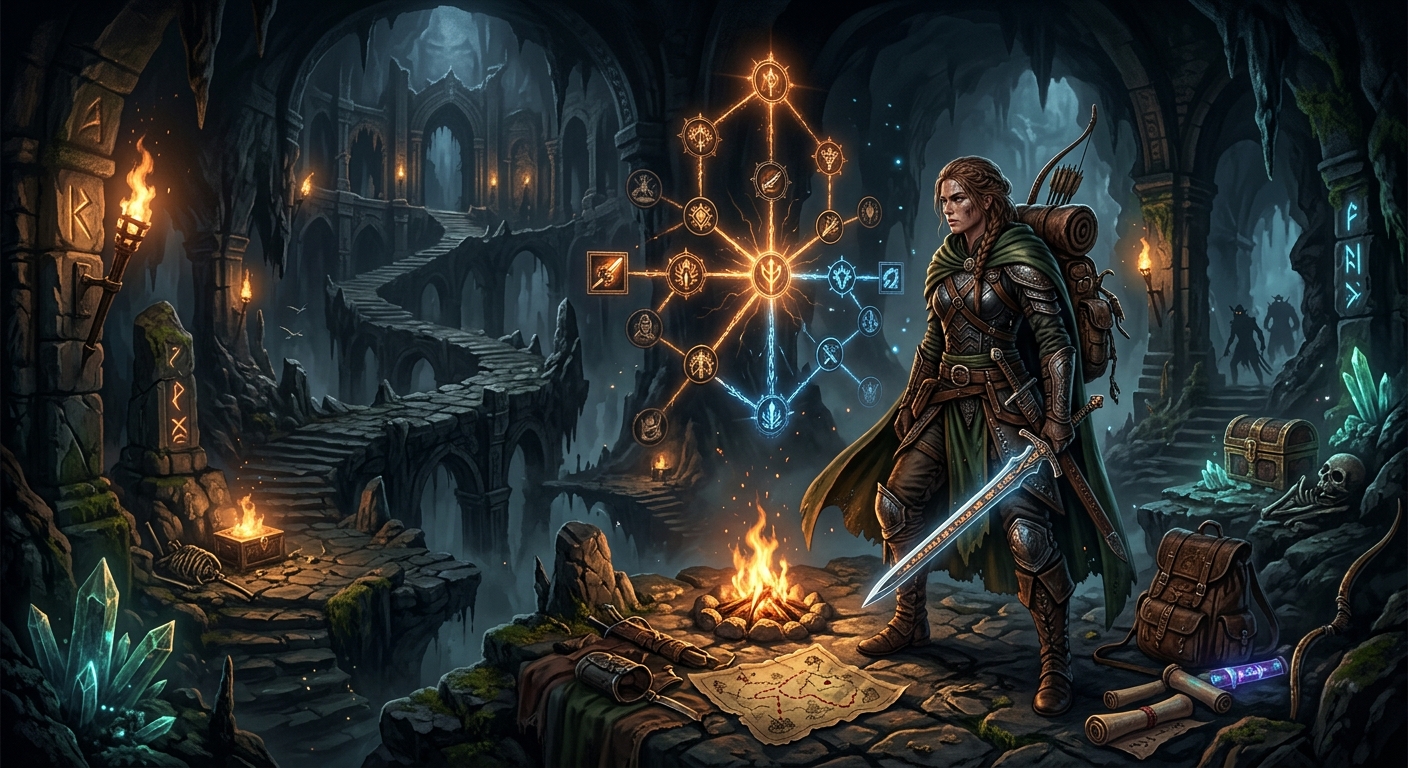
Saros Save Guide: How Progression, Builds, and Runs Really Work
Saros is a sci-fi roguelike shooter set on the ever-shifting world of Carcosa, blending run-based repetition with a surprisingly generous layer of persistent progression. If you’re trying to understand how saving works, what you lose on death, and which upgrades stick around between runs, this guide breaks down everything you need to know.
This article draws inspiration from GamesRadar’s coverage of Saros while providing an original breakdown of its systems, pacing, and strategy. You’ll learn how the game structures its runs, what carries over, and how to use its tools to make each loop more manageable and more rewarding.
1. Saros in a Nutshell: What Kind of Roguelike Is It?
Saros builds on the template established by Housemarque’s earlier work in arcade shooters and roguelike design. You explore procedurally remixed zones on Carcosa, fight hostile entities under a deadly eclipse, and push towards narrative milestones over multiple attempts.
It’s best thought of as a hybrid between traditional roguelikes and modern action RPGs:
- Runs are finite, high-stakes excursions into dangerous areas.
- Death resets your immediate loadout, room layout, and temporary buffs.
- Long-term upgrades, story progress, and some currencies endure across runs.
This structure mirrors the broader genre trend where many modern roguelikes retain some progression between runs to reduce frustration and increase accessibility, a pattern often referred to as “roguelite” design in both academic and industry discussions of game persistence and player retention.
2. The Save System: When, Where, and What Saros Remembers
Because Saros is run-based, its saving rules are tightly connected to how it structures a “run.” Understanding this system will help you plan longer sessions and preserve your progress safely.
2.1 Run-Level Progress vs. Meta Progress
Think of Saros as managing two layers of data:
- Run-Level State – Everything unique to your current expedition:
- Your current weapons and their temporary upgrades
- Short-lived buffs, consumables, and random drops
- The exact layout of rooms and enemy configurations
- Your current health and positioning in the zone
- Meta Progress – The persistent layer that survives death:
- Story advancement and unlocked areas
- Permanent skill tree unlocks
- Armor or suit matrices you’ve upgraded
- Unlocked weapons, modifiers, and difficulty options
When you die, run-level state is wiped, but meta progress is saved. This distinction is essential to how Saros saves and loads your game.
2.2 Mid-Run Saving and Suspended Sessions
Modern console games, particularly those with run-based structures, are expected to support suspended sessions so you can safely take breaks without losing progress. Saros follows suit:
- You can quit mid-run without intentionally dying.
- The game retains a snapshot of your current run when you exit properly.
- On returning, you resume the same run with your current gear, health, and position intact.
However, certain actions—like deliberately resetting a run or initiating a new run—will invalidate that suspended state, pushing you back to your hub with only your persistent gains intact.
2.3 When Death Saves Your Progress
In Saros, death is both an endpoint and a checkpoint. When you die:
- Your run ends and your temporary equipment and buffs vanish.
- Your meta progression is updated with any permanent currency, skill unlocks, or story beats you earned.
- You return to a hub or safe zone where you can spend that currency and plan your next attempt.
This structure aligns with the psychological reward cycles that many modern roguelikes leverage: small, reliable gains each attempt, even if you fail the immediate objective, help to sustain player motivation over repeated losses.
3. Permanent Progression: What You Actually Keep
One of Saros’ biggest strengths is that you’re never truly starting from zero. Even a failed run contributes to your long-term power and knowledge.
3.1 Skill Trees and Persistent Upgrades
Across runs, you’ll acquire resources that feed into various permanent upgrade systems. These might include:
- Core Skill Trees – Nodes that increase health, damage, cooldown efficiency, or mobility.
- Weapon Proficiencies – Long-term boosts that make specific weapon types more effective.
- Utility Enhancements – Shorter dash cooldowns, increased pickup ranges, or improved resource drop rates.
These upgrades permanently change your baseline power, meaning that later runs feel more aggressive and flexible, even in early zones.
3.2 Armor Matrix and Defensive Scaling
Many modern action roguelikes provide dedicated defensive upgrade tracks to reduce early-game fragility. Saros achieves this via an armor matrix-style system that lets you:
- Increase your base shields or armor rating.
- Gain resistances to specific damage types over time.
- Unlock slots for defensive modifiers that slightly alter your playstyle.
The net effect is that early damage spikes become less punishing, making later runs more about execution and positioning than being one-shot by unfamiliar attacks.
3.3 Narrative Unlocks and Zone Access
Saros also ties persistence to story and level access:
- Key narrative revelations remain unlocked once discovered.
- New zones, shortcuts, and warp options become available permanently.
- NPC interactions or hub expansions remain active after subsequent deaths.
This design echoes approaches seen in other narrative-led roguelikes, where the story gradually unfolds with each loop, encouraging players to treat failure as canon rather than a pure setback.
4. What You Lose on Death: The High-Stakes Layer
While Saros is more forgiving than traditional roguelikes, the game still relies on loss to maintain tension.
4.1 Temporary Gear and Drops
At the start of each new run, you typically lose:
- The exact weapon and its run-specific upgrades.
- Artifacts, relics, or short-term bonuses gained during the previous run.
- One-off consumables like emergency heals or powerful limited-use items.
This ensures each run feels distinct: you’re always adapting to the weapons and modifiers you discover that time, rather than following a fixed loadout.
4.2 Run Currency vs. Meta Currency
Saros uses multiple resource types to separate the immediate run economy from the long-term progression economy. A typical split looks like:
| Currency Type | Used For | Persists After Death? |
|---|---|---|
| Run Currency | Buying temporary upgrades, heals, or rerolls during the current run | No, lost when the run ends |
| Meta Currency | Unlocking skill nodes, armor matrix upgrades, or new weapons | Yes, banked and safely kept |
| Rare Upgrade Materials | High-impact permanent improvements or late-game unlocks | Yes, typically stored in the hub |
Learning which pickups are fleeting and which contribute to your meta progress is crucial. Over time, you’ll naturally prioritize routes and encounters that feed into your long-term goals.
5. Difficulty, Modifiers, and Accessibility
Saros includes multiple tools to adjust its challenge, letting you tailor the experience without completely undermining the roguelike tension.
5.1 Carcosa Modifiers and Custom Challenges
One of the standout systems is its modifier-based difficulty tuning. As you progress, you unlock options to tweak the parameters of your runs. These modifiers can:
- Increase difficulty by boosting enemy health, aggression, or spawn rates.
- Make runs more forgiving by granting extra healing charges or reducing the damage you take.
- Change reward structures, such as increasing meta currency gain in exchange for tougher foes.
Players can combine these modifiers to create a customized experience, similar to how some games use challenge mutators or skull systems to personalize difficulty while preserving core mechanics.
5.2 Accessibility-Friendly Design
In line with broader industry moves towards accessibility—pushed heavily by first-party console manufacturers in recent years—Saros’ systems support a spectrum of skill levels. Though it remains demanding at its default, features such as:
- Persistent progression
- Adjustable modifiers
- Suspended save states
combine to ensure the game is challenging without being exclusionary.
6. Combat and Build Strategy: Making Each Run Count
Survival in Saros depends on more than raw stats; understanding its combat flow and build logic is key to turning sporadic victories into reliable progression.
6.1 Core Combat Loop
Moment-to-moment, Saros emphasizes:
- Constant movement – Dashing through enemy fire, circle-strafing, and using verticality.
- Pattern recognition – Learning projectile patterns and boss phases over repeated attempts.
- Risk–reward decisions – Choosing when to chase high-value targets or pickups in dangerous positions.
This aligns with established best practices in fast-paced third-person shooters, where spatial awareness and pattern learning are often more important than pure reflexes.
6.2 Early-Run Priorities
During the early stages of a run, focus on:
- Survivability first – Seek upgrades that boost health, shields, or defensive utility.
- Reliable weaponry – Favor weapons with forgiving accuracy and clear feedback until you master more specialized options.
- Resource accumulation – Collect meta currency and rare materials even if it means cutting a run short after banking a big haul.
This conservative approach ensures that even a short run can be highly profitable for your long-term growth.
6.3 Synergy-Based Builds
As you unlock more systems, Saros rewards synergistic builds where individual perks amplify each other. Look for combinations like:
- Crit-focused builds that stack critical chance with bonuses on crit hits.
- Mobility builds that boost dash distance along with on-dash damage or damage mitigation.
- Resource loop builds that increase drop rates and then convert surplus resources into power mid-run.
Because each run’s drops are semi-random, the trick is to recognize emerging synergies early and commit to them rather than chasing incompatible upgrades.
7. Narrative Progression in a Looping World
Beyond the mechanics, Saros weaves its story into your repeated returns to Carcosa.
7.1 Carcosa and the Eclipse
The game’s setting—an alien world under a reality-warping eclipse—provides a thematic justification for its shifting layouts and unstable encounters. Cosmic horror and science fiction have a long history of using distorted perception and repeating events to convey dread and mystery, and Saros channels that tradition directly into its gameplay loop.
7.2 Investigating Lucenite and Lost Colonists
Your role as an enforcer investigating failed missions, missing colonists, and a powerful resource draws you through increasingly dangerous regions. Each run adds new fragments:
- Logs and environmental storytelling reveal the fate of earlier expeditions.
- New enemy types hint at the escalating threat beneath the surface.
- Major encounters unlock further story beats, which remain accessible in subsequent runs.
This drip-feed structure ensures that even unsuccessful attempts can reveal important narrative context, helping maintain engagement.
8. Practical Tips for Managing Progress and Saves
To make the most of Saros’ saving and progression systems, keep the following practical habits in mind:
- End Sessions Safely – If you need to stop mid-run, exit the game cleanly so your suspended state is preserved.
- Bank Meta Gains – After a particularly lucrative run for permanent resources, consider returning to the hub rather than risking it all in a greedy push.
- Experiment with Modifiers – Start with mild tweaks and ramp up difficulty as you become comfortable with enemy patterns and zone layouts.
- Plan Around Unlocks – If a specific upgrade node radically changes your playstyle, prioritize earning the resources to unlock it early.
- Treat Death as Discovery – Use each failure as a scouting operation: memorize attack tells, hazard placements, and promising upgrade routes.
9. FAQs About Saving and Progression in Saros
Does Saros let me save mid-run?
Yes. As long as you exit the game properly, Saros preserves a suspended snapshot of your current run. When you return, you resume with your current gear, health, and position intact. Starting a new run or manually resetting will overwrite that suspended state.
What do I lose when I die?
On death, you lose your current loadout, temporary upgrades, consumables, and run-specific currency. You_KEEP_ permanent upgrades, meta currency, story progress, and unlocked modifiers or zones.
Is Saros more of a roguelike or a roguelite?
Mechanically, Saros sits between the two. It uses roguelike-style randomly remixed runs and permadeath for your immediate loadout, but layers a robust persistent progression system on top, a hallmark of roguelites.
Can I lower the difficulty without ruining the experience?
Yes. Saros’ modifier system allows you to make the game slightly easier or harder while preserving its core risk–reward structure. Adjustments such as minor damage reduction or extra healing charges can make the experience more manageable without trivializing it.
Do story events reset when I start a new run?
No. Once you unlock a key story beat, it remains in place. Future runs acknowledge your narrative progress, and new dialogue, logs, or areas remain permanently accessible.
References
- Roguelike, Rogue-lite, and the History of Procedural Death Labyrinths — Proceedings of the DiGRA 2019 Conference (Zagal et al.). 2019-08-06. http://www.digra.org/digital-library/publications/roguelike-rogue-lite-and-the-history-of-procedural-death-labyrinths/
- PlayStation 5 Accessibility Features — Sony Interactive Entertainment. 2023-11-01 (last updated). https://www.playstation.com/en-us/accessibility/ps5/
- Understanding Motivation for Persistent Progression in Video Games — Computers in Human Behavior (Villani et al., Elsevier). 2018-01-01. https://doi.org/10.1016/j.chb.2017.07.032
- Fear, Anxiety, and the Construction of the Gothic in Videogames — Games and Culture (Backe, SAGE Journals). 2017-05-01. https://doi.org/10.1177/1555412015592477
- Player-Oriented Difficulty Adjustment for Dynamic Game Balancing — FDG Conference Proceedings (Hunicke). 2005-06-01. https://www.cs.northwestern.edu/~hunicke/pubs/Hunicke2005-DDA.pdf
- Designing Third-Person Shooter Combat — Game Developer (formerly Gamasutra) Feature Article by Richard Rouse III. 2010-03-15. https://www.gamedeveloper.com/design/designing-third-person-shooter-combat
Similar Articles






Read full bio of Sneha Tete