Slay the Spire 2’s Mysterious New Modes Explained
How Slay the Spire 2’s three teased modes could reshape competitive play, quick runs, and multiplayer social experiments.
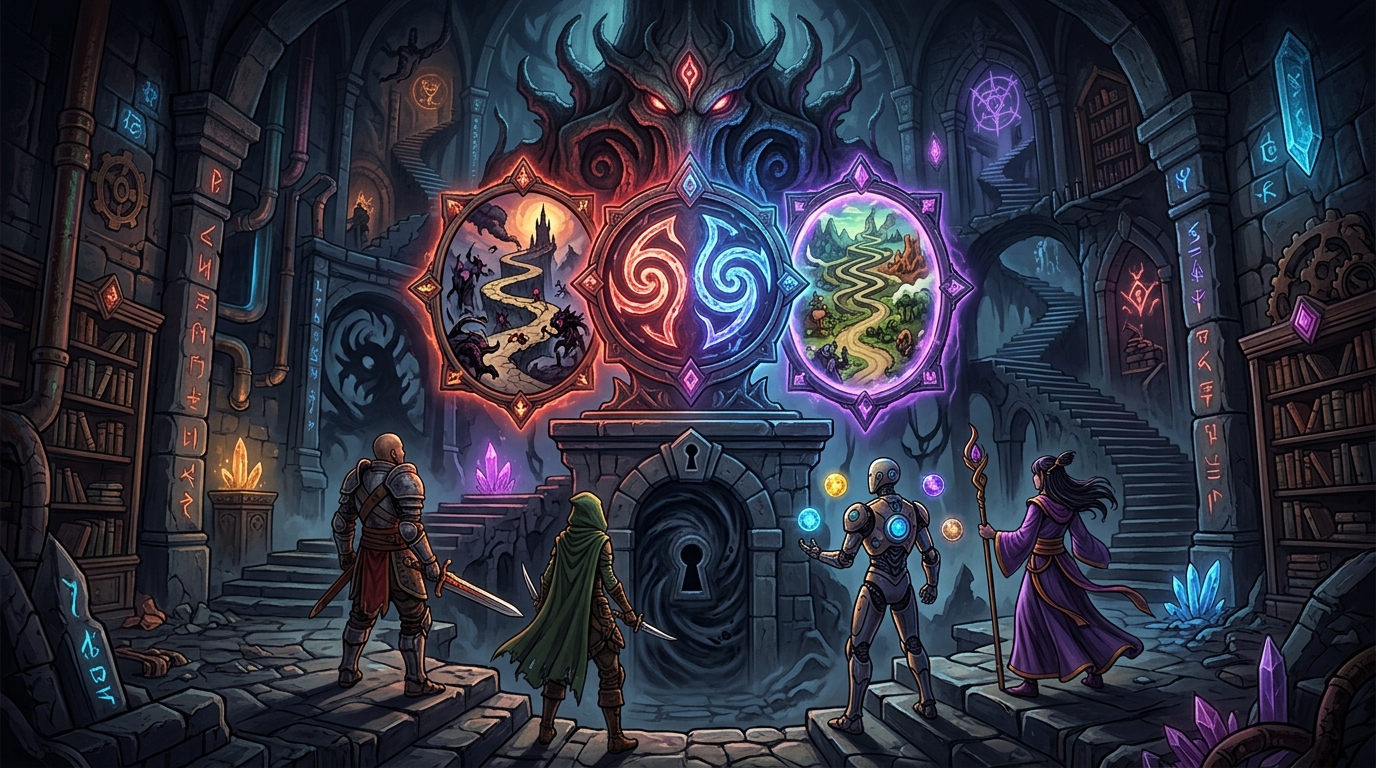
Slay the Spire 2 is already one of the most anticipated roguelike deckbuilders in development, thanks to its expanded cast, refreshed art, and the promise of co-op. But in a recent interview, Mega Crit co-founder Casey Yano hinted that the Early Access period won’t just be about balance tweaks and new cards. The team is actively exploring three new game modes that could fundamentally change how players interact with the Spire.
These modes are still described in deliberately vague terms, but the categories are clear: one focused on intense competition, one designed for players who love Slay the Spire but lack the time for full runs, and one that experiments with new ways for players to interact socially or in a multiplayer-like fashion. Using the developer’s comments as a starting point, this article explores what these modes might mean for the game, how they fit into the current structure of Slay the Spire, and why they matter for both casual and expert players.
Where Slay the Spire 2 Starts: The Baseline Modes
Before speculating about new formats, it helps to understand the baseline that Slay the Spire 2 is already building on. The original Slay the Spire established a surprisingly robust set of ways to play, many of which are returning and expanding in the sequel.
Core Single-Player Progression
At launch, the first Slay the Spire centered around classic roguelike runs: you choose a character, ascend a branching map of encounters, draft cards and relics, and try to survive a gauntlet of elites and bosses. Slay the Spire 2 is retaining this loop with new and returning characters and upgraded systems, as teased in the official gameplay trailer and developer blog posts from Mega Crit.
- Standard Runs: The primary way to experience the game’s card synergies, relic interactions, and evolving meta.
- Ascension Levels: A stackable difficulty system that adds modifiers and constraints, giving expert players long-term skill expression and progression.
This traditional run-based structure is still at the heart of Slay the Spire 2 and provides the foundation the new modes must carefully layer on top of.
Existing Alternative Modes Returning in the Sequel
The original game also introduced modes that experimented with pacing and replayability:
- Daily Climbs: Seeded runs where every player faces the same modifiers and map, with leaderboard rankings.
- Custom Runs: A sandbox mode where players toggle modifiers for unusual or challenge-focused experiences.
Interviews around Slay the Spire 2 indicate that standard runs, Ascension, daily challenges, and customizable runs will all be part of the sequel’s starting feature set, alongside co-op support that turns a traditionally solo experience into a shared climb.
The Three New Modes: What’s Been Teased So Far
In the GamesRadar and PC Gamer coverage of Slay the Spire 2’s Early Access roadmap, Yano shares that the team is considering three new, as-yet-unreleased ways to play. He describes them only at a high level:
- A mode “meant for people who want to play in a very competitive fashion.”
- A mode for players who want the Slay the Spire experience but “do not have the time” for a full run.
- An experimental format asking: what if there were other ways to interact with people, socially or in a multiplayer-like setting, with the systems that exist today?
From these fragments we can’t know final designs, and the developers themselves emphasize that prototypes might change or never ship in their current form. But the categories alone tell us a lot about the direction Mega Crit is exploring.
Mode 1: A More Competitive Take on the Spire
Slay the Spire already attracts a fiercely competitive community. High-Ascension players, speedrunners, and daily-climb specialists push the game’s systems to their limits, sharing strategies, tier lists, and data-driven analyses. A dedicated competitive mode would formalize that culture.
Why a Competitive Mode Makes Sense
Card games have long relied on structured competitive formats to keep players engaged and to drive meta evolution. Digital titles like Hearthstone and Legends of Runeterra maintain ranked ladders and seasonal resets to shape player incentives and enable ongoing balance changes, a pattern documented in industry interviews and reports from their studios. A bespoke competitive mode in Slay the Spire 2 could provide similar benefits:
- Clear goals: visible ranks, tiers, or seasons give players a tangible reason to refine their skills.
- Shared context: consistent rules and seeds help the community discuss strategies on equal footing.
- Balance feedback: competitive metrics can inform which cards, relics, or events need tuning.
Possible Design Directions
While the developers haven’t shared concrete rules, several plausible structures fit a “very competitive” label:
| Concept | How It Might Work | Pros | Potential Challenges |
|---|---|---|---|
| Ranked Seeded Ladder | Players climb the same fixed map seed each season, earning rating based on score and floor reached. | High comparability, easy to spectate, straightforward to balance. | Risk of stagnation if seeds feel repetitive or overly solved. |
| Draft or Limited Mode | Instead of building a deck via map rewards, players draft from rotating card pools. | Spotlights card evaluation and flexibility, reduces reliance on specific relics. | Requires robust card pool and careful rarity weighting. |
| Time-Attack Races | Simultaneous or asynchronous runs where clear time is the main metric. | Appeals to speedrunners; exciting for viewers. | May push degenerate strategies that prioritize speed over depth. |
Balancing Competitive Integrity with Roguelike Chaos
A key question for any competitive mode in a roguelike is how much randomness to retain. Studies on competitive game balance generally argue that a mix of skill and variability helps sustain engagement, as long as lucky outcomes don’t consistently overpower player decision-making. For Slay the Spire 2, that likely means:
- Using shared seeds to equalize opportunities across competitors.
- Retaining enough randomness to keep runs fresh and prevent solved scripts.
- Possibly limiting ultra-swingy relics or events in competitive playlists.
Whatever form the mode takes, its success will depend on keeping the game’s signature unpredictability while giving serious players a fair arena for mastery.
Mode 2: The Spire for Players Short on Time
The second teased mode targets a very different audience: people who enjoy Slay the Spire’s decision-making and deckbuilding, but simply can’t commit to a full-length run. Long-form games have increasingly faced this tension—how to stay deep without demanding multi-hour sessions.
Why Shorter Sessions Matter
Industry data suggests that many players engage with games in short bursts. For instance, surveys of gaming habits show a sizable share of players fitting sessions into busy schedules rather than dedicating entire evenings to a single title. Roguelike runs can easily stretch past an hour, especially for thoughtful players who carefully consider every card pick and path decision.
Slay the Spire already offers some ways to play in smaller chunks, like pausing mid-run, but that doesn’t fully solve the problem of run length or perceived commitment. A purpose-built mode could make a big difference for:
- Parents and working adults with limited gaming windows.
- New players intimidated by a full three-act climb.
- Mobile or handheld sessions (if future platforms support them).
Potential Approaches to a Time-Saving Mode
Without revealing specifics, Yano frames this second mode as a way to get “the Slay the Spire experience” in less time. That phrase suggests a few likely angles:
- Condensed Acts: Shorter maps with fewer fights but higher impact decisions, hitting the same power curve more quickly.
- Pre-built or Semi-built Decks: Starting with a more complete deck and a relic or two, skipping early-game ramp.
- Checkpoint-Based Runs: Tackling the Spire in small, discrete segments that can be completed in 10–15 minutes.
Any of these could provide the satisfying arc of growth—from fragile starter deck to synergistic engine—without requiring a full evening.
Design Tensions: Depth Versus Duration
The biggest risk for a shortened mode is losing what makes Slay the Spire compelling: meaningful choices, emergent synergies, and the ability to craft wildly different decks from run to run. To keep that feeling intact in a compressed format, the mode may need to:
- Offer higher-impact rewards so each card or relic pick matters more.
- Reduce low-stakes encounters that mostly serve as warm-up.
- Maintain variety in events and elites, even if there are fewer of them.
Some board game designers talk about “front-loading interesting decisions”—putting satisfying choices early and often, rather than waiting for late-game payoff. Translated to Slay the Spire 2, the time-saving mode could give you powerful picks and branching paths within minutes of starting, capturing the heart of the experience in a smaller package.
Mode 3: New Social and Multiplayer-Like Interactions
The third teased idea is the most mysterious and potentially the most transformative. It’s framed as an experiment in new ways “to interact with people, socially or in a multiplayer-like setting,” built on top of systems that already exist.
Beyond Classic Co-op
We already know Slay the Spire 2 is adding co-op, turning the climb into a shared journey where players coordinate card plays, relics, and routes. The third mode sounds like something distinct from straightforward two-player runs—perhaps a way to interact indirectly, asynchronously, or at larger scale.
Examples from other games hint at what this might look like:
- Asynchronous Challenges: Players share seeds or custom rules, and friends attempt them later, comparing scores.
- Meta-Progression Communities: Groups contribute to unlocking global modifiers, events, or cosmetics through cumulative achievements.
- Ghost or Shadow Runs: Seeing traces of other players’ paths or decisions on the map without direct real-time interaction.
Online and social features like these have become more common even in primarily single-player experiences, as developers seek ways to foster community without requiring constant matchmaking.
Why Social Systems Matter for Single-Player Games
Research on online communities and social features in games suggests that social connection can significantly extend engagement and perceived value, even when core gameplay is solo-focused. Players are more likely to stick with a title if they feel part of a shared experience—swapping stories, comparing builds, or competing on friendly leaderboards.
For Slay the Spire 2, a social experimental mode could:
- Give players new reasons to talk about runs, decks, and outcomes.
- Encourage community-created challenges and shared goals.
- Highlight creative strategies by surfacing top runs or unusual successes.
Leveraging Existing Systems in New Ways
Yano specifically mentions working with “systems that exist today,” which implies the mode may repurpose current mechanics instead of adding elaborate new ones. That could mean:
- Using the map and event system to create community storylines or branching global states.
- Extending daily climb infrastructure into more varied, player-driven or seasonal challenges.
- Building on co-op code to support larger lobbies, races, or relay-style modes.
Whatever form it takes, the experiment signals Mega Crit’s interest in treating Slay the Spire 2 not just as a single-player puzzle box, but as a living game with social texture.
How These Modes Could Transform Slay the Spire 2’s Lifecycle
These three directions—competitive, time-efficient, and social—cover very different player motivations. Together, they could give Slay the Spire 2 a much broader and more resilient lifecycle than its predecessor.
Appealing to Multiple Player Profiles
Within the same game, players might approach the Spire in radically different ways:
- The Ladder Grinder: Focuses on the competitive mode, climbing ranks each season and using standard runs mainly for practice.
- The Busy Strategist: Treats the time-saving mode as the default, dipping into full runs only when schedule allows.
- The Social Explorer: Spends time in co-op and the experimental social mode, chasing shared goals and community challenges.
By giving each profile a dedicated space, Mega Crit can support a wider audience without sacrificing the depth that made the original game beloved.
Supporting Live Balance and Early Access Iteration
Slay the Spire 2 is planning a substantial Early Access period, during which modes can be tested, iterated on, or even scrapped if they don’t meet expectations. Live-service and Early Access titles increasingly rely on this iterative approach, and there’s evidence that responsive, transparent updates help retain player trust and engagement.
For the new modes, that likely means:
- Rolling out early prototypes with clear “experimental” labeling.
- Collecting quantitative data (win rates, completion times) and qualitative feedback from players.
- Adjusting or rotating modes seasonally, focusing on those that resonate most.
Players should expect change rather than permanence—what’s teased now may look very different by the time the game leaves Early Access.
Frequently Asked Questions
Will all three new modes be available at Early Access launch?
The developer comments suggest these modes are ideas in active exploration, not guaranteed launch features. Some may arrive partway through Early Access, change significantly, or never release if prototypes don’t work out.
Are these modes replacing existing features like daily climbs or Ascension?
No. Standard runs, Ascension, daily challenges, and custom runs are still described as the baseline modes. The three teased modes are additions, not replacements, designed to broaden the ways players interact with the game.
Will the competitive mode have persistent ranks or seasons?
Specific details haven’t been announced. However, many competitive digital card games and roguelike-adjacent titles use seasonal ladders, so a similar structure for Slay the Spire 2’s competitive mode would be a natural fit.
How short will the “time-saving” mode actually be?
The developers haven’t shared target session lengths. It’s reasonable to expect that runs in this mode will be substantially shorter than a full three-act climb, perhaps closer to a 15–30 minute experience depending on difficulty and design.
Is the social/multiplayer-like mode the same thing as co-op?
No. Co-op runs are already part of Slay the Spire 2’s planned feature set. The third mode is described separately as an experiment in new ways to interact socially, likely beyond straightforward cooperative runs.
Looking Ahead: A Spire with Many Staircases
Slay the Spire 2 is not just retreading the path of its predecessor. By layering a serious competitive format, a condensed experience for busy players, and an experimental social mode on top of classic single-player and co-op runs, Mega Crit is positioning the sequel as a flexible platform rather than a single rigid way to play.
Because details are intentionally scarce and the team stresses that everything is subject to change, it’s worth treating these modes as possibilities, not promises. Even so, they offer a revealing glimpse into the studio’s priorities: respect for players’ time, support for deep skill expression, and an interest in turning a beloved solo roguelike into a more shared, communal experience.
As Early Access approaches, the most important thing for players will be staying engaged with official channels, developer posts, and patch notes. The climb up the Spire may look familiar, but the paths branching off it are more varied and experimental than ever.
References
- Inside Hearthstone: ‘We’re moving into a bold new era’ — Blizzard Entertainment / PC Gamer interview. 2023-03-23. https://www.pcgamer.com/games/card-games/inside-hearthstone-were-moving-into-a-bold-new-era/
- Riot Games: Designing Competitive Games — Riot Games Developer Blog. 2021-11-10. https://www.riotgames.com/en/news/designing-competitive-games
- 2023 Essential Facts About the Video Game Industry — Entertainment Software Association (ESA). 2023-07-01. https://www.theesa.com/resource/2023-essential-facts-about-the-video-game-industry/
- Video Game Influences on Social Outcomes: A Meta-Analysis — Greitemeyer & Mügge, Personality and Social Psychology Bulletin (SAGE). 2014-04-01. https://journals.sagepub.com/doi/10.1177/0146167213520459
- Early Access, Crowdfunding, and Video Game Development — Valve / Steamworks Documentation. 2020-09-15. https://partner.steamgames.com/doc/store/earlyaccess
Similar Articles






Read full bio of medha deb