Sony’s Cinemersive Labs Deal Signals an AI-Powered Future for PlayStation
Sony’s acquisition of Cinemersive Labs hints at AI-driven graphics, faster rendering, and more immersive PlayStation experiences in the next hardware era.
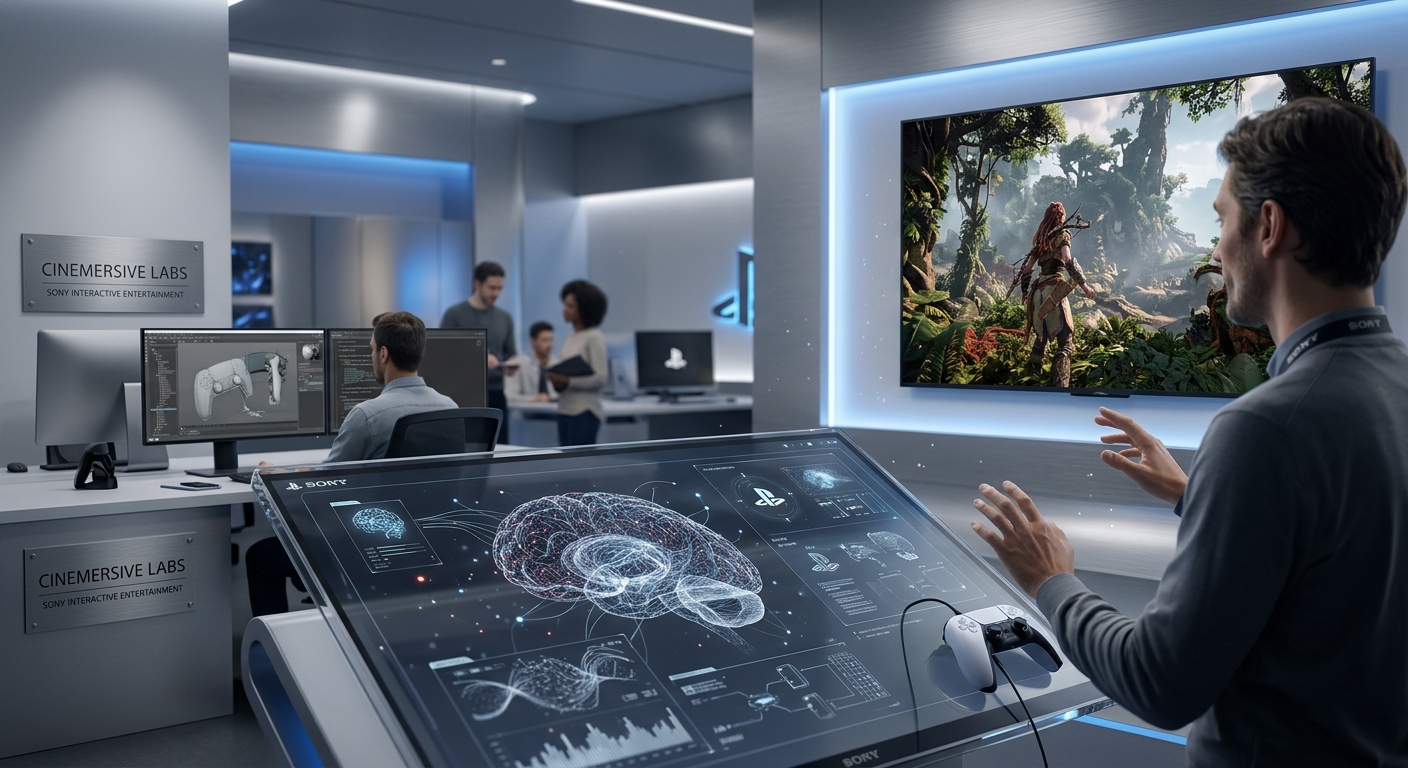
Sony Interactive Entertainment’s acquisition of UK-based machine learning specialist Cinemersive Labs is more than a routine corporate deal. It is a clear signal that the PlayStation ecosystem is preparing for an era in which artificial intelligence and advanced visual computing will shape how games are rendered, experienced, and even created. While the transaction details remain undisclosed, the strategic intent is straightforward: use machine learning and computer vision to push visual fidelity and rendering efficiency far beyond what current consoles typically deliver.
What Is Cinemersive Labs and Why Does It Matter?
Cinemersive Labs is a relatively young company, founded in 2022 in the UK, with a focus on machine learning and computer vision for visual experiences. Its key expertise lies in transforming standard visual data – such as photographs or video frames – into richer, more immersive formats like volumetric or 3D representations. This kind of technology fits neatly into a wider industry trend where AI-driven techniques are used to generate or enhance graphics in real time.
The announcement from Sony’s official newsroom explains that the Cinemersive Labs team will join Sony Interactive Entertainment’s Visual Computing Group (VCG), where they will contribute to “advancing state of the art visual computing within games” and help enhance gameplay visuals, improve rendering techniques, and unlock new levels of visual fidelity for players.1
In practical terms, this means PlayStation is doubling down on AI-assisted graphics research at a time when the industry is already investigating technologies such as AI super-resolution, neural rendering and advanced upscaling for games.
How Machine Learning Is Transforming Game Graphics
To understand why Sony is investing in Cinemersive Labs, it helps to look at how machine learning is already changing graphics pipelines across the industry. For years, visual improvements relied mostly on stronger hardware and more optimized engines. Today, AI adds another layer: it can learn patterns from huge datasets and then apply that knowledge to reconstruct, enhance or simulate visual detail.
Key ML Techniques Relevant to PlayStation Graphics
- Super-resolution upscaling: ML models can render games at a lower internal resolution and upscale them to higher resolutions (like 4K) while preserving or even enhancing sharpness and detail. Nvidia’s DLSS and AMD’s FSR are prominent examples of this approach, showing substantial performance gains in PC games while maintaining image quality.2
- Neural anti-aliasing and reconstruction: By learning how edges and shapes behave, ML can produce smoother lines, reduce shimmering, and reconstruct missing information in partially rendered frames.
- AI-assisted animation and motion: Neural networks can fill gaps between frames, interpolate motion, or generate realistic character movements from sparse inputs, reducing the manual workload on animators.
- Volumetric and 3D conversion: Cinemersive Labs’ own technology focuses on transforming 2D imagery into volumetric 3D experiences, which can be useful for VR, mixed reality, and cinematic sequences in games.
These capabilities are not speculative. Research presented at conferences like ACM SIGGRAPH has already demonstrated neural rendering methods that produce photorealistic scenes from sparse data while reducing computational requirements compared to traditional techniques.3 Sony’s acquisition essentially brings this kind of expertise in-house for the PlayStation brand.
Inside Sony’s Visual Computing Strategy
Cinemersive Labs will become part of SIE’s Visual Computing Group, a unit dedicated to cutting-edge graphics research and technology. While Sony does not publicly detail all of VCG’s projects, its broader corporate communications emphasize the goal of using AI to achieve more immersive, realistic and responsive gameplay experiences.
| Focus Area | Role of Cinemersive Labs | Potential Player Impact |
|---|---|---|
| Rendering Efficiency | Research and deploy ML models that reduce GPU load while maintaining image quality. | Higher frame rates, more stable performance and less visible graphical compromises. |
| Visual Fidelity | Use AI upscaling, neural reconstruction and volumetric tech to enrich scenes. | Sharper textures, more depth, and cinematic visuals even on fixed hardware. |
| Developer Tools | Contribute to tools that integrate ML into dev workflows (e.g., asset generation, testing). | Shorter production cycles, higher quality assets, and more experimentation. |
| New Experiences | Explore volumetric content and hybrid media experiences for games and possibly VR. | More immersive cutscenes, novel camera perspectives and richer PS VR2 content. |
By consolidating this expertise in a dedicated group, Sony can prototype new graphics solutions more quickly and share them across first-party studios, middleware and potentially even system software features for future hardware.
What This Could Mean for Future PlayStation Consoles
Sony has not tied the acquisition directly to a specific console, but the timing naturally raises questions about how machine learning may shape the next generation after PS5. Modern consoles are expected to support 4K and high frame rates simultaneously while rendering complex scenes with ray tracing, dense geometry and advanced effects. These demands push hardware to its limits, which is why AI-based optimizations are so attractive.
Potential Benefits for Upcoming Hardware
- More 60fps and 120fps modes: If ML upscaling and reconstruction lighten the rendering burden, developers can target higher frame rates without sacrificing too much visual detail.
- Enhanced ray-traced visuals: Machine learning can help denoise and reconstruct ray-traced lighting and reflections with fewer rays, making advanced lighting techniques more viable on console hardware.
- Improved VR experiences: PlayStation VR2 and any future VR hardware benefit heavily from efficient rendering. AI-driven upscaling could deliver sharper visuals at the high refresh rates VR demands.
- Longer console lifespan: By squeezing more out of fixed hardware through smarter software, Sony can keep consoles visually competitive for more years without needing a hardware refresh as quickly.
Industry trends support this direction. Major GPU vendors already rely on AI-powered upscaling and frame generation to boost performance in PC games.2 Bringing similar competencies into the console space is a logical next step.
How Players Might Notice the Difference
On paper, phrases like “visual computing” and “machine learning-driven rendering” can sound abstract. From a player’s perspective, the real question is: how will my games look and feel different?
Expected Improvements in Everyday Gameplay
Over the coming years, you might see:
- Cleaner images at lower costs: Games running at 4K-equivalent clarity even if they render internally at a lower resolution.
- Richer environments: More detailed foliage, dense cityscapes, and complex particle effects rendered without as many visible performance drops.
- Less pop-in and fewer visual artifacts: ML reconstruction and anti-aliasing can reduce shimmering, jagged edges, and texture pop-in.
- More cinematic presentation: Volumetric techniques can allow more dynamic camera angles, depth-rich cutscenes, and immersive replays that feel closer to high-end film or TV production.
These improvements may arrive gradually rather than via a single flagship title. The Cinemersive Labs team is joining a research group, which suggests that their work will be folded into engines, development tools and platform-level features used across multiple future games.
Implications for Game Developers
While the headline benefits are aimed at players, developers stand to gain significantly from the integration of machine learning in Sony’s toolchain. Modern AAA production is notoriously expensive and time-consuming, with increasingly large teams required to create high-quality assets, animations and effects. AI can help streamline many of these workflows.
Potential Developer-Facing Advantages
- Smarter asset generation: ML models can assist in creating textures, materials or variations of environmental assets, giving artists more high-quality starting points.
- Automated testing and optimization: AI systems can analyze gameplay footage to identify performance bottlenecks, artifact-prone scenes or problematic camera angles.
- Scalable graphics targeting: With AI reconstruction, developers can target a balanced internal resolution and rely on platform tools to upscale, reducing time spent manually tuning multiple modes.
- New content types: Volumetric and 3D-from-2D technologies open doors for hybrid projects blending interactive and pre-recorded media.
These trends echo broader industry research, where AI is increasingly used to assist, rather than wholly replace, human creativity in graphics and game design.3 For Sony, making such tools easy and robust on PlayStation could become a competitive advantage when attracting studios to its platform.
How Sony’s Move Fits Into the Wider AI-in-Gaming Landscape
Sony is far from alone in exploring AI for games. Major platform holders and publishers are experimenting with machine learning in rendering, non-player character (NPC) behavior, content generation and analytics. For example, Microsoft has publicly discussed AI-assisted features on Xbox and in its cloud infrastructure, while Nvidia has invested heavily in DLSS and neural graphics research.2
Where Sony’s Cinemersive Labs acquisition stands out is its focused emphasis on visual computing for PlayStation specifically, paired with the company’s existing strengths in image sensors, entertainment and display technologies across the broader Sony Group. Sony’s annual corporate reports highlight AI and imaging as central pillars of its future strategy, spanning both gaming and professional media production.4 Bringing a specialized ML and computer vision team into the PlayStation business aligns neatly with those priorities.
Frequently Asked Questions
Is Cinemersive Labs working only on PlayStation games now?
After the acquisition closes, Cinemersive Labs will join Sony Interactive Entertainment’s Visual Computing Group. While details of future projects are not public, the team is being integrated specifically to support Sony’s gaming-related visual computing efforts, which strongly suggests a primary focus on PlayStation platforms.
Will this immediately improve current PS5 games?
Not immediately. Research-driven acquisitions typically take time to translate into shipping products. Any new rendering techniques or tools developed with Cinemersive Labs’ input will likely appear gradually through engine updates, developer tools, and future game releases rather than as an instant upgrade.
Does this mean AI will replace artists and developers?
Current evidence suggests AI is most effective as an assistant, not a replacement. Machine learning can automate repetitive tasks, generate variations, and help optimize performance, but human designers and artists still guide the creative vision and make final decisions about how a game looks and feels.
Could this technology be used for non-gaming applications?
Volumetric imaging and advanced computer vision have applications beyond games, including virtual production, training simulations and immersive media. Sony as a group already operates across film, music and professional imaging, so it is plausible that knowledge gained through Cinemersive Labs will inform other divisions, even though the acquisition was announced within the context of SIE and PlayStation.
Does this hint at PlayStation 6 features?
Sony has not attached the acquisition to a specific future console, and no official PS6 announcements have been made. However, given typical console development timelines, it is reasonable to assume that research conducted by the Visual Computing Group today will influence hardware and software decisions in the next generation.
Looking Ahead: An AI-Enhanced PlayStation Era
By bringing Cinemersive Labs under the PlayStation umbrella, Sony is betting that the future of console graphics lies in the synergy between powerful hardware and intelligent software. Machine learning and computer vision can make games look better, run smoother and potentially reduce development friction, all of which are crucial as production costs rise and player expectations continue to climb.
For players, the acquisition is a behind-the-scenes move that will likely be felt gradually rather than seen immediately. Over time, however, the combination of AI-driven rendering, volumetric experiences and smarter development tools could redefine what a PlayStation game looks and feels like—especially on the next generation of hardware.
References
- Sony Interactive Entertainment Acquires Cinemersive Labs — Sony Interactive Entertainment. 2025-04-02. https://sonyinteractive.com/en/news/blog/sony-interactive-entertainment-acquires-cinemersive-labs/
- DLSS 3.5: Ray Reconstruction for Ray Traced Games — NVIDIA Corporation. 2023-08-22. https://www.nvidia.com/en-us/geforce/news/dlss-3-5-ray-reconstruction/
- State of the Art on Neural Rendering — T. Karras et al., ACM SIGGRAPH Courses. 2021-08-09. https://dl.acm.org/doi/10.1145/3450508.3464592
- Integrated Report 2023 — Sony Group Corporation. 2023-08-31. https://www.sony.com/en/SonyInfo/IR/library/integrated-report/
- AI and the Future of Gaming — Microsoft, Official Xbox Wire. 2024-03-05. https://news.xbox.com/en-us/2024/03/05/ai-and-the-future-of-gaming/
Similar Articles







Read full bio of medha deb