Stormgate’s Server Shake-Up: What RTS Fans Need to Know
Stormgate’s online services are being disrupted after a backend partner is acquired by an AI firm, leaving RTS players facing key feature outages.
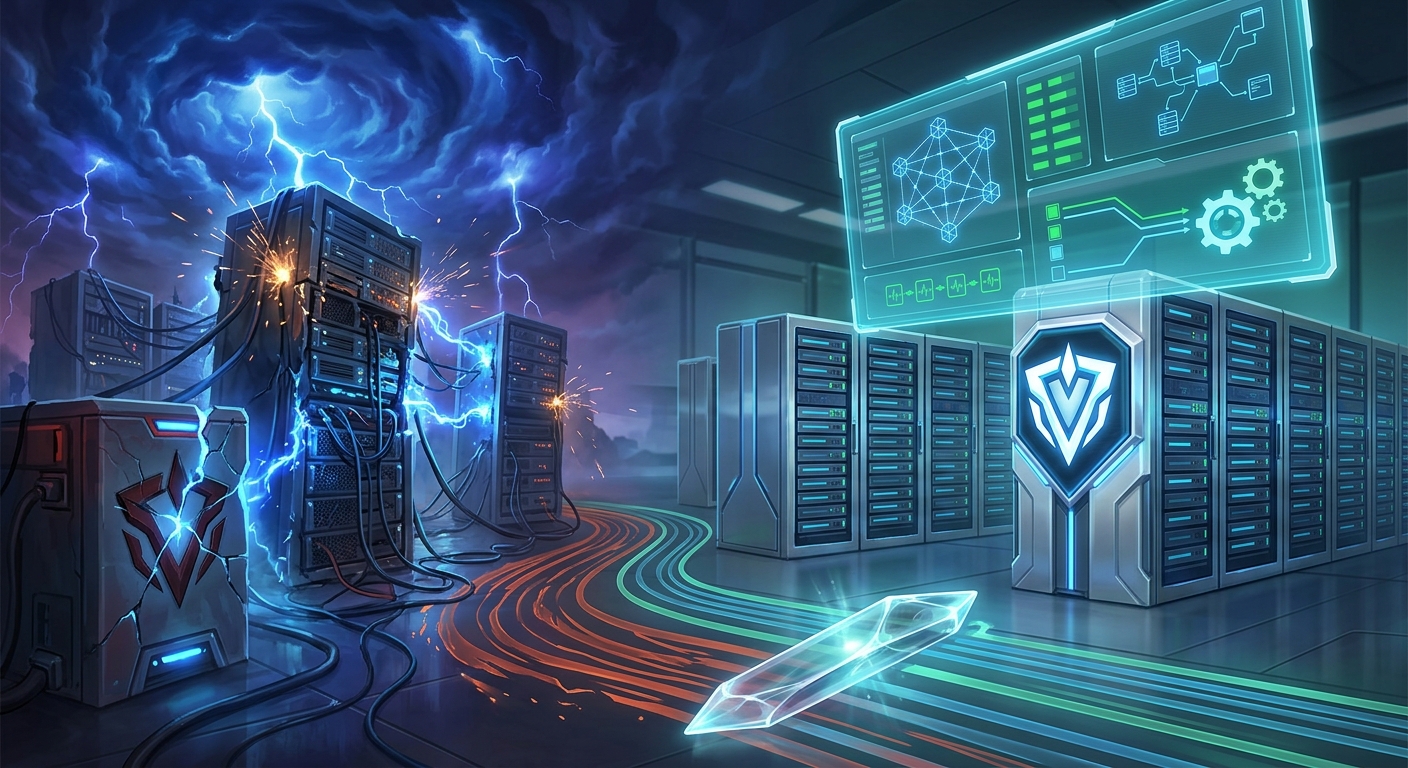
Stormgate, the ambitious real-time strategy (RTS) game from Frost Giant Studios, has hit an unexpected hurdle. The studio’s backend server partner has been acquired by an artificial intelligence company, triggering a shutdown of key online services and forcing the developers to re-evaluate their technical roadmap. While the core vision for Stormgate remains intact, players face a period of uncertainty as ranked play, matchmaking, and other online features are put on hold.
Background: An RTS Built by Genre Veterans
Frost Giant Studios is composed of developers who previously worked on StarCraft and Warcraft at Blizzard. Their goal with Stormgate is to revive and modernize the RTS genre with:
- Accessible competitive play—lowering barriers so more players can enjoy high-level RTS.
- Co-op and social modes—designed to welcome non-traditional RTS audiences.
- Live-service infrastructure—frequent updates, events, and balance patches.
All of that hinges on robust online services: matchmaking servers, account systems, progression tracking, and seasonal ladders. When a critical backend provider changes ownership or shuts down, those pillars are directly threatened.
The Server Partner Sale and Its Immediate Impact
Frost Giant revealed that their server technology partner—responsible for important online infrastructure—is being sold to an AI-focused company. As part of that acquisition, the game services Stormgate relies on are being decommissioned. This is not a planned migration; it’s a forced and accelerated change.
Features Affected by the Shutdown
Although the exact list may evolve, the following categories of features are typically tied to a backend provider and are likely to be impacted:
- Matchmaking and ranked ladders – automated pairing of players and the ranking system.
- Persistent profiles and progression – player levels, achievements, and unlocks.
- Party and social systems – invitations, lobbies, and friend lists.
- Live events and seasonal content – scheduled tournaments, ranked resets, and timed challenges.
Frost Giant has been transparent that these services may go offline for an extended period, and there is no confirmed timeline for restoration. Some offline or local features may remain available, but the heart of Stormgate’s online ecosystem will be constrained.
Why Losing a Backend Provider Hurts So Much
Modern online games depend heavily on specialist infrastructure vendors. Instead of building everything from scratch, studios often integrate third-party services for authentication, matchmaking, analytics, and more. This approach accelerates development, but it also creates a dependency that can become a single point of failure.
| Function | What It Does | Impact if Lost |
|---|---|---|
| Matchmaking | Groups players into fair matches based on skill and preferences. | Long queues, manual lobbies, or no online play at all. |
| Authentication | Verifies user identity, accounts, and entitlements. | Log-in problems, lost progress, or locked accounts. |
| Stateful Game Servers | Simulates matches, tracks state, and prevents cheating. | Instability, desyncs, or complete inability to host matches. |
| Data Storage | Saves progression, stats, replays, and unlocks. | Progress rollbacks, missing stats, or wiped data. |
| Live Ops Tools | Enables events, promotions, and hotfixes. | Slower updates and fewer live events or balance patches. |
When a partner exits the market or is repurposed for a different industry focus (such as AI R&D), the game studio must either:
- Migrate to a new third-party provider, or
- Build and operate an in-house replacement stack.
Both paths are expensive and time-consuming, especially for a studio still polishing a new game.
What Frost Giant Can Do Next
The studio’s public communications emphasize that they want to restore online functionality, but they cannot promise precise timing. From a technical and business standpoint, their options look something like this:
1. Rapid Migration to a New Provider
Frost Giant could integrate a different backend solution—such as Amazon Web Services (AWS) GameLift, Microsoft Azure PlayFab, or similar offerings—from scratch. Major cloud providers actively target the game industry with tailored services:1
- Pros: Leverages tested infrastructure, scales globally, and offers robust support.
- Cons: Complex integration work, potential feature mismatches, and higher short-term costs.
2. Building an Internal Backend Platform
Some studios ultimately bring critical services in-house, using general cloud infrastructure to host custom-built matchmaking and account systems:
- Pros: Full control of features, pricing, and long-term direction.
- Cons: Requires substantial engineering resources and ongoing operational expertise.
3. Hybrid Approach and Phased Rollouts
A likely path is a hybrid solution, where Frost Giant:
- Restores the most essential online features first (e.g., basic matchmaking).
- Gradually reintroduces advanced systems like skill-based rankings and ladder seasons.
- Uses this transition to redesign parts of the backend for future resilience.
A staged rollout minimizes downtime for players but requires careful testing to avoid data loss or new bugs.
Implications for Stormgate’s Player Community
For players who have invested time in Stormgate’s early access or testing phases, this disruption can be frustrating. However, it does not necessarily signal the end of the project. The broader game industry has weathered similar disruptions before, and many titles have recovered or even improved their infrastructure in the long run.
Short-Term Effects Players May Notice
Depending on how Frost Giant sequences changes, players may experience:
- Temporary or extended loss of ranked matchmaking.
- Inability to access online profiles, stats, or achievements.
- Longer queues or reliance on custom lobbies.
- Delayed content updates or pauses in seasonal systems.
In some cases, the studio might offer compensatory rewards—such as cosmetic items or extended event durations—once services are stabilized, though this will depend on their own financial and development constraints.
How Communication Shapes Player Trust
Clear, regular updates are critical in situations like this. Industry research on online services and user trust shows that transparency and timely communication greatly influence whether users remain engaged during outages or churn away permanently.2 When studios acknowledge uncertainty, describe their plan at a high level, and provide realistic timelines, players tend to be more forgiving of technical setbacks.
Frost Giant’s willingness to say they do not yet know exactly when all features will return fits this pattern of honest communication. It may be disappointing news, but it’s more credible than vague promises that fail to materialize.
AI Acquisitions and the Changing Tech Landscape
The acquisition of a game-service provider by an AI-focused company illustrates a broader trend: infrastructure firms are being repurposed to support data-heavy AI workloads, including large language models, recommendation systems, and computer vision research. Cloud resources and engineering talent are shifting toward AI products and platforms.3
For game studios, this can mean:
- Less long-term stability if a provider pivots away from games.
- New opportunities for AI-driven tools (like smarter matchmaking or anti-cheat), but with different priorities than pure game hosting.
- Increased pressure to design backends that can be moved between providers when necessary.
While AI is often framed as a boon for games—from NPC behavior to content moderation—the Stormgate situation highlights a less-discussed side effect: when AI investments absorb or redirect game-centric infrastructure, live games can be caught in the crossfire.
Resilience Lessons for Live-Service RTS Games
Stormgate is not the first online game to face backend disruption, and it won’t be the last. High-profile titles have previously experienced server shutdowns, migrations, or platform transitions that forced developers to rethink their architecture. Regulatory bodies and industry analysts have noted the growing importance of reliability in cloud-based services across sectors, including gaming.4
Key Takeaways for Developers
- Avoid single points of failure: Critical systems such as authentication or matchmaking should be designed with portability in mind.
- Maintain exit strategies: Contracts and architectures should allow relatively rapid migration if a provider changes direction.
- Document data flows: Clear understanding of what data is stored where makes migration and compliance easier.
- Budget for infrastructure risk: Financial planning should account for unexpected backend changes.
What Players Can Look for in Live-Service Games
From a player perspective, it’s useful to pay attention to these signs of long-term support:
- Regular developer updates and roadmaps.
- Evidence of robust infrastructure (e.g., regional servers, status pages).
- Clear policies on data retention and account management.
While players can’t control infrastructure decisions, understanding how reliant a game is on a single provider can help set expectations about potential disruptions.
Stormgate’s Future in the RTS Ecosystem
The RTS genre has always depended on stable multiplayer ecosystems. Classic titles such as StarCraft II flourished in part due to reliable matchmaking, competitive ladders, and robust esports scenes supported by their publishers.5 Frost Giant’s mission is to build a spiritual successor that merges competitive depth with modern accessibility.
The server setback is a serious test of that mission, but not the final word. If Frost Giant can successfully navigate the transition and emerge with a more resilient backend, Stormgate may ultimately be better positioned for long-term growth. That would benefit not only current players but also the wider RTS community hungry for a modern flagship title.
Practical Advice for Current and Prospective Players
If you’re already playing Stormgate, or considering joining once it’s more broadly available, here are some practical steps you can take during this period of uncertainty:
1. Follow Official Communication Channels
Check Frost Giant’s official website, launchers, and verified social media channels for:
- Service status updates and downtime windows.
- Patch notes that describe partial feature restoration.
- Information about account data, including any necessary migrations.
2. Diversify How You Engage with the Game
If online modes are temporarily limited, you can still:
- Experiment with practice modes, AI skirmishes, or offline challenges.
- Study replays (if available) and refine builds or strategies.
- Engage with community content, guides, and discussions outside the game.
This can keep your skills sharp and maintain interest while the studio stabilizes services.
3. Manage Expectations and Feedback
Providing constructive feedback through official channels helps developers prioritize critical fixes. That said, it’s equally important to recognize the complexity and cost of backend overhauls. Large-scale server migrations in other games have taken months to complete; an RTS with ambitious online features is unlikely to be an overnight fix.
Frequently Asked Questions
Will Stormgate’s online features come back?
Frost Giant has signaled its intent to restore online services, but because the shutdown is tied to an external acquisition, the studio cannot guarantee exact dates. Expect a phased return of features rather than a single all-inclusive patch.
Is my account data and progression safe?
The answer depends on how data was stored with the outgoing provider and what backups Frost Giant maintains. Modern cloud practices typically encourage redundancy and backups, but until the studio confirms details, players should treat any communication from the developers about account safety as authoritative.
Can I still play Stormgate offline?
Some modes may remain accessible without full backend services, such as local skirmishes vs. AI or certain campaign content. However, features relying on central servers—ranked play, online progression, and certain social systems—may be unavailable or limited until the migration is complete.
Does this mean the game is in financial trouble?
A server partner being sold to an AI company reflects broader tech industry trends, not necessarily Frost Giant’s financial state. While backend changes can be expensive, there is no automatic link between a provider’s business decision and a studio’s solvency. Official statements from Frost Giant are the best source for understanding their long-term plans.
What does this say about the future of online RTS games?
The situation underscores how deeply RTS games rely on stable infrastructure. It may encourage more studios to invest in portable, modular backends and to choose partners with clear, long-term commitments to the game sector. For players, it’s a reminder that live-service experiences are inherently tied to business and technology decisions occurring behind the scenes.
Conclusion: A Setback, Not a Checkmate
Stormgate’s online feature disruption is a major challenge for Frost Giant Studios and its community, but it is not necessarily a fatal blow. The RTS is still in an evolving phase of its life cycle, and the forced server migration could eventually lead to a more robust and future-proof infrastructure. In the short term, players will have to weather outages, reduced features, and incomplete information. In the long term, the way Frost Giant manages this crisis may define player trust and the game’s reputation more than the crisis itself.
For now, the best course for fans is to stay informed, offer constructive feedback, and recognize that the road to a modern, sustainable RTS ecosystem is rarely smooth. If Stormgate emerges stronger from this transition, the genre as a whole may benefit from the hard lessons learned.
References
- Game Tech: AWS Solutions for Game Developers — Amazon Web Services. 2024-02-15. https://aws.amazon.com/gametech/
- Trust, Transparency and Control in Platform Services — OECD Digital Economy Papers No. 322. 2022-09-01. https://www.oecd.org/digital/trust-transparency-and-control-in-platform-services.htm
- AI and the Future of Cloud Infrastructure — McKinsey & Company. 2023-10-10. https://www.mckinsey.com/capabilities/mckinsey-digital/our-insights/ai-and-the-future-of-cloud-infrastructure
- Cloud Computing and Digital Transformation of Industries — World Economic Forum. 2023-03-20. https://www.weforum.org/agenda/2023/03/cloud-computing-digital-transformation-industries/
- StarCraft II Battle.net Infrastructure Overview — Blizzard Entertainment (via archived technical presentation). 2015-11-06. https://blizzard.gamespress.com/StarCraft-II
Similar Articles



Read full bio of Sneha Tete