The Modern Renaissance of Strategic Gaming
How innovative design is reshaping the landscape of tactical gameplay experiences
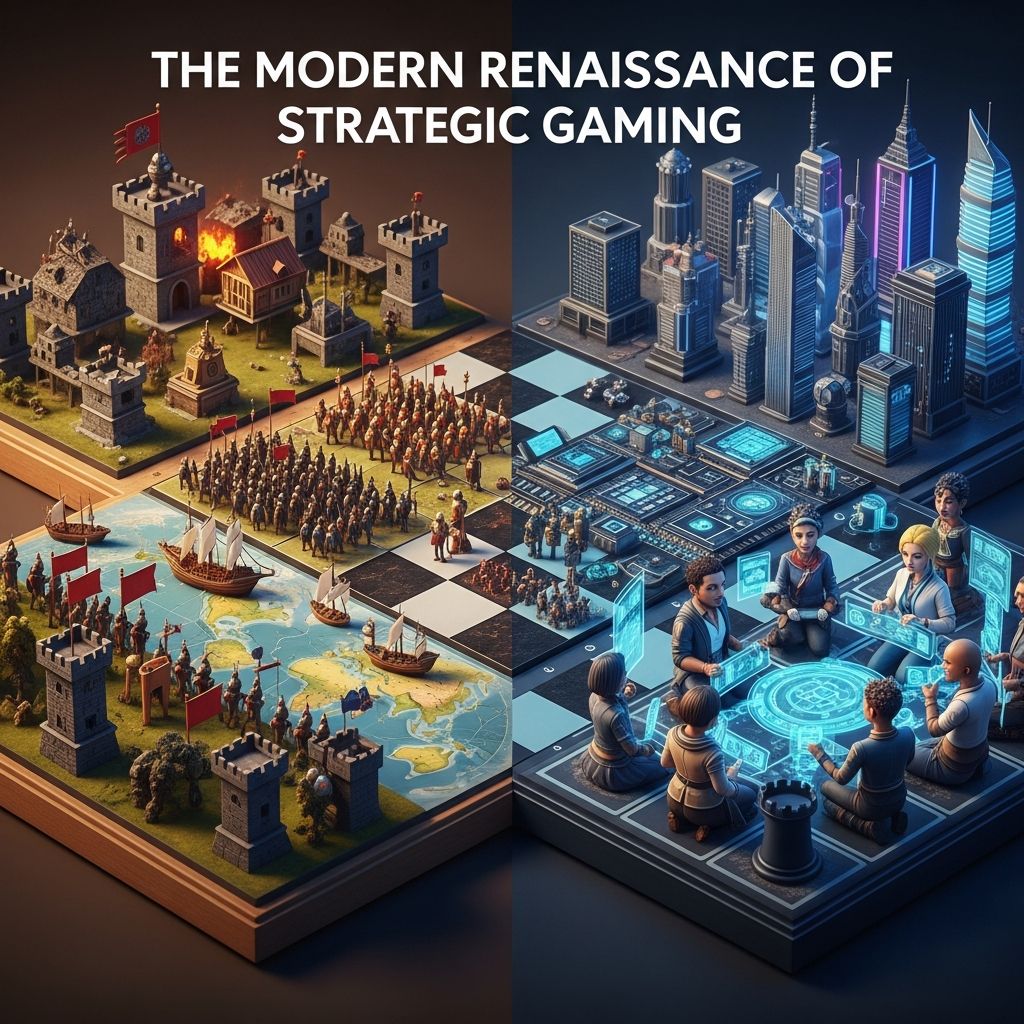
The gaming landscape has undergone a profound transformation in recent years. What was once considered a niche preference—deliberate, methodical gameplay that rewards careful planning over reflexive action—has suddenly become mainstream. This shift represents more than a passing trend; it signals a fundamental change in how developers approach game design and how players engage with interactive entertainment.
This resurgence has emerged at a critical moment when the industry seemed saturated with fast-paced action games and always-online multiplayer experiences. Yet emerging titles have demonstrated that substantial audiences hunger for something different: games that prioritize thoughtful decision-making, meaningful strategy, and player agency in ways that traditional action-oriented titles simply cannot deliver.
Understanding the Shift in Gaming Preferences
For decades, the dominant narrative in gaming suggested that faster and more immediate gameplay experiences would always outsell methodical alternatives. Publishers invested heavily in action-heavy franchises, real-time combat systems, and reflex-based challenges. However, this assumption has proven incomplete.
Several factors have contributed to this changing landscape:
- Players increasingly seek meaningful narrative experiences integrated with gameplay mechanics
- The gaming demographic has expanded to include individuals with varying time commitments and play styles
- Digital distribution platforms have reduced barriers to entry for smaller and experimental titles
- Social media and streaming communities have amplified conversations around game design philosophy
- Players demonstrate growing interest in games that respect their intelligence and decision-making capabilities
These developments have created conditions where strategic gameplay can flourish not as a marginal category, but as a central focus of major releases and widespread cultural conversation.
Breaking the Traditional Combat Formula
Traditional strategic gaming has operated within established parameters for generations. The conventional framework typically follows a predictable sequence: opponents act, players respond, environmental factors shift, and cycles repeat. While effective, this structure has become so standardized that many players view it as the only viable approach to strategic gameplay.
Recent innovations have challenged these assumptions by introducing hybrid systems that blend strategic depth with dynamic, moment-to-moment interaction. These new approaches maintain the core appeal of strategic gameplay—careful planning, resource management, and meaningful consequences for decisions—while introducing elements that create visceral, engaging experiences.
One particularly influential approach emphasizes player skill and reflexive decision-making within a structured strategic framework. Rather than simply selecting actions from menus, players navigate real-time defensive mechanics that reward precise timing and spatial awareness. This creates a gameplay loop where strategic knowledge informs tactical execution, and player skill directly influences outcomes.
The Role of Accessibility in Mainstream Appeal
A significant contributor to the current renaissance involves making strategic gameplay more accessible to broader audiences. Games that previously appealed primarily to dedicated enthusiasts now attract casual players, experienced gamers seeking fresh experiences, and demographics traditionally underrepresented in strategic gaming communities.
This expansion happens through several design approaches:
| Design Element | Impact on Accessibility | Player Benefit |
|---|---|---|
| Tutorials and Gradual Complexity | Reduces learning curve | New players understand mechanics without overwhelming information |
| Adjustable Difficulty Settings | Accommodates skill variation | Players choose appropriate challenge levels |
| Visual and Audio Design | Enhances clarity and engagement | Strategic information communicated intuitively |
| Flexible Playstyles | Multiple viable approaches | Players succeed using preferred strategies |
| Narrative Integration | Meaningful story context | Gameplay decisions feel consequential |
By removing barriers that previously gatekept strategic gaming, developers have opened these experiences to millions of potential players who never considered the genre.
Rewarding Aggressive, Confident Play
A fascinating characteristic of modern strategic game design involves incentivizing bold, aggressive approaches. Rather than penalizing risk-taking, contemporary systems often reward players who make confident decisions and execute them skillfully.
This represents a departure from earlier strategic games, which frequently punished aggressive play through heavy damage penalties, resource depletion, or tactical disadvantages. Modern design instead creates systems where skilled players can overcome nearly any challenge through superior execution and decision-making.
The mechanical implications are substantial. Games now feature:
- Defensive mechanics allowing skilled players to negate damage entirely
- Reward systems that bonus damage output and successful execution
- Character progression that scales with aggressive play styles
- Combat effects that trigger when players take calculated risks
- Environmental interactions rewarding bold tactical positioning
This approach creates a satisfying feedback loop where player skill directly correlates with tangible, immediate rewards. Experienced players feel genuinely more powerful than novices, but the gap remains bridgeable through practice and learning rather than purely through time investment or equipment acquisition.
Industry Momentum and Cultural Conversation
The current renaissance has generated substantial cultural momentum within gaming communities. Content creators, critics, and players engage in ongoing discussions about game design philosophy, mechanical innovation, and what constitutes meaningful gameplay.
This conversation has several important effects:
- Legitimizes strategic gameplay as a serious, respected category
- Encourages developers to experiment with mechanical innovation
- Attracts investment toward strategic game projects
- Influences upcoming releases across multiple studios and genres
- Generates media coverage and cultural visibility
When major titles embrace strategic design principles, industry observers note the shift. Publishers recognize that audiences will support well-crafted strategic experiences, leading to increased development resources and creative freedom for designers interested in this space.
Implications for Established Franchises
The rise of sophisticated strategic gaming creates interesting dynamics for established franchises that have built audiences on different design philosophies. Long-running series that emphasized real-time action, reflexive gameplay, or simplified mechanics now face audiences with elevated expectations around strategic depth and mechanical complexity.
Some franchises have responded by incorporating strategic elements while maintaining their core identity. Others continue pursuing their established direction, potentially risking perception as outdated. The most successful adaptations typically involve evolutionary changes rather than revolutionary reimagining—incorporating fresh ideas while respecting what made franchises appealing originally.
This tension between innovation and tradition will likely define the next era of game development across multiple genres and established properties.
The Player Experience Revolution
From a player perspective, the current gaming landscape offers unprecedented variety. Those seeking strategic depth can find sophisticated, challenging experiences. Those preferring action-oriented gameplay maintain abundant options. Hybrid approaches blur traditional category boundaries, creating games that satisfy players across the preference spectrum.
This abundance represents genuine industry progress. Rather than assuming singular correct design philosophy, the market now supports diverse approaches. Players benefit from this pluralism through access to experiences tailored to their preferences and play styles.
The psychological satisfaction of strategic gaming extends beyond mechanical engagement. Players report increased investment in narrative outcomes, deeper emotional connection to characters and consequences, and stronger sense of personal agency. These factors combine to create meaningful experiences that often exceed what traditional action-focused design can provide.
Future Directions and Emerging Trends
Looking forward, several developments suggest the strategic gaming renaissance will continue evolving. Technological advancement enables more sophisticated AI systems, creating opponents that respond intelligently to player strategies. Improved processing power permits complex simulation systems, allowing emergent gameplay scenarios arising from dynamic interaction.
Additionally, growing recognition that audiences include diverse preferences and playstyles encourages developers to embrace mechanical variety. Rather than pursuing singular design philosophies, successful games increasingly offer multiple viable approaches to challenges, respecting player autonomy and preference.
The current moment represents genuine creative flourishing within gaming development. Designers explore strategic mechanics more thoroughly than ever, artists demonstrate how beautiful presentation enhances rather than distracts from gameplay, and writers craft narratives that integrate meaningfully with mechanical systems.
Frequently Asked Questions
Q: Is strategic gaming replacing action-oriented gameplay?
A: No. The renaissance represents expansion of available options rather than replacement. Both categories continue attracting substantial audiences and development resources. The shift involves recognizing strategic gaming as equally valid and commercially viable.
Q: What makes modern strategic games different from earlier examples?
A: Contemporary designs integrate real-time elements, emphasize player skill and reflexive decision-making, and reward aggressive play through innovative mechanical systems. Earlier strategic games typically followed more rigid turn-by-turn formulas.
Q: Can casual players enjoy strategic games?
A: Absolutely. Modern design prioritizes accessibility through tutorials, adjustable difficulty, and intuitive interfaces, allowing players of all skill levels to engage meaningfully with strategic systems.
Q: How does this trend affect major gaming franchises?
A: Franchises face pressure to evolve mechanically or risk appearing dated. Successful adaptations incorporate strategic depth while maintaining core identity and audience expectations.
Conclusion: A New Era of Gaming Design
The current renaissance of strategic gaming reflects broader shifts in player preferences, developer capabilities, and industry economics. What was once niche has become mainstream, transforming conversations about game design and player expectations. This evolution benefits the entire industry by demonstrating that audiences support diverse approaches to interactive entertainment, encouraging creative risk-taking and mechanical innovation across development studios worldwide.
References
- “Clair Obscur: Expedition 33 Has Phenomenal Turn-Based Combat” — Vice. 2025. https://www.vice.com/en/article/clair-obscur-expedition-33-has-phenomenal-turn-based-combat-but-we-cannot-make-it-the-new-standard-for-turn-based-rpgs/
- “Clair Obscur Expedition 33: The FIRST Turn-based ARPG” — YouTube. 2025. https://www.youtube.com/watch?v=rEv2iU49gcQ
- “5 turn-based RPGs to play after Clair Obscur: Expedition 33” — XDA Developers. 2025. https://www.xda-developers.com/turn-based-rpgs-play-clair-obscur-expedition-33/
- “Turn-Based Combat Didn’t Need Saving by Clair Obscur” — Second Wind (YouTube). 2025. https://www.youtube.com/watch?v=R4Tc7JYZkSU
Similar Articles





Read full bio of Sneha Tete