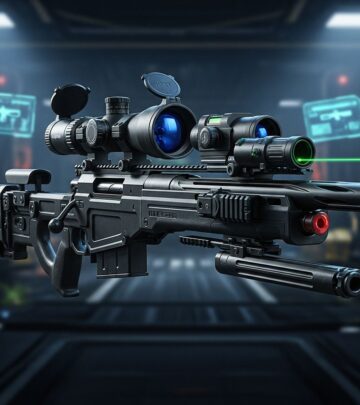
Strider 300 Quickscoping Guide for Black Ops 7
Master precision quickscoping with optimized Strider 300 loadouts

The Strider 300 represents one of the most formidable sniper options available in Black Ops 7, particularly for players who specialize in rapid-engagement quickscoping tactics. Unlike traditional hardscope playstyles that emphasize long-range precision and stability, quickscoping demands a different architectural approach to weapon customization. This guide explores the mechanics behind effective Strider 300 configurations designed specifically to maximize acquisition speed, handling fluidity, and snap-target accuracy in competitive multiplayer environments.
Understanding the Strider 300 Fundamentals
The Strider 300 functions as a semi-automatic sniper platform, delivering one-shot elimination capability across most engagement distances. Its baseline configuration provides an eight-round magazine capacity with four additional magazines available during standard multiplayer matches. The weapon’s default fire mode operates on a semi-automatic basis, allowing skilled operators to chain successive shots rapidly without mechanical limitations between triggers pulls.
What distinguishes the Strider 300 from competing sniper platforms is its inherent velocity characteristic. The rifle achieves a bullet velocity rating of approximately 1,700 meters per second, creating a near-instant trajectory experience for targets positioned within typical engagement ranges. This velocity advantage translates directly into practical benefits: minimal lead compensation requirements, reduced environmental variables affecting projectile flight, and significantly simplified target prediction calculations compared to lower-velocity alternatives.
Attachment Strategy Framework for Quickscoping Performance
Building an effective quickscoping configuration requires understanding how each attachment category influences core performance pillars: aim-down-sight speed, aiming stability, recoil management, and overall weapon handling responsiveness. The attachment selection process involves calculated trade-offs between competing objectives, as certain modifications that enhance one characteristic may introduce disadvantages in complementary areas.
Muzzle and Barrel Considerations
The muzzle attachment serves dual purposes within quickscoping loadouts: suppression characteristics and ballistic enhancement. Professional quickscopers frequently select the Monolithic Suppressor muzzle option, which maintains velocity integrity while providing audio concealment benefits during multiplayer engagement. This attachment category minimizes muzzle flash, a critical factor since excessive flash obscures target visibility immediately following discharge.
Barrel selection presents nuanced optimization opportunities. Extended barrels enhance accuracy statistics and velocity performance but introduce handling penalties. Conversely, shorter barrel variants prioritize aim-down-sight speed—the metric defining how rapidly the optic sight achieves functional use. Advanced quickscoping configurations often feature the 24.1-inch Salire Dispatch barrel, balancing velocity retention with acceptable handling characteristics. For players prioritizing extreme speed over raw distance capability, shorter barrel alternatives provide measurable aim-down-sight improvements.
Laser Alignment Systems
Laser attachments provide aiming stability enhancements, reducing aiming idle sway—the characteristic drift experienced during scoped viewing. The 1MW Instinct Laser Array represents a performance-oriented selection, offering substantial aiming stability improvements while maintaining relatively modest handling penalties. Alternative laser configurations such as the 5mW variant provide comparable stability benefits with marginally different trade-off profiles.
Ammunition and Firing Modifications
Overpressured ammunition rounds represent an effective modification choice, delivering enhanced one-shot elimination reliability across extended ranges. This attachment ensures consistent performance against armored opponents and mitigates situations where marginal damage calculations might otherwise produce non-lethal outcomes. Quickscopers benefit substantially from this reliability enhancement, as missed follow-up shots represent significant tactical disadvantages in fast-paced multiplayer scenarios.
Grip and Stock Configuration Analysis
The rear grip attachment significantly influences rapid target acquisition capability. The Hatch Quick Grip delivers accelerated aim-down-sight performance alongside improved weapon handling characteristics. This attachment prioritizes the velocity metrics most critical to quickscoping success: how quickly operators transition from hip-fire positioning to scoped aiming state.
Stock selection introduces another decision point. Quickscoping-optimized builds often reduce or eliminate stock attachments entirely, sacrificing recoil management for enhanced mobility and handling fluidity. When stocks are included, variants emphasizing speed characteristics replace traditional stability-focused options. The Prudent Stock represents a middle-ground approach, offering acceptable stability improvements without severely compromising handling mechanics.
Magazine Architecture and Reload Dynamics
Magazine selection balances ammunition capacity against aim-down-sight speed. Standard configurations utilize larger magazine capacities to minimize reload frequency during extended engagements. However, specialized speed-focused variants feature eight-round fast-loading magazines, which accelerate reload animations at the expense of total ammunition availability. Quickscoping playstyles typically favor extended magazines, as the primary advantage of rapid target acquisition diminishes if operators must return to reload states during combat sequences.
Comparative Loadout Configurations
Different engagement contexts and player skill levels benefit from distinct customization approaches. The following configurations represent established performance benchmarks:
Balanced Quickscoping Build
- Muzzle: Monolithic Suppressor
- Barrel: 24.1-inch Salire Dispatch
- Laser: 1MW Instinct Laser Array
- Ammunition: Overpressured
- Grip: Hatch Quick Grip
This configuration emphasizes equilibrium between raw speed and stability characteristics. The Monolithic Suppressor preserves velocity while suppressing audio signature, while the Salire Dispatch barrel maintains acceptable handling despite its extended physical profile. The Instinct Laser Array provides meaningful aiming stability enhancement without excessive penalties. This loadout suits players transitioning into competitive quickscoping or those preferring stability assurance during high-pressure moments.
Maximum Velocity Build
- Muzzle: Monolithic Suppressor
- Barrel: Extended velocity-focused option
- Laser: 5mW alternative variant
- Ammunition: Overpressured rounds
- Grip: Hatch Quick Grip
- Stock: None or lightweight variant
This approach prioritizes obtaining the maximum practical velocity advantage, accommodating the Strider 300’s inherent ballistic superiority. The extended barrel selection combines with overpressured ammunition to ensure consistent one-shot elimination across maximum engagement ranges. This configuration benefits experienced quickscoopers who possess refined aiming mechanics and can manage recoil characteristics independently.
Speed-Optimized Build
- Muzzle: Standard suppressor or lightweight alternative
- Barrel: Short-profile variant
- Laser: Standard or reduced-power laser
- Ammunition: Standard or performance variant
- Grip: Hatch Quick Grip
- Magazine: Fast-loading eight-round option
This configuration sacrifices extended-range consistency for extreme acquisition velocity. The short barrel dramatically reduces aim-down-sight time, while the fast-loading magazine accelerates reload sequences. This loadout serves players specializing in close-quarters engagements or those with elite mechanical skill enabling consistent mid-range quickscoping despite reduced stability characteristics.
Tactical Quickscoping Methodology
Effective quickscoping transcends mere attachment selection, requiring coordinated mechanical execution and positioning awareness. The fundamental technique involves transitioning from hip-fire positioning into scoped aiming state, acquiring target lock, and discharging the weapon before opponents generate adequate response capability. Success depends on prediction accuracy—anticipating opponent movement trajectories and pre-positioning aim intersection points before visible target acquisition.
Map knowledge significantly amplifies quickscoping effectiveness. Identifying high-traffic corridors, predictable flanking routes, and common engagement sightlines enables operators to establish advantageous positioning. The Strider 300’s 1,700 velocity characteristic reduces the mental calculation complexity associated with ballistic prediction, effectively converting distant engagements into near-instantaneous elimination scenarios.
Addressing Common Challenges
Quickscoping practitioners frequently encounter specific difficulties. Excessive aiming idle sway interferes with precision snap-targeting, making laser attachments particularly valuable for stability enhancement. Recoil management becomes increasingly important when chaining successive shots rapidly, particularly in configurations emphasizing speed over stability. Practicing controlled trigger discipline—avoiding premature discharge while ensuring adequate scoped acquisition—separates successful quickscoopers from inconsistent performers.
Magazine capacity balancing presents another consideration. While eight-round extended magazines provide superior endurance during extended engagements, they introduce subtle handling penalties. Fast-loading variant magazines accelerate reload sequences but create ammunition scarcity during sustained firefights. The optimal selection depends on individual playstyle preferences and specific map characteristics.
Optimization Through Practice and Adaptation
Quickscoping mastery emerges through iterative practice, consistent configuration refinement, and thoughtful adaptation to opponent behavior patterns. Initial configuration selection should emphasize balanced characteristics—neither extreme speed nor maximum stability—enabling operators to develop foundational muscle memory before advancing toward specialized variants. As mechanical execution improves, attachment adjustments can progressively optimize toward preferred engagement ranges and tactical preferences.
Competitive quickscoping environments often feature opponent diversity, ranging from aggressive rushing players to conservative position holders. Successful practitioners maintain configuration flexibility, recognizing that specific matches might demand speed-optimized builds while others benefit from stability-emphasizing variants. This adaptive mentality, combined with persistent mechanical refinement, separates casual players from accomplished quickscoping specialists.
Integration Within Squad-Based Gameplay
While individual quickscoping performance drives direct elimination counts, squad-based tactical coordination amplifies overall effectiveness. Communicating sniper positioning information to teammates enables coordinated pressure application, trapping opponents between multiple threat vectors. The Strider 300’s rapid firing capability supports suppressive coverage, enabling quickscoping specialists to maintain aggressive engagement tempo while supporting broader squad objectives.
Frequently Asked Questions
What defines the optimal aim-down-sight speed for quickscoping?
Aim-down-sight speed should facilitate rapid target acquisition without sacrificing excessive stability. Most competitive quickscopes complete within 300-400 milliseconds, with configurations achieving 250-millisecond transitions representing the extreme speed threshold. Balance-oriented builds typically target 350-millisecond transitions, enabling consistent execution across varying opponent distances.
Should quickscoping configurations prioritize velocity or handling characteristics?
Velocity provides practical benefits at extended ranges, while handling prioritizes close-quarters effectiveness. The optimal approach balances both characteristics, particularly given the Strider 300’s inherent 1,700 velocity advantage. Most scenarios benefit from retaining velocity superiority while moderately optimizing handling, rather than completely sacrificing range capability for marginal speed improvements.
How do laser attachments influence quickscoping performance?
Laser attachments reduce aiming idle sway, improving stability during scoped target acquisition. For quickscoping, this translates into more consistent snap-targeting capability and reduced aim drift during the critical acquisition window. The stability improvement typically outweighs the modest penalties, making laser attachments valuable inclusions in virtually all quickscoping configurations.
What magazine configuration balances capacity against speed?
Extended eight-round magazines provide superior endurance without prohibitive handling penalties, representing the optimal choice for most quickscoping scenarios. Fast-loading six-round variants accelerate reload sequences but create ammunition scarcity during sustained engagements. The extended capacity option better accommodates unpredictable multiplayer scenarios where reload frequency remains unpredictable.
Can quickscoping succeed with the Strider 300 at extreme distances?
The 1,700 velocity characteristic enables quickscoping viability across extended ranges, though extreme-distance scenarios (beyond 100 meters) introduce prediction complexity that challenges even experienced operators. Closer ranges under 100 meters present near-instantaneous target acquisition characteristics, making them optimal quickscoping territories. Maximum-distance attempts remain possible but require refined prediction mechanics.
References
- Strider 300 Weapon Stats — Game8. 2026-04-07. https://game8.co/games/Call-of-Duty-Black-Ops-7/
- Strider 300 Specifications and Fire Mode — CODMunity. 2026. https://codmunity.gg/weapon/bo7/strider-300
- Warzone BO7 Meta Loadout Analysis — YouTube. 2026. https://www.youtube.com/watch?v=EhI9kRUgW9M
- Strider 300 Quickscoping Mechanics — YouTube. 2026. https://www.youtube.com/watch?v=ih65ivRgDuw
- Fastest One-Shot Strider 300 Class Configuration — YouTube. 2026. https://www.youtube.com/watch?v=RdfuqudfVlk
- Maximum Speed Strider 300 Sniper Class — YouTube. 2026. https://www.youtube.com/watch?v=ClQTp3TTvAU
Similar Articles






Read full bio of Sneha Tete