Top Arknights: Endfield Team Comps for Every Element
Learn how to build powerful Arknights: Endfield squads by understanding elements, combos, and operator roles instead of copying fixed lineups.
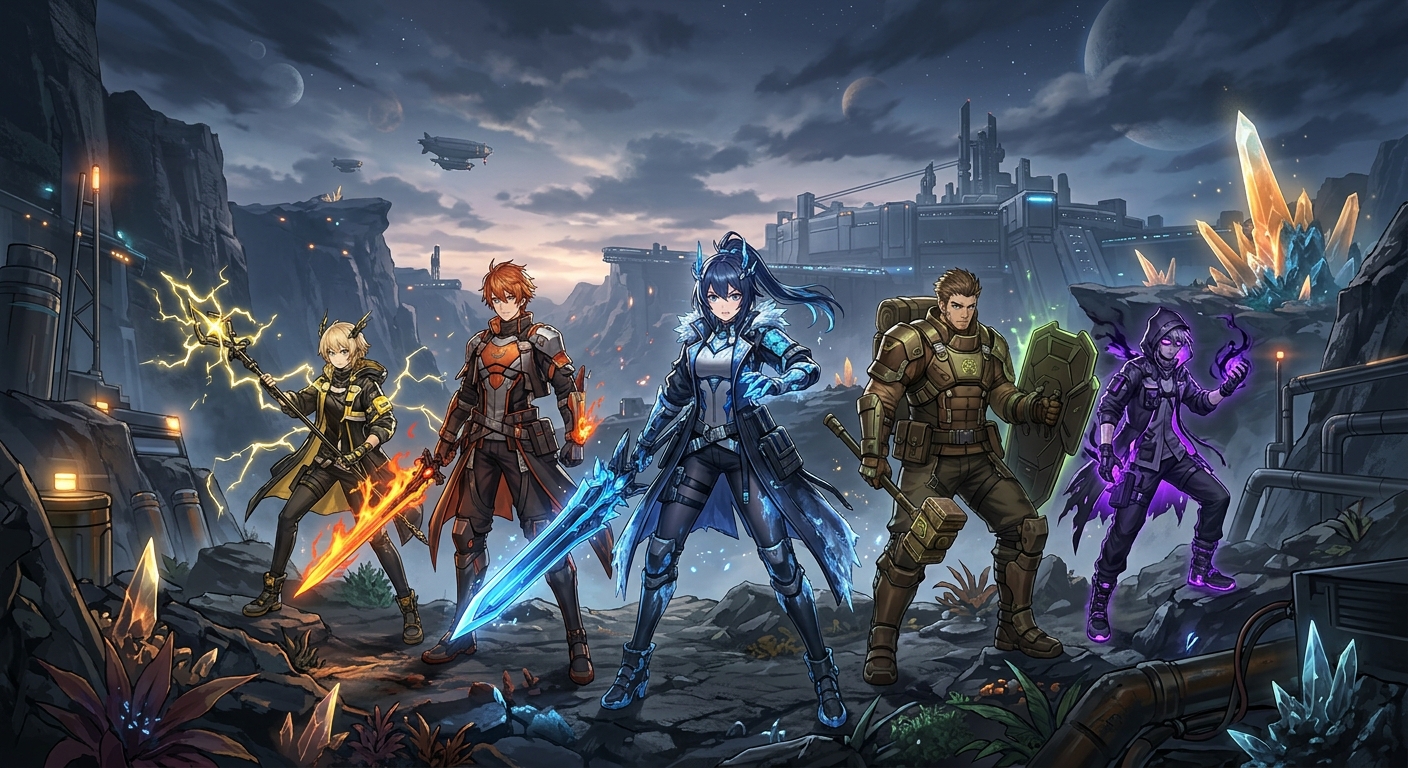
Arknights: Endfield turns the classic tower-defense formula into an action RPG, and that shift makes team building more important than ever. You are no longer placing units on static tiles; you are juggling cooldowns, combos, and positioning in real time. This guide walks you through how to build strong, flexible squads and gives example lineups for the major elements and playstyles.
Instead of memorizing a single “best team”, you will learn how to identify your key damage dealer, support them with the right elemental partners, and fill out the party with sustain and utility so that almost any stage becomes manageable.
Understanding Team Building in Arknights: Endfield
Most early mistakes in Endfield come from treating teams as random collections of favorite characters. In reality, every strong squad follows a few simple principles:
- Define a primary damage dealer (carry) and build around their element and combo needs.
- Ensure consistent sustain via healing, shields, or mitigation.
- Cover crowd control and mobility so you can handle waves and bosses.
- Align elemental synergies instead of mixing random damage types.
Core Roles Every Squad Needs
Endfield gives you four party slots, and while some characters blend multiple jobs, a healthy team usually covers these roles:
- Primary DPS (Carry) – Your main source of damage and the centerpiece of the composition.
- Enabler / Amplifier – Characters who increase damage through debuffs, elemental exposure, or buffs.
- Sustain (Healer / Protector) – Keeps your team alive with healing, shields, or damage reduction.
- Controller / Flex – Adds crowd control, extra damage of another element, or utility like taunts and movement.
Some units can double up on these, so you might run a healer who also amplifies damage, or a DPS who contributes crowd control. The key is that your squad as a whole can hit all four functions.
Planning Around Elements and Combo Skills
Unlike the original Arknights, where physical vs Arts is often the main dichotomy, Endfield leans heavily into element-specific effects and combo interactions. Building around elements turns your team from a loose group into a synergy engine.
How Element Synergy Works
While each character has unique mechanics, most elements share broad themes:
| Element | General Strengths | Common Team Identity |
|---|---|---|
| Heat / Fire | DoT, ramping damage, stacking debuffs | High sustained DPS with burn effects and amp support |
| Physical | Reliable raw damage, good vs low-resist enemies | Frontline bruisers and brawlers with stable output |
| Electric / Volt | Chain damage, burst, and multi-target hits | AoE clearing and combo bursts, punishing grouped foes |
| Arts / Ether | Magic-like damage, strong against armor | Def-bypassing DPS and defensive tools like barriers |
Most effective teams lean heavily into one primary element, then add either a complementary second element or neutral utility. This keeps your combo activations and debuffs consistent.
Combo Skills: The Heart of Team Synergy
Combo skills are cooperative attacks or effects that trigger when specific conditions are met. They might require a status to be active (like Heat stacks or electric charge) or need a sequence of abilities from multiple characters.
To make combos reliable:
- Check each operator’s combo conditions in their skill descriptions.
- Order skills correctly: for example, apply a debuff first, then consume it with another character.
- Balance generators and consumers: avoid lineups where everyone needs stacks but no one builds them.
- Focus on 1–2 primary combo loops you can consistently perform in battle.
Practically, an optimized team feels like a rhythm game: you rotate abilities so that each combo chain comes online as soon as it is off cooldown.
Heat-Based Teams: Fire Up Your Main Carry
Heat teams are some of the most straightforward and powerful lineups for early and mid-game content. They revolve around a Heat carry who stacks burning effects and a team designed to keep those stacks going as long as possible.
Why Heat Teams Work
- Ramping Damage – Many Heat skills become more threatening over time as stacks accumulate.
- Synergy with Debuffs – Allies that lower enemy resistance or apply vulnerability multiply your output.
- Flexible Positioning – A lot of Heat DPS operates comfortably from mid-range, making it easier to avoid damage.
Typical Heat Team Structure
A solid Heat lineup can look like this:
- Heat Carry: Your main source of single-target or small AoE damage.
- Heat Enabler: A unit that increases Combustion stacks, provides SP/energy, or refreshes Heat-based debuffs.
- Arts / Vulnerability Support: Someone who increases Arts or Heat susceptibility, or amplifies damage taken.
- Healer or Defensive Utility: Ensures your squishy fire users can stay in range safely.
Example Heat Team Gameplan
In a Heat comp, your general rotation might follow this pattern:
- Open with your enabler’s skill to apply initial Heat or resistance shred.
- Use your carry to start stacking Combustion on priority targets.
- Trigger your amplifier’s ability to increase damage taken once multiple stacks are present.
- Layer defensive or healing skills when the carry has to stay in harm’s way to keep stacks going.
- Repeat, timing burst windows around enemy telegraphed attacks or phase transitions.
This style rewards proactive planning: you want major Heat stacks ready before an elite enemy or boss commits to a dangerous ability.
Physical Brawler Teams: Frontline Powerhouses
Physical-based squads focus on raw hits, reliable damage, and durability. They are especially effective in stages where enemies have low physical defense or when you need a character who can hold the front line without constant micromanagement.
Strengths of Physical Compositions
- Consistency – They rarely rely on ramp-up or upkeep.
- Tanking and Bruising – Many physical DPS can function as off-tanks or even main tanks.
- Beginner-Friendly – Straightforward mechanics make them easier to pilot.
Building a Physical Team
A typical physical bruiser lineup might include:
- Frontline DPS / Tank: The unit that anchors your team, often with mitigation or self-sustain.
- Secondary DPS with Crowd Control: Adds stuns, knock-ups, or slows to control enemy waves.
- Support or Debuffer: Provides attack buffs, defense debuffs, or armor-breaking effects.
- Dedicated Healer or Hybrid Sustain: Keeps the frontline alive when mitigation alone is insufficient.
When to Prefer Physical Over Heat or Electric
Choose a physical-focused team when:
- Enemies have low armor or are not heavily resistant to physical damage.
- You expect prolonged brawls rather than quick burst phases.
- You want a stable line that does not collapse if you miss a single combo.
Physical teams may struggle against extremely tanky foes with high defense; in those cases, you will want at least one Arts-leaning or debuff-heavy unit in the party.
Electric Burst Teams: Chain Lightning and Crowd Control
Electric compositions focus on chaining damage between enemies, stacking charges, and detonating them for large bursts. These teams feel explosive when they are set up correctly, especially in stages with tightly packed mobs.
Why Electric Teams Shine
- AoE Clear Speed – Perfect for wave-heavy stages and farming.
- Combo-Friendly – Many Electric operators rely on consuming charged states, which interact beautifully with combo systems.
- Stun and Disruption – Electric skills often carry stuns or brief interrupts.
Sample Electric Team Blueprint
When planning an Electric team, you generally want:
- Electric Carry: Specializes in chain attacks or detonating charges.
- Charge Generator: A partner who continually applies the Electric status or builds the resource your carry consumes.
- Control Specialist: Offers stuns, slows, or grouping tools so enemies stay within AoE range.
- Defensive or Healing Support: Helps the team survive while they wait for big cooldowns to come up.
Rotations and Positioning for Electric Teams
Electric lineups are more sensitive to positioning than some other elements. For best results:
- Group enemies using terrain chokepoints or crowd control.
- Apply Electric or a related status over the whole group.
- Trigger your carry’s burst skill to detonate charges across all affected targets.
- Use defensive skills immediately after big bursts to cover cooldown downtime.
This playstyle is high-risk, high-reward: you can erase waves quickly, but mishandling cooldowns may leave you vulnerable.
Mixed Element and General-Purpose Squads
Not every stage is best cleared by leaning fully into a single element. Some content features a mix of enemy types, armor profiles, and resistances that reward flexible, mixed-element squads.
Advantages of Hybrid Teams
- Coverage of Weaknesses – Physical for low-resist enemies, Arts or Heat for armored targets.
- Safety Net for Unknown Stages – Good when you do not know what you are walking into.
- Redundancy – If your Heat carry dies, you still have another element that can finish the job.
How to Balance a Hybrid Squad
A well-rounded general-purpose team often looks like:
- Main Carry (Any Element) – Choose your best-built operator.
- Secondary DPS of a Different Damage Type – Covers stages where the main element is inefficient.
- Dedicated Sustain – A reliable healer or protector that works with any element.
- Amplifier / Utility – Someone who brings debuffs, crowd control, or universal buffs.
In these lineups, your goal is not to maximize a single combo loop but to maintain adaptability. You will use different skill rotations depending on the enemies you face.
Early Game vs Late Game Team Priorities
Your priorities for team building change as you progress. Early on, you are limited by what characters you own and how much you can invest in them. Later, you can start refining highly specialized squads.
Early Game Focus
At the start, concentrate on:
- One main carry – Pour resources into the DPS you like most and have good access to.
- One reliable healer or protector – Progress stalls quickly without sustain.
- Basic synergy – It is enough to match elements for a simple combo; do not chase perfection.
- Survivability over style – Slightly slower clears are fine; wipes are not.
Mid to Late Game Focus
As your roster grows and you farm more materials, you can:
- Build multiple specialized teams – Heat, Physical, Electric, and mixed comps for different stages.
- Optimize combo sequences – Choose units specifically because their skills fit together.
- Raise amplifiers and niche supports – They may feel weak alone but are crucial in perfect teams.
- Swap operators by stage – Adapt lineups to armor types, enemy behaviors, and mechanics.
Sample Team Templates
The following templates are not strict prescriptions but frameworks you can adapt to your own roster. Replace the generic role names with operators that fit that role in your account.
Template 1: Heat Pressure Team
- Slot 1 – Heat Carry: Focus your best gear and levels here.
- Slot 2 – Combustion Support: Increases Heat stacks or speeds up rotations.
- Slot 3 – Arts Amplifier / Debuffer: Reduces enemy resistances or raises damage taken.
- Slot 4 – Healer / Shield Provider: Keeps the backline safe.
Gameplan: Maintain Heat stacks on key targets and time debuffs with your carry’s big skills. Use your sustain character to stabilize during boss mechanics or when mobs slip through.
Template 2: Physical Bruiser Line
- Slot 1 – Frontline Bruiser: Holds enemies in place and deals steady damage.
- Slot 2 – Aggressive Melee DPS: Assassination or burst against priority foes.
- Slot 3 – Tactical Support: Provides attack buffs, mitigation, or debuffs.
- Slot 4 – Healer: Your safety valve for difficult encounters.
Gameplan: Position the bruiser where enemy waves converge, rotate mitigation skills, and let the second DPS handle dangerous targets like casters or elites.
Template 3: Electric Control Squad
- Slot 1 – Electric Burst DPS: Chain damage and detonations.
- Slot 2 – Charge Generator / Off-DPS: Maintains Electric states on enemies.
- Slot 3 – Crowd Control Specialist: Gathers or stuns enemies for perfect bursts.
- Slot 4 – Defensive Support: Shields or heals the team after big bursts.
Gameplan: Cluster enemies using CC and terrain, apply Electric status, then trigger destructive bursts. Ride out cooldowns while your defender keeps the team intact.
Frequently Asked Questions (FAQ)
Do I need to follow meta teams to clear content?
No. Understanding roles and elements matters more than copying exact lineups. If you maintain a clear carry, sustain, and at least one synergy partner, many different rosters can clear the same stages. Official developer notes for Arknights: Endfield emphasize team experimentation and varied strategies rather than a single dominant meta.
Is it better to invest in many characters or a few?
In the early game, it is far more efficient to invest heavily into a small core group of 4–6 operators. As you approach later content, start raising additional units that fill missing roles, add new elements, or enable specialized compositions. This mirrors the progression advice often given by gacha RPG developers in their official beginner guides.
How do I know which element to focus on first?
Look at your strongest operators and choose an element where you already have a natural carry. If your best unit is a Heat DPS, start with a Heat team; if it is a sturdy physical bruiser, build around physical. This “follow your roster” approach allows you to progress more smoothly instead of forcing a comp around underleveled characters.
When should I switch teams for a stage?
Change teams when you notice clear resistance issues (e.g., your physical hits feel like they are bouncing off), repeated wipes from specific mechanics, or if enemies are spread out in a way that counters your current comp (for instance, Electric teams suffering against scattered high-HP elites). Swapping in even one operator who counters the stage’s main problem can dramatically increase your success rate.
Are hybrid teams viable in endgame content?
Yes, hybrid teams are viable as long as they maintain clear roles and deliberate synergy. Many late-game encounters in RPGs with elemental systems are designed so that relying purely on one damage type is risky; having a secondary element or a strong neutral support can prevent runs from failing when enemies resist your main damage plan.
References
- About Hypergryph — Hypergryph. 2024-03-01. https://www.hypergryph.com
- Arknights: Endfield Official Site — Gryphline. 2024-04-15. https://akendfield.gryphline.com
- Game User Interface Design: Lessons from the Industry — Carnegie Mellon University, ETC Press. 2022-10-10. https://press.etc.cmu.edu/index.php/product/game-user-interface-design
- Balancing Multiplayer Games — GDC (Game Developers Conference). 2023-07-20. https://www.gdconf.com/news/how-balance-multiplayer-games
- Effects of Team Composition in Multiplayer Games — ACM Digital Library. 2021-11-05. https://dl.acm.org/doi/10.1145/3472538.3472564
Similar Articles



Read full bio of medha deb