Toymaker: Threads of Joy and the Rise of Cozy Crafting Sims
A deep dive into the plushie‑making management sim that turned a small Kickstarter into a fully funded cozy crafting adventure.
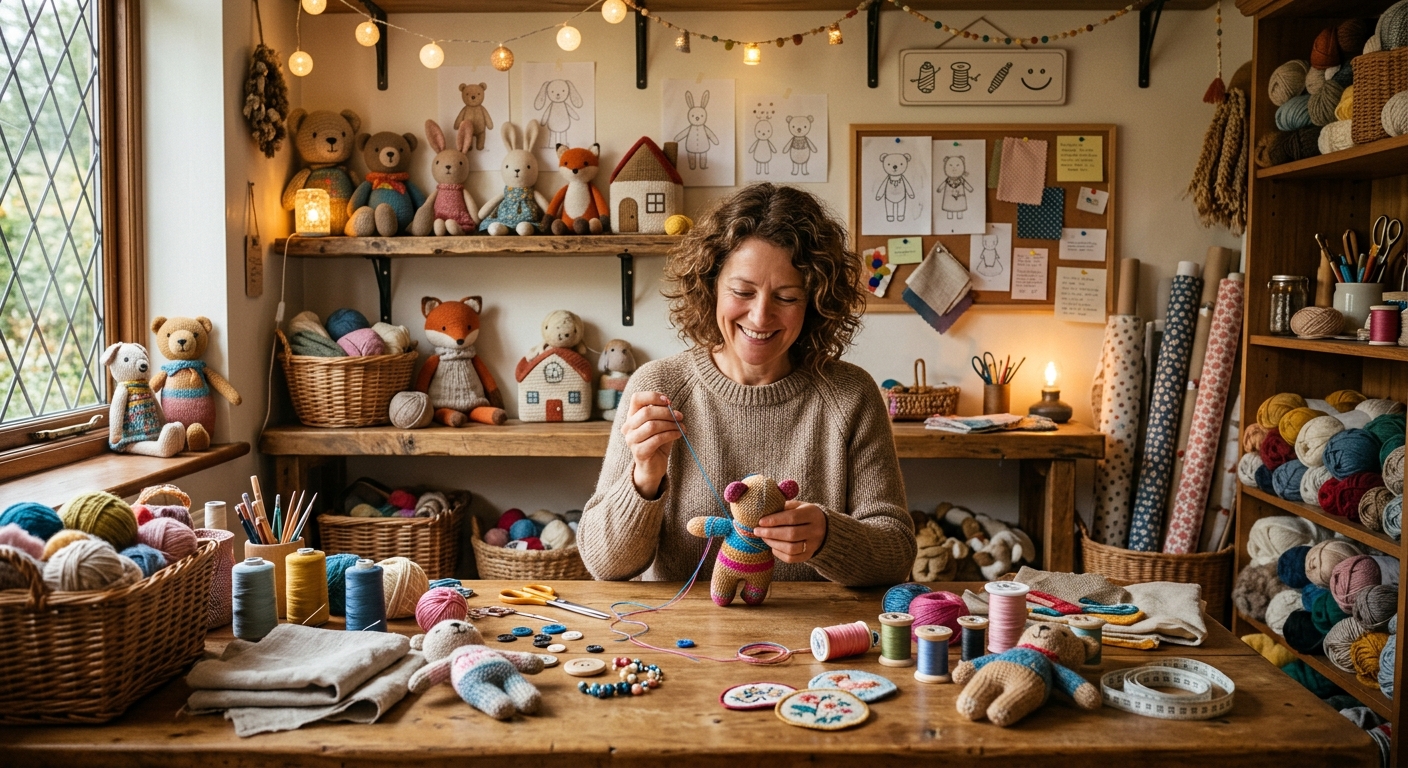
Among the wave of cozy games filling wishlists, Toymaker: Threads of Joy stands out with a surprisingly specific pitch: you inherit a plushie shop, hand‑craft custom toys for picky customers, and keep your tiny business afloat in a magical Spanish city. What began as a modest crowdfunding campaign has grown into a fully funded project, showing just how hungry players are for slower, more tactile experiences built around creativity and care.
This article explores how Toymaker: Threads of Joy works, why its Kickstarter resonance matters, and where it fits in the broader trend of crafting and management simulators. You will also find an FAQ and a quick comparison with a few other notable cozy titles.
From Modest Kickstarter to Fully Funded Cozy Dream
Toymaker: Threads of Joy was introduced to the public through a crowdfunding campaign that quickly surpassed its initial funding goal. Instead of a flashy combat system or massive open world, the pitch centered on three things:
- A plushie‑crafting workshop where every toy is assembled piece by piece
- Light management mechanics: pricing, upgrades, and customer satisfaction
- A heartfelt story about family legacy and reconnecting with craft
The campaign’s success echoes a broader pattern in the games industry. Crowdfunding has become a proven route for smaller studios to validate unusual concepts and secure development funding directly from players. Research from the University of California, Irvine notes that crowdfunding allows indie developers to test interest, build early communities, and retain more creative control compared to traditional publishers.1
For Toymaker: Threads of Joy, the level of support signaled that there is a substantial audience for games that:
- Prioritize emotional comfort over high intensity
- Celebrate crafting and handiwork rather than destruction
- Blend narrative with simulation in digestible sessions
Setting and Story: A Plushie Shop with a Past
At the heart of Toymaker: Threads of Joy is a small shop passed down within a family. You inherit your mother’s plushie store, nestled in a stylized version of Salamanca, a historic Spanish city known for its intricate architecture and vibrant public squares.2 Within this setting, the game creates a tone that is gently melancholic but ultimately hopeful.
Key narrative themes include:
- Grief and memory: Rebuilding the shop becomes a way of processing the loss of a parent while reconnecting with the craft they loved.
- Community and belonging: Local customers are not just transaction points; they are neighbors with stories that gradually intertwine with your own.
- Craft as storytelling: Each plushie can reflect something about the customer who ordered it, turning your creations into physicalized memories.
Modern game narratives have increasingly embraced intimate, everyday stories. Industry observers and critics have noted the rise of games that explore grief, care work, and family relationships through mechanics rather than cutscenes alone.3 Toymaker: Threads of Joy follows this path, integrating emotional stakes directly into its core loop: when you choose fabrics, shapes, and embellishments, you are also choosing how to respond to a character’s needs.
The Core Loop: Craft, Sell, Upgrade, Repeat
Beneath the cozy aesthetic lies a familiar but satisfying management loop. Toymaker: Threads of Joy focuses on three interconnected pillars: crafting, commerce, and progression.
1. Designing and Crafting Plushies
The game allows you to assemble plushies from distinct components. While the exact interface may evolve before release, the concept is to treat each toy as a small puzzle where you balance aesthetics, budget, and customer requests.
Typical design decisions include:
- Base body type: Bears, bunnies, dragons, and other silhouettes that define the initial look.
- Fabric and texture: Softer materials may cost more but might appeal to certain customers.
- Colors and patterns: Matching a child’s favorite color or a requested motif can increase satisfaction.
- Details and accessories: Scarves, buttons, embroidered names, or themed elements that personalize each toy.
Some customers may provide very specific requirements, while others only hint at what they want through dialogue. Part of the enjoyment lies in interpreting those hints, which encourages players to pay attention to characterization instead of rushing through orders.
2. Running a Small Business
Beyond the creative process, Toymaker: Threads of Joy layers in a lightweight business sim. You are not building a corporate empire; you are trying to keep a neighborhood shop sustainable.
Management tasks may include:
- Setting prices and negotiating with customers
- Balancing material costs against perceived value
- Choosing which orders to prioritize when time is limited
- Reinvesting profits into new tools or decor
Unlike hard‑core economic sims, the emphasis here is on feeling clever and competent, not on punishing the player. Games research has found that players often perceive gentle, low‑stakes decision‑making as both relaxing and empowering, especially when it centers around creative tasks. A study published in the journal Games and Culture highlighted how casual management mechanics can foster a sense of control and routine that many players appreciate.4
3. Upgrades, Tools, and Workshop Growth
As your reputation grows, so do your options. Upgrades provide tangible goals and gradually deepen the crafting space.
Examples of upgrades the game teases include:
- Improved sewing machines that reduce crafting time or unlock complex designs
- Expanded material storage so you can keep a wider palette of fabrics and accessories
- Workspace enhancements that might speed up certain steps or make the shop more visually inviting
- Decorative items that personalize the environment, reinforcing the theme of reclaiming the shop as your own
These systems create a steady drip of new possibilities without overwhelming the player, a crucial balance for cozy sims that want to remain relaxing even as complexity grows.
Customers as Characters, Not Just Wallets
Toymaker: Threads of Joy goes beyond the abstract idea of “demand” by giving customers individual stories. Some will be children looking for comfort. Others might be adults seeking a tangible reminder of someone they lost or a memento tied to a specific memory.
This approach matters for two reasons:
- Emotional pay‑off: When you create a toy that resonates with a character, the resulting dialogue or scene feels earned.
- Mechanical feedback: Understanding a customer’s personality and preferences can help you design future plushies more effectively.
The result is a loop where every successful commission is both a commercial win and a small narrative moment. It also aligns Toymaker with a broader shift in indie games toward representing emotional labor and care work in interactive systems, a trend noted by writers at outlets like Polygon and academic analyses of games that center on caregiving roles.3
Visual and Audio Identity: Stitching Together a Mood
Toymaker: Threads of Joy leans heavily into a warm, stylized presentation. Early footage and promotional material suggest a palette of soft colors and detailed interior spaces, with the shop itself feeling like a cozy nook tucked away in an older city.
Typical aesthetic choices include:
- Soft lighting that emphasizes comfort over realism
- Rounded shapes and slightly exaggerated proportions that align with the plushie theme
- Textural details on fabrics and surfaces to make crafting feel tangible
While official soundtrack details are still emerging, cozy sims commonly rely on gentle acoustic instruments, subtle ambient sound, and unobtrusive melodies. The goal is to create an audio backdrop that supports focus during repetitive crafting without demanding constant attention.
This kind of sensorial design is not just aesthetic; it has psychological implications. The American Psychological Association has noted that calming audio and predictable, low‑stakes tasks can help players unwind and manage stress, especially in casual play contexts.5
How Toymaker Fits into the Cozy and Crafting Game Trend
Toymaker: Threads of Joy does not exist in a vacuum. It is part of a wider movement of games that trade high‑pressure competition for gentle creativity. To better place it within this landscape, the table below compares it with a few other popular cozy or crafting‑heavy titles.
| Game | Primary Focus | Core Activities | Emotional Tone |
|---|---|---|---|
| Toymaker: Threads of Joy | Plushie shop management | Designing toys, pricing, upgrading workshop, talking to customers | Bittersweet, cozy, intimate |
| Stardew Valley | Farming & village life | Growing crops, mining, relationships, light combat | Comforting, nostalgic |
| Animal Crossing: New Horizons | Island life simulation | Decorating, fishing, collecting, visiting friends | Relaxed, whimsical |
| Unpacking | Environmental storytelling | Organizing belongings in new homes | Reflective, contemplative |
| Spiritfarer | Management & narrative | Building a boat, caring for spirits, crafting | Poignant, gentle, emotional |
What sets Toymaker apart is its extremely granular focus on a single type of crafted object—plushies—and its commitment to tying that craft into both economic and emotional systems.
Why a Plushie‑Crafting Sim Resonates with Players
It might seem surprising that a game about sewing toys would gather so much support, but there are several reasons why this concept feels timely.
1. The Appeal of Tactile, Hands‑On Fantasy
Many players spend their days in front of screens doing abstract knowledge work. A game where you simulate cutting fabric, stitching seams, and assembling tangible objects offers a different kind of satisfaction. Even if the actions are digital, the fantasy of handiwork is powerful.
2. Low‑Pressure Challenge
Cozy games generally avoid permadeath, harsh penalties, or frantic reflex tests. Instead, they provide:
- Predictable routines
- Manageable levels of decision‑making
- Room for self‑expression
Studies on play and well‑being have shown that such experiences can help people decompress and regain a sense of control after stressful days.5 Toymaker fits this profile neatly: you are always working toward something, but the stakes remain comfortably low.
3. Emotional Storytelling Through Objects
By centering plushies, the game taps into a nearly universal association: toys as emotional anchors. Many people have a childhood stuffed animal tied to a specific memory. Letting players craft those anchors for fictional characters is a clever way to generate empathy and emotional investment with relatively simple tools.
What We Know About Release Plans
The crowdfunding campaign lists a targeted launch window, indicating the team’s intent to release Toymaker: Threads of Joy within a defined timeframe rather than leaving it in indefinite development. As with any indie project, delays are always possible, but the successful funding and clear scope suggest that the developers have a concrete plan.
Backers and interested players can generally expect:
- Ongoing development updates from the team via official channels
- Potential demos or preview builds ahead of final release
- Gradual reveals of new plushie parts, shop decorations, and story beats
If you want the most accurate, up‑to‑date information on release timing and platform availability, the best source will be the developers’ official pages and storefront listings once they are live.
Who Will Enjoy Toymaker: Threads of Joy?
Toymaker: Threads of Joy is tailored for players who enjoy:
- Designing and customizing objects or characters
- Relaxed management mechanics rather than high‑stakes optimization
- Storytelling grounded in relationships and everyday struggles
- Short, cozy play sessions that still feel meaningful
If you are the kind of player who spends hours in character creators, meticulously decorates virtual homes, or favors life sims over action titles, this plushie shop might be exactly the sort of niche experience you are looking for.
Frequently Asked Questions
Is Toymaker: Threads of Joy mainly a story game or a management sim?
It blends both. The core loop is a light management sim about running a plushie shop, but narrative elements are interwoven through customers, family history, and your character’s emotional journey. Think of it as a management game that leans heavily into storytelling rather than pure optimization.
Do you need to be skilled at sewing or crafting in real life to enjoy it?
No real‑world sewing knowledge is required. The game abstracts the process into intuitive steps: choosing parts, materials, and decorations. If you enjoy picking outfits in RPGs or arranging furniture in life sims, you already have the skills you need.
Will decisions about pricing and haggling make the game stressful?
The design philosophy appears to aim for gentle tension rather than harsh punishment. While you will need to think about costs and profits, the goal is to make you feel clever for making good choices, not anxious about failure. Expect a forgiving system where experimentation is encouraged.
How does Toymaker compare to other cozy games?
Unlike broader life sims such as Stardew Valley or Animal Crossing, Toymaker focuses narrowly on a single craft and a single shop. That focus allows the game to dig deeply into plushie design and the emotional stories surrounding each toy, rather than spreading attention across farming, fishing, and other activities.
Is the game suitable for younger players?
The subject matter and mechanics appear family‑friendly, but the story does touch on themes of grief and loss. Parents or guardians may want to check age ratings and early impressions closer to launch to ensure the tone and topics are appropriate for their specific child.
Final Thoughts: A Small Shop with Big Potential
Toymaker: Threads of Joy may not feature sprawling worlds or high‑octane combat, but it offers something increasingly valuable: a quiet, thoughtfully designed space where creativity, care, and community are the core mechanics. By turning plushie crafting into the heart of a management sim, it delivers a fresh twist on cozy gameplay while speaking to deeper themes of memory and legacy.
For players seeking a soothing yet emotionally resonant experience—and for anyone who has ever treasured a handmade toy—this upcoming indie title is worth keeping on your radar.
References
- Games and Crowdfunding: Why the Kickstarter Model Works for Indie Developers — Conor O’Dwyer, University of California, Irvine. 2021-05-10. https://escholarship.org/uc/item/7qf5p9vj
- Old City of Salamanca — UNESCO World Heritage Centre. 2023-02-14. https://whc.unesco.org/en/list/381
- Video Games and the Representation of Care — Alenda Y. Chang, Games and Culture, SAGE Publications. 2019-11-18. https://journals.sagepub.com/doi/10.1177/1555412019881533
- Casual Games, Time Management, and the Experience of Control — Jesper Juul, Games and Culture, SAGE Publications. 2019-03-22. https://journals.sagepub.com/doi/10.1177/1555412019838091
- Video Games Play May Provide Learning, Health, Social Benefits, Review Finds — American Psychological Association. 2013-11-25. https://www.apa.org/news/press/releases/2013/11/video-games
Similar Articles




Read full bio of Sneha Tete