Why Crimson Desert Players Can’t Stand Yann
A look at the character who has become an instant lightning rod in Crimson Desert discussions.
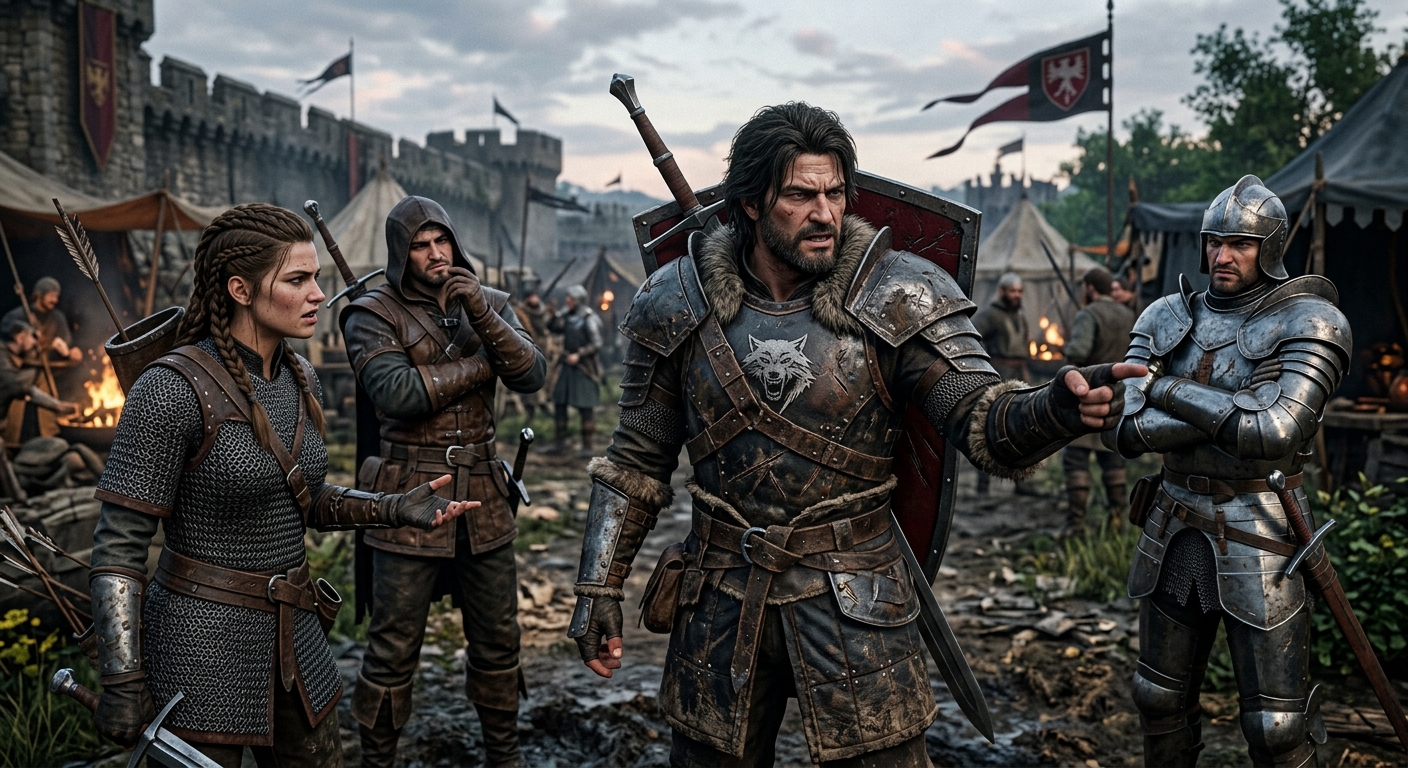
Every big game seems to produce at least one character who becomes the center of a strange kind of community agreement: not admiration, not even healthy debate, but collective irritation. In Crimson Desert, that role appears to belong to Yann. Players keep talking about him not because he is noble, tragic, or especially charming, but because he seems engineered to get under everyone’s skin. Whether he is being blamed for poor choices, awkward behavior, or simply the way the story frames him, Yann has emerged as one of the most disliked figures in current discussion around the game.
That reaction is interesting because it says as much about the audience as it does about the character. Players do not only reject villains when they are written to be hated. Sometimes they turn against a character because he feels grating, obstructive, or emotionally unrewarding in a game that otherwise asks them to invest in its world. Yann fits neatly into that kind of backlash. He is not just unpopular; he has become a shared joke, a shorthand for frustration, and a sign that players are paying close attention to the story’s tone and character handling.
Why One Character Becomes the Community’s Target
In sprawling RPGs and open-world adventures, characters do more than move the plot forward. They help players understand the stakes, provide emotional anchors, and make a fictional world feel worth caring about. If a character fails at those jobs, the audience notices immediately. That appears to be what happened with Yann. Instead of inspiring sympathy or curiosity, he seems to trigger annoyance almost by default.
Part of the reason this kind of reaction spreads so quickly is that modern game communities are highly participatory. Players do not just absorb a story; they argue over it, meme it, dissect it, and compare experiences. When a character consistently irritates players, that sentiment can snowball into a cultural consensus. A single complaint becomes a dozen. A dozen become a chorus. Before long, the character’s name carries an emotional charge far beyond what any one scene can explain.
- Players tend to dislike characters who slow the story down.
- They react strongly to personalities that feel smug, evasive, or unearned.
- They lose patience when the game asks them to care without giving enough reason.
- Repeated exposure to a frustrating character can turn annoyance into a fandom-wide meme.
Yann’s Problem Is Bigger Than Personality
A character does not have to be likable to be effective. Plenty of memorable antagonists are rude, manipulative, or morally rotten. The issue is that a character still needs purpose. He must justify the space he occupies in the story. When players complain about Yann, they are not necessarily rejecting the idea of a difficult or flawed figure. They are objecting to the sense that he is difficult in a way that does not feel dramatically rewarding.
That distinction matters. Some characters are designed to be hated because the story wants tension. Others are intended as tragic figures whose behavior is painful but comprehensible. Yann seems to land in a less flattering zone: he inspires irritation without clearly earning either fear or pity. When a game frames someone as important, but players do not feel the character has done enough to merit that status, resentment is the predictable result.
This also affects how the broader cast is perceived. If one central figure feels draining, then scenes around him can start to look weaker, even if the writing elsewhere is stronger. Players may begin treating him as a narrative burden rather than a dramatic asset, and that shift can shape how they remember the entire arc.
The Role of Friction in Player Response
Friction is not always a bad thing in storytelling. In fact, it can be essential. A game that aims to create tension, tragedy, or emotional complexity needs some characters who make the audience uncomfortable. But friction has to be meaningful. It must reveal something, complicate something, or challenge the player in a way that feels intentional.
Yann seems to provoke a different kind of friction: the sort that makes players feel like they are waiting for the story to move past him. That is a dangerous position for any character to occupy. If the audience begins treating a figure as an obstacle rather than a contributor, the narrative loses momentum. Even a large-scale fantasy world can start feeling oddly small if one personality dominates the conversation for all the wrong reasons.
In practical terms, this means players are not just reacting to dialogue or plot beats. They are reacting to pacing, expectation, and payoff. A character who shows up often, matters a great deal, and still fails to deliver emotional value can become far more aggravating than a traditional villain.
What Makes the Reaction So Strong
There is a difference between mild annoyance and genuine community hostility. Yann has crossed that line for a lot of players because he seems to represent a larger frustration with how certain stories ask audiences to care. If a game wants a player to invest emotionally, that investment usually has to be earned through action, vulnerability, or compelling conflict. When that does not happen, audiences may interpret the character as pretentious, tedious, or simply overprotected by the script.
Another reason the reaction is so intense is that players often form strong attachments to the world’s heroes, companions, and side characters. When one figure disrupts that balance, the contrast becomes even sharper. A character who is merely mediocre in isolation can become unbearable if he keeps interrupting the parts of the game people actually enjoy.
Yann’s notoriety may also be fueled by the way players discuss him together. Internet communities reward bluntness and exaggeration. Once someone calls a character a disaster, others often find that wording irresistible. The result is a feedback loop in which irritation becomes entertainment.
Why Dislike Can Still Be a Sign of Success
It is easy to assume a hated character means failed writing. That is not always true. Sometimes the best response a fictional person can provoke is strong feeling, and strong feeling is better than indifference. If players are still talking about Yann, that means he has made an impression. The question is whether that impression serves the story or overshadows it.
From a design perspective, characters like this can function as pressure points. They force players to ask what kind of story they are actually being told. Are they meant to admire the character? Tolerate him? Pity him? Condemn him? If the answer is unclear, then the audience may build its own answer by sheer force of reaction.
That may be the hidden lesson here. A character can be memorable for the wrong reasons and still reveal something important about how players engage with narratives. Yann’s presence tells us that fans are sensitive not just to events, but to emotional fairness. They want reasons to invest, and they can sense very quickly when a story is not giving them enough.
Common Reasons Players Turn Against Characters Like Yann
| Player complaint | What it usually means |
|---|---|
| “He’s unbearable.” | The character feels smug, irritating, or emotionally one-note. |
| “Why is the game forcing this?” | The audience does not believe the character has earned his importance. |
| “I just want him gone.” | The character is obstructing pacing rather than enriching it. |
| “Nobody acts like this in a believable way.” | The behavior feels artificial or badly calibrated for the story’s tone. |
How Games Turn Irritation Into Conversation
One reason characters like Yann matter is that they spark conversation beyond the game itself. Players trade opinions, compare interpretations, and develop shared language around the character. That conversation can be surprisingly useful. It shows where a game has succeeded in making people care, even if the feeling is negative. It also highlights the gap between what a writer may intend and what the audience actually experiences.
In a modern release cycle, this kind of discussion can shape first impressions quickly. If a character becomes a lightning rod early on, new players often arrive already primed to dislike him. That can affect how they read every later scene. A neutral moment may be taken as evidence of arrogance. A dramatic beat may be dismissed as more Yann nonsense. The character acquires a reputation that follows him wherever he goes.
For some players, that reputation is part of the fun. They enjoy having a common target. For others, it creates a real barrier to immersion. Either way, the character becomes unforgettable.
What This Says About Crimson Desert’s Story Ambitions
The reaction to Yann also hints that Crimson Desert is aiming for more than straightforward heroics. Games do not create this sort of debate unless they are trying to build emotionally messy relationships, morally complicated motives, or a story that lives in the gray area between loyalty and resentment. That ambition is worth noting, even if the execution has not landed for everyone.
A world with no friction would be forgettable. But a world with too much friction, especially if concentrated in one character, can feel exhausting. The challenge is balance. The story needs enough tension to feel alive, but enough clarity to keep players invested. Yann appears to be testing that balance in a way that many players find deeply unsatisfying.
Whether he becomes a lasting problem or simply an early source of irritation will depend on how the final game develops him. Some characters start as unbearable and later reveal unexpected depth. Others remain exactly what they seemed to be from the beginning. For now, though, the conversation is clear: Yann has become the person many players love to hate.
Final Thoughts
Characters do not need universal admiration to matter. Sometimes they matter most when they divide opinion sharply and consistently. Yann has clearly achieved that kind of recognition in Crimson Desert, though not in the flattering sense. He has become a symbol of frustration, a test of patience, and a reminder that players pay close attention to how a story earns their emotions.
If the game ultimately uses him to deepen the narrative, his current reputation may soften. If not, he may remain the face of a broader complaint about pacing, writing, and emotional payoff. Either way, one thing is certain: players know exactly who Yann is, and they are not pretending to like him.
FAQs
Why are players talking so much about Yann?
Because he has become a focal point for irritation. Players see him as a character who draws attention without offering enough payoff in return.
Does disliking Yann mean the writing is bad?
Not automatically. A disliked character can still be effective if the story uses that reaction well. The issue is whether the frustration feels intentional or accidental.
Is Yann a villain?
He may function as a source of conflict, but player reaction suggests the real problem is less about villainy and more about how he is written and positioned in the story.
Can a hated character improve a game?
Yes, if the hatred creates tension that pays off later. If the character remains annoying without adding depth, however, the effect is usually negative.
References
- Crimson Desert: 10 Things Players HATE — YouTube. n.d.. https://www.youtube.com/watch?v=oOWlyl4xoEo
- Yann – Crimson Desert Wiki — Fandom. n.d.. https://crimsondesert.fandom.com/wiki/Yann
- HOT TAKE: Yann is insufferable – Crimson Desert — Steam Community. n.d.. https://steamcommunity.com/app/3321460/discussions/0/805721739935983086/
Similar Articles



Read full bio of medha deb