Why The Last of Us Online Was Canceled at 80% Complete
Inside Naughty Dog’s difficult decision to axe a nearly finished multiplayer spin-off and back Intergalactic: The Heretic Prophet instead.
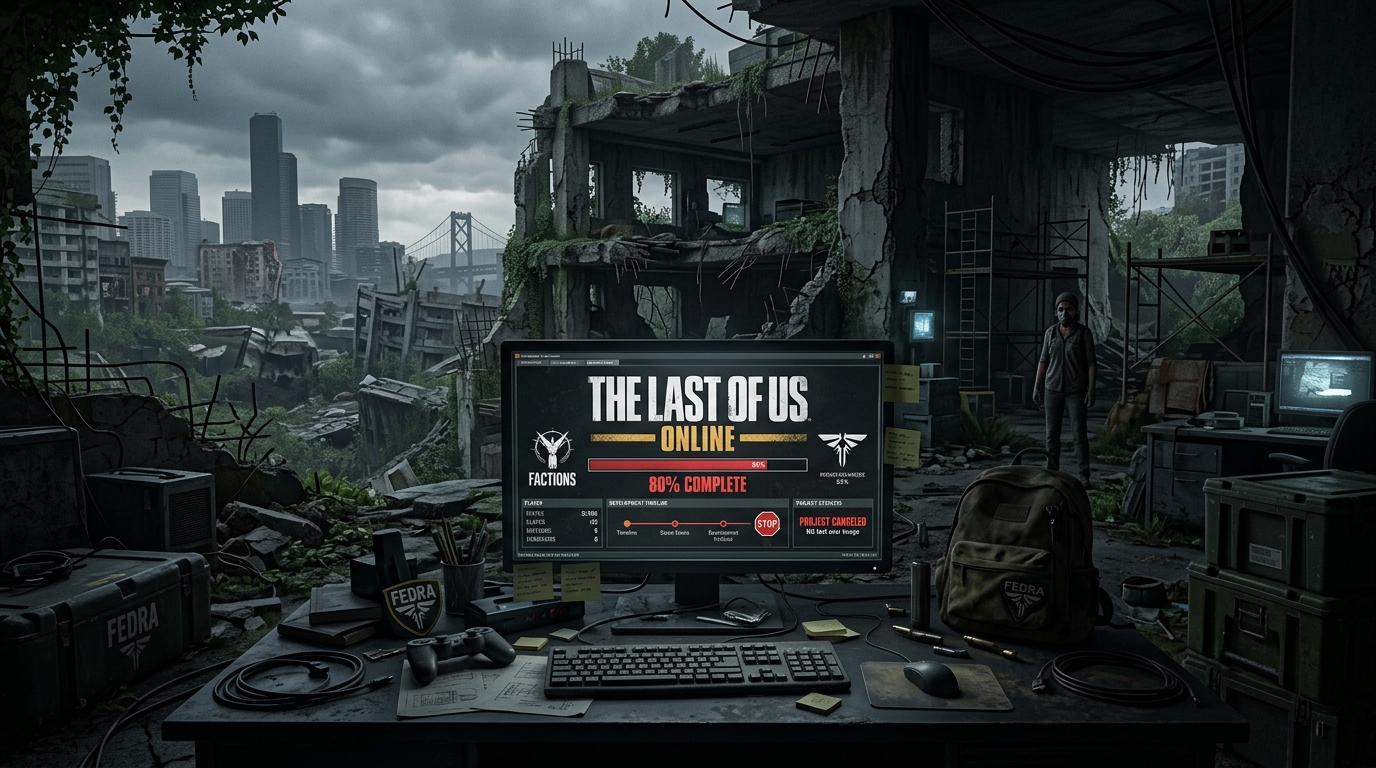
The story of The Last of Us Online is one of the most striking examples of how quickly priorities can shift in modern game development. After roughly seven years of work and reportedly reaching around 80% completion, Naughty Dog pulled the plug on its ambitious multiplayer spin‑off in late 2023, choosing instead to double down on story‑driven single‑player games and back a new project, Intergalactic: The Heretic Prophet.
Using reporting, official statements, and recent interviews as a foundation, this article explores how the project came together, why it was canceled so late in development, and what this means for live service games, Sony’s strategy, and the future of The Last of Us franchise.
From Factions Follow‑Up to Full Live Service Ambition
Multiplayer has been part of The Last of Us DNA since the original game launched with its Factions mode. Fans expected a similar (or expanded) offering for The Last of Us Part II, but Naughty Dog announced in 2019 that its multiplayer ambitions had grown beyond a traditional side mode.
Over time, this expanded concept evolved into what became widely known as The Last of Us Online, envisioned not as an add‑on but as a standalone online game anchored in the same bleak world as the single‑player series.
Seven Years of Iteration
According to the project’s former director, Vinit Agarwal, the multiplayer game had been in development for about seven years when it was canceled. That timeline likely includes:
- Early prototyping of new multiplayer concepts built on lessons from the original Factions.
- Reframing the project from a bundled mode into a full standalone product.
- Multiple design iterations as Sony’s live service strategy evolved.
In a 2026 interview, Agarwal described the game as roughly 80% complete by the time Naughty Dog scrapped it, and suggested the team was happy with the direction and quality of what they had assembled.
What Kind of Game Was The Last of Us Online?
Naughty Dog never released a full public demo or gameplay presentation, but comments from the studio and external reporting point toward a live service shooter with narrative elements. It appears the game aimed to fuse:
- Tense, grounded combat inspired by The Last of Us.
- Progression systems and ongoing updates typical of live service titles.
- Story hooks and world‑building that could coexist with the main series.
This approach fit squarely into Sony’s wider push for live service games as part of its PlayStation Studios portfolio.
How Sony’s Live Service Strategy Shaped the Project
To understand the cancellation, it helps to look at the broader strategy of Sony Interactive Entertainment. Around 2022, Sony signaled plans to release at least a dozen live service titles over several years, framing them as a critical pillar of its growth beyond one‑and‑done single‑player blockbusters.1
COVID‑Era Tailwinds and Post‑Pandemic Reality
The development of The Last of Us Online overlapped with dramatic shifts in the global gaming market:
- Pandemic boom: During COVID‑19 lockdowns, online games and live services saw spikes in player engagement and spending, encouraging publishers to invest heavily in that space.2
- Return to office & slowing growth: By 2022, as work patterns and entertainment habits normalized, growth expectations for some online games cooled, and companies started re‑evaluating long‑term bets.
Agarwal has said that Sony’s decision to invest in The Last of Us Online was partly driven by the pandemic‑era surge in online play, and that the eventual reversal in economic optimism was a factor when funding came under scrutiny.
Scaling Back the Live Service Pipeline
Sony confirmed in late 2023 that it would be delaying and scaling back its live service slate.1 Shortly before Naughty Dog’s own announcement, reporting indicated that some of the publisher’s in‑development online projects were being re‑evaluated or postponed.
Against that backdrop, The Last of Us Online was no longer just a promising experiment. It had to compete internally for resources and executive backing with other PlayStation initiatives, including unannounced single‑player titles and new IP.
Naughty Dog’s Official Explanation: Two Diverging Paths
On December 14, 2023, Naughty Dog published an official blog post titled “An Update on The Last of Us Online”, confirming that development had ceased.3 The wording of the announcement remains important for understanding the studio’s priorities.
“We’d Have to Put All Our Studio Resources Behind It”
In the statement, Naughty Dog said that the team’s gameplay concept had become more refined and satisfying as development progressed. However, during planning for long‑term support, the studio realized the full scope of what a successful live service release would demand:
- Dedicated support for years of post‑launch content.
- Large ongoing development and operations teams.
- Potential trade‑offs with other projects, particularly story‑driven games.
The blog explained that properly supporting The Last of Us Online would require the studio to commit the majority of its resources to sustaining that single project, effectively transforming Naughty Dog into a live service‑focused studio.
Choosing Heritage Over Transformation
In the same announcement, Naughty Dog framed the decision as a choice between two futures:
- A primarily live service future, building and maintaining The Last of Us Online for many years.
- A continuation of its single‑player legacy, centered on narrative‑driven blockbusters.
The studio explicitly stated that it chose to maintain its heritage in single‑player narrative games rather than becoming “solely” a live service studio.3 That internal identity – the studio that created the Uncharted series and The Last of Us campaigns – proved decisive.
80% Complete, Then Canceled
What makes this case stand out is the reported level of completion. According to Agarwal, The Last of Us Online was roughly 80% finished when Naughty Dog and Sony elected to shut it down. Most games are canceled in much earlier prototype stages; ending a project so late is expensive and emotionally difficult.
What 80% Complete Likely Meant
While we do not have internal milestones, “80% complete” in AAA development usually implies:
- The core gameplay loop is functional and largely locked in.
- Major maps, systems, and modes are implemented, though still being polished.
- Back‑end infrastructure (matchmaking, progression, etc.) is in place or close to it.
- Art assets and animations exist for most primary content, with work remaining on polish and breadth.
At this stage, the focus increasingly shifts from building the foundational game to preparing for launch and, crucially for live services, setting up a pipeline of ongoing content and updates.
The Final Trade‑Off: Online vs. Next Single‑Player Epic
In his interview, Agarwal described a moment where Naughty Dog effectively had to choose between backing The Last of Us Online and backing its next big single‑player title. He characterized his multiplayer project as an “experimental” game that he believed could be huge, but acknowledged that the studio ultimately prioritized the “bread and butter” single‑player project.
Publicly, that single‑player path was later linked to a new Naughty Dog IP: Intergalactic: The Heretic Prophet, a narrative‑driven game led by Neil Druckmann. Although details are sparse at the time of writing, the existence of a large, resource‑intensive new single‑player project helps explain why there wasn’t room to fully support both it and a live service spin‑off.
Intergalactic: The Heretic Prophet and the Cost of Focus
The cancellation of The Last of Us Online cleared the runway for Naughty Dog’s next major story‑driven project, widely reported to be Intergalactic: The Heretic Prophet. While official information remains slim, the title and scattered comments suggest a departure from grounded post‑apocalyptic America into far more fantastical or sci‑fi territory.
Why Back a New IP Over a Proven Brand?
On paper, betting on a new IP instead of extending The Last of Us might seem risky. However, several strategic considerations likely made Intergalactic more attractive:
- Creative evolution: After two major The Last of Us campaigns and a TV adaptation, Naughty Dog may see new worlds and themes as creatively essential.
- Clear production model: A single‑player story‑driven title fits existing pipelines, skill sets, and successful processes within the studio.
- Finite scope: Even large single‑player games have more bounded timelines than a live service intended to run for years.
In short, Intergalactic offers growth and novelty while still aligning with the studio’s identity as a maker of high‑end narrative experiences.
What the Cancellation Reveals About Live Service Risk
The demise of The Last of Us Online offers a lens into the broader uncertainty around live service projects, especially for studios known primarily for single‑player work.
Key Risks for AAA Live Service Games
| Risk Area | Impact on Studios Like Naughty Dog |
|---|---|
| Ongoing Content Demands | Requires long‑term commitment of core teams, limiting ability to start new single‑player projects. |
| Market Saturation | Players’ time is finite; competing with entrenched giants (e.g., Fortnite, Apex) is difficult.2 |
| Revenue Volatility | Success often hinges on maintaining high engagement and monetization over years, not just initial sales. |
| Cultural Fit | Studios built around tightly scripted stories may struggle to align live service demands with their creative DNA. |
Lessons for the Industry
Naughty Dog’s decision aligns with a wider recalibration in the games industry. In recent years, multiple publishers have shut down or cut back on live service titles that failed to find a stable audience, even when they came from high‑profile teams. Sony’s own choice to slow down its live service rollout reinforces that the model, while potentially lucrative, is not a guaranteed success.1,2
For fans, this means that not every beloved single‑player series will successfully extend into the live service space — and that some ambitious projects may never see the light of day, even when they are nearly complete.
Impact on Fans and The Last of Us Franchise
The cancellation hit especially hard among players who had invested years in the original Factions mode and had been anticipating a next‑generation evolution of that experience.
Why the Loss Feels So Personal
Several factors make The Last of Us Online’s cancellation feel more painful than a typical shelved project:
- Long build‑up: Hints, teases, and job listings for years built expectations of a substantial multiplayer release.
- Pedigree: Naughty Dog’s track record made many assume the studio would deliver a world‑class online game.
- Near‑completion: Learning that the game was about 80% complete creates a sense of “what might have been,” rather than a curiosity about an early experiment.
Where Does Multiplayer Go From Here?
Naughty Dog has not announced plans for any future multiplayer The Last of Us projects. Given the studio’s statements and the resource demands of Intergalactic, it seems unlikely that a large‑scale live service successor will emerge in the near term.
That said, there are still possible avenues:
- Smaller, self‑contained online modes in future single‑player releases.
- Collaborations with external studios more specialized in ongoing online support.
- Revisiting elements of the canceled game in a different format or scope, even if the full project never returns.
FAQ: The Last of Us Online and Its Cancellation
Was The Last of Us Online confirmed as a full standalone game?
Yes. Over time, Naughty Dog shifted from describing a multiplayer mode tied to The Last of Us Part II toward a separate, standalone online experience set in The Last of Us universe. The studio referred to the project publicly as The Last of Us Online in its 2023 cancellation announcement.3
Why did Naughty Dog cancel a game that was reportedly 80% complete?
Based on Naughty Dog’s official statement and subsequent interviews, the core reasons were:
- The realization that properly supporting a live service game would require a large share of studio resources for years.
- Concern that this would “severely impact” development of future single‑player titles.3
- The need to prioritize a major new single‑player project, widely reported to be Intergalactic: The Heretic Prophet.
Was the game canceled because it was bad?
There is no indication in official communications that The Last of Us Online was canceled due to poor quality. On the contrary, Naughty Dog stated that the gameplay was becoming more refined and satisfying over time. The issues appear to have been strategic and resource‑driven, not primarily about the game’s core mechanics.3
Will The Last of Us Online ever be revived?
As of the latest statements, Naughty Dog has not announced any plans to revive the project. While it’s theoretically possible that ideas or assets could be repurposed in the future, players should not expect the original live service concept to return in its previous form.
What is Intergalactic: The Heretic Prophet?
Intergalactic: The Heretic Prophet is the title associated with Naughty Dog’s upcoming narrative‑driven project, reportedly led by Neil Druckmann. Official details remain limited, but it appears to be a new IP rather than a continuation of The Last of Us. The project has been cited as one of the reasons the studio chose to protect development bandwidth instead of fully committing to The Last of Us Online.
What This Means for Players Who Love Single‑Player Games
For players who value Naughty Dog primarily for its cinematic campaigns, the cancellation of The Last of Us Online is bittersweet. The loss of a promising multiplayer project is disappointing, but the decision also signals that:
- Naughty Dog intends to remain a leader in premium, story‑driven experiences.
- Its resources will continue to be focused on ambitious narrative titles rather than being consumed by a single live service.
- New worlds like Intergalactic may expand the types of stories and settings the studio explores.
The industry will continue to chase live service success, but this high‑profile cancellation shows that even major publishers and prestigious studios are willing to walk away when the long‑term costs outweigh the potential upside.
References
- Sony plans to launch more than 10 live service games by March 2026 — Sony Interactive Entertainment (via earnings presentation). 2022-02-02. https://www.sie.com/en/corporate/release/2022/220202.html
- Global Video Games Consumer Update — Ampere Analysis. 2023-03-15. https://www.ampereanalysis.com/reports/global-video-games-consumer-update
- An Update on The Last of Us Online — Naughty Dog. 2023-12-14. https://www.naughtydog.com/blog/an_update_on_the_last_of_us_online
- The Last of Us Online was around ‘80%’ complete when Naughty Dog canceled it — Game Developer. 2026-04-19. https://www.gamedeveloper.com/business/the-last-of-us-online-was-around-80-complete-when-naughty-dog-canceled-it
- The Real Reason The Last Of Us Online Was Canceled — SVG. 2026-04-21. https://www.svg.com/2145237/why-the-last-of-us-online-canceled/
Similar Articles





Read full bio of medha deb